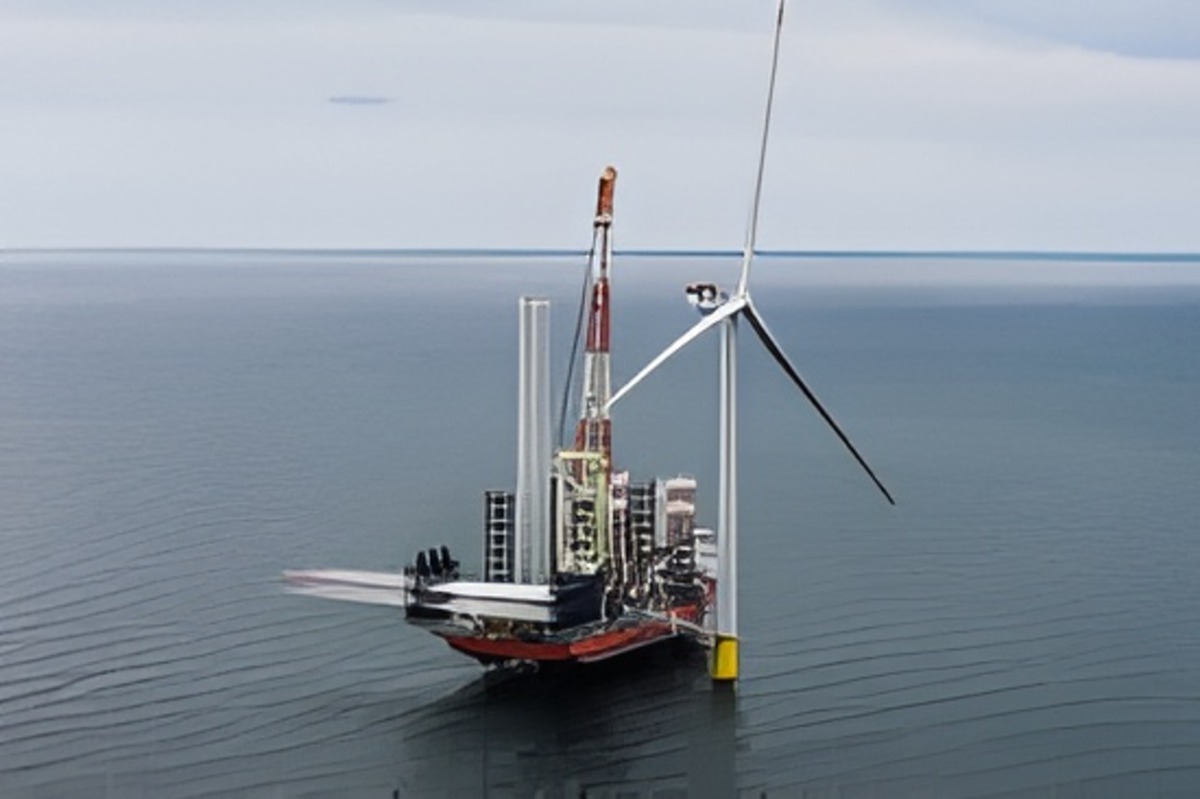
Poland has reached a major milestone in its offshore wind energy journey with the successful installation of its first offshore substations in the Baltic Sea. The achievement comes from the Baltic Power Offshore Wind Farm, a joint venture between ORLEN Group and Northland Power, marking a historic step for Poland’s renewable energy sector.
Built in Gdańsk and Gdynia, the two four-story offshore substations will collect electricity from 76 high-capacity wind turbines before transmitting it to shore. Once operational, the infrastructure will play a central role in strengthening Poland’s offshore wind leadership, boosting sustainability in the Baltic Sea, and accelerating the country’s clean energy transition.
Baltic Power Offshore Wind Farm: A new era of Poland Offshore Wind
Poland’s offshore wind sector has entered a decisive new phase with the successful installation of its first offshore substations in the Baltic Sea. The milestone was achieved by the Baltic Power Offshore Wind Farm, a joint venture between ORLEN Group and Northland Power, marking a historic breakthrough for Poland’s renewable energy industry.
The installation strengthens Poland’s growing role in Europe’s clean energy transition and establishes the critical infrastructure needed to connect offshore wind generation with the national power grid.
This project highlights how Poland’s offshore wind energy is rapidly moving from planning to large-scale execution in the Baltic Sea.
Offshore Substations: The Backbone of Baltic Power
The two four-story offshore substations—massive steel structures weighing up to 2,500 tonnes each—form the electrical heart of the Baltic Power project. Located around 20 kilometers offshore near Choczewo, the substations create the vital link between sea-based wind turbines and Poland’s onshore electricity network.
With a planned capacity of 1.2 gigawatts (GW), Baltic Power is expected to generate approximately 4 terawatt-hours (TWh) of renewable electricity annually—enough to supply more than 1.5 million homes and cover nearly 3% of Poland’s current electricity demand.
According to the Energy Information Administration (EIA), wind power continues to increase its share of electricity generation across Europe and globally.
Engineering Excellence in the Baltic Sea
The OSS West and OSS East substations collect electricity from 76 Vestas 15 MW offshore wind turbines through an extensive network of inter-array cables. Power is then stepped up to 230 kV and transmitted to the onshore substation in Choczewo via four offshore export cables, ensuring efficient integration into Poland’s grid.
Each unmanned offshore platform is equipped with:
- Two main transformers
- Gas-insulated switchgear at 230 kV and 66 kV
- Diesel generators and auxiliary systems
- Automated monitoring, control, and safety technologies
This design allows fully remote operation while maintaining high reliability in challenging marine conditions.
Strong Polish Industrial Participation
The offshore substations were delivered through a partnership between CS Wind Offshore and Semco Maritime, supported by multiple Polish companies. Substation foundations were built by Grupa Przemysłowa Baltic at shipyards in Gdynia and Gdańsk, reinforcing local industrial participation.
Following fabrication, the topsides were transported to Denmark for final outfitting before being installed offshore. Notably, both substations were equipped with specialized cranes manufactured by Protea, a Polish engineering firm, highlighting domestic contribution to advanced offshore technology.
Over its 30-year operational lifespan, Baltic Power is expected to achieve a local content share of at least 21%, strengthening Poland’s offshore supply chain and marine engineering expertise.
From Sea to Shore: A Coordinated Offshore Installation
Installing the substations required one of the most complex offshore operations ever conducted in Polish waters. Using floating heavy-lift cranes, tugboats, and crew transfer vessels, teams precisely positioned the steel structures and transition pieces onto their monopile foundations.
More than 20 specialized vessels supported the installation campaign, coordinated from Baltic Power’s newly operational offshore base in Łeba, which has been active since April 2025.
Project Director Jens Poulsen described the phase as “extremely intense,” noting that the next step will involve installing offshore cables to complete the wind farm’s internal electrical network.
Offshore wind leasing and permitting standards referenced in this project align with international frameworks outlined by the Bureau of Ocean Energy Management (BOEM).
What Baltic Power Means for Poland’s Energy Future
Beyond engineering success, the completion of the offshore substations signals Poland’s formal entry into the European offshore wind market. When fully operational in 2026, Baltic Power will become Poland’s first offshore wind farm, delivering reliable, clean electricity while reducing carbon emissions.
The project is also expected to drive economic growth through:
- Shipbuilding and port investments
- Engineering and logistics jobs
- Long-term grid modernization
By combining international offshore wind expertise with strong local industry participation, Baltic Power is setting a benchmark for future developments.
As construction progresses, one key question remains:
Will Baltic Power become the blueprint for Poland’s next wave of offshore wind projects?
FAQ
Q: What milestone has Poland achieved in offshore wind energy?
A: Poland has installed its first offshore substations in the Baltic Sea, marking a major step forward for the country’s offshore wind and renewable energy sector.
Q: Who is developing the Baltic Power Offshore Wind Farm?
A: The project is a joint venture between ORLEN Group and Northland Power, combining domestic and international offshore wind expertise.
Q: What role do the offshore substations play?
A: The substations collect electricity from 76 offshore wind turbines and transmit it to shore for distribution through Poland’s power grid.
Q: Why is this project important for the Baltic Sea region?
A: The project supports cleaner energy production, strengthens Baltic Sea sustainability, and reduces reliance on fossil fuel-based electricity.
Q: How does this project support Poland’s energy transition?
A: It accelerates Poland’s shift toward renewable energy, improves energy security, and positions the country as an emerging offshore wind leader in Europe.

Ismot Jerin is the founder and Editor-in-Chief of WindNewsToday, an independent publication covering offshore wind, renewable energy policy, and clean power markets with an analytical focus on the United States and global energy transition.
Thank you for your sharing. I am worried that I lack creative ideas. It is your article that makes me full of hope. Thank you. But, I have a question, can you help me?
Thank you for your sharing. I am worried that I lack creative ideas. It is your article that makes me full of hope. Thank you. But, I have a question, can you help me?