WindNewsToday

Floating vs Fixed-Bottom Offshore Wind: Key Differences, Costs, and Use Cases

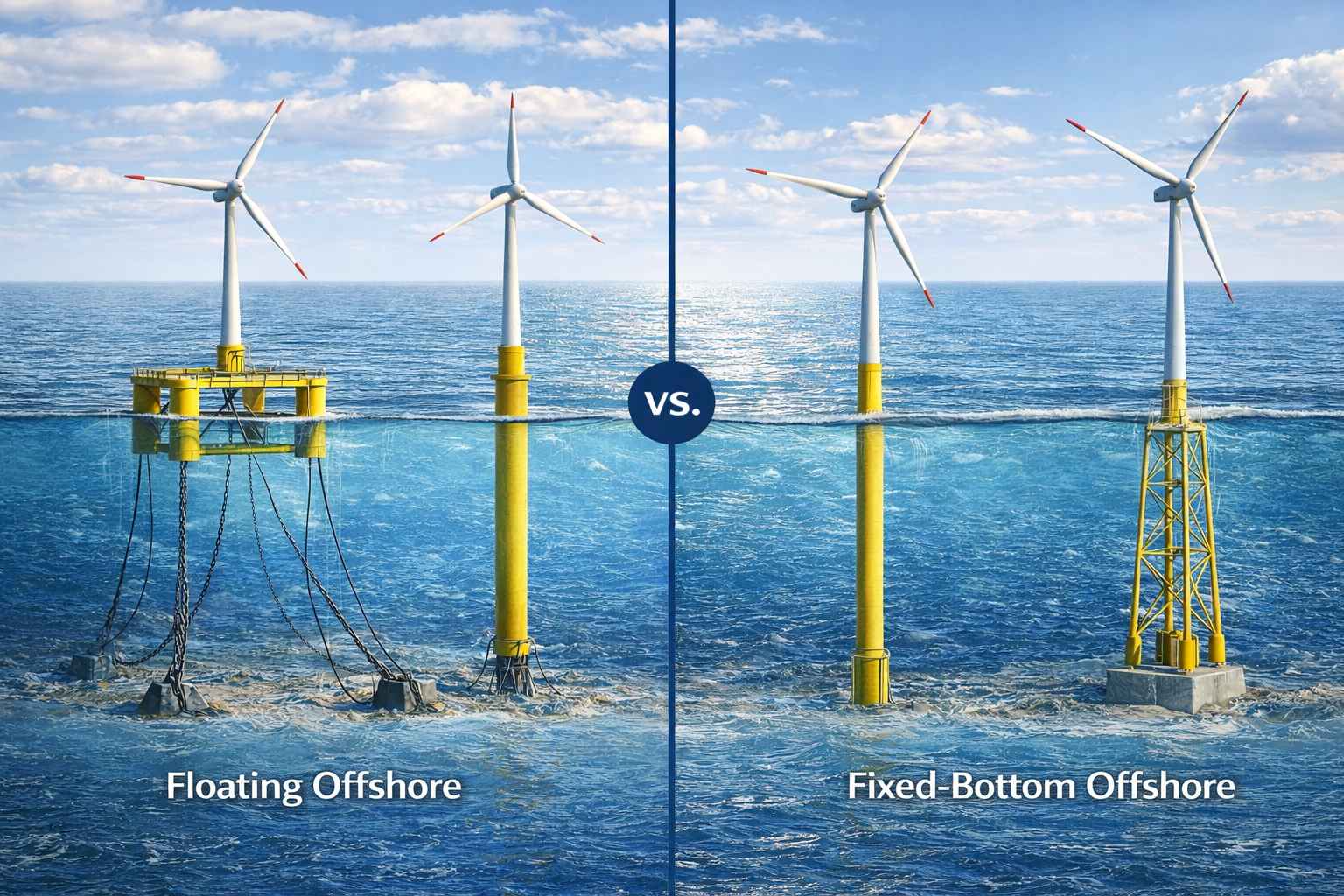
Floating vs fixed-bottom offshore wind foundation comparison

Last updated: January 2026

As offshore wind expands into deeper waters and new global markets, one comparison is now shaping nearly every major development decision: floating offshore wind vs fixed-bottom offshore wind.

This is not just a technical debate.

The choice between floating and fixed-bottom foundations directly affects project costs, site feasibility, environmental impact, grid planning, and national energy strategy. In many regions, it determines whether offshore wind is possible at all.

While fixed-bottom offshore wind still dominates global installations today, its reliance on shallow seabed conditions places clear geographic limits on future growth. Floating offshore wind, by contrast, unlocks deep-water regions using buoyant platforms anchored to the seabed—bringing offshore wind to coastlines that were previously out of reach.

To understand where offshore wind is heading next, it is essential to understand how these two technologies differ, where each works best, and why both will shape the industry’s future.

Why This Comparison Matters Now

Offshore wind is no longer a single-technology industry.

As explained in our Offshore Wind Energy Explained – Global Overview, early offshore wind growth focused on shallow seas such as the North Sea. Today, many of those regions are approaching saturation.

New capacity is increasingly coming from:

  • Deeper waters
  • Longer distances from shore
  • Markets with narrow continental shelves

This shift makes the floating vs fixed-bottom offshore wind decision one of the most critical planning questions in the industry today—especially for governments targeting large-scale decarbonization.

What Is Fixed-Bottom Offshore Wind?
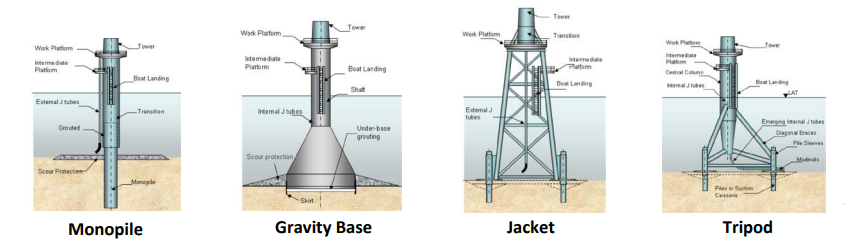
Fixed-bottom offshore wind foundations including monopiles and jacket structures
Common fixed-bottom offshore wind foundation types used in shallow waters, Image: NREL

Fixed-bottom offshore wind refers to wind turbines installed on foundations that are physically attached to the seabed. These foundations are designed to remain rigid and stationary throughout the turbine’s operational life.

Common Fixed-Bottom Foundation Types

  • Monopiles (most widely used)
  • Jacket foundations
  • Gravity-based structures

Fixed-bottom turbines are typically deployed in water depths up to 50–60 meters, making them ideal for regions with wide continental shelves such as:

  • The North Sea
  • The U.S. East Coast
  • Parts of China

Because this technology has been deployed for decades, it benefits from:

  • Mature global supply chains
  • Lower financing risk
  • Proven installation and maintenance methods

In established markets, fixed-bottom offshore wind has already reached full commercial scale.

What Is Floating Offshore Wind?
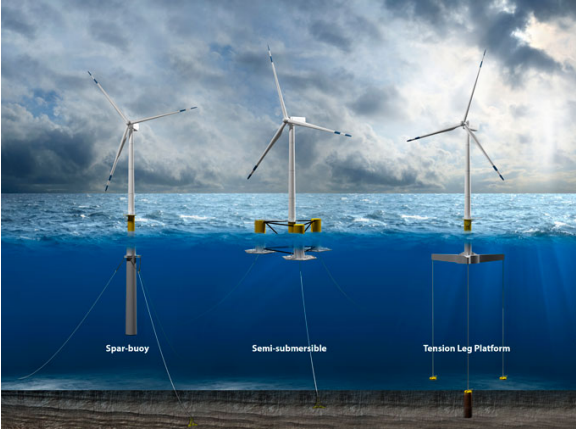
Floating offshore wind platforms operating in deep water
Floating offshore wind platforms anchored with mooring systems in deep seas, Image: NREL

Floating offshore wind uses turbines mounted on buoyant platforms that are anchored to the seabed using mooring lines rather than fixed foundations.

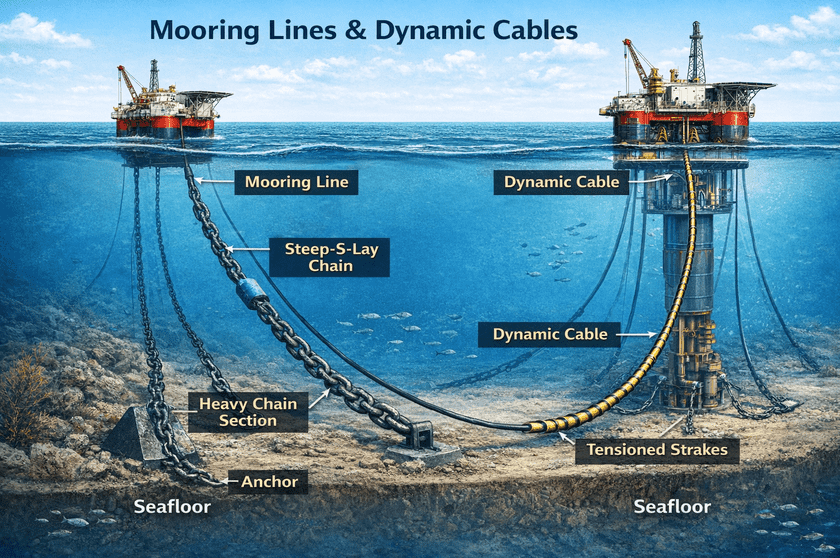
This approach allows turbines to operate in deep waters exceeding 60 meters, opening offshore wind development to regions once considered inaccessible. U.S. Department of Energy research highlights the role of dynamic export cables and advanced mooring systems in enabling floating offshore wind deployment in deep waters.

Key Components of Floating Offshore Wind Systems

  • Steel or concrete floating platforms
  • Mooring systems adapted from offshore oil and gas
  • Dynamic export cables that move with the platform

For a deeper technical breakdown, see our dedicated guide on Floating Offshore Wind Energy Explained.

Floating vs Fixed-Bottom Offshore Wind: Core Technology Differences

1. Foundation Design

FeatureFloating Offshore WindFixed-Bottom Offshore Wind
Seabed attachmentAnchored with mooring linesPhysically fixed
Water depth60–1,000+ metersUp to ~50–60 meters
Platform motionLimited movementNo movement

Floating platforms are engineered to absorb wave and wind motion, while fixed-bottom structures rely on structural rigidity and seabed stability.

2. Installation Process

Fixed-bottom installation requires:

  • Heavy-lift installation vessels
  • Offshore pile driving
  • Narrow weather windows

Floating wind installation typically involves:

  • Onshore or port-based assembly
  • Towing turbines to the site using tugboats
  • Connecting to pre-installed anchors and moorings

From a logistics standpoint, floating wind reduces offshore construction complexity but increases reliance on port infrastructure readiness.

Cost Comparison: Floating vs Fixed-Bottom Offshore Wind

Cost remains the largest difference between the two technologies. Cost trends for floating offshore wind remain higher than fixed-bottom projects, particularly due to early-stage deployment and financing risk, according to the International Energy Agency.

Current Cost Profile (2026)

  • Fixed-bottom offshore wind: Lower-cost and commercially competitive
  • Floating offshore wind: Higher costs due to early-stage deployment

Why Floating Offshore Wind Costs More Today

  • Limited supply chain scale
  • Specialized mooring and anchoring systems
  • Higher perceived financing risk

Why Costs Are Expected to Fall

Floating offshore wind costs are projected to decline as:

  • Turbine sizes increase
  • Platform designs become standardized
  • Manufacturing scales globally

This cost curve is similar to what fixed-bottom offshore wind experienced over the past decade.

Geographic Suitability
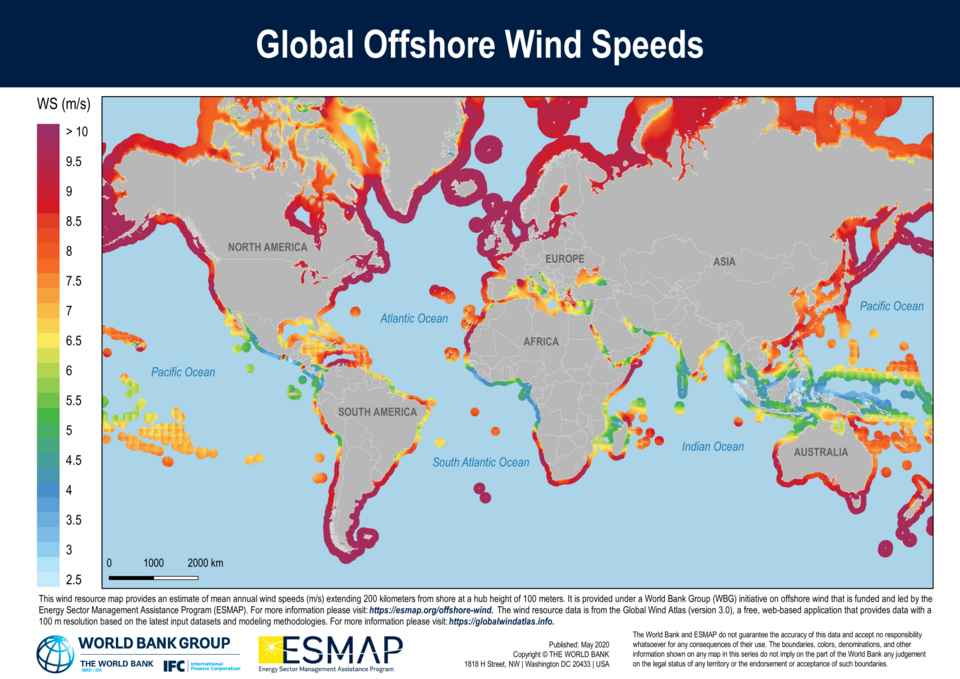
Global offshore wind water depth suitability map
Offshore wind suitability by water depth across major global markets

Global Wind Energy Council data shows that markets such as Japan, South Korea, and the U.S. West Coast depend heavily on floating offshore wind due to deep coastal waters.

Fixed-Bottom Offshore Wind Works Best In:

  • Shallow continental shelves
  • Nearshore environments
  • Regions with existing offshore infrastructure

Floating Wind Is Essential For:

  • Deep coastal waters
  • Steep seabed drop-offs
  • Regions like:
    • U.S. West Coast
    • Japan
    • South Korea
    • Mediterranean countries

In places like California, floating offshore wind is not a choice—it is the only viable option.

Environmental and Visual Impact

Floating offshore wind offers several ecological advantages:

  • Reduced seabed disturbance
  • Greater distance from shore
  • Lower visual impact from coastal communities

Fixed-bottom projects, while well-regulated, can face:

  • Greater seabed impact during installation
  • Higher visibility near coastlines

Both technologies undergo rigorous environmental impact assessments and long-term marine monitoring.

Grid Connection and Infrastructure

Fixed-bottom offshore wind benefits from:

  • Established grid connection models
  • Proven offshore substations
  • Conventional export cable systems

Floating offshore wind requires:

  • Dynamic power cables
  • Advanced grid planning
  • Flexible transmission systems

As offshore wind capacity expands globally, grid upgrades will be required regardless of foundation type.

Which Technology Has the Bigger Future?

The future is not a competition—it is a combination.

  • Fixed-bottom offshore wind will continue expanding in shallow-water regions
  • Floating offshore wind will drive growth in deep-water markets

Floating offshore wind is not replacing fixed-bottom wind. It is extending offshore wind into regions that were previously unreachable. Together, they form a complementary pathway toward large-scale decarbonization and energy security.

Frequently Asked Questions

Is floating offshore wind better than fixed-bottom?

No. Floating offshore wind enables deep-water deployment, while fixed-bottom remains cheaper and proven in shallow waters.

Why is floating offshore wind important?

It unlocks offshore wind potential in regions where fixed-bottom foundations cannot be installed.

Will floating offshore wind become cheaper?

Yes. Costs are expected to decline significantly as deployment scales and supply chains mature.

Which countries need floating offshore wind the most?

The U.S. West Coast, Japan, South Korea, and Mediterranean nations depend heavily on floating offshore wind.

50 MW Floating Turbine—the World’s Largest—Was Built by China

China Built the World’s Largest 50 MW Floating Turbine

A Giant Rises in Offshore Wind

China has once again captured global attention in the renewable energy sector. An important turning point for the offshore wind sector has been marked by the announcement of plans for the largest 50 MW floating turbine in the world by Mingyang Smart Energy, one of the nation’s leading clean energy companies, according to Bloomberg.

Though it is still in its infancy, the idea goes far beyond small steps forward. It is a daring leap in ambition, scale, and design that has the potential to completely reshape the boundaries of what is technically and financially feasible in floating wind technology.

Mingyang Smart Energy—Behind the Innovation

Since its founding in 2006, Mingyang Smart Energy has emerged as a world leader in offshore engineering, smart energy systems, and wind turbine manufacturing. Record-breaking designs are nothing new to the company. By announcing a 22 MW offshore turbine in 2023, it raised the bar for turbine capacity. Mingyang is ambitious to outdo even that achievement with its 50 MW floating wind turbine concept, the largest ever proposed.

What Makes the 50 MW Floating Wind Turbine So Revolutionary?

The engineering scale of a 50 MW floating wind turbine is unprecedented. Today’s offshore wind turbines typically have a capacity of 10–18 MW. The increase to 50 MW, which is almost three times that capacity, necessitates radical adjustments to materials, structure, and floating platform stability.

According to Mingyang, this concept leverages:

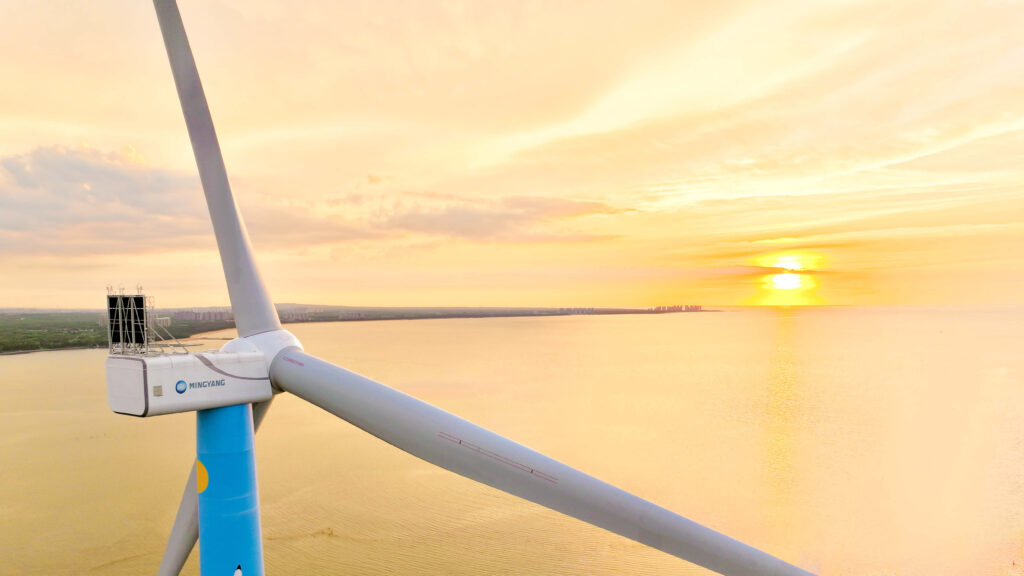
MySE16-260, Image: Mingyang Smart Energy
  • lightweight composite blades of the next generation that are longer than 150 meters.
  • Large rotating structures can be stabilized with intelligent load control systems.
  • Sophisticated floating foundations are made to survive harsh maritime environments.
  • AI-powered energy optimization that enables integration with smart grids for optimal output efficiency.

By eliminating the need for numerous smaller units and lowering the cost per megawatt for offshore wind farms, this design may be able to power tens of thousands of homes with a single turbine.

Why China Is Betting Big on Floating Wind

The growth of offshore wind energy in China has been astounding. In terms of installed wind capacity, the nation leads the world, and floating wind power is becoming the next big thing. Floating turbines can function in deep offshore regions with more reliable and powerful wind resources than fixed-bottom turbines, which need shallow waters.

With the help of this technological advancement, China can now access enormous oceanic wind corridors in the East China Sea and South China Sea, opening up previously untapped potential for renewable energy.

Along with creating new investment opportunities for maritime engineering and smart grid integration, floating wind technology also lessens conflicts with coastal industries and fishing zones.

Floating Wind: The Next Phase of Global Energy Evolution

Although floating wind technology is not new, China’s large-scale entry could change the rules of international competition.
Early progress in floating wind pilot projects has been made by nations like Norway, Japan, and the United Kingdom. None, though, have suggested a design with a capacity of about 50 MW.

Mingyang hopes to reduce production costs, show grid stability, and illustrate how large turbines could power deep-sea wind farms in the future by scaling up.

This is in line with China’s long-term objective of becoming carbon neutral by 2060 and its larger clean energy strategy, which calls for 1,200 GW of renewable capacity by 2030.

Engineering Challenges Ahead

Despite the excitement, building a 50 MW floating wind turbine is no small task. Engineers must address:

  • Extreme load management: enormous wind and wave forces acting on a single massive structure.
  • Floating stability: ensuring the platform remains balanced in deep waters.
  • Transportation and assembly: moving colossal turbine components from land to offshore installation sites.
  • Grid connectivity: maintaining power stability for such a large, single-unit generation source.

Each of these challenges requires precision engineering, advanced materials, and continued research collaboration with global partners.

Global Reactions and Industry Impact

Energy analysts see Mingyang’s announcement as a symbol of China’s growing dominance in renewable technology.
If successful, this 50 MW floating wind turbine could outpace existing European designs and reshape offshore wind economics by drastically reducing per-megawatt costs.

Moreover, it would strengthen China’s position in exporting clean energy technology, enabling other nations to adopt large-scale floating wind solutions in their own coastal regions.

The Future of Offshore Wind Power

The concept also points to the future direction of offshore wind:
Fewer, larger, smarter turbines—all networked into digital energy grids.

By combining floating foundations, AI-driven efficiency, and smart energy systems, projects like Mingyang’s could accelerate the transition toward a cleaner, more sustainable global energy mix.

This innovation not only supports China’s domestic goals but also contributes to global decarbonization, offering a blueprint for how nations can harness offshore wind at scale.

Final Thoughts: The Floating Giant That Could Redefine Energy

Mingyang’s 50 MW floating turbine remains a concept, but its implications are enormous. It embodies the next generation of offshore wind innovation, combining engineering power, digital intelligence, and clean energy ambition.

If brought to life, this turbine could symbolize the moment the world’s energy landscape truly began to float—toward a smarter, greener, and more sustainable horizon.

Key Facts at a Glance

FeatureDetails
Turbine Capacity50 MW
TypeFloating Offshore Wind Turbine
DeveloperMingyang Smart Energy (China)
Innovation HighlightsAI optimization, smart grid integration, digital twin technology
Global SignificanceWorld’s largest wind turbine concept

FAQs

Q1: Why is the 50 MW floating wind turbine important?
It represents a major leap in offshore wind technology, offering higher capacity, lower costs, and access to deeper waters for clean energy generation.

Q2: What is unique about floating wind turbines?
They don’t require fixed foundations, making them ideal for deep-sea deployment where winds are stronger and more stable.

Q3: How does AI improve turbine efficiency?
AI algorithms monitor performance, predict failures, and adjust turbine settings in real time for optimal power generation and maintenance savings.

Stay updated on the world’s biggest renewable energy breakthroughs—follow WindNewsToday for daily insights into offshore wind, AI innovation, and global clean power transformation.

Floating Offshore Wind Energy Explained: Technology, Costs, Projects, and Future Outlook

floating offshore wind technology platform at sea

Introduction: Why Floating Offshore Wind Matters Now

Floating offshore wind energy is rapidly emerging as one of the most important technologies shaping the future of global renewable energy. As countries push offshore wind projects farther from shore and into deeper waters, traditional fixed-bottom foundations are reaching their physical and economic limits.

Unlike conventional offshore wind farms, floating offshore wind turbines are mounted on buoyant platforms anchored to the seabed with mooring systems. This allows wind energy generation in deep-water locations that were previously inaccessible, where wind speeds are stronger, more consistent, and less constrained by coastal geography.

As explained in our Offshore Wind Energy Explained: Technology, Projects, and Global Trends guide, foundation technology ultimately determines where offshore wind can be built. Floating platforms remove depth limitations and unlock vast new wind resources across the globe.

In this article, we explain what floating offshore wind energy is, how floating wind turbines work, how it compares to fixed-bottom offshore wind, where major projects are being developed, and why floating wind is becoming essential to the future of global offshore wind energy.

What Is Floating Offshore Wind Energy?

Floating offshore wind energy is a method of generating electricity at sea using wind turbines mounted on floating platforms rather than foundations fixed directly to the seabed. These platforms are stabilized using mooring lines and anchors, allowing turbines to operate in water depths ranging from 60 meters to well over 1,000 meters.

This technology addresses a fundamental limitation of offshore wind development. Fixed-bottom turbines become technically challenging and increasingly expensive beyond depths of roughly 50–60 meters. Floating offshore wind platforms overcome this constraint, enabling deployment in deep-water regions farther from shore.

According to the International Energy Agency (IEA), floating offshore wind will be critical for expanding offshore wind capacity in countries with steep continental shelves, including Japan, South Korea, Norway, and the U.S. West Coast.

How Floating Wind Turbines Work

floating offshore wind mooring system and dynamic cables
Mooring systems and dynamic export cables keep floating wind turbines stable while transmitting electricity to shore

Above the waterline, floating wind turbines operate much like conventional offshore wind turbines. The key differences lie below the surface, where advanced marine engineering ensures stability and durability.

Key Components of Floating Offshore Wind Systems

  • Floating platform (steel or concrete foundation)
  • Wind turbine tower, nacelle, and blades
  • Mooring systems (chains, ropes, anchors)
  • Dynamic export cables
  • Offshore substation or direct grid connection

The platform stays stable through ballast systems and mooring tension, enabling turbines to operate in severe offshore conditions. Together, these components form an integrated system designed to balance stability, power generation, and long-term durability at sea.

How Floating Offshore Wind Farms Are Developed

The development of a floating offshore wind farm follows a structured process combining offshore engineering with experience from fixed-bottom wind and offshore oil and gas industries.

Step-by-step development includes:

  1. Site selection: Evaluate wind resources, water depth, wave conditions, and seabed characteristics.
  2. Environmental and regulatory studies: Assess marine ecosystems, fisheries, and shipping routes.
  3. Design selection: Choose a floating platform design based on local conditions.
  4. Onshore assembly: Turbines are assembled onshore and mounted onto platforms.
  5. Tow-out and installation: Platforms are towed to the site and anchored.
  6. Grid connection: Dynamic cables connect turbines to offshore substations and the onshore grid.
  7. Operation & monitoring: Digital systems track performance and structural health.

Unlike fixed-bottom turbines, floating units are often towed into position, reducing reliance on heavy-lift installation vessels and allowing more work to occur in controlled port environments.

Types of Floating Offshore Wind Platforms

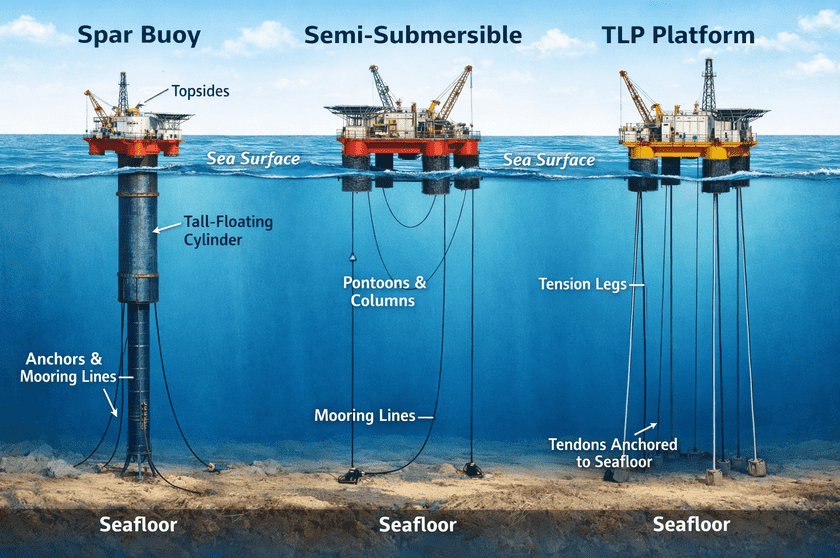
types of floating offshore wind platforms diagram
Main floating offshore wind platform designs include spar-buoy, semi-submersible, and tension leg platforms

There are three primary floating wind foundation designs currently in development and deployment:

Spar-Buoy Platforms

  • Deep vertical cylinder
  • Stability from ballast weight
  • Requires deep ports for assembly

Semi-Submersible Platforms

  • Multiple columns connected by pontoons
  • Easier port integration
  • Most commonly deployed design today

Tension Leg Platforms (TLP)

  • Anchored by vertical tendons
  • Minimal platform motion
  • Higher engineering complexity

Floating Offshore Wind vs Fixed-Bottom Wind

Floating and fixed-bottom offshore wind farms differ significantly in terms of foundation design, cost structure, and geographic reach.

FactorFloating Offshore WindFixed-Bottom Offshore Wind
Water Depth60–1,000+ metersUp to ~50–60 meters
Cost (Current)HigherLower
Technology Maturity
Emerging
Commercially mature
Expansion PotentialVery highLimited by the seabed
Geographic ReachDeep-water regions worldwideShallow continental shelves

As offshore wind energy expands globally, floating wind is expected to complement rather than replace fixed-bottom projects.

Global Floating Offshore Wind Projects

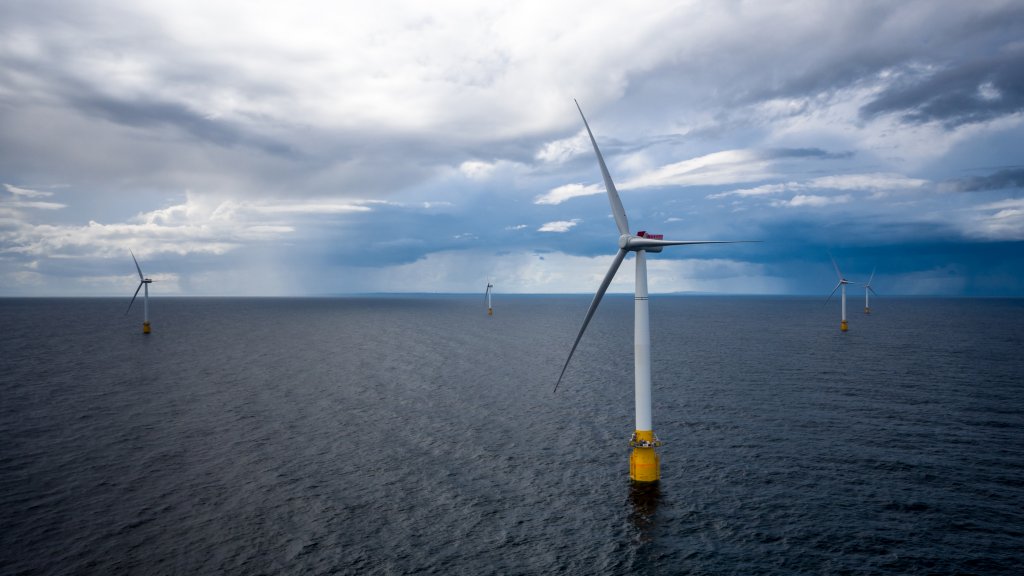
floating offshore wind project Hywind Scotland
Hywind Scotland was the world’s first commercial-scale floating offshore wind farm

Floating offshore wind is transitioning from demonstration projects to commercial-scale developments worldwide.

Notable Projects:

  • Hywind Scotland (UK/Norway)
  • WindFloat Atlantic (Portugal)
  • Kincardine Offshore Wind Farm (UK)
  • U.S. West Coast lease areas (California, Oregon)

These projects demonstrate the technical viability of floating platforms under real-world ocean conditions.

Floating Offshore Wind in the United States

The United States is one of the largest long-term markets for floating offshore wind, particularly along the Pacific coastline.

Key Drivers of U.S. Floating Wind Growth

  • Deep coastal waters unsuitable for fixed-bottom turbines
  • Strong offshore wind resources
  • State-level clean energy mandates
  • Federal offshore leasing programs

According to the U.S. Department of Energy (DOE), floating offshore wind is essential for unlocking wind resources along the U.S. West Coast, where water depths increase rapidly near the shore.

Costs and Economics of Floating Wind Energy

Cost remains the primary barrier to large-scale floating offshore wind deployment today. Floating wind projects are currently more expensive than fixed-bottom offshore wind due to:

  • Limited supply chain scale
  • Specialized mooring and platform systems
  • Early-stage manufacturing costs

However, research from the National Renewable Energy Laboratory (NREL) indicates that floating offshore wind costs are expected to decline significantly as turbine sizes increase, manufacturing scales up, and standardized platform designs are adopted. Industry projections suggest cost competitiveness within the next decade.

Environmental and Grid Considerations

Floating offshore wind offers several environmental advantages compared to traditional offshore installations:

  • Reduced seabed disturbance
  • Ability to site projects farther from shore
  • Lower visual impact for coastal communities

Grid integration remains a challenge, requiring advanced offshore transmission planning, dynamic cables, and upgraded onshore infrastructure.

Future Outlook for Floating Offshore Wind

Floating offshore wind represents more than a technological upgrade—it is a geographic expansion of where clean energy can be deployed.

Key trends shaping the future include:

  • Larger 15–20 MW floating wind turbines
  • AI-based turbine monitoring
  • Hybrid wind + energy storage systems
  • International collaboration on standards

Floating offshore wind is widely viewed as the next frontier of offshore wind development, creating long-term opportunities across global clean energy markets.

Frequently Asked Questions

What is floating offshore wind energy?

Floating offshore wind uses turbines mounted on floating platforms to generate electricity in deep ocean waters.

Is floating offshore wind commercially viable?

Yes, several projects are already operational, with many large-scale developments planned.

Why is floating wind important for the U.S.?

Most West Coast offshore wind resources are located in deep water unsuitable for fixed-bottom foundations.

Sources:

International Energy Agency (IEA)
U.S. Department of Energy (DOE)
National Renewable Energy Laboratory (NREL)