WindNewsToday

Offshore Wind Supply Chain: Turbines, Installation, and Logistics Explained

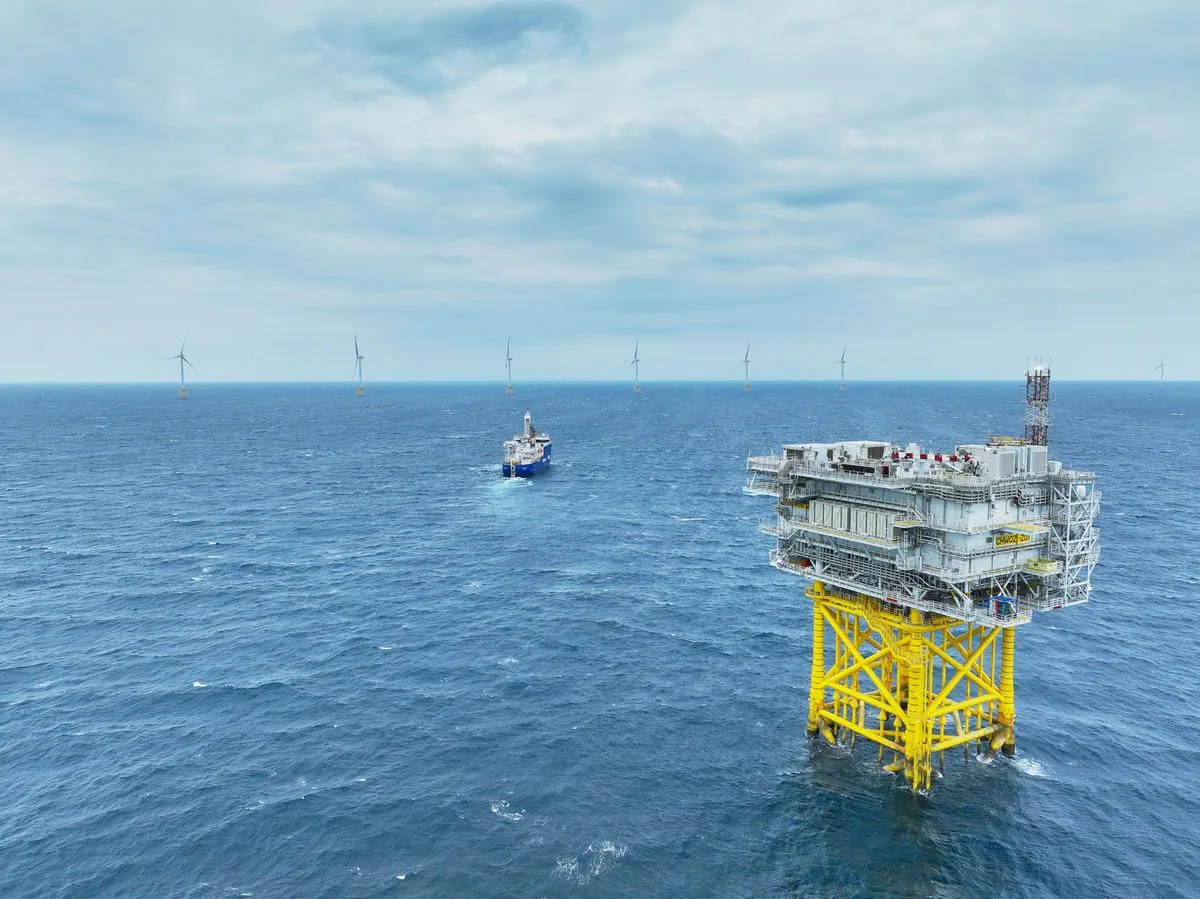
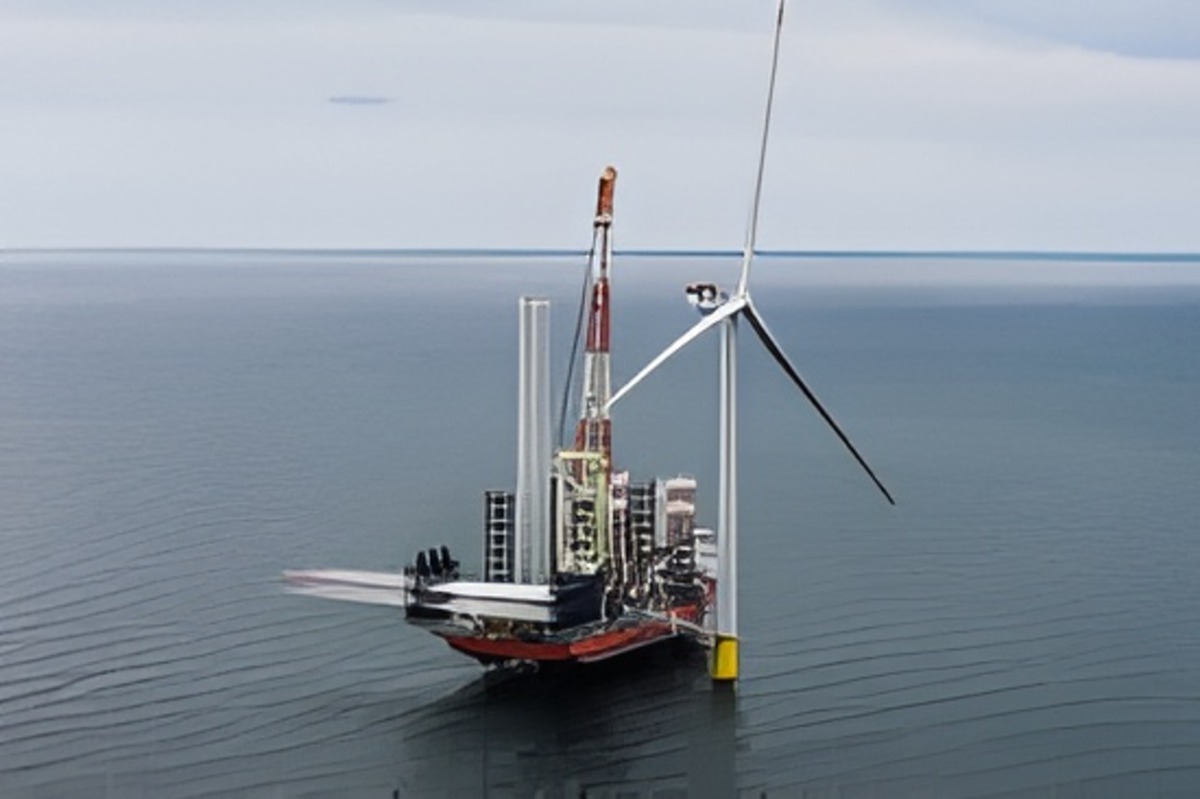
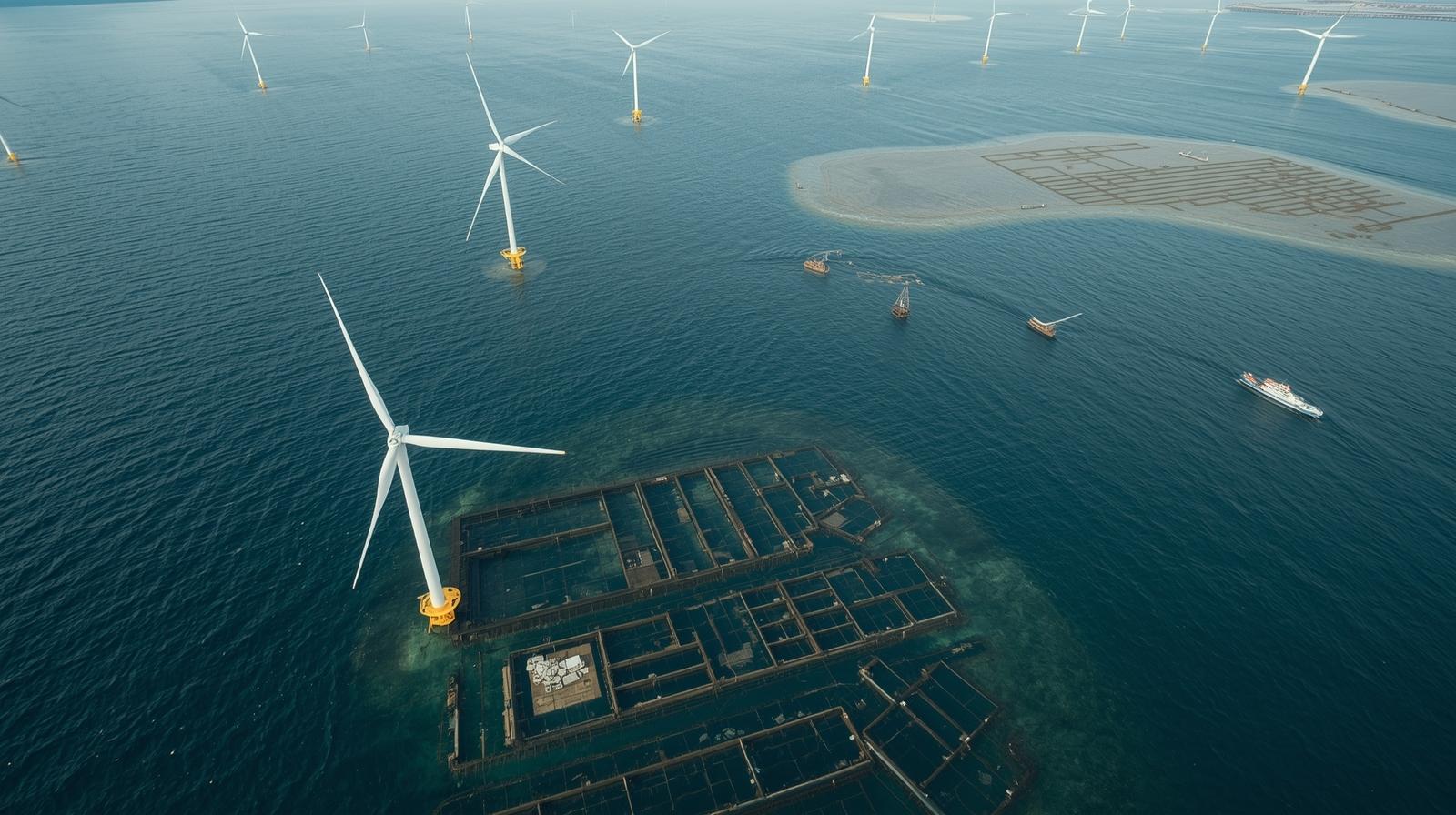
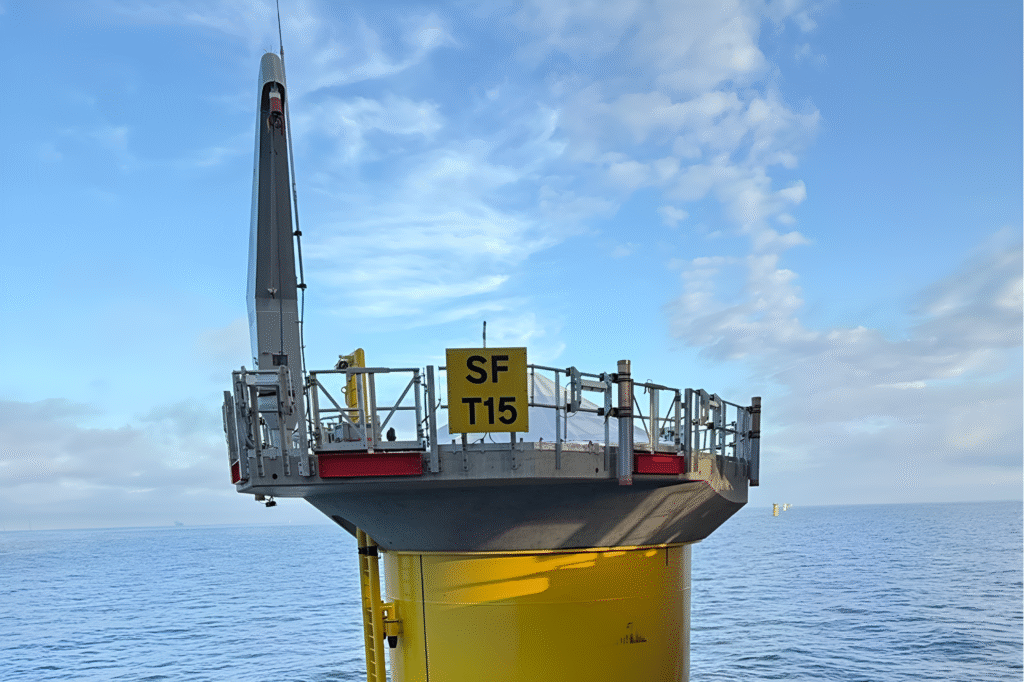
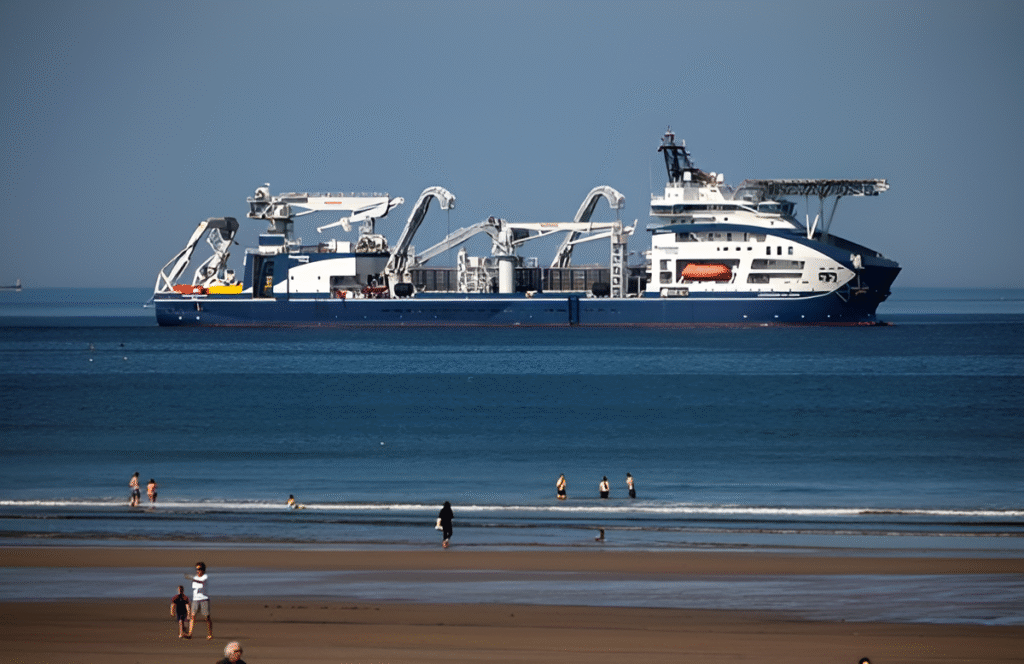
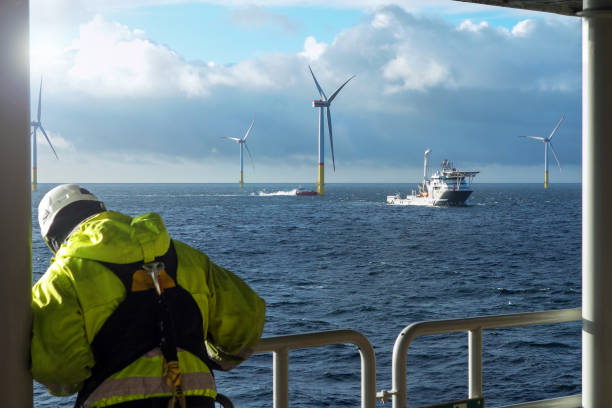
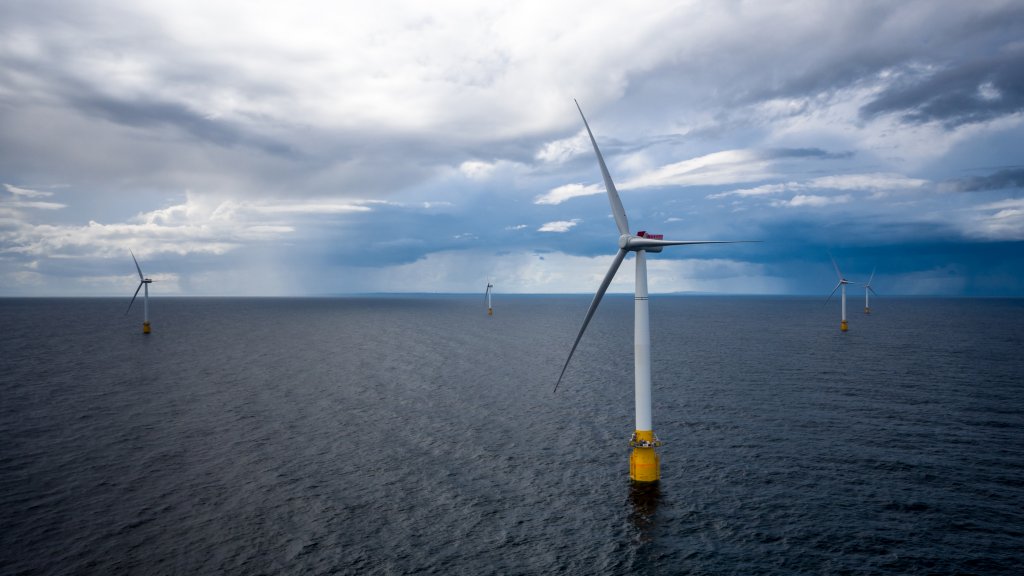
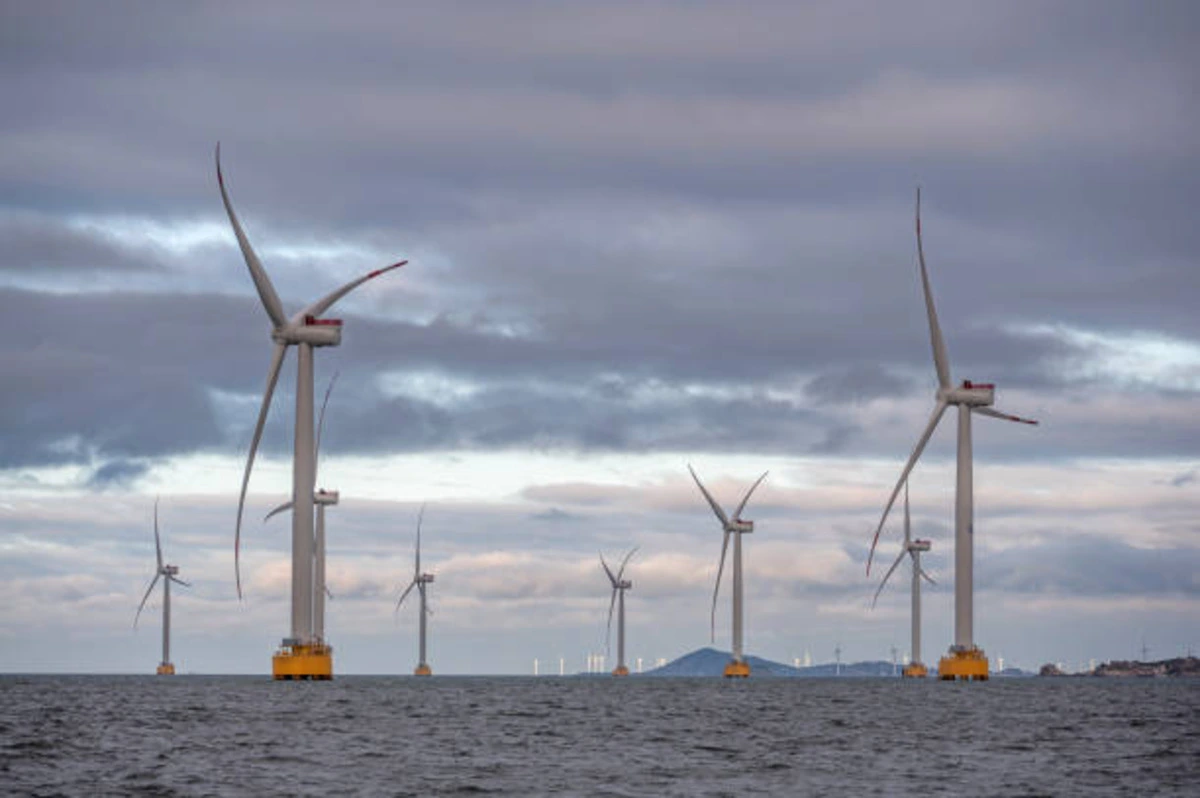
Offshore wind turbine installation vessel lifting nacelle and blades at sea

Behind every offshore wind farm is a complex, capital-intensive, and highly coordinated supply chain. While towering turbines spinning at sea often get the spotlight, the true backbone of offshore wind energy lies in manufacturing plants, ports, installation vessels, and global logistics networks working together with near-military precision.

As offshore wind projects scale up and move farther from shore, supply chain performance has become one of the most decisive factors influencing project cost, delivery speed, and investment risk. Understanding how this ecosystem functions explains why offshore wind is both expensive to build—and strategically vital to national energy security.

This article breaks down the offshore wind supply chain step by step, from turbine manufacturing to installation logistics, vessel fleets, and the emerging impact of floating offshore wind.

Wind Turbine Manufacturing for Offshore Projects
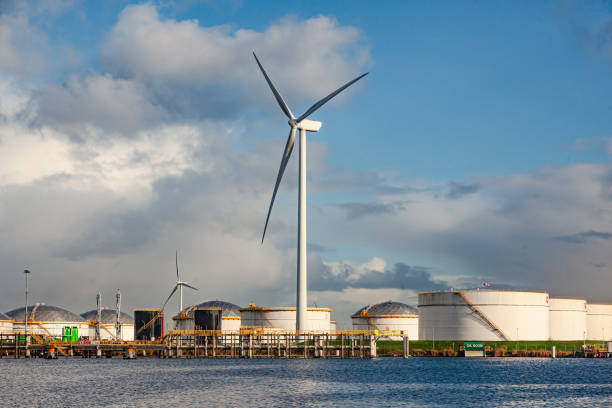
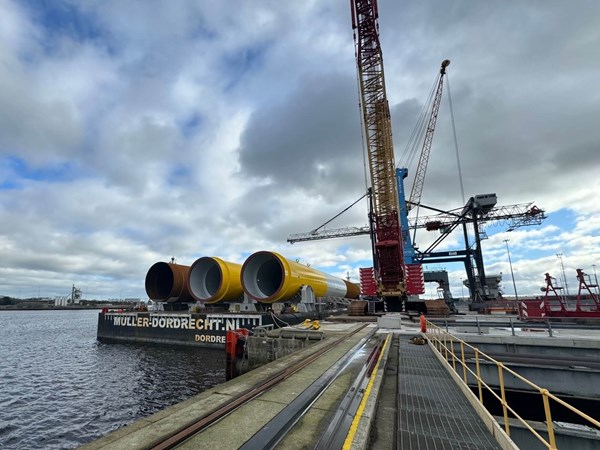
Offshore wind turbine installation using heavy-lift crane vessel at sea
Installation vessels play a critical role in offshore wind project timelines

Offshore wind turbines are fundamentally different from their onshore counterparts. They are larger, heavier, more powerful, and designed to operate continuously in harsh marine environments for 25–30 years.

Modern offshore turbines commonly exceed 12–15 MW per unit, with rotor diameters wider than football fields. Manufacturing these machines requires specialized facilities and highly controlled production processes.

Key Manufacturing Components

Blades

Offshore wind blades are among the largest composite structures ever produced, often exceeding 100 meters in length. Their scale improves energy capture at sea, where winds are stronger and more consistent, but creates major challenges for fabrication, transport, and handling.

Blade manufacturing relies on advanced composite materials, precision molds, and strict quality controls to prevent defects that could lead to catastrophic failure offshore.

The National Renewable Energy Laboratory (NREL) provides in-depth analysis of offshore turbine blade technology and materials science, highlighting durability and scaling challenges in marine environments.

Nacelles

The nacelle houses the generator, power electronics, gearbox (if used), cooling systems, and control hardware. Offshore nacelles are engineered with corrosion resistance, redundancy, and remote monitoring in mind, as maintenance access is costly and weather-dependent.

Many manufacturers now integrate digital condition monitoring and AI-based diagnostics to reduce downtime.

Towers and Foundations

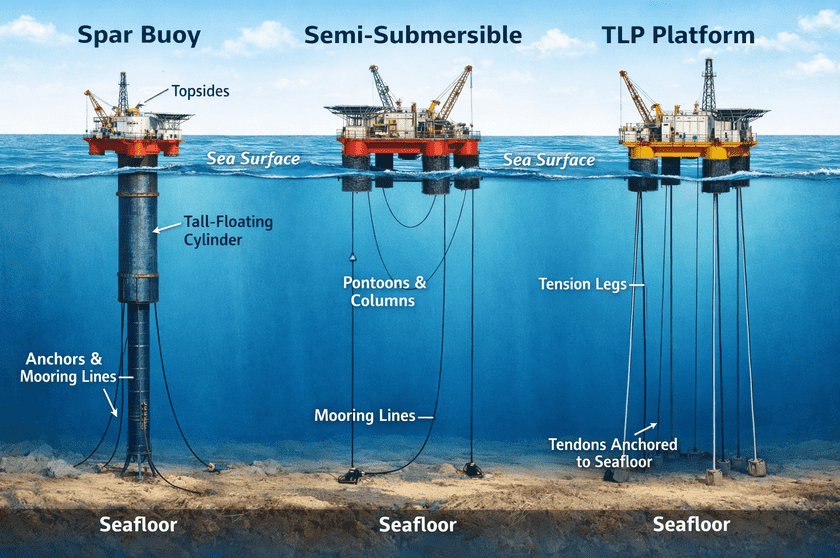
Offshore towers must withstand higher wind loads, wave action, and saltwater corrosion. Foundations vary based on water depth and seabed conditions and include monopiles, jackets, gravity-based structures, and floating platforms.

Manufacturing sites are increasingly located close to deep-water ports, reducing transportation complexity for oversized components.

Ports: The Hidden Hubs of Offshore Wind

Ports are the unsung heroes of offshore wind development. Without suitable port infrastructure, even the best-designed wind projects can stall.

Ports function as:

  • Manufacturing interface points
  • Storage and staging areas
  • Pre-assembly hubs
  • Launch locations for installation vessels

What Makes a Port Offshore-Wind Ready?

Modern offshore wind ports require:

  • Deep-water access for heavy vessels
  • Reinforced quays to support thousands of tons
  • Large laydown areas for blades and towers
  • Heavy-lift cranes and roll-on/roll-off capacity

Many countries are investing billions to upgrade ports specifically for offshore wind. WindEurope regularly tracks European port investment for offshore wind and explains why port readiness directly impacts project timelines.

Port capacity has become a strategic bottleneck, especially as turbine sizes continue to increase.

Offshore Wind Installation Process
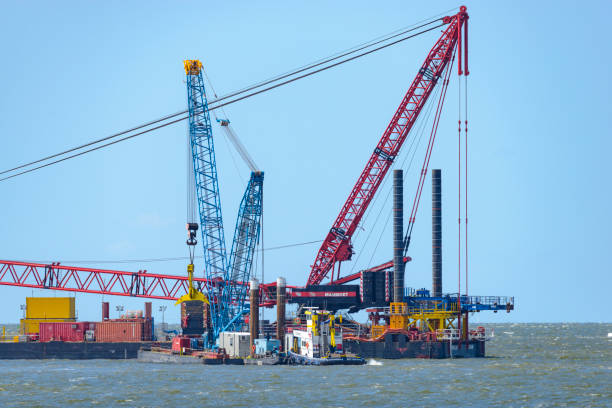
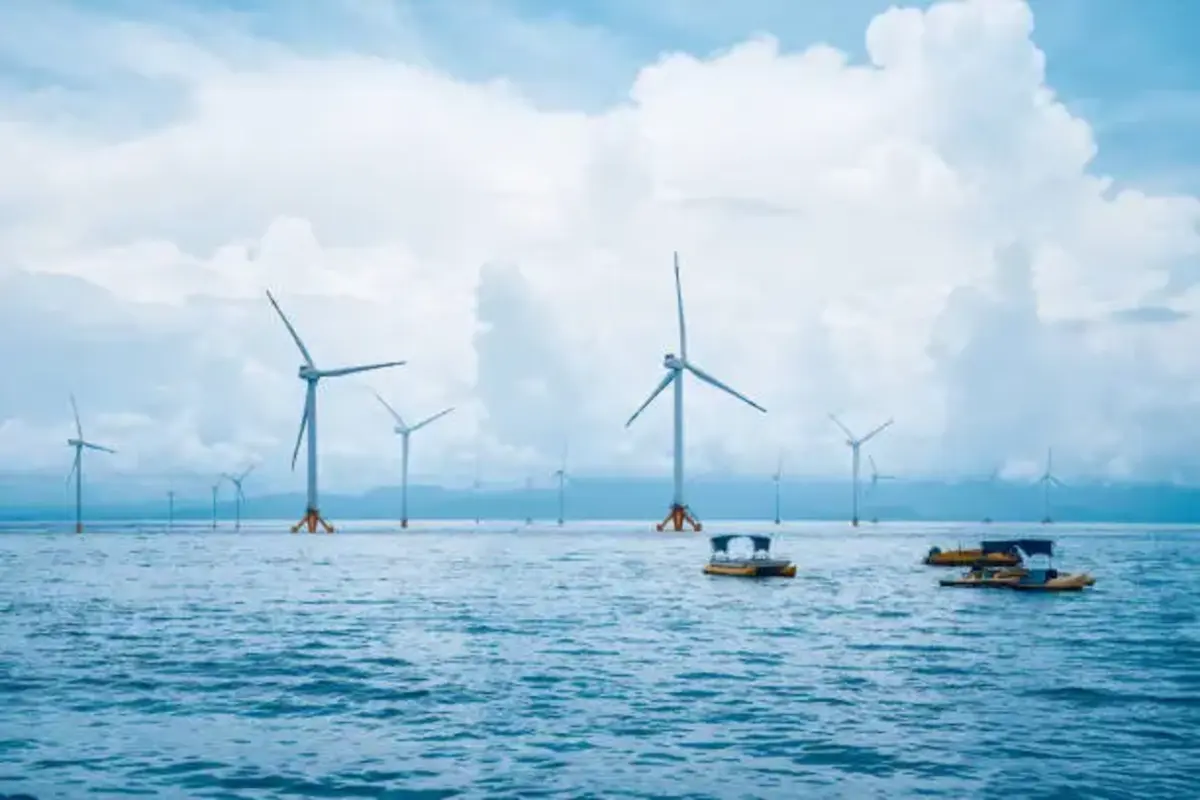
Floating offshore wind platform being towed from port to offshore site

Installing offshore wind turbines is one of the most complex construction operations in the energy sector. Every phase depends on weather windows, vessel availability, and precise scheduling.

Installation Stages

  1. Foundation installation – monopiles or jackets driven or placed into the seabed
  2. Subsea cable laying – inter-array and export cables installed and buried
  3. Tower installation – tower sections lifted and secured
  4. Nacelle installation – heavy-lift operation requiring calm seas
  5. Blade installation – either individual blades or pre-assembled rotors
  6. Grid connection and commissioning

Delays at any stage can cascade through the entire project timeline, increasing costs.

Specialized Vessels in Offshore Wind Logistics

The offshore wind supply chain depends on a fleet of highly specialized vessels, many of which are in short global supply.

Key Vessel Types

Jack-Up Installation Vessels

Used primarily in shallow waters, these vessels raise themselves above sea level using legs that rest on the seabed, providing a stable platform for heavy lifts.

Heavy-Lift Vessels

Capable of lifting thousands of tons, these vessels install foundations, nacelles, and large turbine components.

Cable-Laying Vessels

Equipped with dynamic positioning systems and subsea trenching tools, these ships install and bury power cables connecting turbines to offshore substations and onshore grids.

Tow-Out and Support Vessels

Used extensively in floating offshore wind, these vessels transport fully assembled platforms from port to site.

The International Energy Agency (IEA) highlights vessel shortages as a key risk to offshore wind deployment through 2030. Vessel availability has become one of the highest costs and scheduling risks in offshore wind projects globally.

Floating Offshore Wind and Supply Chain Evolution

Floating offshore wind represents a major shift in supply chain design.

Unlike fixed-bottom turbines, floating systems are often:

  • Fully assembled at port
  • Launched and towed to the site
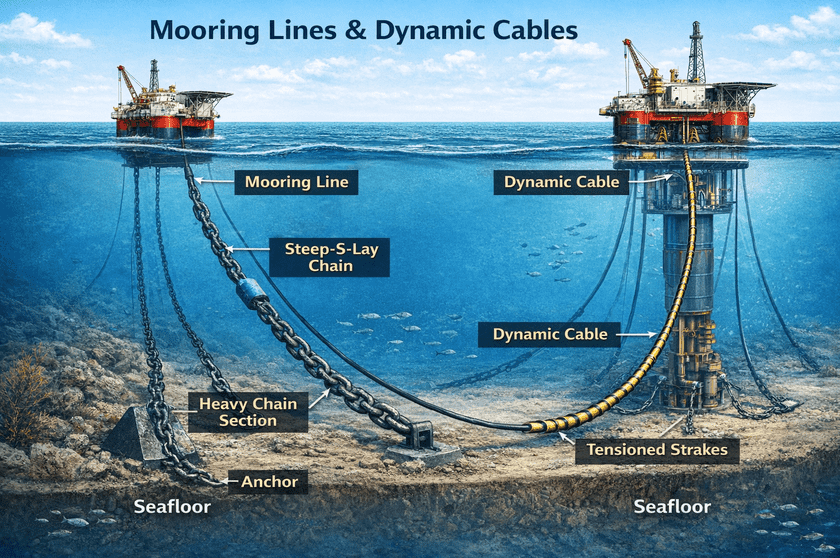
  • Anchored using mooring lines and dynamic cables

How Floating Wind Changes the Supply Chain

Floating offshore wind:

  • Reduces offshore construction complexity
  • Moves more labor and value creation onshore
  • Increases demand for large assembly ports and fabrication yards
  • Expands offshore wind potential to deeper waters

The Global Wind Energy Council (GWEC) explains how floating offshore wind unlocks new markets in the U.S., Asia, and Southern Europe.

As floating wind scales, ports may become even more central than installation vessels.

Supply Chain Challenges and Constraints

Despite rapid growth, offshore wind supply chains face serious constraints:

  • Limited manufacturing capacity for large turbines
  • Shortage of skilled labor and technicians
  • Vessel bottlenecks and long lead times
  • Port infrastructure limitations
  • Rising steel, logistics, and financing costs

Governments and developers are increasingly adopting local content strategies to reduce risk, stabilize costs, and build domestic industries.

Why the Offshore Wind Supply Chain Matters

A resilient offshore wind supply chain:

  • Reduces construction and financing risk
  • Lowers long-term levelized cost of energy (LCOE)
  • Speeds up project delivery
  • Supports industrial growth and job creation
  • Strengthens national energy security

Countries that invest early in offshore wind manufacturing, ports, and logistics gain a long-term competitive advantage beyond electricity generation.

Conclusion

The offshore wind supply chain is far more than a background operation—it is a highly technical, capital-intensive ecosystem that determines whether projects succeed or fail.

From turbine factories and reinforced ports to installation vessels and floating platforms, every link in the chain must function seamlessly. As offshore wind expands into deeper waters and larger turbines, supply chain strength will increasingly decide which regions lead the global offshore wind transition

What Is Wind Energy? Technology, Costs, Jobs & Future — Complete Guide

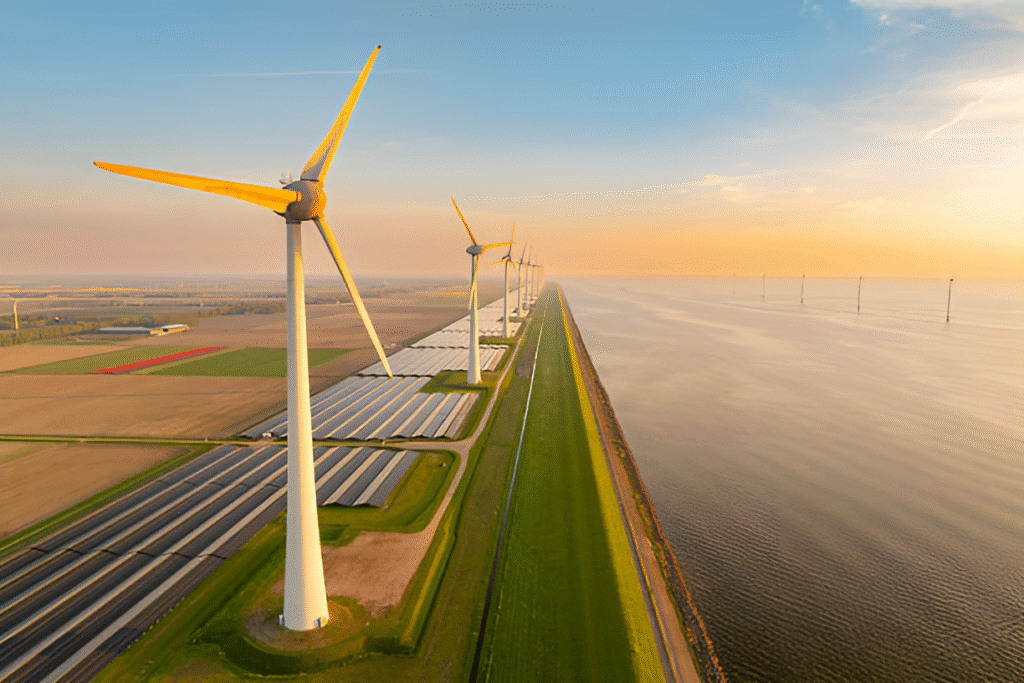
modern wind turbines generating renewable electricity

What is wind energy?

If we want to understand what wind energy is, in simple terms, it is a clean, renewable energy source that converts the kinetic energy of moving air into electricity using turbines. Wind farms are installed onshore, across plains or hilly areas, and offshore, in oceans or large bodies of water, where winds are stronger and more consistent. Unlike fossil fuels, wind power does not burn fuel or consume water, making it environmentally friendly.

According to the U.S. Department of Energy – Wind Power Technology Office, wind energy is one of the fastest-growing sources of electricity worldwide and plays a key role in reducing carbon emissions.

Once operational, wind farms can generate electricity for 20 to 25 years with regular maintenance, providing stable and relatively low-cost energy while reducing carbon emissions and improving energy security. Today, wind energy supplies electricity to millions of homes worldwide and continues to grow rapidly, driven by technological advances, supportive policies, and increasing demand.

This article explains how wind power works, its types, technologies, jobs, policy context, wind energy costs, and prospects, all in a clear, easy-to-understand way with real-world examples and actionable insights

How Does Wind Energy Work?

Wind turbines capture kinetic energy from moving air and convert it into electricity. The blades rotate when wind passes over them, turning a generator inside the nacelle. Modern turbines adjust the blade pitch and orientation automatically for maximum efficiency, even at variable wind speeds.

Detailed Explanation:

Wind energy works by converting the kinetic energy of moving air into mechanical power and then into electricity. When wind flows across turbine blades, it creates lift, causing the blades to rotate. This rotational motion turns a shaft connected to a generator, where mechanical energy is converted into electrical energy. The electricity is then conditioned and transmitted through cables to the power grid for distribution.

Modern wind turbines are equipped with sensors and control systems that continuously adjust blade angle and orientation to maximize efficiency and protect equipment during high winds. Power electronics ensure that the electricity produced meets grid requirements for voltage and frequency, allowing wind energy to integrate smoothly into existing power systems.

Main turbine components:

  • Rotor blades
  • Nacelle (gearbox, generator, control systems)
  • Tower
  • Transformer

Types of Wind Energy Systems

Wind energy projects are generally categorized based on location.

Onshore Wind Energy

Onshore wind farms are built on land—often in open plains, agricultural regions, or ridgelines with strong, consistent winds.

Why onshore wind dominates today:

  • Lower construction costs
  • Easier grid connection
  • Faster permitting
  • Proven technology

Onshore wind farms are installed on land and remain the most widely deployed due to lower construction and maintenance costs. In countries like the United States, onshore wind is one of the cheapest sources of new electricity, particularly in states such as Texas, Iowa, and Oklahoma.

Offshore Wind Energy

offshore wind turbines in the ocean
Offshore wind farms provide reliable, large-scale renewable electricity

Offshore wind farms are located in oceans or large lakes, where winds tend to be stronger and more consistent, allowing for higher energy output.

Advantages:

  • Higher capacity factors
  • Massive power potential near coastal cities
  • Less land-use conflict

Challenges:

  • Higher costs
  • Complex installation
  • Longer development timelines

Offshore wind is expanding rapidly in Europe and Asia and is now gaining momentum in the United States. Fixed-bottom turbines are anchored directly to the seabed in shallow waters, while floating offshore wind systems are designed for deeper waters where traditional foundations are not feasible. Each approach plays a role in expanding wind energy into new geographic areas.

To understand the technical and economic differences between offshore technologies, you can explore our comparison of fixed-bottom and floating offshore wind systems

Fixed-Bottom vs Floating Offshore Wind

Most offshore wind turbines use fixed-bottom foundations, ideal for shallow waters (<60 meters). Floating turbines allow installations in deep waters (>60–80 meters), expanding potential sites.

Fixed-Bottom Foundations:

  • Economical, proven technology
  • Used extensively in Europe and the North Sea

Floating Offshore Wind:

  • Ideal for deep waters with stronger winds
  • Anchored using mooring lines and tethers
  • Reduces seabed disturbance
  • Examples: Scotland’s Hywind and the U.S. Gulf of Maine pilots

Key Considerations:

  • Cost: Floating systems are currently more expensive but declining
  • Installation: Floating turbines can be assembled onshore and towed to the site
  • Environmental Impact: Minimal seabed disruption, but requires monitoring of mooring lines

Wind Energy Costs and Economics

Wind energy is among the most cost-competitive electricity sources globally. According to the International Energy Agency (IEA)

Onshore Costs:

  • LCOE: $30–50/MWh in optimal regions
  • Low operational costs, no fuel required

Offshore Costs:

  • LCOE: $60–100/MWh
  • Costs declining with larger turbines, floating technology, and better logistics
Comparison of levelized cost of energy (LCOE) for onshore and offshore wind power, showing costs in USD per megawatt-hour for global regions
Levelized cost of energy (LCOE) for onshore and offshore wind projects. Onshore wind remains the most cost-competitive in optimal regions, while offshore costs are declining due to larger turbines and floating technology innovations. Source: International Energy Agency (IEA).

Financial Advantages:

  • Long-term predictable energy costs
  • Government incentives and renewable energy credits reduce investment risk

Wind Energy and Grid Integration

Integrating wind energy into electricity grids is one of the most important challenges—and opportunities—of large-scale renewable deployment. Because wind speeds vary, grid operators rely on advanced forecasting, energy storage, and flexible generation resources to balance supply and demand in real time.

Advances in digital forecasting tools and grid management software have significantly improved system reliability. Wind power often complements solar energy by producing more electricity at night and during winter months, helping stabilize grids with high shares of renewable generation. At the same time, continued investment in transmission infrastructure is essential, particularly for offshore wind projects that require subsea cables and upgraded coastal substations to deliver power efficiently to population centers.

As wind capacity expands, grid integration will increasingly depend on smarter networks, expanded transmission corridors, and closer coordination between renewable generation and storage technologies.

Environmental Impact

Wind energy reduces carbon emissions, but it has environmental considerations:

  • Wildlife interactions: Birds and bats
  • Visual and noise impact
  • Marine ecosystems for offshore installations

Mitigation Strategies:

  • Careful turbine siting
  • Seasonal operational adjustments
  • Monitoring programs to protect wildlife

Wind Energy Jobs and Workforce

The rapid expansion of wind energy is not only transforming power systems but also creating a strong global workforce. From manufacturing and construction to operations and maintenance, the wind sector now supports millions of skilled jobs worldwide and continues to grow as new projects come online.

Wind turbine technicians have emerged as one of the fastest-growing occupations in the renewable energy sector, particularly in countries expanding offshore and utility-scale onshore wind. Alongside technicians, the industry relies on engineers, project managers, environmental specialists, and grid experts to plan, build, and operate increasingly complex wind projects.

Globally, the wind workforce is estimated at around 1.3 million jobs as of 2025, with steady growth expected through the next decade. In the United States alone, employment for wind turbine technicians is projected to grow by around 50% by 2030, reflecting strong investment in both onshore and offshore wind development.

For readers interested in career paths, required skills, salaries, and long-term job prospects, see our detailed guidelines on wind energy jobs, which explain how the industry is shaping the future renewable workforce.

Policy and Regulation

Government policy plays a decisive role in how quickly wind energy scales. Stable regulatory frameworks reduce investment risk and enable developers to commit to long-term projects. In many regions, wind deployment only accelerated after clear policy support was introduced.

Key policy tools include tax incentives, renewable energy targets, and streamlined permitting processes. In the United States, federal incentives such as the Production Tax Credit have helped reduce costs and encourage private investment. At the state level, renewable portfolio standards ensure steady demand for clean electricity. In Europe, coordinated policy efforts have positioned offshore wind as a central pillar of the energy transition.
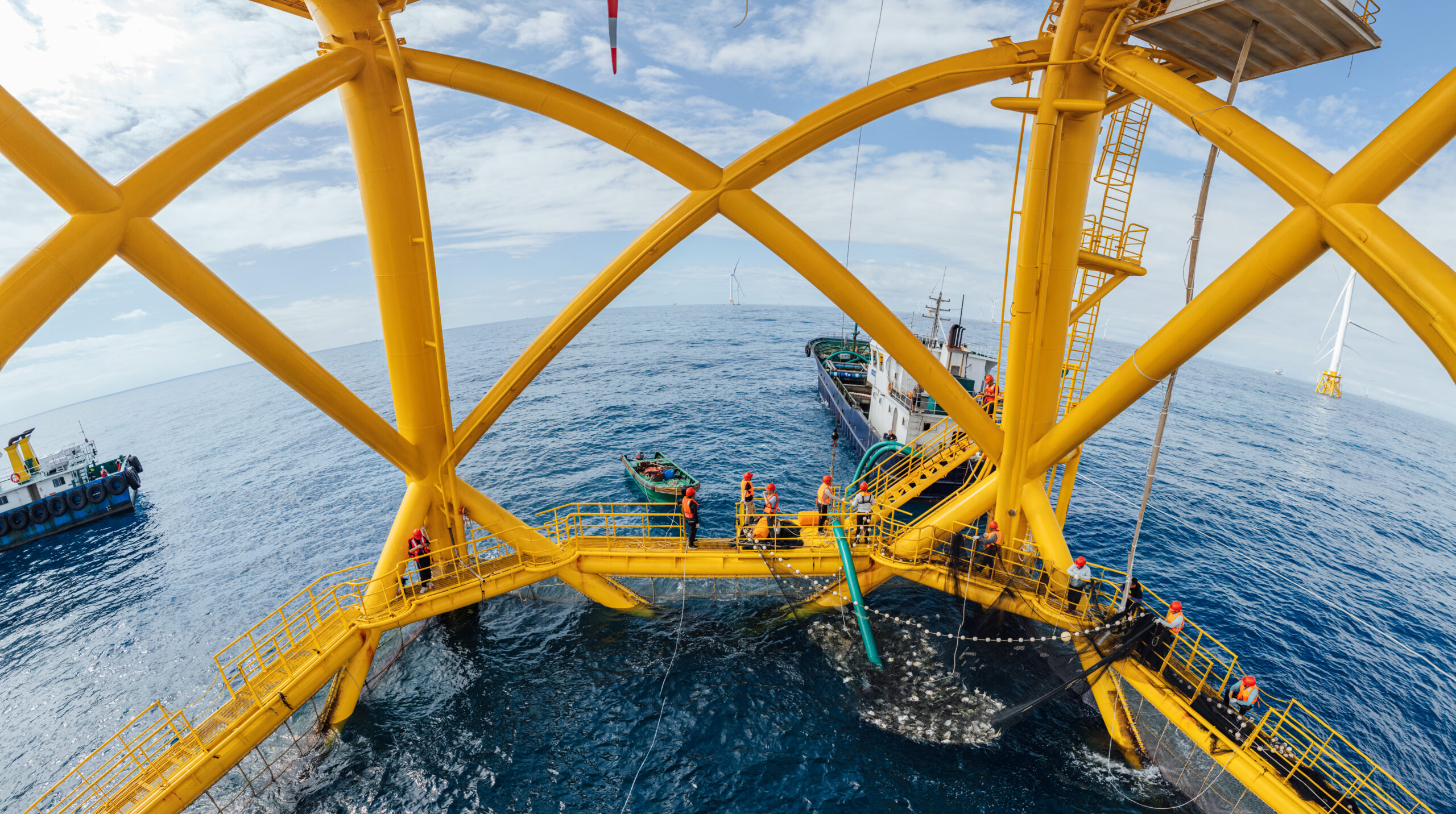
For ongoing coverage of federal and state-level developments, incentives, and regulatory updates, explore our U.S. wind energy policy section, where we track the latest policy changes shaping the industry.

The Future Outlook of Wind Energy

The future of wind energy is defined by scale, innovation, and integration. Larger turbines, longer blades, and floating platforms are unlocking new markets and improving efficiency. At the same time, digital technologies such as artificial intelligence and predictive maintenance are reducing operational costs and downtime.

As countries race to meet climate targets, wind energy is expected to remain one of the fastest-growing sources of new electricity generation. Continued investment in grids, energy storage, and policy stability will determine how quickly wind power can replace fossil fuels and support a fully decarbonized energy system. In the coming years, success will depend not only on technology but on how effectively wind power is integrated into modern electricity networks.

Why Wind Energy Matters

After explaining what wind power is, in a nutshell, wind power is one of humanity’s most important resources and a cornerstone of a sustainable future. At its core, wind power produces electricity with zero direct greenhouse gas emissions, making it a vital tool in combating climate change – the defining challenge of our time. Every turbine that turns in the wind represents a step toward avoiding pollution, cleaner air, and less dependence on fossil fuels.

Beyond its environmental benefits, wind power strengthens energy security. Reducing reliance on imported energy, it helps insulate countries from volatile global energy markets and geopolitical disruptions. Wind power keeps energy costs local, supporting domestic industries, and stabilizing long-term electricity costs for both consumers and businesses.

The wind industry is also a powerful economic engine. It supports millions of well-paying jobs in manufacturing, construction, installation, and long-term maintenance. Many of these jobs are created in rural and coastal communities, where wind projects provide new income opportunities, stable tax revenues for local governments, and lease payments for landowners. In regions facing economic decline, wind energy has become a source of renewal and long-term resilience.

Unlike fossil fuels, which are limited and increasingly expensive to extract, wind is a renewable resource. It will not run out and will not become more expensive as it is used. Wind energy provides important public health benefits by eliminating air pollutants from coal and gas plants that cause asthma, heart disease, and premature death – often impacting vulnerable communities the most.

Today, wind energy is no longer a niche or experimental technology. In many regions, it is one of the cheapest sources of new electricity, providing clean energy without a premium price. Wind works particularly well alongside solar power, producing electricity at different times of the day and year – often stronger at night and in winter – creating a more balanced and resilient energy system.

With proven technology, rapidly improving efficiency, and the ability to deploy projects faster than many other forms of power generation, wind power is one of the most scalable and practical solutions available. It is not just a vision for the future – it is a solution that can be built today, at the speed and scale needed to meet urgent climate, economic, and energy security goals.

  1. U.S. Department of Energy
  2. International Energy Agency
  3. GWEC – Global Wind Reports
  4. NREL – Grid Integration of Wind

Ørsted Greater Changhua 2 Offshore Wind Farm: Why Cathay Life Partnership Strengthens Taiwan Projects

Ørsted Greater Changhua 2 Offshore Wind Farm located off the coast of Changhua County, Taiwan

The Ørsted Greater Changhua 2 Offshore Wind Farm has secured a 55% ownership stake investment from Cathay Life Insurance, Taiwan’s largest insurer, highlighting the country’s expanding offshore wind sector. Located approximately 50–60 km off the coast of Changhua County, the project includes the operational Greater Changhua 2a and the under-construction Greater Changhua 2b, with full commercial operation expected in 2026. This partnership represents a significant step in Taiwan’s clean energy transition and the growing role of institutional investors in offshore wind development.

Overview of the Ørsted Greater Changhua 2 Offshore Wind Farm

The Greater Changhua 2 Offshore Wind Farm has a combined capacity of 632 MW, making it one of Taiwan’s key offshore wind projects. Ørsted will continue to provide long-term operations and maintenance (O&M) from its hub at the Port of Taichung, ensuring project reliability.

The project consists of:

  • Greater Changhua 2a – 295 MW, already operational
  • Greater Changhua 2b – 337 MW, under construction, commissioning expected in Q3 2026. According to Ørsted’s press release, the 2b phase is scheduled to be commissioned in Q3 2026.

In July 2025, Ørsted finalized a DKK 20 billion project financing package, and the sale of a 55% equity stake to Cathay is valued at approximately DKK 11 billion (TWD 55 billion). This highlights both the financial viability and investor confidence in Taiwan’s offshore wind sector.

Ørsted Cathay Life Partnership in Taiwan Offshore Wind

The Ørsted Cathay Life partnership builds on previous collaborations, including Greater Changhua 1 and 4. By selling a 55% stake, Ørsted strengthens its capital structure while providing Cathay Life with a stable, long-term infrastructure-backed investment.

Trond Westlie, Ørsted CFO, commented:

Trond Westlie, Ørsted CFO, discussing the Greater Changhua 2 Offshore Wind Farm partnership with Cathay Life
Trond Westlie, Ørsted CFO, speaking about the Greater Changhua 2 Offshore Wind Farm partnership. Image: LinkedIn

“The transaction underlines the strong appetite from leading investors for high-quality assets with long-term offtake agreements. Combined with project financing, this deal strengthens our capital structure and contributes significantly to our partnership and divestment program.”

Andrew Liu, President of Cathay Life Insurance, said:

“This investment reflects our continued support for Taiwan’s renewable energy transition while generating stable, long-term returns aligned with the investment objectives of the insurance sector.”

Strategic Timing: Why the Transaction Closes in 2026

The deal will close when the project reaches commercial operations in Q3 2026, which is critical because:

  • Construction risk is reduced
  • Revenue streams are secured
  • Financing conditions improve
  • Investor confidence increases

This structure benefits both parties:

  • Ørsted avoids early-stage risk exposure
  • Cathay enters a stabilized asset phase

Impacts on Taiwan Offshore Wind Investment

The Greater Changhua offshore wind project demonstrates how Taiwan is increasingly attracting institutional investors to its renewable energy sector. By partnering with international developers like Ørsted, local investors can participate in high-quality offshore wind projects while reducing project risk.

Shared ownership models like this accelerate the construction of Taiwan’s offshore wind projects, provide financial flexibility to developers, and support the country’s goal to increase renewable energy capacity in the coming years.

Future Outlook for Offshore Wind Investment in Taiwan

As Taiwan scales up its offshore wind sector, offshore wind investment in Taiwan is expected to grow. Partnerships between global developers and local financial institutions, such as Ørsted and Cathay Life, create a model for financing and operating future projects efficiently.

Per Mejnert Kristensen, Ørsted SVP and CEO of Region APAC, stated:

“We’re pleased to deepen our long-standing partnership with Cathay as we advance Taiwan’s offshore wind build-out. This investment reflects shared confidence in Taiwan’s offshore wind fundamentals and creates lasting value for investors and the local energy market.”

What This Means for Taiwan’s Offshore Wind Market

The Ørsted Greater Changhua 2 Offshore Wind Farm transaction highlights the value of strategic partnerships in Taiwan’s offshore wind sector. Ørsted retains operational control while freeing capital for future developments, and Cathay Life secures a resilient investment in a growing market. As this Taiwan offshore wind project progresses toward full commercial operation in 2026, it illustrates how collaborative ownership models are shaping the future of offshore wind investment in Taiwan.

Sources:

  • Ørsted Press Release: Greater Changhua 2 Offshore Wind Farm
  • Cathay Life Insurance News Release

Floating vs Fixed-Bottom Offshore Wind: Key Differences, Costs, and Use Cases

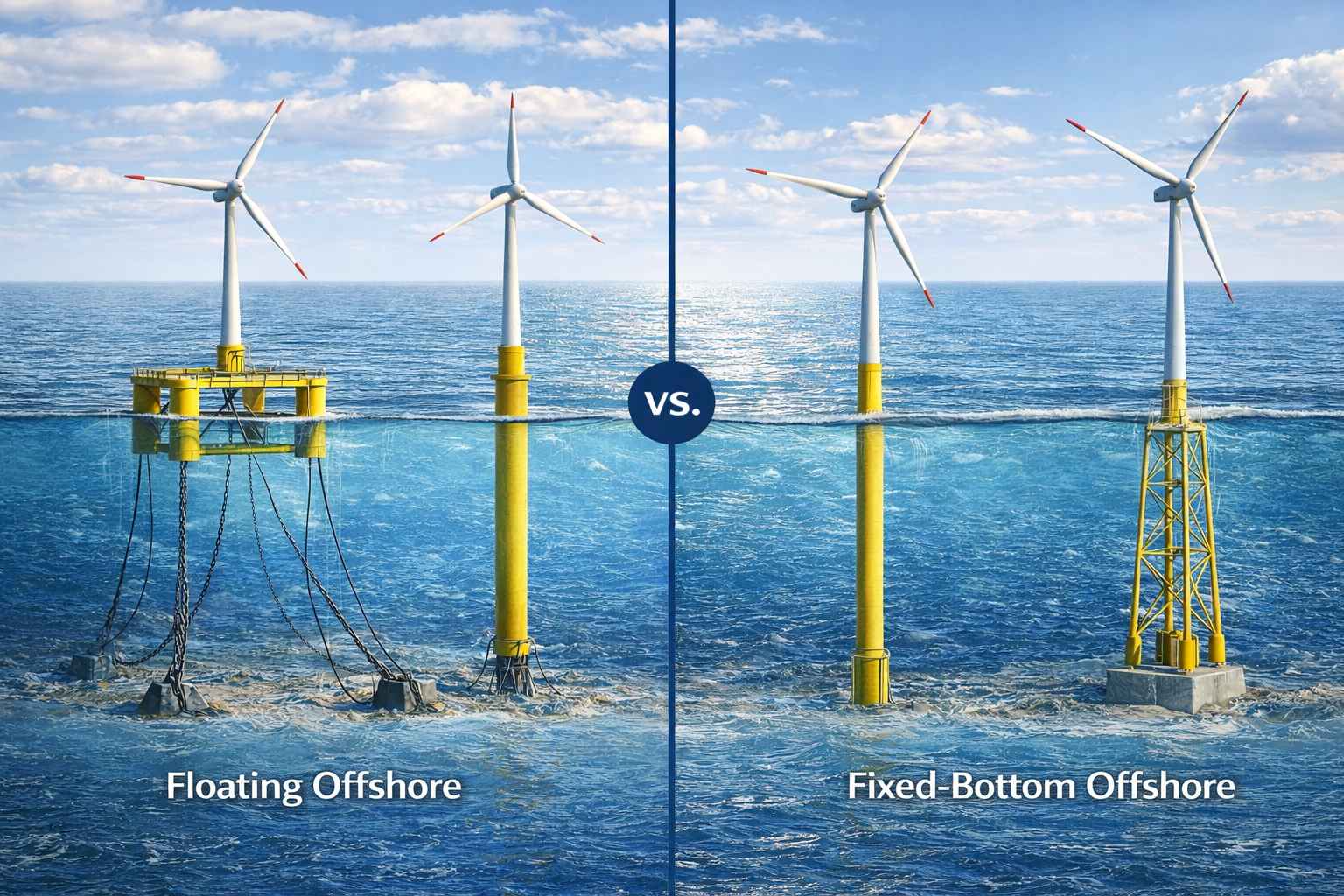
Floating vs fixed-bottom offshore wind foundation comparison

Last updated: January 2026

As offshore wind expands into deeper waters and new global markets, one comparison is now shaping nearly every major development decision: floating offshore wind vs fixed-bottom offshore wind.

This is not just a technical debate.

The choice between floating and fixed-bottom foundations directly affects project costs, site feasibility, environmental impact, grid planning, and national energy strategy. In many regions, it determines whether offshore wind is possible at all.

While fixed-bottom offshore wind still dominates global installations today, its reliance on shallow seabed conditions places clear geographic limits on future growth. Floating offshore wind, by contrast, unlocks deep-water regions using buoyant platforms anchored to the seabed—bringing offshore wind to coastlines that were previously out of reach.

To understand where offshore wind is heading next, it is essential to understand how these two technologies differ, where each works best, and why both will shape the industry’s future.

Why This Comparison Matters Now

Offshore wind is no longer a single-technology industry.

As explained in our Offshore Wind Energy Explained – Global Overview, early offshore wind growth focused on shallow seas such as the North Sea. Today, many of those regions are approaching saturation.

New capacity is increasingly coming from:

  • Deeper waters
  • Longer distances from shore
  • Markets with narrow continental shelves

This shift makes the floating vs fixed-bottom offshore wind decision one of the most critical planning questions in the industry today—especially for governments targeting large-scale decarbonization.

What Is Fixed-Bottom Offshore Wind?

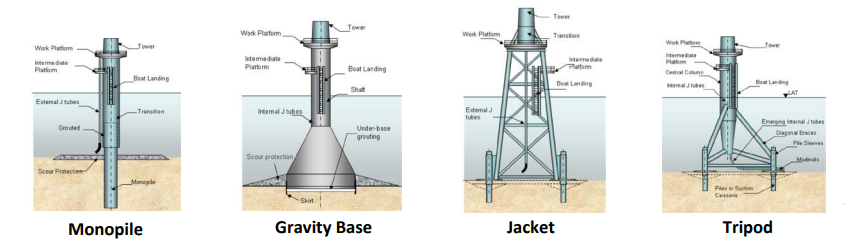
Fixed-bottom offshore wind foundations including monopiles and jacket structures
Common fixed-bottom offshore wind foundation types used in shallow waters, Image: NREL

Fixed-bottom offshore wind refers to wind turbines installed on foundations that are physically attached to the seabed. These foundations are designed to remain rigid and stationary throughout the turbine’s operational life.

Common Fixed-Bottom Foundation Types

  • Monopiles (most widely used)
  • Jacket foundations
  • Gravity-based structures

Fixed-bottom turbines are typically deployed in water depths up to 50–60 meters, making them ideal for regions with wide continental shelves such as:

  • The North Sea
  • The U.S. East Coast
  • Parts of China

Because this technology has been deployed for decades, it benefits from:

  • Mature global supply chains
  • Lower financing risk
  • Proven installation and maintenance methods

In established markets, fixed-bottom offshore wind has already reached full commercial scale.

What Is Floating Offshore Wind?

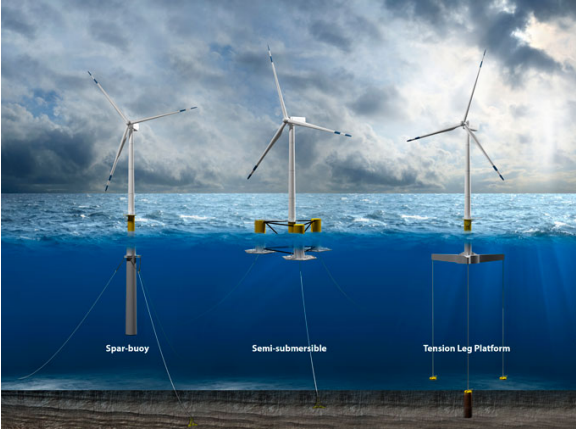
Floating offshore wind platforms operating in deep water
Floating offshore wind platforms anchored with mooring systems in deep seas, Image: NREL

Floating offshore wind uses turbines mounted on buoyant platforms that are anchored to the seabed using mooring lines rather than fixed foundations.

This approach allows turbines to operate in deep waters exceeding 60 meters, opening offshore wind development to regions once considered inaccessible. U.S. Department of Energy research highlights the role of dynamic export cables and advanced mooring systems in enabling floating offshore wind deployment in deep waters.

Key Components of Floating Offshore Wind Systems

  • Steel or concrete floating platforms
  • Mooring systems adapted from offshore oil and gas
  • Dynamic export cables that move with the platform

For a deeper technical breakdown, see our dedicated guide on Floating Offshore Wind Energy Explained.

Floating vs Fixed-Bottom Offshore Wind: Core Technology Differences

1. Foundation Design

FeatureFloating Offshore WindFixed-Bottom Offshore Wind
Seabed attachmentAnchored with mooring linesPhysically fixed
Water depth60–1,000+ metersUp to ~50–60 meters
Platform motionLimited movementNo movement

Floating platforms are engineered to absorb wave and wind motion, while fixed-bottom structures rely on structural rigidity and seabed stability.

2. Installation Process

Fixed-bottom installation requires:

  • Heavy-lift installation vessels
  • Offshore pile driving
  • Narrow weather windows

Floating wind installation typically involves:

  • Onshore or port-based assembly
  • Towing turbines to the site using tugboats
  • Connecting to pre-installed anchors and moorings

From a logistics standpoint, floating wind reduces offshore construction complexity but increases reliance on port infrastructure readiness.

Cost Comparison: Floating vs Fixed-Bottom Offshore Wind

Cost remains the largest difference between the two technologies. Cost trends for floating offshore wind remain higher than fixed-bottom projects, particularly due to early-stage deployment and financing risk, according to the International Energy Agency.

Current Cost Profile (2026)

  • Fixed-bottom offshore wind: Lower-cost and commercially competitive
  • Floating offshore wind: Higher costs due to early-stage deployment

Why Floating Offshore Wind Costs More Today

  • Limited supply chain scale
  • Specialized mooring and anchoring systems
  • Higher perceived financing risk

Why Costs Are Expected to Fall

Floating offshore wind costs are projected to decline as:

  • Turbine sizes increase
  • Platform designs become standardized
  • Manufacturing scales globally

This cost curve is similar to what fixed-bottom offshore wind experienced over the past decade.

Geographic Suitability

Global offshore wind water depth suitability map
Offshore wind suitability by water depth across major global markets

Global Wind Energy Council data shows that markets such as Japan, South Korea, and the U.S. West Coast depend heavily on floating offshore wind due to deep coastal waters.

Fixed-Bottom Offshore Wind Works Best In:

  • Shallow continental shelves
  • Nearshore environments
  • Regions with existing offshore infrastructure

Floating Wind Is Essential For:

  • Deep coastal waters
  • Steep seabed drop-offs
  • Regions like:
    • U.S. West Coast
    • Japan
    • South Korea
    • Mediterranean countries

In places like California, floating offshore wind is not a choice—it is the only viable option.

Environmental and Visual Impact

Floating offshore wind offers several ecological advantages:

  • Reduced seabed disturbance
  • Greater distance from shore
  • Lower visual impact from coastal communities

Fixed-bottom projects, while well-regulated, can face:

  • Greater seabed impact during installation
  • Higher visibility near coastlines

Both technologies undergo rigorous environmental impact assessments and long-term marine monitoring.

Grid Connection and Infrastructure

Fixed-bottom offshore wind benefits from:

  • Established grid connection models
  • Proven offshore substations
  • Conventional export cable systems

Floating offshore wind requires:

  • Dynamic power cables
  • Advanced grid planning
  • Flexible transmission systems

As offshore wind capacity expands globally, grid upgrades will be required regardless of foundation type.

Which Technology Has the Bigger Future?

The future is not a competition—it is a combination.

  • Fixed-bottom offshore wind will continue expanding in shallow-water regions
  • Floating offshore wind will drive growth in deep-water markets

Floating offshore wind is not replacing fixed-bottom wind. It is extending offshore wind into regions that were previously unreachable. Together, they form a complementary pathway toward large-scale decarbonization and energy security.

Frequently Asked Questions

Is floating offshore wind better than fixed-bottom?

No. Floating offshore wind enables deep-water deployment, while fixed-bottom remains cheaper and proven in shallow waters.

Why is floating offshore wind important?

It unlocks offshore wind potential in regions where fixed-bottom foundations cannot be installed.

Will floating offshore wind become cheaper?

Yes. Costs are expected to decline significantly as deployment scales and supply chains mature.

Which countries need floating offshore wind the most?

The U.S. West Coast, Japan, South Korea, and Mediterranean nations depend heavily on floating offshore wind.

Breaking: Federal Wind Energy Ruling Blocks Trump Wind Freeze

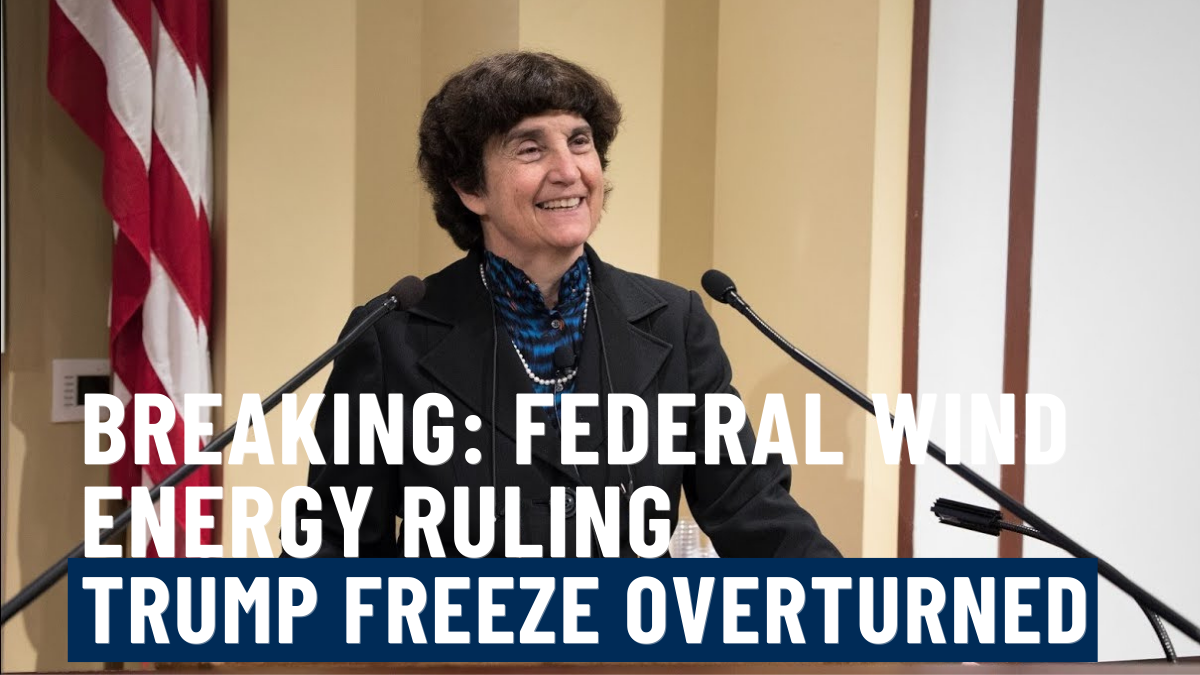
Patti Saris in federal wind energy ruling overturns Trump wind energy freeze

A landmark federal wind energy ruling by Judge Patti Saris has overturned the Trump-era freeze, reopening the path for onshore and offshore wind projects in the U.S. The decision represents a significant win for states, developers, and clean energy advocates, who warned that halting approvals would have harmed jobs, the economy, and climate goals.

This ruling restores momentum for U.S. wind energy, signaling a more predictable regulatory environment for both current and future projects.

Judge Saris Rules the Freeze “Arbitrary and Capricious”

Judge Patti Saris rules on federal wind energy case

A landmark federal ruling by Judge Patti Saris has overturned the Trump-era wind energy freeze, ensuring that both onshore and offshore wind projects in the U.S. can continue under proper legal procedures. The decision reinforces stable governance for renewable energy policy and signals a reset for developers, investors, and state authorities.

The freeze, issued early in the Trump administration, attempted to halt leasing and permitting for wind projects on federal lands and waters. States including New York, Massachusetts, New Jersey, California, and a coalition of 13 others argued that the freeze jeopardized billions of dollars in investments, hundreds of jobs, and the reliability of the nation’s electrical grid.

This wind energy court decision ensures that renewable energy development can continue under proper legal procedures, reinforcing stable governance for renewable energy policy news.

The freeze, issued early in the Trump administration, sought to halt leasing and permitting for wind projects on federal lands and waters. States including New York, Massachusetts, New Jersey, California, and a coalition of 13 others argued that the freeze jeopardized billions of dollars in investments, hundreds of jobs, and the reliability of the nation’s electrical grid.

What the Freeze Meant for U.S. Wind Energy

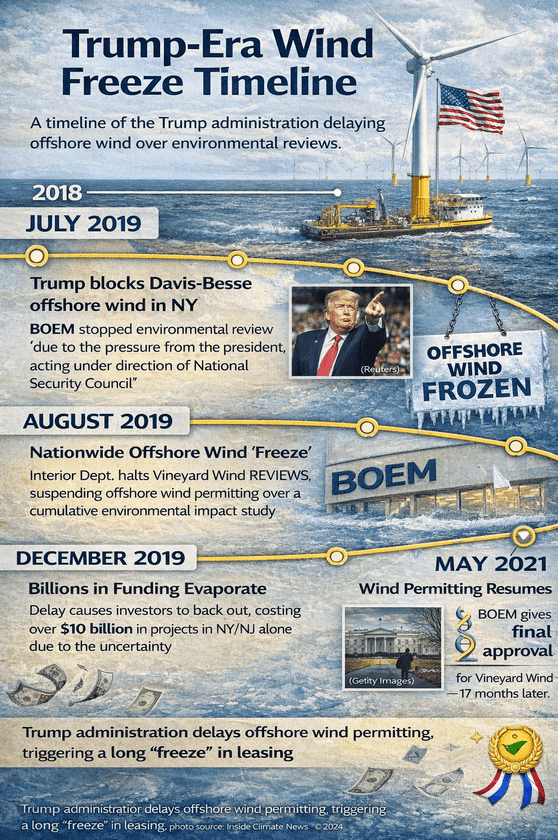
Timeline showing Trump-era wind energy freeze and subsequent court ruling

“This decision protects vital investments in renewable energy and demonstrates that abrupt policy shifts cannot bypass federal law,” said Massachusetts Attorney General Andrea Joy Campbell. Her office, along with other state attorneys general, had challenged the freeze in court.

Industry groups welcomed the ruling as a crucial reset. Wind energy court decisions like this are more than legal victories—they safeguard a sector powering nearly 10% of U.S. electricity. The Alliance for Clean Energy New York called the ruling “a victory for consumers, workers, and businesses who depend on stable renewable energy policy.”

Impact on Offshore Wind Projects USA

For offshore wind projects USA, the ruling is particularly significant. Many large-scale developments rely on federal approvals to secure financing and move toward construction. Delays caused by the freeze threatened not only the projects themselves but also the coastal jobs and supply chains that support the industry. With the freeze lifted, developers can resume federal reviews and continue toward construction milestones without further uncertainty.

Read our Offshore Wind Projects Guide

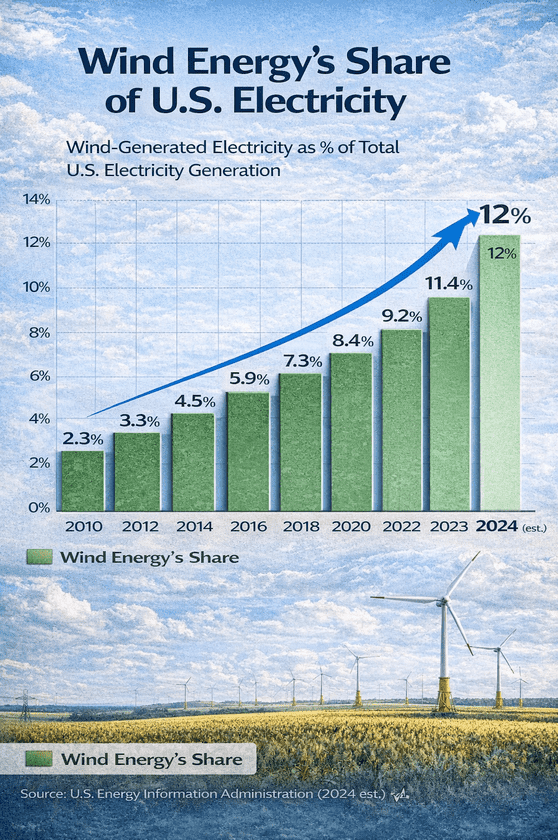
Wind energy contribution to U.S. electricity in 2025

Judge Saris emphasized that the Trump freeze was “arbitrary and capricious”, violating the Administrative Procedure Act. Experts in energy law note that this sets a precedent: federal authorities cannot impose sweeping restrictions on renewable energy projects without following proper procedures.

Analysts say the ruling’s impact extends beyond wind energy. By clarifying limits on executive power, it may influence future administrations’ approach to national energy policy, encouraging stable, predictable regulation essential for long-term investment.

Government agencies also highlight the significance of the decision. According to the Bureau of Ocean Energy Management (BOEM), offshore wind leasing and permitting are critical to meeting regional clean energy goals. The Department of Energy Wind Energy Technologies Office notes that wind is one of the most cost-effective electricity sources. Meanwhile, the Energy Information Administration reports that wind already contributes a growing share of U.S. electricity, projected to rise in the coming years.

What’s Next After the Federal Wind Energy Ruling

Federal agencies are expected to restart pending wind permit reviews immediately. States plan to accelerate grid upgrades, transmission improvements, and procurement processes delayed by the freeze.

Although political debates over renewable energy will continue, the ruling sends a clear message: stability, adherence to legal procedures, and consideration of economic evidence must guide U.S. energy decisions. Developers, investors, and communities can now plan with confidence, particularly for offshore wind projects in the USA and other renewable initiatives.

FAQ

Q: What did the federal wind energy ruling decide?
A: The court overturned the Trump-era freeze, allowing onshore and offshore wind projects in the U.S. to continue under proper legal procedures.

Q: Who benefits from the ruling?
A: Developers, state authorities, investors, and clean energy advocates gain regulatory certainty, protecting jobs, investments, and grid planning.

Q: Why is this ruling important for offshore wind projects?
A: Many large-scale offshore developments rely on federal approvals for financing and construction; the ruling removes delays caused by the freeze.

Sources: U.S. Department of Energy (DOE), International Energy Agency (IEA), National Renewable Energy Laboratory (NREL), Company Press Releases.

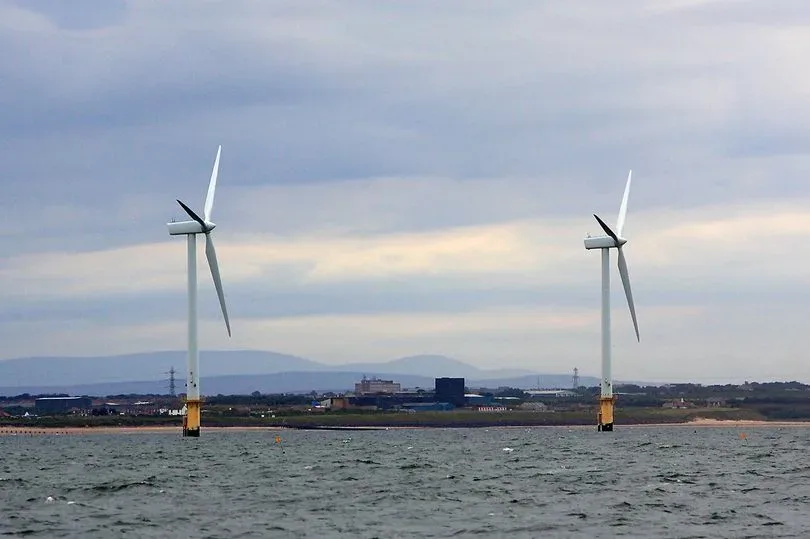
How Blyth Offshore Wind Farm 25 Years Transformed the UK Energy

How Blyth Offshore Wind Farm 25 Years Transformed the UK

A quarter century of offshore vision: how the UK’s renewables story began

The UK is marking a quiet but significant milestone this year: 25 years since the Blyth Offshore Wind Farm first began operating off the coast of Northumberland. What started in 2000 with just two experimental turbines has since grown into one of the world’s biggest renewable energy success stories, tracing back to the early days of offshore wind energy. While offshore wind first took shape in Denmark, it is the UK that has turned the technology into a global industry leader.

When those first turbines were installed at Blyth, large-scale offshore wind was still an open question. Engineers and policymakers were only beginning to explore whether Britain’s shallow coastal waters and powerful North Sea winds could support a reliable new source of energy. There were no guarantees about performance, durability, or whether turbines could survive the harsh marine environment over decades.

A quarter of a century later, those early uncertainties feel distant, as the UK’s offshore wind sector now leads the world in installed capacity and large-scale project development, with new mega-projects continuing to reshape its energy system. Just as importantly, the offshore wind sector has helped revive coastal economies, build a globally respected supply chain, and position Britain at the forefront of clean-energy innovation.

The Blyth anniversary is more than a historical footnote. It is a reminder that the UK’s offshore wind leadership began as a modest experiment—and grew into a national industry that continues to redefine how the country powers its future.

The UK’s Renewable Transformation: A Story of Growth and Grit

The story begins in 1993 with the Blyth Harbour Wind Farm, the UK’s first onshore wind farm with nine turbines of 0.3 MW (2.7 MW total). Then, in December 2000, this UK offshore wind project was commissioned near Blyth, with two2 MW Vestas turbines (rotor diameter 66 m), built on monolith foundations, approximately 1–2 km offshore, in 6–10 m water depth.

At the time, these turbines were among the largest offshore in the world. This was a defining early moment for offshore wind worldwide. Today, offshore wind alone supplies electricity to over 11 million homes, and there are 45 operational offshore wind farms in the country.

This transition to offshore wind energy in the UK didn’t happen overnight. It grew out of:

  • Strategic government funding
  • World-class engineering expertise
  • A skilled and evolving maritime workforce
  • A consistent policy vision toward 2030 and beyond
  • Ports like Blyth are becoming innovation hubs

The UK’s rapid progress turned offshore wind from a niche experiment into the backbone of Britain’s clean energy future. If we are talking about the significance of the farm, the Engineers, policymakers, and energy companies relied on Blyth to answer key questions that:

  • How will turbines withstand storm-force offshore conditions?
  • Can the UK build a supply chain ready for the offshore era?
  • Will costs fall if technology scales?
  • Can this offshore wind energy UK support long-term economic growth?

The answers, proven over 25 years of the Blyth wind farm anniversary, were all yes.

This single site helped shape:

✔ Turbine design standards
✔ Marine installation techniques
✔ Offshore cabling innovations
✔ Environmental assessment frameworks
✔ The UK’s early workforce training

The energy minister expressed his gratitude on the Blyth wind farm anniversary and noted the message that a quarter of a century after the first turbines started spinning, the UK is once again at the forefront of generating clean electricity at home. He stressed that offshore wind is central to Britain’s 2030 mission, which will help the country wean itself off the unpredictable fossil fuel market, reduce energy bills, and create a workforce that is expected to reach almost 100,000 jobs.

A senior manager from Van Oord emphasized that the inter-array cable work required a partner with deep offshore experience, and the Port of Blyth met every expectation. After supporting thousands of components across both onshore and offshore projects, Blyth’s capabilities made it the natural choice for such a complex operation.

The Sofia project lead explained why this is one of the unique UK offshore wind projects. He noted that Blyth provides a rare opportunity to test new offshore technologies designed to cut development costs and unlock previously untapped wind resources off the UK coast. Similarly, The Crown Estate brought into focus that Blyth’s test site opens the door for technologies that will define the next generation of offshore wind growth, helping the UK capture new areas of economic and energy potential.

Jane Cooper, CEO of The RenewableUK, Image: LinkedIn

Jane Cooper, The Renewable UK’s deputy chief, drew attention to the economic growth. She expressed that the UK’s offshore wind growth has reshaped local economies, strengthened energy resilience, and positioned the country as a global leader. She said the transformation over one generation shows how the UK turned offshore wind from a prototype into a core part of its future energy system.

Again, Julia Rose, a senior director at The Crown Estate, pointed out that 25 years of continuous progress demonstrate the power of long-term collaboration, creating an environment where investors, developers, and innovators can thrive. She noted that the UK now hosts 45 operational wind farms and has an astonishing 95 GW pipeline. Lastly.

Ed Daniels, CEo The Venterra Group, image: LinkedIn

Ed Daniels, The Venterra Group CEO, described the last 25 years of these UK offshore wind projects as a triumph of UK engineering, saying a world-class supply chain has brought tens of thousands of skilled jobs, revitalised coastal regions, and sparked innovation across the North East.

Blyth became the “laboratory” that informed multi-gigawatt projects like Dogger Bank, Hornsea, Sofia, and more.

How Blyth enabled a new offshore era

The original turbines represented more than just an energy project – they symbolised confidence in the UK’s ability to engineer the future. What makes Blyth exceptional is its long-term value:

  1. A living lab for innovation

Modern floating wind concepts, larger turbine blades, advanced cables, and installation vessels – all have benefited from the testing and insights gathered at Blyth.

  1. The birthplace of the UK’s supply chain

Companies such as Van Oord, RWE, Ventera Group, and hundreds of subcontractors build their primary offshore capacity here.

  1. Blyth Port: From local port to global offshore hub

Handling thousands of offshore components, the port has become a logistics powerhouse that now supports major European projects.

  1. Investor confidence

Blyth has proven to investors that offshore wind can be a reliable, sustainable, and profitable technology.

Wind farms typically have a lifespan of around 20-25 years, and the Blyth Offshore Wind Farm is nearing the end of its life. This means the UK is now ready to use one of the turbines for a new training facility being built in Blyth by the port’s training arm, Port Training Services.

Analyze the Blyth Offshore Wind Farm 25th Anniversary

From all the data and analysis of the wind farms above the UK offshore wind history, I would say that the story of Blyth is not about the size of the turbines but about the ambition of the dream. The UK has succeeded in the global wind energy competition in renewable energy deployment because it made offshore wind a national mission long before other countries saw the potential. From analyzing the industry’s evolution,

Blyth’s achievement is setting the tone for two decades of engineering progress, market stability, and investor confidence. Today, while offshore wind projects face challenges unimaginable in developed countries, the UK is celebrating Blyth Offshore Wind Farm’s 25 years of glorious journey.

It is clear to me that the Blyth wind farm anniversary is a template – a combination of demonstrably concrete policy, technological courage, and local expertise – that lies at the heart of a whole new economic sector. Blyth has created millions of green jobs and connected millions of UK homes to supply clean electricity.

Its journey shows that the UK offshore wind projects’ leadership today did not emerge from a single mega-project; it grew from a series of small steps.

As we move into the next phase – floating wind, deep water, and even larger turbines – Blyth reminds us that innovation begins with experimentation, iteration, and patience. To me, that is the real legacy.

£100m Belfast Wind Project Powers 3 Million Homes and Creates 300 Green Jobs

£100m Belfast Wind Creates 300 Jobs and Powers 3M UK Homes

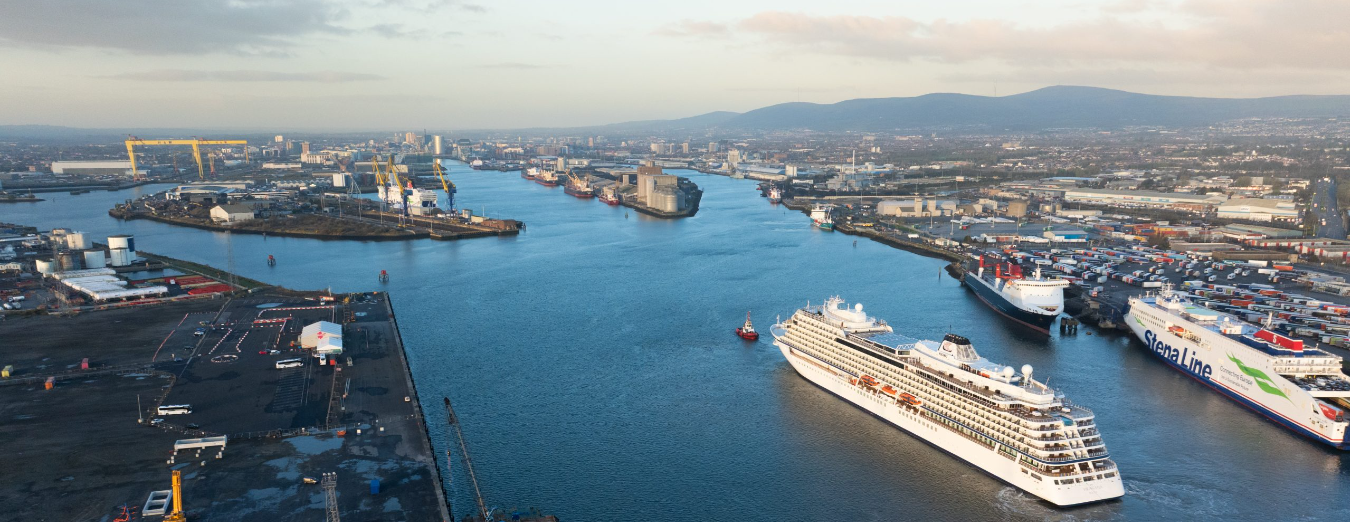
Belfast is set to become a major hub for the UK’s offshore wind industry with the £100 million Belfast Wind Project. EnBW and JERA Nex bp will transform Belfast Harbour into a central assembly and logistics hub for the Mona and Morgan Wind Farms in the Irish Sea.

The project will generate enough electricity to power three million UK homes and create 300 skilled green jobs, ranging from engineers and technicians to port operators and logistics specialists.

“This is more than a project. It’s a statement that Belfast is ready to lead the UK’s renewable energy future,” said Dr. Theresa Donaldson, Chair of Belfast Harbour.

By combining strategic infrastructure investment with renewable energy deployment, the Belfast Wind Project highlights the UK’s ongoing commitment to net-zero emissions, clean energy growth, and economic development.

Project Overview: Transforming Belfast Harbour

The £100 million Belfast Wind Project will upgrade the D1 terminal at Belfast Harbour to handle the assembly and marshalling of offshore wind turbines for the Mona and Morgan Wind Farms. Together, these projects could produce 3 GW of electricity, enough to power 3 million homes in the UK.

Project information:

FeatureDetails
Investment £100 million
Capacity3GW
Homes Powered3 million
Jobs created300 skilled green roles
LocationBelfast Harbour, Northern Ireland
Operational Goal2028
ImpactBoosts UK green jobs & clean energy

In addition to electricity generation, the project will enhance port infrastructure, strengthen regional supply chains, and contribute to Northern Ireland’s economy.

Leading Voices: Promoting the Green Energy Agenda

The agreement was hailed by UK Prime Minister Keir Starmer as a “major step forward” for the nation’s clean energy and UK green job creation goals.

“The £100 million Belfast Wind project shows that renewable energy can provide energy security and economic growth. It’s helping us achieve our net-zero goals and generating hundreds of skilled jobs,” he said.

JERA Nex bp CEO Nathalie Oosterlinck highlighted the broader advantages:

“This isn’t just about energy. It’s about empowering communities, creating sustainable jobs, and driving long-term economic growth through renewable technologies.”

The project demonstrates the value of cooperation in achieving the UK’s energy transition objectives and is an example of a successful partnership between the public and private sectors as well as local stakeholders.

Belfast Harbour: The New Nerve Center for Offshore Wind

Belfast Harbour’s really stepped up its game. It’s become a main hub for the UK’s offshore wind scene—think turbine assembly, logistics, and all the behind-the-scenes work that keeps those giant wind farms like Mona and Morgan running smoothly.

Here’s why Belfast stands out:

🏗️ The port’s deep waters mean it can handle the massive parts these turbines need.

⚙️ Local manufacturers and service crews get a boost, keeping the whole supply chain tight.

🌐 Location matters, and Belfast’s right where it needs to be for projects in the Irish Sea and North Sea.

👩‍🏭 And let’s not forget jobs—about 300 new green roles are opening up, giving the local economy a real shot in the arm.

This isn’t just another port upgrade. Belfast is setting the pace, showing how smart investment in renewables pays off for both the economy and the environment. Other UK ports are watching and, honestly, probably taking notes.

UK Clean Energy Goals and Achievements

The £100 million Belfast Wind project isn’t just another wind farm—it’s a big step toward the UK’s goal of hitting 50 GW of offshore wind by 2030 and reaching net-zero emissions by 2050.

What does that actually mean?

– Power for 3 million UK homes

– 300 new skilled UK green jobs in renewable energy

– A boost for Belfast’s local economy and supply chain

– Real progress toward the UK’s long-term clean energy targets. Belfast’s investment shows that offshore wind doesn’t just cut carbon

— It creates jobs and builds stronger communities.

This project sets a real example for others across the UK.

Why Belfast Sets the Standard for Offshore Wind

The £100 million Belfast Wind Project proves that strategic investment in renewables delivers measurable results. Belfast Harbour has emerged as a benchmark for other UK ports, showing how infrastructure, technology, and skilled labor combine to power a clean-energy future.

With projects like Mona and Morgan, Belfast is helping the UK meet its renewable energy ambitions, create new employment opportunities, and strengthen local economies.

Japan-UK Forge First Offshore Wind Alliance Opens New Era in Renewable Energy

Japan-UK Forge First Offshore Wind Alliance Opens New Era in Renewable Energy

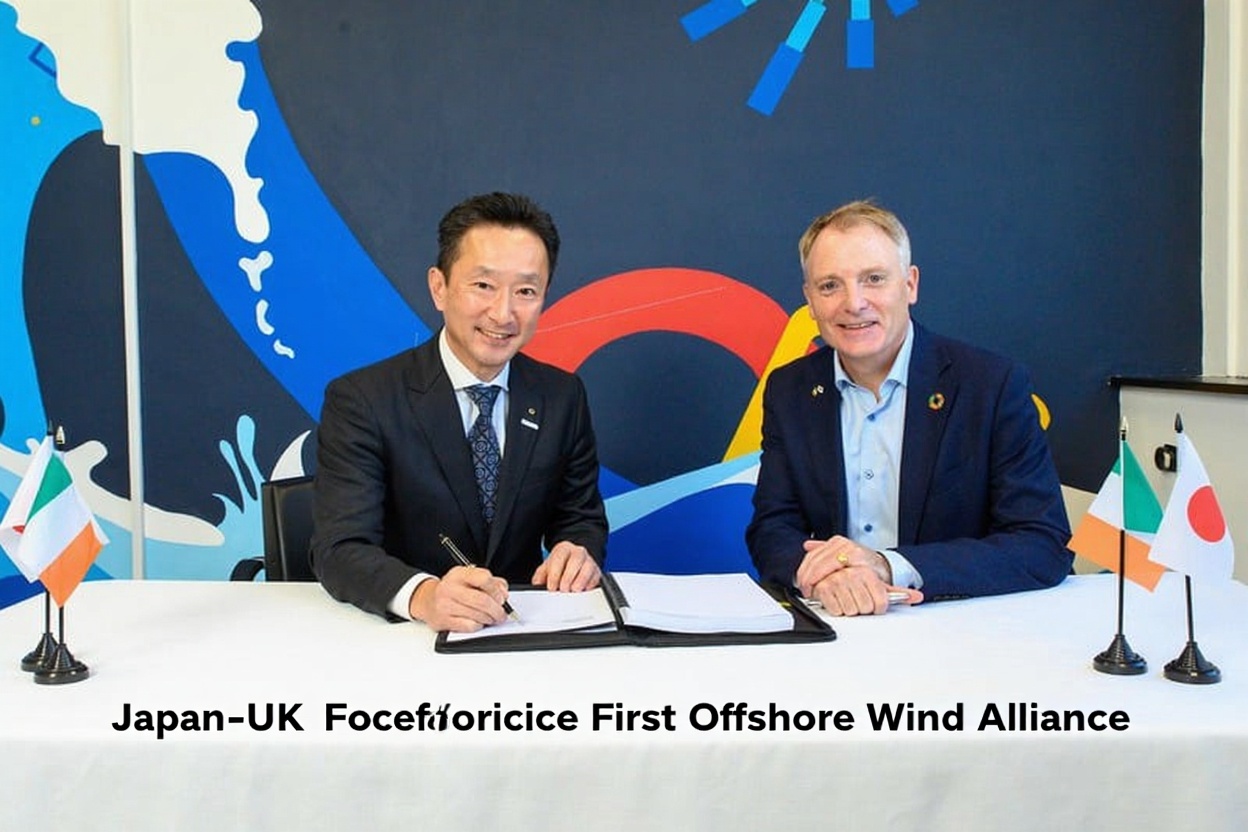
The Japan-UK First Offshore Wind alliance marks an important step in international renewable energy cooperation. This partnership brings together Simply Blue Group, a top European offshore wind developer based in Cork, Ireland, and Japan’s Kansai Electric Power Company (KEPCO), which serves over 13 million customers in the Kansai region. “The support from KEPCO provides the strength and resources needed to scale our operations and improve our offshore wind projects,” said Hugh Kelly, co-founder and CEO of Simply Blue Group.

By merging Japan’s technical skills with Simply Blue’s experience in floating offshore wind projects, the alliance speeds up renewable energy growth in several markets, including Ireland, the UK, Spain, and Canada. KEPCO’s investment shows rising Japanese interest in European offshore wind as the world works toward net-zero emissions.

A Bold Step for Renewable Energy Cooperation

This offshore wind partnership is more than a financial investment. It marks a new era of international teamwork in clean energy. Toru Kuwahara, KEPCO’s executive vice president and general manager of the Global EX Division, described the alliance as a move towards improving offshore wind skills and helping create a carbon-neutral society.

KEPCO’s long-term vision, shared through its Zero Carbon Vision 2050, aims for 5 million kW of new domestic renewable capacity by 2040, with a total of 9 million kW. By investing in Simply Blue, KEPCO gains access to offshore wind development knowledge, including floating and fixed-bottom technologies, environmental impact planning, and large-scale project execution.

Simply Blue Group, founded in 2011, expects that the influx of capital and Japanese technical skills will speed up project delivery across Europe and North America. With offices in Cork, Dublin, Belfast, Newquay, Pembrokeshire, Edinburgh, Bilbao, and Nova Scotia, Simply Blue focuses on local economic benefits and environmental harmony in every project.

Why Japan Sees Offshore Wind as a Strategic Priority

Japan’s energy landscape is changing quickly. With limited domestic fossil fuel resources and ambitious carbon reduction goals, the nation is focusing on offshore wind as a key renewable energy source. Deep coastal waters make floating offshore wind projects especially important, opening up large areas for sustainable power generation in places like Hokkaido, Tohoku, and Kyushu.

By working with the UK’s Simply Blue Group, Japan gains from established European knowledge in large-scale offshore wind development. At the same time, Japan offers its strengths in grid management, engineering, and sustainable energy integration. This Japan-UK First Offshore Wind Partnership shows how international cooperation can speed up the shift to cleaner and more resilient energy systems.

Simply Blue Group: Promoting Innovation Offshore

A major global player in the rapidly expanding offshore renewable energy market is Simply Blue Group. It has more than 12 GW of projects in its portfolio, which includes both fixed-bottom and floating offshore wind developments. The company’s partnership with KEPCO furthers its objective of promoting the blue economy and providing real advantages to nearby communities.

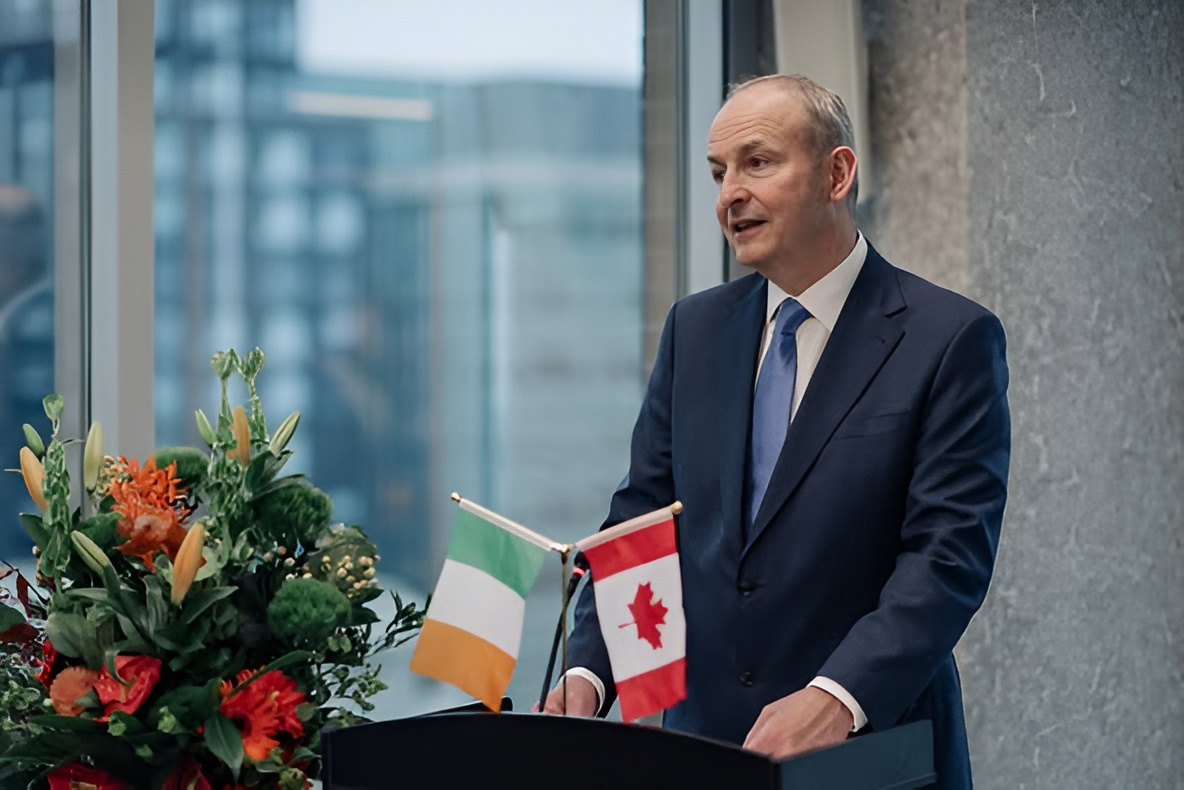
As Taoiseach Micheál Martin noted,

This partnership speeds up project timelines and boosts knowledge-sharing between Japan and the UK. It shows how strategic alliances can improve renewable energy partnerships worldwide.

A Shared Vision for a Carbon-Neutral Future

The Japan-UK First Offshore Wind alliance highlights a shared commitment to sustainability, energy innovation, and the global effort for net-zero emissions. KEPCO is diversifying beyond traditional power generation by moving into renewables, telecommunications, and real estate. Meanwhile, Simply Blue is using Japanese support to grow its operations effectively.

Together, this partnership acts as a model for international renewable energy cooperation. By joining their technical skills, financial support, and strategic ideas, Japan and the UK show that working together is essential for creating a cleaner, more sustainable energy future.

Poland’s Baltic Power Offshore Wind Farm Breaks Records

Poland’s Baltic Power Offshore Wind Farm Breaks Records

Poland has reached a major milestone in its offshore wind energy journey with the successful installation of its first offshore substations in the Baltic Sea. The achievement comes from the Baltic Power Offshore Wind Farm, a joint venture between ORLEN Group and Northland Power, marking a historic step for Poland’s renewable energy sector.

Built in Gdańsk and Gdynia, the two four-story offshore substations will collect electricity from 76 high-capacity wind turbines before transmitting it to shore. Once operational, the infrastructure will play a central role in strengthening Poland’s offshore wind leadership, boosting sustainability in the Baltic Sea, and accelerating the country’s clean energy transition.
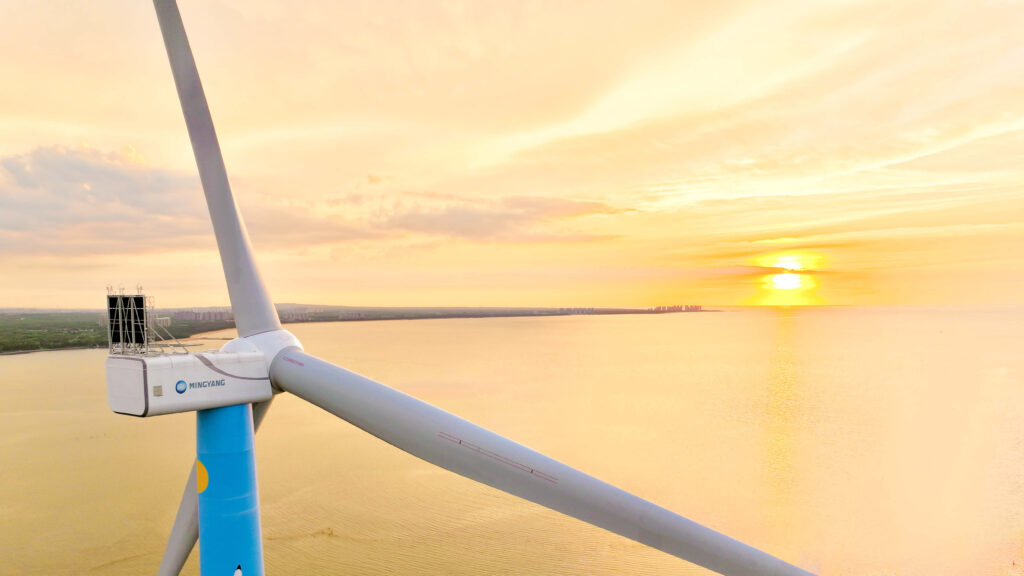
Baltic Power Offshore Wind Farm: A new era of Poland Offshore Wind

Poland’s offshore wind sector has entered a decisive new phase with the successful installation of its first offshore substations in the Baltic Sea. The milestone was achieved by the Baltic Power Offshore Wind Farm, a joint venture between ORLEN Group and Northland Power, marking a historic breakthrough for Poland’s renewable energy industry.

The installation strengthens Poland’s growing role in Europe’s clean energy transition and establishes the critical infrastructure needed to connect offshore wind generation with the national power grid.

This project highlights how Poland’s offshore wind energy is rapidly moving from planning to large-scale execution in the Baltic Sea.

Offshore Substations: The Backbone of Baltic Power

The two four-story offshore substations—massive steel structures weighing up to 2,500 tonnes each—form the electrical heart of the Baltic Power project. Located around 20 kilometers offshore near Choczewo, the substations create the vital link between sea-based wind turbines and Poland’s onshore electricity network.

With a planned capacity of 1.2 gigawatts (GW), Baltic Power is expected to generate approximately 4 terawatt-hours (TWh) of renewable electricity annually—enough to supply more than 1.5 million homes and cover nearly 3% of Poland’s current electricity demand.

According to the Energy Information Administration (EIA), wind power continues to increase its share of electricity generation across Europe and globally.

Engineering Excellence in the Baltic Sea

The OSS West and OSS East substations collect electricity from 76 Vestas 15 MW offshore wind turbines through an extensive network of inter-array cables. Power is then stepped up to 230 kV and transmitted to the onshore substation in Choczewo via four offshore export cables, ensuring efficient integration into Poland’s grid.

Each unmanned offshore platform is equipped with:

  • Two main transformers
  • Gas-insulated switchgear at 230 kV and 66 kV
  • Diesel generators and auxiliary systems
  • Automated monitoring, control, and safety technologies

This design allows fully remote operation while maintaining high reliability in challenging marine conditions.

Strong Polish Industrial Participation

The offshore substations were delivered through a partnership between CS Wind Offshore and Semco Maritime, supported by multiple Polish companies. Substation foundations were built by Grupa Przemysłowa Baltic at shipyards in Gdynia and Gdańsk, reinforcing local industrial participation.

Following fabrication, the topsides were transported to Denmark for final outfitting before being installed offshore. Notably, both substations were equipped with specialized cranes manufactured by Protea, a Polish engineering firm, highlighting domestic contribution to advanced offshore technology.

Over its 30-year operational lifespan, Baltic Power is expected to achieve a local content share of at least 21%, strengthening Poland’s offshore supply chain and marine engineering expertise.

From Sea to Shore: A Coordinated Offshore Installation

Installing the substations required one of the most complex offshore operations ever conducted in Polish waters. Using floating heavy-lift cranes, tugboats, and crew transfer vessels, teams precisely positioned the steel structures and transition pieces onto their monopile foundations.

More than 20 specialized vessels supported the installation campaign, coordinated from Baltic Power’s newly operational offshore base in Łeba, which has been active since April 2025.

Project Director Jens Poulsen described the phase as “extremely intense,” noting that the next step will involve installing offshore cables to complete the wind farm’s internal electrical network.

Offshore wind leasing and permitting standards referenced in this project align with international frameworks outlined by the Bureau of Ocean Energy Management (BOEM).

What Baltic Power Means for Poland’s Energy Future

Beyond engineering success, the completion of the offshore substations signals Poland’s formal entry into the European offshore wind market. When fully operational in 2026, Baltic Power will become Poland’s first offshore wind farm, delivering reliable, clean electricity while reducing carbon emissions.

The project is also expected to drive economic growth through:

  • Shipbuilding and port investments
  • Engineering and logistics jobs
  • Long-term grid modernization

By combining international offshore wind expertise with strong local industry participation, Baltic Power is setting a benchmark for future developments.

As construction progresses, one key question remains:
Will Baltic Power become the blueprint for Poland’s next wave of offshore wind projects?

FAQ

Q: What milestone has Poland achieved in offshore wind energy?
A: Poland has installed its first offshore substations in the Baltic Sea, marking a major step forward for the country’s offshore wind and renewable energy sector.

Q: Who is developing the Baltic Power Offshore Wind Farm?
A: The project is a joint venture between ORLEN Group and Northland Power, combining domestic and international offshore wind expertise.

Q: What role do the offshore substations play?
A: The substations collect electricity from 76 offshore wind turbines and transmit it to shore for distribution through Poland’s power grid.

Q: Why is this project important for the Baltic Sea region?
A: The project supports cleaner energy production, strengthens Baltic Sea sustainability, and reduces reliance on fossil fuel-based electricity.

Q: How does this project support Poland’s energy transition?
A: It accelerates Poland’s shift toward renewable energy, improves energy security, and positions the country as an emerging offshore wind leader in Europe.

Japan Offshore Wind Project: Kajima Powers 315 MW Boom

Japan offshore wind project - 315 MW Akita offshore wind turbines under construction with Kajima Corporation foundations

Japan offshore wind project ambitions have reached a landmark milestone as Oga Katagami Akita Offshore Green Energy LLC (OKAOGE) signed a historic contract with Kajima Corporation on October 23 for the 315 MW Akita Offshore Wind Project. As part of the agreement, wind turbine foundations will be manufactured, purchased, transported, and installed, initiating full-scale construction for one of Japan’s biggest offshore wind projects. This offshore wind project in Japan is a significant step toward the nation’s carbon-neutral and clean energy goals.

Renewable Energy Meets Local Revitalization

The offshore wind project in Japan prioritizes coexistence with nearby fisheries and coastal communities in addition to producing clean energy. OKAOGE seeks to advance sustainable regional revitalization, creating jobs and stimulating economic growth across Akita Prefecture.

The company intends to create a self-sustaining agricultural and fisheries sector by utilizing ITOCHU Corporation’s commercial infrastructure and working with nearby companies, guaranteeing that the advantages of renewable energy effectively reach the local community.

Building Japan’s Offshore Wind Workforce

With 86% of its workforce hired from Akita, OKAOGE is poised to become the largest offshore operations and maintenance (O&M) company in Japan. In addition to providing a trained workforce to support future offshore expansions throughout Asia, this initiative will bolster Japan’s domestic offshore wind industry.

With Kajima Corporation on board, the Japan offshore wind project is entering a new era of growth, technological innovation, and industry leadership.

Shaping the Future with Akita Winds

Under the vision “Shaping the Future with Akita Winds—A New Step Towards Clean Energy,” OKAOGE combines technology, sustainability, and community engagement to advance Japan’s renewable energy ambitions. As the 315 MW Akita Offshore Wind Project approaches operation in June 2028, it symbolizes Japan’s commitment to offshore renewable energy and the empowerment of local economies.

Business Management Policy Diagram

Focus AreaObjectiveKey Actions/Keywords
1. Generate ElectricityComplete the first operational bottom-fixed offshore wind project in Japan.Bottom-fixed offshore wind project in Japan Oga Katagami Akita Offshore Green Energy, Kajima Corporation, offshore turbine foundations, Japan
2. Establish an IndustryCreate the biggest offshore operations and maintenance company in Japan, then grow to Asia with local workers. Japan’s offshore wind industry, Akita, and the growth of renewable energy in Asia
3. Generate RevenueEncourage local companies and self-sufficient industriesITOCHU Corporation, commercial infrastructure, Akita’s economic development, the agriculture and fishing sectors, and the advantages of renewable energy.
4. Expand NationwideCreate a domestic offshore wind ecosystemdomestic suppliers, a carbon-neutral sector, battery storage, renewable energy in Japan, and offshore wind expansion across the country.

Project Overview – 315 MW Akita Offshore Wind Project

Project Name: 315 MW Akita Offshore Wind Project

Operator: Oga Katagami Akita Offshore Green Energy LLC (OKAOGE)

Key Partner: Kajima Corporation (foundation manufacturing, procurement, transport, installation)

Location: Off the coasts of Oga City, Katagami City, and Akita City, Akita Prefecture, Japan

Turbines: 21 bottom-fixed offshore wind turbines

Capacity: 315 MW

Start of Commercial Operations: June 2028

Objectives:

  • Under the Act on Promoting the Utilization of Sea Areas for Renewable Energy, Japan installed its first bottom-fixed offshore wind power generator.
  • Energy contribution that is carbon neutral by 2050
  • Job creation and regional revitalization in Akita Prefecture
  • Create the biggest offshore O&M company in Japan.
  • Increase knowledge of offshore wind across Asia and the country.

Stay informed on the latest developments in Japan’s offshore wind projects and global renewable energy innovations. Follow WindNewsToday for real-time updates on the 315 MW Akita offshore wind project, Kajima’s contracts, and emerging clean energy opportunities.

50 MW Floating Turbine—the World’s Largest—Was Built by China

China Built the World’s Largest 50 MW Floating Turbine

A Giant Rises in Offshore Wind

China has once again captured global attention in the renewable energy sector. An important turning point for the offshore wind sector has been marked by the announcement of plans for the largest 50 MW floating turbine in the world by Mingyang Smart Energy, one of the nation’s leading clean energy companies, according to Bloomberg.

Though it is still in its infancy, the idea goes far beyond small steps forward. It is a daring leap in ambition, scale, and design that has the potential to completely reshape the boundaries of what is technically and financially feasible in floating wind technology.

Mingyang Smart Energy—Behind the Innovation

Since its founding in 2006, Mingyang Smart Energy has emerged as a world leader in offshore engineering, smart energy systems, and wind turbine manufacturing. Record-breaking designs are nothing new to the company. By announcing a 22 MW offshore turbine in 2023, it raised the bar for turbine capacity. Mingyang is ambitious to outdo even that achievement with its 50 MW floating wind turbine concept, the largest ever proposed.

What Makes the 50 MW Floating Wind Turbine So Revolutionary?

The engineering scale of a 50 MW floating wind turbine is unprecedented. Today’s offshore wind turbines typically have a capacity of 10–18 MW. The increase to 50 MW, which is almost three times that capacity, necessitates radical adjustments to materials, structure, and floating platform stability.

According to Mingyang, this concept leverages:

MySE16-260, Image: Mingyang Smart Energy
  • lightweight composite blades of the next generation that are longer than 150 meters.
  • Large rotating structures can be stabilized with intelligent load control systems.
  • Sophisticated floating foundations are made to survive harsh maritime environments.
  • AI-powered energy optimization that enables integration with smart grids for optimal output efficiency.

By eliminating the need for numerous smaller units and lowering the cost per megawatt for offshore wind farms, this design may be able to power tens of thousands of homes with a single turbine.

Why China Is Betting Big on Floating Wind

The growth of offshore wind energy in China has been astounding. In terms of installed wind capacity, the nation leads the world, and floating wind power is becoming the next big thing. Floating turbines can function in deep offshore regions with more reliable and powerful wind resources than fixed-bottom turbines, which need shallow waters.

With the help of this technological advancement, China can now access enormous oceanic wind corridors in the East China Sea and South China Sea, opening up previously untapped potential for renewable energy.

Along with creating new investment opportunities for maritime engineering and smart grid integration, floating wind technology also lessens conflicts with coastal industries and fishing zones.

Floating Wind: The Next Phase of Global Energy Evolution

Although floating wind technology is not new, China’s large-scale entry could change the rules of international competition.
Early progress in floating wind pilot projects has been made by nations like Norway, Japan, and the United Kingdom. None, though, have suggested a design with a capacity of about 50 MW.

Mingyang hopes to reduce production costs, show grid stability, and illustrate how large turbines could power deep-sea wind farms in the future by scaling up.

This is in line with China’s long-term objective of becoming carbon neutral by 2060 and its larger clean energy strategy, which calls for 1,200 GW of renewable capacity by 2030.

Engineering Challenges Ahead

Despite the excitement, building a 50 MW floating wind turbine is no small task. Engineers must address:

  • Extreme load management: enormous wind and wave forces acting on a single massive structure.
  • Floating stability: ensuring the platform remains balanced in deep waters.
  • Transportation and assembly: moving colossal turbine components from land to offshore installation sites.
  • Grid connectivity: maintaining power stability for such a large, single-unit generation source.

Each of these challenges requires precision engineering, advanced materials, and continued research collaboration with global partners.

Global Reactions and Industry Impact

Energy analysts see Mingyang’s announcement as a symbol of China’s growing dominance in renewable technology.
If successful, this 50 MW floating wind turbine could outpace existing European designs and reshape offshore wind economics by drastically reducing per-megawatt costs.

Moreover, it would strengthen China’s position in exporting clean energy technology, enabling other nations to adopt large-scale floating wind solutions in their own coastal regions.

The Future of Offshore Wind Power

The concept also points to the future direction of offshore wind:
Fewer, larger, smarter turbines—all networked into digital energy grids.

By combining floating foundations, AI-driven efficiency, and smart energy systems, projects like Mingyang’s could accelerate the transition toward a cleaner, more sustainable global energy mix.

This innovation not only supports China’s domestic goals but also contributes to global decarbonization, offering a blueprint for how nations can harness offshore wind at scale.

Final Thoughts: The Floating Giant That Could Redefine Energy

Mingyang’s 50 MW floating turbine remains a concept, but its implications are enormous. It embodies the next generation of offshore wind innovation, combining engineering power, digital intelligence, and clean energy ambition.

If brought to life, this turbine could symbolize the moment the world’s energy landscape truly began to float—toward a smarter, greener, and more sustainable horizon.

Key Facts at a Glance

FeatureDetails
Turbine Capacity50 MW
TypeFloating Offshore Wind Turbine
DeveloperMingyang Smart Energy (China)
Innovation HighlightsAI optimization, smart grid integration, digital twin technology
Global SignificanceWorld’s largest wind turbine concept

FAQs

Q1: Why is the 50 MW floating wind turbine important?
It represents a major leap in offshore wind technology, offering higher capacity, lower costs, and access to deeper waters for clean energy generation.

Q2: What is unique about floating wind turbines?
They don’t require fixed foundations, making them ideal for deep-sea deployment where winds are stronger and more stable.

Q3: How does AI improve turbine efficiency?
AI algorithms monitor performance, predict failures, and adjust turbine settings in real time for optimal power generation and maintenance savings.

Stay updated on the world’s biggest renewable energy breakthroughs—follow WindNewsToday for daily insights into offshore wind, AI innovation, and global clean power transformation.

RWE Offshore Wind Project Australia Canceled Amid Policy Delays

RWE Offshore Wind Project Australia Canceled

The RWE Offshore Wind Project Australia—a massive 2 GW development planned off the coast of Victoria—has officially been canceled. German renewable energy giant RWE confirmed it has ceased the development of the Kent Offshore Wind Farm, following the Australian government’s decision to delay its first offshore wind tender.

After nearly a year of feasibility studies, RWE announced that the RWE Offshore Wind Project Australia would no longer move forward under current market conditions. The Kent site, located approximately 67 kilometers off the Gippsland offshore wind zone, featured an average water depth of 59 meters and was expected to be operational in the early 2030s.

“This decision follows a review of the project’s competitiveness in current market conditions, as well as ongoing uncertainties around supply chain costs and the future design of the auction framework,” RWE said in a statement.

“We want to be clear that this decision relates solely to the Kent Offshore Wind Project.”

RWE’s Kent Offshore Wind Vision in Australia

The RWE Offshore Wind Project Australia was designed to generate 2 gigawatts (GW) of clean power, enough to supply hundreds of thousands of homes with renewable energy. The project symbolized a major investment in Australia’s transition toward carbon neutrality and reflected RWE’s growing interest in the Asia-Pacific renewable energy market.

However, with policy delays, high supply chain costs, and an undefined auction framework, RWE concluded that continuing with development was no longer viable at this stage.

RWE’s Kent Offshore Wind Vision in Australia

The RWE Offshore Wind Project Australia was designed to generate 2 gigawatts (GW) of clean power, enough to supply hundreds of thousands of homes with renewable energy. The project symbolized a major investment in Australia’s transition toward carbon neutrality and reflected RWE’s growing interest in the Asia-Pacific renewable energy market.

However, with policy delays, high supply chain costs, and an undefined auction framework, RWE concluded that continuing with development was no longer viable at this stage.

Gippsland: The Heart of Australia’s Offshore Wind Ambitions

Declared in 2022, Gippsland became Australia’s first offshore wind zone, with an estimated potential of 25 GW of renewable energy capacity. The region quickly attracted leading developers, including RWE, BlueFloat Energy, and a joint venture between Origin Energy and Renewable Energy Systems (RES).

Yet, recent months have brought setbacks. BlueFloat Energy withdrew from the Gippsland zone in July 2025, and the Origin-RES joint venture later suspended work on its 1.5 GW Navigator Offshore Wind Project, citing similar challenges and uncertainties around Victoria’s delayed offshore wind auction.

These developments collectively underscore how regulatory delays and rising global supply costs are impacting Australia’s emerging offshore wind sector.

Policy Uncertainty Threatens Offshore Wind Growth

The Victorian government’s decision to indefinitely postpone its first offshore wind auction in September has created significant market uncertainty. Without a clear auction framework, developers find it difficult to assess project economics and secure funding for the complex infrastructure offshore wind requires.

Experts say that the RWE Offshore Wind Project Australia highlights the importance of a transparent and timely offshore wind policy to maintain investor confidence.

“Australia has the wind resources and engineering talent to become a global offshore wind leader,” said an energy analyst from Melbourne. “But developers need policy stability and consistent auction timelines to make long-term investment decisions.”

Australia’s Offshore Wind Potential Remains Strong

Despite RWE’s withdrawal, Australia’s offshore wind potential is vast and largely untapped. The federal government estimates that tens of gigawatts of renewable energy could be generated from the nation’s coastal zones, supporting national targets to reach net zero emissions by 2050.

The Gippsland offshore wind zone remains central to this vision, with other developers continuing feasibility studies despite current challenges. The area’s powerful and consistent winds offer a foundation for future clean energy generation once clearer policies are in place.

Conclusion: RWE Offshore Wind Project Australia Signals a Wake-Up Call

The cancellation of the RWE Offshore Wind Project Australia is a reminder that even the strongest renewable energy ambitions depend on policy clarity, stable auction frameworks, and supply chain support.

While RWE has paused its Australian offshore wind efforts, the company remains a leading global player in offshore wind development across Europe, North America, and Asia-Pacific. Industry observers believe RWE could re-enter the Australian market once the regulatory environment matures.

Ultimately, the project’s cancellation serves as both a lesson and an opportunity—highlighting the need for stronger coordination between government, investors, and developers to realize Australia’s clean energy potential and secure its place in the global offshore wind market.

What’s Next for RWE?

Although RWE has exited the Kent project, the company continues to maintain a strong presence in global offshore wind markets, with active developments in Europe, the United States, and Asia-Pacific. The company remains optimistic about future opportunities in Australia once market conditions stabilize and the government finalizes its offshore wind framework.

California Pledges $225 Million for Offshore Wind Port Development

California Pledges $225 Million for Offshore Wind Port Development

The California Energy Commission has committed USD 225.7 million to offshore wind port development, marking a significant step in advancing the state’s clean energy infrastructure. The investment will upgrade port facilities to support floating offshore wind projects along California’s coast, helping the state achieve its ambitious goal of 25 GW of offshore wind capacity by 2045.

Nancy Kirshner-Rodriguez of Oceantic Network praised the move, saying it will generate long-term jobs and economic growth while positioning California as a leader in offshore wind developmet.

Port Upgrades to Support Offshore Wind Expansion

The $225.7 million funding is part of the state’s current budget and focuses on upgrading California ports for the emerging offshore wind sector. Port improvements will include enhanced loading facilities, specialized equipment for turbine assembly, and improved transportation infrastructure for wind components.

Oceanic Network highlighted that the state’s leadership contrasts with federal delays, emphasizing that the state is driving offshore wind port development forward.

State Goals and Federal Context

In 2022, the Bureau of Ocean Energy Management (BOEM) auctioned five lease areas offshore California, raising over $757 million for future floating offshore wind projects—the first of its kind in the U.S.

The California Energy Commission (CEC) also updated the state’s offshore wind targets that year, reinforcing a long-term vision of 25 GW of offshore wind by 2045. Additional support came from the 2024 climate bond, which allocated USD 475 million toward offshore wind port infrastructure.

Legislative Support and Policy Measures

Earlier this year, Assembly Bill 472 proposed integrating funding assessments for offshore wind ports into the governor’s five-year infrastructure plan. According to Offshore Wind of the state, the measure enjoys bipartisan support, with 75% of Californians backing offshore wind development.

The legislation ensures that port infrastructure, transmission, and other resources are aligned to support California offshore wind investment and the state’s clean energy targets.

Economic and Job Impacts

State leaders emphasize that the port upgrades will deliver economic activity and new job opportunities across coastal regions. Over the next three and a half years, California’s ports, transmission, and other critical infrastructure will be positioned to accelerate offshore wind development, complementing solar, storage, and onshore wind resources.

Conclusion

California’s $225.7 million commitment to offshore wind port development demonstrates the state’s leadership in renewable energy. By upgrading ports and supporting floating offshore wind projects, California is not only creating jobs but also advancing its clean energy and climate goals, setting a benchmark for the U.S. in clean energy infrastructure investment.

FAQs

Q1: What is the purpose of California’s $225.7M investment?

A1: The funds will upgrade ports to support offshore wind projects, including turbine assembly, transportation, and related infrastructure.

Q2: How much offshore wind capacity is California targeting?

A2: The state aims to achieve 25 GW of offshore wind capacity by 2045, with floating offshore wind playing a key role.

Q3: Which agencies are involved in California offshore wind development?

A3: Key agencies include the California Energy Commission (CEC), the Bureau of Ocean Energy Management (BOEM), and local port authorities, alongside private partners like Oceantic Network.

Jan De Nul Wins Cable Installation Contract for Taiwan’s Formosa 4 Offshore Wind Farm

Jan De Nul Wins Cable Installation Contract for Taiwan’s Formosa 4 Offshore Wind Farm

Jan de Nul has secured a contract with Synera Renewable Energy (SRE) to install export cables for Taiwan’s Formosa 4 offshore wind farm, set to provide electricity to approximately 500,000 households. This project marks a significant milestone in Taiwan’s expanding offshore wind sector, underscoring the country’s position as a leading player in Asia’s renewable energy sector.

By combining advanced wind energy systems with AI in wind turbine operations, Formosa 4 integrates digital innovation and renewable energy, improving efficiency, reliability, and environmental performance. This Taiwan offshore wind farm demonstrates how modern engineering and technology can deliver large-scale sustainable power while supporting Taiwan’s net-zero energy goals.

Export Cable Installation – Engineering and Impact

The Formosa 4 project involves the installation and protection of 60 kilometers of submarine HVAC export cables, which will link the offshore turbines to Taiwan’s mainland grid. Positioned 20 kilometers off Miaoli County, the wind farm will host 35 turbines generating 495 MW, enough to supply power to nearly half a million households.

Installing submarine cables at this scale requires careful consideration of seabed conditions, marine ecosystems, and cable protection. By deploying the cable-laying vessel Willem de Vlamingh, Jan de Nul ensures precise, safe, and environmentally sensitive installation.

Beyond Formosa 4, Jan de Nul is also contracted for Formosa 6 and is involved in Greater Changhua 2B and 4, as well as preparing for Fengmiao 1. The company’s continuous presence in Taiwan highlights both its technical expertise and Taiwan’s strategic reliance on experienced international contractors to support rapid offshore wind development.

Jan de Nul’s role in Taiwan’s offshore wind growth

Offshore construction operations for Taiwan’s growing wind energy capacity
Taiwan is rapidly expanding its offshore wind sector, aiming to exceed 13 GW of capacity by 2030. Image: website

Active in Taiwan since 1990, Jan de Nul has been supporting the development of offshore wind energy since its inception in 2017. According to Wouter Vermeersch:

“We have successfully delivered several fully operational wind farms through large EPCI contracts, undertaking the entire project from design and procurement to construction and installation. We have played a leading role in supporting Taiwan’s path to net-zero emissions by 2050.”

Taiwan has rapidly increased its offshore wind capacity to more than 3 gigawatts, generated by 374 turbines, placing the country in seventh place globally. With ongoing projects, Taiwan is expected to overtake Belgium this year to reach sixth place. By 2030, the country aims to exceed 13 gigawatts of offshore wind capacity.

Project Summary

FeatureDetails
Additional ProjectsFormosa 6, Greater Changhua 2B & 4, Fengmiao 1
Location20 km off Miaoli County, Taiwan
DeveloperSynera Renewable Energy (SRE)
ContractorJan de Nul (export cable installation)
Capacity495 MW
Turbines35
Cable60 km submarine HVAC export cable
Construction Period2026–2027
VesselWillem de Vlamingh (cable-laying vessel)
Power Supply~500,000 households

Advantages

  • Strengthening Taiwan’s Renewable Energy Infrastructure: Supports rapid offshore wind growth.
  • Technological Leadership: Demonstrates Jan de Nul’s expertise in submarine cable installation.
  • International Collaboration: Boosts Belgian-Taiwanese cooperation in clean energy.
  • Future-Ready: Forms part of a project pipeline extending to 2028, ensuring consistent development.
  • Jan de Nulke has been active in Taiwan since 1990 and in offshore wind since2017.
  • Taiwan currently ranks 7th globally in terms of offshore wind capacity, which is expected to reach 6th place this year.
  • The Jan de Nul Taiwan project will strengthen Belgian-Taiwanese cooperation in renewable energy.

Conclusion – Powering a Low-Carbon Future

The Formosa 4 offshore wind farm highlights how large-scale engineering, offshore renewable energy, and advanced operational systems can be integrated to deliver tangible environmental and societal benefits. The project will supply reliable electricity to 500,000 households, reduce carbon emissions, and support Taiwan’s goal of 13 GW offshore wind capacity by 2030 and net-zero emissions by 2050.

Beyond energy production, Formosa 4 sets a benchmark for operational efficiency and infrastructure planning in the region, demonstrating how strategic investment in offshore wind can create scalable, sustainable outcomes. Projects like this reinforce Taiwan’s position as a leader in offshore wind development, showcasing the country’s ability to combine innovation, precision engineering, and environmental stewardship at scale.

Frequently Asked Questions (FAQ) – Formosa 4 Offshore Wind Farm

Question 1: Who is responsible for the Formosa 4 Offshore Wind Project?

Answer: Formosa 4 is being developed by Cinere Renewable Energy (SRE), with which Jan de Nulke has a contract to install and secure the export cable.

Question 2: Where is the Formosa 4 Wind Farm located?

Answer: It is located 20 kilometers off the coast of Miaoli County, Taiwan.

Question 3: What is the capacity of Formosa 4?

Answer: The wind farm will have a capacity of 495 MW, generated by 35 turbines, which is enough to power about 500,000 households.

Question 4: How long will it take to install the export cable?

A: Jan de Nul will install and protect the 60 km submarine HVAC export cable.

Question 5: When will construction begin?

Answer: Cable laying will begin in 2026 and continue until 2027.

Question 6: Which vessel will be used to lay the cable?

Answer: The cable-laying vessel Willem de Vlamingh will be deployed to lay the cable.

Question 7: Is Jan de Nul involved in other projects in Taiwan?

Answer: Yes, Jan de Nul is also the preferred contractor for Formosa 6, and is working on Greater Changhua 2B and 4, and preparing Fengmiao 1 for cable laying.

Question 8: What is the significance of this project for Taiwan?

Answer: Formosa 4 contributes to the growth of Taiwan’s offshore wind capacity, which helps the country achieve its goal of 13 gigawatts of emissions by 2030 and a path to net-zero emissions by 2050.

Ørsted Sunrise Wind Project 2027: Powering New York’s Future

Ørsted Sunrise Wind project 2027 offshore wind farm in New York" loading

Ørsted Sunrise Wind Project 2027 marks a major milestone in New York’s clean energy journey. As one of the largest offshore wind projects in the USA, this initiative—led by Danish offshore wind giant Ørsted—has reaffirmed its commitment to completing by the second half of 2027, CEO Rasmus Errboe told reporters on Tuesday. The announcement underscores Ørsted’s continued leadership in America’s offshore wind sector—a key pillar of the nation’s clean energy transition.
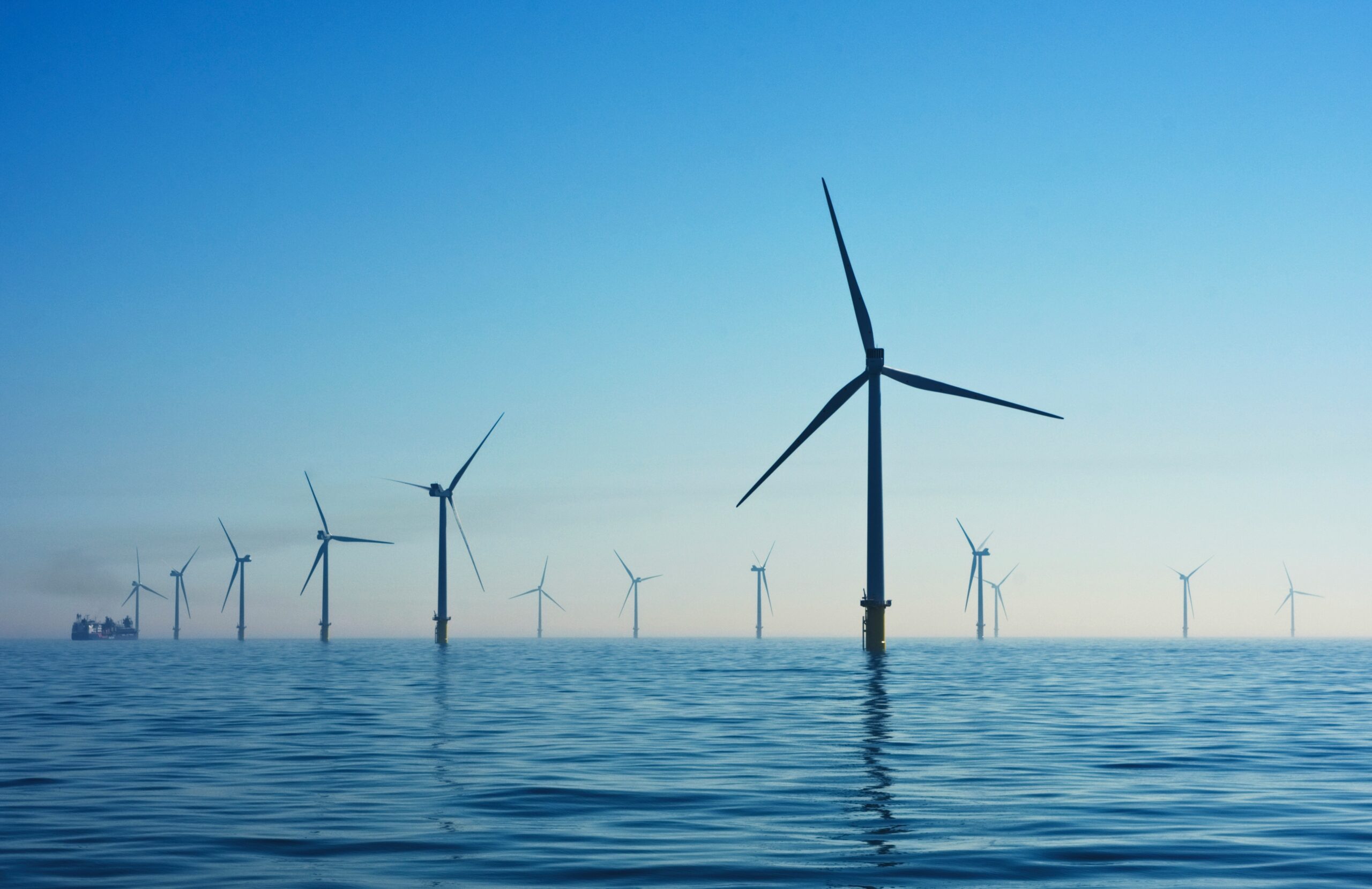
A Landmark Project in New York’s Clean Energy Future

Sunrise Wind is located off the coast of New York. It is designed to generate enough offshore wind energy to power nearly 600,000 homes. It will provide 100% renewable electricity, making it one of the largest and most impactful clean energy projects in the country. Ørsted emphasized that the project represents a transformational step for New York’s energy and economic future, directly supporting the state’s goal of 70% renewable energy by 2030.

“Sunrise Wind is the future of American clean energy, and that future is being built by New Yorkers, for New Yorkers,”—Ørsted”’s CEO.

800 Union Jobs and a Nationwide Labor Partnership

Ørsted’s U.S. operations are grounded in its nationwide labor agreement with North America’s Building Trades Unions (NABTU). This ensures that construction and operations at Sunrise Wind will rely on union-affiliated labor, creating 800 direct jobs and hundreds more indirect roles across supply chains and service industries. These are good-paying, long-term offshore wind jobs, spanning from Long Island and New York City to the Capital Region and beyond. This collaboration not only reinforces local employment but also strengthens workforce training and skill development in the growing renewable energy industry.

$700 Million in Community and Supply Chain Investments

This Danish offshore giant is investing over $700 million in community initiatives, infrastructure, and supply chain development throughout Sunrise Wind New York. This investment will bolster local ports, shipyards, and fabrication facilities, positioning the state as a national leader in offshore wind manufacturing and logistics. The project is expected to create a statewide clean energy economy, ensuring that the benefits of offshore wind are distributed broadly—from coastal regions to inland communities. Such investments align with New York’s strategy to establish a robust offshore wind supply chain, supporting not only current projects but also future developments along the U.S. East Coast.

Ørsted Sunrise Wind Project 2027—A Step Toward 100% Renewable Energy

The Sunrise Wind New York project plays a critical role in meeting New York’s Climate Leadership and Community Protection Act (CLCPA)—which mandates 70% renewable electricity by 2030 and a zero-emission grid by 2040. Ørsted’s steady progress despite market and policy challenges signals confidence in the future of U.S. offshore wind. With federal and state support, industry leaders like Ørsted are paving the way for a cleaner, more resilient energy future.

A Message of Confidence and Continuity In his remarks, CEO Rasmus Errboe reiterated Ørsted’s focus on delivering Sunrise Wind on schedule while maintaining high standards for sustainability, safety, and community impact.

“We are moving forward with determination—not only to meet our 2027 target but also to ensure Sunrise Wind sets a benchmark for clean energy excellence.”

The Future of Offshore Wind in America Ørsted Offshore Wind Project represents more than a single development—it’s a signal of stability and ambition for the offshore wind industry at large. As states like New York, New Jersey, and Massachusetts accelerate their renewable energy goals, Sunrise Wind stands as a model of collaboration, innovation, and long-term vision.

When completed in 2027, the project will:

  • Power 600,000+ homes with clean offshore wind energy
  • Thousands of indirect roles Invest $700+ million in communities
  • Local businesses Support New York’s 70% renewable target by 2030

(FAQ)

1. What is the Ørsted Sunrise Wind Project 2027?

It has been said that because Ørsted confirms in October that the Sunrise Wind project remains on track for H2 2027, the 924 MW offshore wind farm will deliver renewable energy to New York City.

2. Where is the Sunrise Wind project located?

The project is located about 30 miles east of Montauk Point, Long Island, New York.

3. How many homes will Sunrise Wind power?

The Ørsted Sunrise Wind 2027 project will provide clean electricity to approximately 600,000 homes.

4. Who are the main partners in the project?

Ørsted and Eversource Energy are the primary developers behind Sunrise Wind, working in partnership with New York State.

5. What makes Sunrise Wind 2027 significant?

It’s one of the largest offshore wind projects in the U.S., supporting New York’s clean energy goals for 2030, creating 800+ offshore wind jobs, and boosting economic growth in the region.

Skyborn Gennaker Offshore Wind Farm Secures Major Deals for Baltic Project

Skyborn Gennaker Offshore Wind Farm

Skyborn Gennaker Offshore Wind Farm Secures All Major Contractors

The Skyborn Gennaker Offshore Wind Farm has reached a defining milestone as Skyborn Renewables (Skyborn) confirmed all major contractor agreements for the 976.5 MW Gennaker Offshore Wind Project — set to become Germany’s largest offshore wind farm in the Baltic Sea.

The signing of Preferred Supply Agreements (PSAs) during the summer of 2025 marks a turning point for Germany’s renewable industry, bringing momentum back to a sector that had slowed in early 2025.

A Boost for Germany’s Offshore Wind Ambitions

Germany, with more than 9.2 GW of offshore wind capacity, has been a clean energy leader in Europe. However, the first half of 2025 saw no new turbines connected to the grid — raising concerns about national climate goals.

Now, the Skyborn Gennaker Offshore Wind Farm is reviving optimism, ensuring progress toward Germany’s Net Zero 2045 vision.

Skyborn CEO Patrick Lammers said:

“We are extremely proud of the agreements we’ve signed with Gennaker’s suppliers. These experienced contractors will help deliver Gennaker on budget and on schedule, bringing real benefits to Mecklenburg-Vorpommern through jobs, investments, and decarbonization.”

He added his gratitude to the Skyborn team for bringing the Gennaker project one step closer to reality.

Major Contractors Powering the Gennaker Offshore Wind Project

Skyborn has assembled a lineup of world-class engineering and energy partners to deliver this record-setting wind farm efficiently and sustainably.

Monopile Foundations – EEW SPC

The Preferred Supply Agreement for 63 monopile foundations has been awarded to EEW Special Pipe Construction GmbH (EEW SPC).
Each monopile is up to 54.1 meters long, with a 7.5-meter top diameter, and weighs up to 877 tonnes.
The monopiles will be manufactured in Rostock, just 40 kilometers from the project site, strengthening the local Mecklenburg-Vorpommern economy and supporting over 1,000 employees at EEW SPC.

A ceremony at EEW SPC’s facility in Rostock marked the milestone, celebrating Gennaker’s role in securing local employment and supply chain resilience.

Transition Pieces – Dajin Heavy Industry

Dajin Heavy Industry will provide 63 transition pieces, each about 20 meters tall and weighing 400 tonnes.
Production will start in Penglai, China, and final assembly will occur in Odense, Denmark, showcasing the project’s international collaboration.

Foundation Transport & Installation – Seaway7

Seaway7 has been chosen for the transportation and installation of monopiles and transition pieces, ensuring precision and efficiency in the offshore construction phase.

Inter-Array Cables – Boskalis and TKF

A consortium of Boskalis and TKF will handle the supply and installation of 140 kilometers of inter-array cables.
These cables, manufactured in Eemshaven, Netherlands, will connect Gennaker’s turbines to offshore substations, forming the electrical backbone of the project.

These PSAs follow earlier deals for turbine supply and service with Siemens Gamesa Renewable Energy and turbine transport with Fred. Olsen Windcarrier, completing Skyborn’s full roster of top-tier contractors.

Local Jobs, Global Impact

The Skyborn Gennaker Offshore Wind Farm represents more than clean power — it’s an economic driver for northeast Germany.
By manufacturing major components in Rostock, the project creates hundreds of skilled jobs, boosts the regional supply chain, and injects new life into the Mecklenburg-Vorpommern economy.

Located 15 kilometers north of the Fischland-Darß-Zingst peninsula, the Gennaker site lies in a priority offshore wind zone in the Baltic Sea.
Skyborn secured the building permit in May 2019, maintaining exclusivity for full-scale development.

When completed, Gennaker will supply enough clean electricity to power hundreds of thousands of homes, reinforcing Germany’s leadership in offshore renewable energy.

Skyborn Gennaker Offshore Wind Farm: A Blueprint for Europe’s Green Future

Set for commissioning in 2028, the Skyborn Gennaker Offshore Wind Farm will add 976.5 MW of new capacity to Germany’s renewable energy mix.
At a time when several European wind projects are facing challenges, Gennaker showcases Skyborn Renewables’ resilience and strategic leadership.

CEO Patrick Lammers summed it up:

“This is not just a step forward for Skyborn — it’s a leap forward for Germany’s clean energy transition.”

Conclusion: Skyborn Gennaker Offshore Wind Farm Lights the Path to 2045

The Skyborn Gennaker Offshore Wind Farm stands as a symbol of engineering innovation, economic opportunity, and environmental progress.
By combining global expertise with local manufacturing and employment, Skyborn is redefining how Europe builds sustainable offshore energy projects.

As Gennaker moves toward completion in 2028, it sets a powerful example for future offshore wind energy projects across Europe, driving the continent closer to a carbon-free future.

Why Dutch Halted Billion-Dollar Offshore Wind Projects Today

the Netherlands Just Halted Billion-Dollar Offshore Wind Projects

Amsterdam, Oct. 5 (WindNewsToday) – Several major offshore wind projects in the Netherlands were temporarily paused this week as authorities prioritized the safety of millions of migratory birds crossing the North Sea. The shutdowns, affecting wind farms such as Borssele I & II, Borssele III & IV, Hollandse Kust Zuid, and Hollandse Kust Noord, occurred on Wednesday and Thursday evenings, according to reports from AD.

The decision highlights the country’s commitment to balancing rapid offshore wind development with ecological protection, particularly during the peak of autumn migration. Millions of birds travel over the North Sea en route to southern Europe and Africa, raising concerns about collisions with turbine blades.

A Pause for Wildlife Protection

The temporary pause is part of the Start/Stop project, designed to reduce environmental risks posed by offshore wind operations. Using advanced predictive modeling, operators receive alerts up to two days in advance when heavy bird migration is expected, allowing turbines to slow down or halt safely.

Officials and wind farm operators believe these measures can significantly reduce bird collisions. As the Netherlands expands its offshore wind capacity, this initiative demonstrates how technological innovation can align with environmental stewardship.

Major North Sea Wind Farms Affected

Among the impacted North Sea wind farms, the Borssele Offshore Wind Farm zone is the most notable, with a total installed capacity of 1,502.5 MW:

  • Borssele I & II – Developed by Ørsted, featuring 94 Siemens Gamesa 8 MW turbines with a combined capacity of 752 MW. Full operations were achieved by late 2020, and the site has been used for testing innovations like cargo drones.
  • Borssele III & IV – Built by the Blauwwind II consortium, including Shell, Van Oord, Eneco, and Mitsubishi, with 77 Vestas V164 9.5 MW turbines totaling 731.5 MW.
  • Borssele V – A smaller demonstration project with two Vestas V164 9.5 MW turbines, focused on testing emerging offshore technologies.
  • Hollandse Kust Zuid – Located 18 km off the Dutch coast, this four-part complex, developed by Vattenfall, became fully operational in September 2023 and is one of the world’s largest offshore wind farms.

These temporary shutdowns, while minor in terms of energy output, emphasize the importance of proactive environmental management in large-scale renewable projects.

Balancing Energy Expansion and Ecology

The Dutch initiative occurs amid broader global debates about offshore wind. In the United States, political and regulatory changes have threatened projects such as Ørsted’s Empire 1 Wind Project in New York, Lava Ridge, and Revolution Wind in Rhode Island. While the contexts differ, both the U.S. and Dutch examples illustrate how offshore wind development must navigate environmental, social, and political challenges.

The Netherlands’ approach shows that temporary operational adjustments can protect wildlife without halting energy progress, offering a model for other countries with overlapping migratory routes and wind farm zones. Dutch officials and wind farm operators believe these measures.

Controversy and International Parallels

The Dutch pause comes amid broader global debates over offshore wind projects. In the United States, the Trump administration’s offshore wind ban threatens Ørsted’s multi-billion-dollar projects, including New York’s Empire 1 Wind Project, Lava Ridge, and Rhode Island’s Revolution Wind. Approved during the Biden administration, these projects were hailed as cornerstones of America’s clean energy transition. Critics argue Trump’s shutdowns represent a retreat from climate commitments at a time when the world is moving toward low-carbon energy.
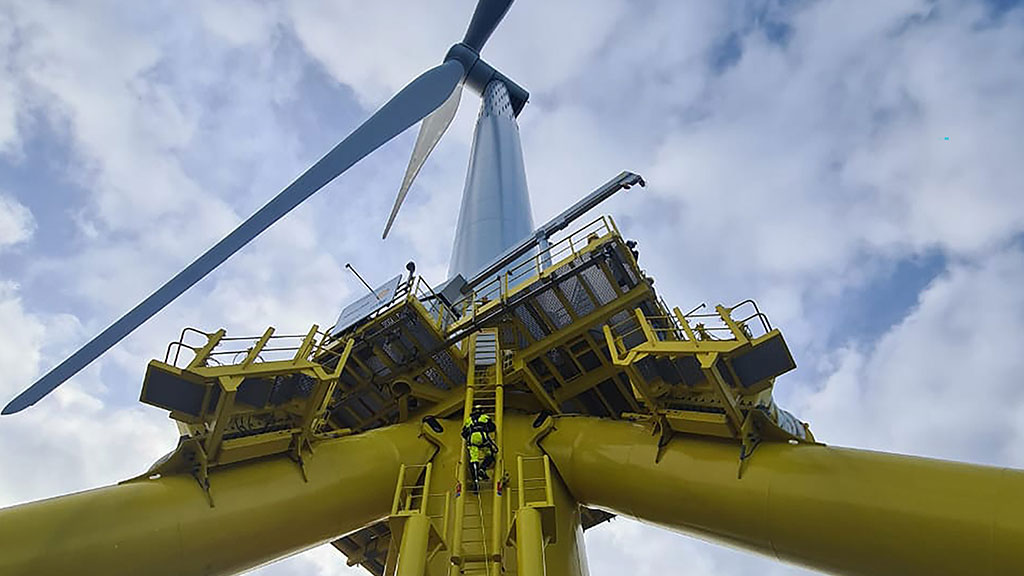
The Trump administration claims the projects are expensive, unreliable, and a national security risk, sparking one of the most divisive energy debates in modern American history. Some observers see a parallel between this U.S. policy and the Netherlands’ own temporary turbine shutdowns—not in political intent, but as a reminder that ambitious renewable energy development often must contend with environmental and societal pressures.

Implications for the Offshore Wind Sector

These temporary shutdowns highlight a key question for the global offshore wind industry: How can offshore wind projects expand while minimizing environmental impacts? Initiatives like the Start/Stop project could serve as a model for other nations where major bird migration routes overlap with planned wind farm zones.

Dutch officials suggest similar measures could become standard during spring and autumn migrations. Wind farm operators note that short-term halts have minimal impact on overall energy output, showing that wildlife-friendly practices can coexist with ambitious renewable energy goals.

As offshore wind capacity scales across Europe and beyond, the Netherlands’ approach may influence international best practices for wildlife protection. Lessons from the North Sea could guide project planning from Europe to the United States and Asia, ensuring that energy transition does not come at the expense of biodiversity.

Key Takeaway

The sight of stationary turbines along the North Sea horizon underscores the complex balance between advancing offshore wind projects and protecting ecosystems. While progress in renewable energy is essential for climate targets, nature sometimes demands a pause. By integrating ecological protection into operational decisions, the Netherlands demonstrates that sustainability requires both technological innovation and environmental stewardship.

Offshore Wind Ireland: 5 Critical Ways AI Is Boosting Energy Demand

Offshore wind Ireland is now at the heart of Ireland’s energy strategy, Taoiseach Micheál Martin has said. Speaking in New York

As AI and data centres surge, offshore wind Ireland becomes crucial for Ireland’s energy security and renewable energy future.

DUBLIN/NEW YORK, Sept 27Offshore wind Ireland is now at the heart of Ireland’s energy strategy, Taoiseach Micheál Martin has said. Speaking in New York this week, Martin warned that surging AI energy demand in Ireland and the explosive growth of data centres could trigger a full-blown Ireland energy crisis unless large-scale offshore wind projects are accelerated.

“We just have to get those offshore wind farms over the line, because that is the key for our self-reliance and independence in terms of energy,” Martin said.

“And also then it would enable us to have some future in terms of AI, because AI will use an enormous amount of energy, and we’re currently in difficulty on that front.”

Martin emphasized that offshore wind is not just a climate measure—it is essential for maintaining grid stability and supporting Ireland’s growing digital economy.

Ireland’s Data Centres: A Surge in Energy Demand

Ireland has emerged as the data centre capital of the world, hosting 89 operational centres with over 40 more in the pipeline. Many are clustered near Dublin, forming energy-intensive hubs.

These facilities alone now consume around 22% of Ireland’s electricity, up from 21% in 2023 and just 5% in 2015—a staggering 531% increase over nine years.

“AI, cloud computing, and digital services will use an enormous amount of energy. That is the gap we must close with offshore wind,” the Taoiseach said.

The rapid growth of AI-driven workloads is adding further pressure, creating a potential Ireland energy crisis if offshore wind deployment lags.

Offshore Wind Ireland: Scaling Up for 2030 and Beyond

The Taoiseach said Ireland’s next decade will depend on delivering offshore wind Ireland at scale. Current capacity is modest—just 25 MW at the Arklow Bank Wind Park—but targets are ambitious:

  • 5 GW by 2030
  • 20 GW by 2040
  • 37 GW by 2050

“In Ireland, the big issue for us will be offshore wind. We have already proven the impact of renewables in terms of our onshore wind performance over the last 20 years,” Martin said.

“It represents a very substantive part of our energy now. I think the offshore wind is the next big one for us.”

Ireland’s expansive Exclusive Economic Zone (EEZ)—seven times the size of its landmass—combined with powerful Atlantic winds, gives it a competitive edge in offshore renewable energy. Scaling these projects positions Ireland to supply both domestic demand and potentially export clean energy to Europe.

Policy and Investment Challenges

Despite these targets, development faces multiple hurdles:

  • Planning and environmental delays can stretch projects over a decade
  • Grid capacity is insufficient in some regions to handle large offshore flows
  • Financing requires strong government support to attract private investors

The government’s Offshore Wind Action Plan aims to streamline approvals, upgrade transmission connections, and encourage foreign investment. Industry leaders warn that without faster execution, Ireland risks falling behind European peers like Denmark, the UK, and Germany.

AI, Climate, and Health Implications

Martin’s warnings coincided with former US President Donald Trump’s UN address, in which he criticized Europe for backing green energy, claiming it would “go to hell.”

The Taoiseach countered firmly:

“We would disagree with the US administration on this. We believe in the science, and also we believe that there are economic opportunities as well,” he said.

“From a public health perspective, which rarely gets mentioned, there are huge gains. If you take fossil fuels out of the equation, ultimately we’re all living healthier lives.”

He stressed that Ireland’s renewable energy future is a pathway to both sustainability and economic growth, creating opportunities in energy-intensive industries and technology.

Ireland at the Crossroads: Technology Meets Sustainability

The intersection of AI growth, data centre expansion, and climate commitments places Ireland at a pivotal moment. Scaling offshore wind Ireland is the most viable solution to:

  • Meet AI energy demand in Ireland
  • Prevent an Ireland energy crisis
  • Achieve a net-zero and sustainable Ireland renewable energy future
  • Attract and maintain international investment in high-tech and industrial sectors

Failure to act could leave the country dependent on imports, vulnerable to price shocks, and unable to support the digital economy.

Conclusion: Offshore Wind Ireland Is the Nation’s Last Defense

The Taoiseach’s message is unequivocal: offshore wind Ireland is Ireland’s last line of defense against an energy crisis fueled by AI and data center growth. Delivering on these ambitious targets will secure Ireland’s renewable energy future, stabilize the grid, and allow Ireland to lead Europe in clean power generation.

“Offshore wind is not optional—it is essential to Ireland’s energy security and future prosperity,” Martin said.

TotalEnergies Leads ‘Centre Manche 2’—France’s Biggest Offshore Wind Project Ever

TotalEnergies Leads ‘Centre Manche 2’—France’s Biggest Offshore Wind Project Ever

France Awards Centre Manche 2 Offshore Wind Project to TotalEnergies in Historic €4.5B Deal

Paris, September 24, 2025 – In a historic milestone for France’s renewable energy sector, TotalEnergies Centre Manche 2 Offshore Wind has secured the €4.5 billion Centre Manche 2 offshore wind tender, establishing the largest renewable energy project ever undertaken in the country. Developed in partnership with RWE, the project will see the construction and operation of a 1.5-gigawatt offshore wind farm off the coast of Normandy, set to transform France’s energy landscape by providing green electricity to over 1 million households.

France’s Largest Offshore Wind Farm

The Centre Manche 2 offshore wind farm, located more than 40 kilometers from the Normandy coastline, is expected to generate approximately 6 terawatt-hours of electricity per year. This volume of clean energy will supply more than 1.1 million homes while maintaining a competitive electricity price of €66 per megawatt-hour, ensuring affordability alongside France’s ambitious decarbonization goals.

Patrick Pouyanné, Chairman and CEO of TotalEnergies, said:

“Winning the Centre Manche 2 tender demonstrates TotalEnergies’ commitment to the energy transition in France. This project is not only a major industrial achievement but also a milestone in providing clean, affordable electricity to French households.”

Economic Impact and Job Creation

The €4.5 billion investment is poised to deliver a significant economic boost to Normandy and beyond. During the three-year construction phase, the project will generate up to 2,500 jobs and provide 500,000 hours of work for apprentices and individuals in professional reintegration programs.

TotalEnergies will implement a European preference policy, sourcing turbines, cables, and other major components from European manufacturers, thereby supporting regional industry and strengthening the European offshore wind supply chain. Residents and local authorities in Normandy will also have the opportunity to co-invest through a crowdfunding initiative, promoting local engagement and ownership in the renewable energy transition.
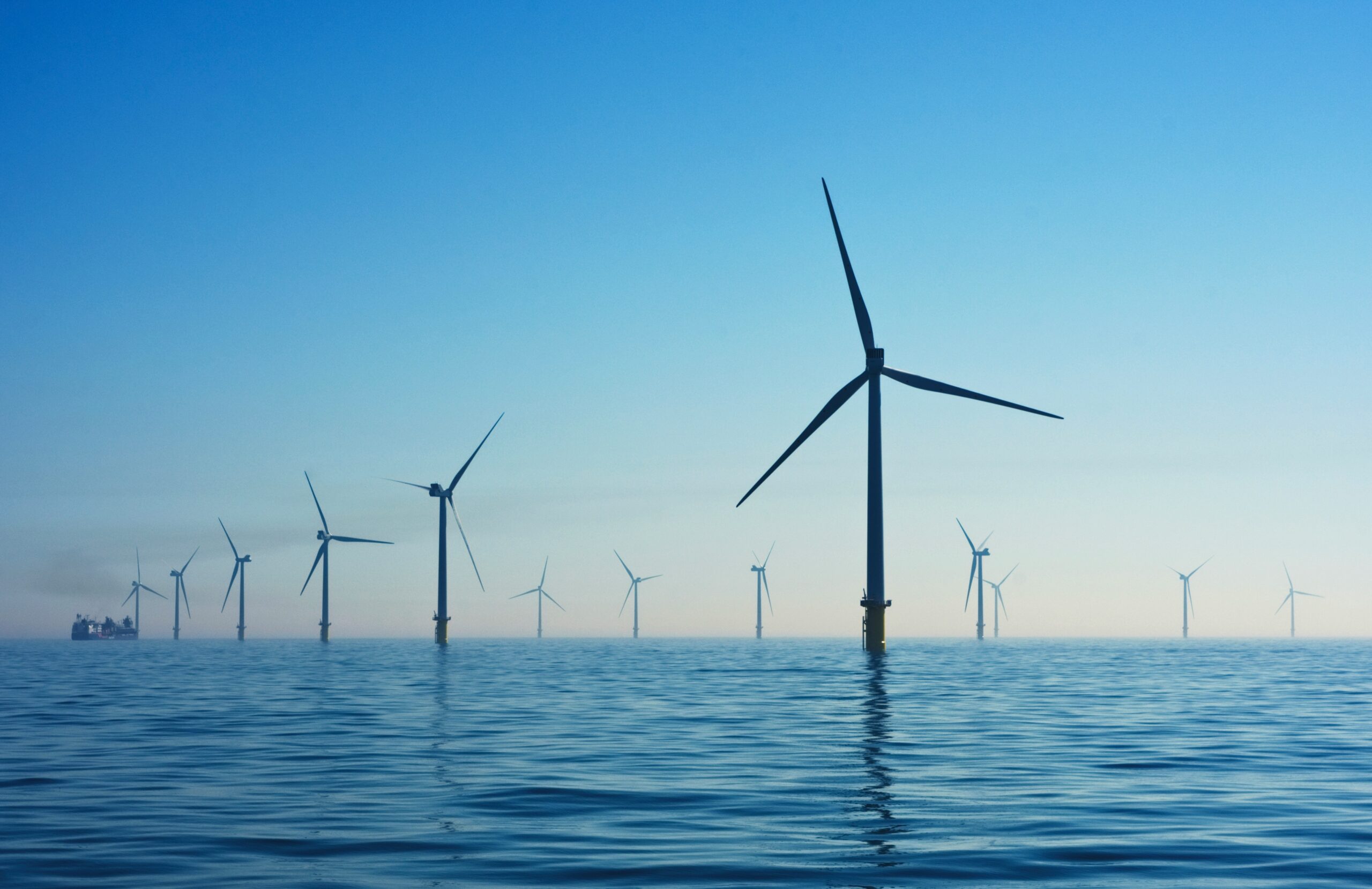
Project Timeline and RWE Partnership

The project expects a final investment decision in 2029, with electricity production slated for 2033, aligned with France’s RTE grid connection schedule.

RWE has announced its intention to exit the consortium, pending approval from French authorities. TotalEnergies will continue development, honoring all existing commitments, and plans to bring in a new partner to replace RWE.

Regional and European Benefits

The project strengthens Normandy’s regional economy and France’s position in the European offshore wind market. It will create advanced training opportunities, foster growth among European suppliers for turbines and transmission cables, and support local initiatives through a €10 million territorial fund dedicated to education, culture, and workforce development.

TotalEnergies’ Renewable Leadership in France

TotalEnergies has a long-standing presence in France, investing more than €8 billion since 2020, with nearly half directed toward renewable energy projects. The company operates 660 renewable assets across wind, solar, hydro, and battery storage, supplying electricity to 1.8 million people and serving 4.2 million residential and business customers. With over 2 GW of installed renewable capacity, TotalEnergies ranks among the top three renewable electricity providers in France.

A Brief History and Future of Wind Energy in France

France has steadily grown its wind energy sector over the past two decades, becoming a key player in Europe’s renewable energy transition. As of 2025, the country has reached a total of 18,676 megawatts (MW) of installed wind power capacity, making it the world’s seventh-largest wind power nation by installed capacity. Onshore and offshore wind farms across Normandy, Brittany, and other regions have contributed to this impressive growth, laying the foundation for France’s ambitious future targets.
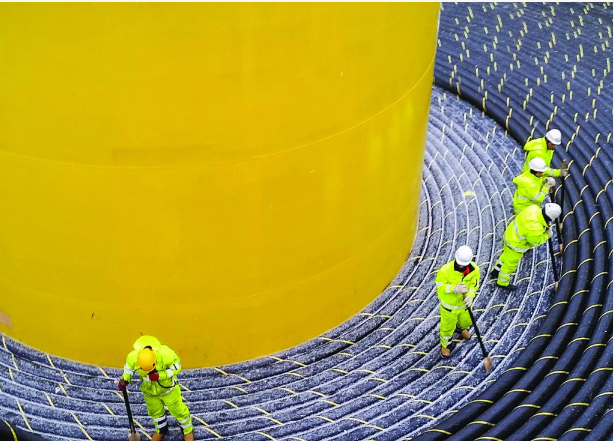
Looking ahead, France aims to achieve 18 GW of offshore wind capacity by 2035 and 45 GW by 2050, reflecting its commitment to carbon neutrality and the broader EU climate goals. To support this, the French government has proposed a major €11 billion state aid scheme, designed to accelerate the development of offshore wind projects, foster industrial growth, and stimulate job creation in the sector.

The Centre Manche 2 project represents a cornerstone in achieving these targets. With a capacity of 1.5 GW, it will supply green electricity to over 1 million households, significantly contributing to the 2035 target of 18 GW. Beyond its direct output, the project sets a benchmark for industrial best practices, environmental sustainability, and local economic engagement. By leveraging European suppliers, promoting apprenticeship programs, and investing in regional infrastructure, Centre Manche 2 strengthens the ecosystem needed to achieve France’s long-term offshore wind ambitions. Its success will act as a catalyst for the country’s renewable energy expansion, helping France move closer to its 45 GW goal by 2050.

Centre Manche 2 Offshore Wind Project – Key Information

FeatureDetails
Project NameCentre Manche 2 Offshore Wind
OperatorTotalEnergies (RWE partnership initially)
Investment€4.5 billion
Location40 km off the coast of Normandy, France
Capacity1.5 GW
Electricity Generation6 TWh per year
Households Powered~1 million
Electricity Price€66/MWh
Jobs CreatedUp to 2,500 during construction
Training/Apprenticeships500,000 hours
Environmental Fund€45 million for mitigation, €15 million for biodiversity
Recycling Commitment≥95% turbine components, 100% generator magnets
Investment DecisionExpected 2029
Electricity Production Start2033
Local InvestmentCrowdfunding options for Normandy residents; €10M territorial fund
European Industry EngagementPriority sourcing from European suppliers (turbines, cables)

Conclusion: A Milestone for France and Europe

TotalEnergies Centre Manche 2 Offshore Wind represents not only France’s largest renewable energy project but also a model for sustainable industrial growth. With over 1 million homes powered, thousands of jobs created, and groundbreaking environmental commitments, this project sets a benchmark for the European green energy transition.
Trump Offshore Wind Crackdown Fails—1,000 Workers, 350,000 Homes Back in Play

Trump Offshore Wind Crackdown Fails—1,000 Workers, 350,000 Homes Back in Play

A federal judge allows Ørsted’s $5 billion Revolution Wind project to resume off Rhode Island, overturning the Trump offshore wind crackdown.

WASHINGTON, D.C.Former President Donald Trump’s aggressive effort to shut down America’s offshore wind industry suffered a major setback Monday when a federal judge ruled that the multibillion-dollar Revolution Wind project can resume construction.

The Revolution Wind project has long been a hot topic because of the Trump administration’s policies, renewable jobs, and global investment. The offshore power project, led by Danish renewable giants Ørsted and Skyborn Renewables, was halted on August 22nd when the Bureau of Ocean Energy Management (BOEM) issued a stop-work order citing unspecified “national security concerns.” The halt to progress on a wind farm that is already 80% complete has put more than 1,000 jobs at risk and billions in investment at risk.

But on Monday, U.S. District Judge Royce Lamberth lifted the stay, calling Trump’s offshore wind crackdownharmful and unreasonable,” insisting that developers have lost about $2.3 million for each day of delay, with specialized construction vessels unlikely to return until 2028 if the deadline slips. “I have no doubt that plaintiffs will suffer irreparable harm,” Judge Lamberth said in his ruling.

$5 Billion Clean Energy Milestone

Upon completion, the Revolution Wind project will provide enough clean electricity to power 350,000 homes across Rhode Island and Connecticut—about 2.5% of the region’s demand. Developers have already invested about $5 billion in the project, making it one of the largest clean energy initiatives in New England’s history. Ørsted warned that canceling it could cost more than $1 billion.

“This ruling allows us to immediately resume offshore work and complete this important project,” Orsted said in a statement.

Connecticut Attorney General William Tong and Rhode Island Attorney General Peter Neronha both praised the decision, calling it a victory for workers, families, and energy security.

Trump’s War on Offshore Wind

Trump sought to shut down offshore power projects on his first day in office and has done so by shutting down nearly all of the previous projects, including projects that were in the middle of construction, and by showing interest in oil, gas, and coal. And since returning to office, Trump has doubled down on his opposition to offshore wind, calling the industry expensive, unreliable, and a threat to fossil fuel dominance. The Rhode Island wind project is no exception, with his administration revoking permits, withholding $679 million in federal funding, suspending new leases across U.S. waters and trying to shut down projects in Massachusetts and Maryland.

Environmentalists say the moves are politically motivated. “Trump is trying to push renewable energy to the brink of extinction in favor of dirty and expensive fossil fuels,” said Nancy Pine of the Sierra Club, calling Monday’s ruling “a victory for the climate and American workers.”

The White House has pushed back, insisting that it is not the end of the legal battle. “This will not be the final decision on this issue,” said spokeswoman Anna Kelly, adding that Trump is committed to restoring “American energy dominance” by prioritizing fossil fuels.

The Big Picture

Construction on the Revolution Wind project began about 15 miles off the Rhode Island coast, following the example of the smaller Block Island Wind Farm. With more than 1,000 workers on site, the project is being seen as a bellwether for whether America can scale up offshore wind despite political opposition.

If completed, it would mark a significant turning point in U.S. clean energy policy—proving that offshore wind can withstand intense political opposition and provide jobs, investment, and renewable energy to millions of families.

With construction now resuming, Revolution Wind is committed to collaborating with the administration and stakeholders to ensure the project stays on track, securing jobs, clean energy, and progress for the region.

Canada and Nova Scotia Chart Bold Course for Offshore Wind Future

Nova Scotia Powers Up Offshore Wind

Nova Scotia is taking its biggest step yet toward Canada offshore wind—and the results could be transformative for Atlantic Canada’s clean energy and beyond.

A New Era for Clean Energy

The Government of Canada and Nova Scotia have unveiled a strategic plan that clears the way for the first Canada renewable energy projects. The move gives the Canada–Nova Scotia Offshore Energy Regulator new direction to launch a prequalification process and call for information, drawing in global investors while opening the door for public and Indigenous input.

This process will set the stage for a call for bids on offshore wind areas, ensuring projects are both environmentally responsible and economically viable.

Major Projects Office Steps In

The announcement builds on last week’s creation of the federal Major Projects Office (MPO), which will focus on advancing transformative energy infrastructure—including the proposed Wind West Atlantic Energy project.

If developed, Wind West could tap into some of the world’s strongest offshore winds, delivering clean power across Atlantic Canada while strengthening energy security and creating new economic opportunities. Plans also include interprovincial connections through transmission lines between Nova Scotia, New Brunswick, Prince Edward Island, Quebec, and Newfoundland and Labrador.

Leaders Call Canada Offshore Wind a “Game Changer”

Government officials are framing this as a turning point for Canada’s energy future:

  • “Now is the time to harness our powerful wind potential, turning it into prosperity and new opportunities,” said Tim Hodgson, Minister of Energy and Natural Resources.
  • “We have the wind, the people, and the ambition to lead the clean energy future,” added Sean Fraser, Minister of Justice and Attorney General of Canada.
  • Nova Scotia’s Energy Minister Trevor Boudreau called offshore wind a “game changer” that will deliver clean energy to markets while creating good jobs for Nova Scotians.

Industry Momentum Building

The Canada–Nova Scotia Offshore Energy Regulator is finalizing details of the process, which will guide the first Call for Bids. Industry voices say maintaining momentum is crucial to attracting world-class investment and ensuring benefits flow to communities across Atlantic Canada.

Why It Matters

With global demand for offshore wind accelerating, Canada is finally staking its claim in a sector projected to deliver billions in investment and thousands of jobs worldwide.

This fall could prove pivotal: Nova Scotia’s offshore winds are poised to power homes, strengthen energy security, and position Canada as a serious contender in the global clean energy race.

Why Offshore Wind Matters for Nova Scotia’s Future

Nova Scotia is emerging as one of the most promising places in the world to build offshore wind farms—and the benefits could be enormous.

Clean Energy, Zero Emissions

Offshore wind offers a powerful alternative to fossil fuels. By generating electricity without greenhouse gas emissions, Nova Scotia can cut pollution, meet its climate change goals, and become a leader in the global clean energy transition.
Supporting Other Clean Industries

The impact goes beyond power generation. Offshore wind can also fuel other clean energy industries, like green hydrogen, creating new opportunities for innovation, investment, and exports.

Driving Economic Growth

Developing offshore wind could strengthen Nova Scotia’s economy. It would boost the local supply chain, create high-quality jobs, and support port services, construction, and advanced research. With its skilled workforce and strong academic institutions, the province is well-positioned to build an entirely new energy industry.

Ideal Conditions for Wind Farms

Nova Scotia has natural advantages that make it uniquely suited for offshore wind:

  • A wide continental shelf with relatively shallow waters, perfect for floating or fixed platforms.
  • Some of the fastest and most consistent winds in the world.
  • Deep, ice-free harbors ready to support offshore construction and shipping.

These features make it possible to build large-scale wind farms that deliver clean, reliable energy.

Balancing Development and Responsibility

Building wind farms at sea requires careful planning. Factors such as distance to shore, seabed conditions, turbine design, weather patterns, and environmental impacts must all be considered. That’s why both the federal and provincial governments are jointly regulating projects through the Canada–Nova Scotia Offshore Wind Energy Regulator, ensuring development is sustainable and balanced with other ocean industries.

Nova Scotia Offshore Wind Advantage

What makes Nova Scotia stand out globally?

  • Abundant wind resources matched with proximity to growing European clean fuel markets.
  • Available land and ports for facilities, manufacturing, and servicing turbines.
  • A competitive, experienced workforce with knowledge in ocean industries and energy.
  • A reputation as a leader in emerging technologies.

The Big Picture

Nova Scotia offshore wind represents a once-in-a-generation opportunity for Canada renewable energy projects. It can power homes, support new industries, create thousands of jobs, and position the province as a clean energy hub—not just for Canada, but for the world.


Europe Needs More €2.4bn Investment for 2030 Offshore Wind Goals—Report

Europe offshore wind investment needs an additional €2.4 billion for 2030 offshore wind golas

Europe aims to increase its offshore wind capacity to 84 GW by 2030, but one of the most important challenges is the lack of investment in shipbuilding and port infrastructure

Brussels, August 2025— Europe is facing a shortfall in offshore wind investment, according to a new report by IndEurope News. With just five years to go to meet its 2030 energy targets, Europe offshore wind investment needs an additional €2.4 billion in funding to ensure its offshore wind infrastructure can grow in time. Without this investment, Europe will fall behind in its clean energy transition.

Europe needs urgent action to meet offshore wind targets

Europe currently has 36.6 gigawatts (GW) of installed offshore wind capacity. To meet climate targets and energy security commitments, this figure needs to rise to 84 GW by 2030. Achieving this target depends on the continent installing at least 10 GW of offshore wind capacity annually, which is expected to increase to 15 GW per year after 2030.

While the installation rate is currently on track, supporting infrastructure, including ports and ships, is not developing fast enough. It is understood that significant capacity shortfalls could hinder the deployment of offshore wind projects in the future.

Marine infrastructure plays a central role

The offshore wind supply chain is heavily dependent on Europe’s maritime infrastructure. In the last three years, €6.7 billion has been invested in port upgrades and ship procurement. Analysts warn an additional €6.4 billion is needed, and €2.4 billion in the short term to meet the 2030 target.

This infrastructure is needed for building, installing, and maintaining wind turbines, so without immediate investment in this area, the supply chain may not be able to handle the volume of installations needed to stay on track.

Read more: https://windnewstoday.com/pd-ports-aims-200m-offshore-wind-hub-teesport/: Europe Needs More €2.4bn Investment for 2030 Offshore Wind Goals—Report

EU ports strategy aims to fill infrastructure gaps

The European Commission is developing a new EU-wide ports strategy aimed at supporting the offshore wind sector. Ports are crucial for the industry. They act as logistical hubs for transporting turbines and components, act as maintenance bases and provide the space needed to assemble large structures—especially for floating offshore wind.

Strategic importance of ports for offshore wind

Over the past three years, €4.4 billion has been invested in port infrastructure across Europe, yet the report finds that an additional €2.4 billion is urgently needed to upgrade facilities and expand port capacity, as ports play a key role in supporting local wind energy supply chains and delivering efficient projects across the continent.

Policy measures proposed in the EU Ports Strategy

The Ports Strategy is expected to recommend three key actions. Firstly, the European Investment Bank could be involved in increasing funding allocations through programs such as the EU Connecting Europe Facility and supporting strategic projects. Secondly, the Commission is likely to simplify permitting procedures, as it can currently take up to 10 years to approve port expansions. Finally, the strategy could include an EU-wide map of port capacity and plans to match them with the demand for offshore wind deployment in member states.

Shipbuilding and ship investment are barriers.

In the case of offshore wind, there was talk of ports but in addition to ports, Europe needs to make significant investments in its offshore wind fleet. Why ports? Because currently, around 80 ships are used across Europe to install turbines and transport workers. The emergence of larger turbines over 15 MW requires a new generation of ships with more advanced capabilities.

Technological innovation of ships is needed

In the last three years, Europe has already invested around €2.3 billion in offshore wind ships. Despite this progress, an additional €4 billion is needed to install larger and more technologically advanced turbines, many of which are not capable of handling the weight and complexity of the new models.

Reducing emissions from marine activities

Marine activities currently contribute up to 20% of the total life cycle emissions of an offshore wind project. Decarbonizing this sector is crucial. The EU Maritime Industrial Strategy is expected to promote clean fuels such as hydrogen, ammonia, and electricity while supporting the refitting of older ships or the construction of new zero-emission ships.

How Europe’s Offshore Wind Future Hinges on Strategic Europe Offshore Wind Investment

Europe’s offshore wind future largely depends on timely investment. Its ability to meet its offshore wind targets depends on swift and coordinated action. A well-funded port strategy and a forward-looking maritime industry strategy can ensure that infrastructure, permitting, and innovation are developed in line with demand.

Without investment, the European Union could fail to achieve its 2030 offshore wind goals. It clearly said that it risks losing its global leadership in renewable energy. Though the window for action narrows, decisions taken in the coming months will fix the future of Europe’s clean energy landscape.

Key points:

  • More than €4.4 billion has been invested in ports.
  • Ports supply, store, assemble, and maintain wind equipment.
  • Floating offshore wind infrastructure to be integrated into port areas
  • Europe to generate 10 GW of electricity per year by 2030 and 15 GW later
  • A €2.4 billion shortfall needs to be urgently filled.
  • Ports and ships are out of the question for offshore wind to succeed.
  • The strategic move will determine Europe’s energy security and competitiveness for decades to come.

In the Bottom

If the EU is serious about leading the way in offshore wind, it needs to match ambition with investment. The proposed EU Port Strategy and Maritime Industry Strategy offer a golden opportunity to close the Europe offshore wind investment of €2.4 billion and strengthen Europe’s journey towards a cleaner, more resilient energy system.

New York Pulls Plug on Offshore Wind Transmission

Offshore wind transmission New York City halted amid Trump legacy

From WindNewsToday Staff | Source: Public Statements, New York post

Offshore wind transmission New York City halted amid Trump legacy — while nation’s largest offshore wind Farm is gaining momentum!

A tipping Point In The Wind

offshore wind is a stunning blow to the clean energy economy, the New York State Public Service Commission (PSC) is stopping the process for approving vital offshore wind transmission New York lines that is intended to deliver renewable electricity to the downstate region of New York City. The commission’s action, industry advocates say, is the single most severe blow so far to New York clean energy policy and climate goals — and they are placing the blame squarely on former President Donald Trump offshore wind opposition.

The PSC attributed the decision to federal uncertainty and Trump administration hostility toward offshore wind as the reasons for putting construction approvals on ice. The ruling, delivered with little fanfare but resonating mightily throughout the state’s energy sector, punctures New York’s signature climate law — the Climate Leadership and Community Protection Act — which requires a power sector free of carbon by 2040 and a mix that includes 70 percent renewable energy by 2030.

“Offshore wind transmission New York Halted is significant,” said John B. Howard, a former PSC chairman. “The Climate Act is not operational. “We’re obviously going to be way past the emission deadlines.

The Trump Shadow Still Looms

New York clean energy policy once made the state a national leader in clean energy innovation. But the P.S.C.’s stepping on the brakes of transmission lines essential for offshore wind integration shows a structural weakness one that would have become clear if it became impossible to get the wind-generated electricity to where it is most needed, New York City and left those targets a pipe dream.

Offshore wind projects in the United States, which have long been stymied along the East Coast, are facing a critical, make-or-break moment as a flurry of developers push to bring the turbines to American waters. The United States was rushing toward its 2030 clean energy goals, even New York clean energy goals — delivering clean electricity to trillion NYC homes and creating thousands of renewable energy jobs — but several new federal policy reversals under the former president, Donald Trump, are progressing the opposite.

Just yesterday, California’s clean energy companies were warning of this. They urged Gov. Gavin Newsom and state lawmakers to act quickly in response to drastic changes to federal tax policy under Trump. Industry leaders said the revisions endanger billions of dollars in investments in renewable energy and could upend California’s ambitious clean energy goals.

And all of this anxiety comes hot on the heels of another huge blow — the U.S. Department of the Interior last Friday said it would stop fast-tracking approval for solar and wind projects on federal land. And now, the effects have landed in New York.

In a surprise move today, the New York State Public Service Commission, PSC halts wind transmission lines that would carry offshore wind power to New York City and downstate. Without this crucial infrastructure in place, the most ambitious offshore wind projects will be unable to deliver electricity to homes and businesses—and their promise will remain unrealized.

“For now, offshore wind remains a promise deferred in New York.”

New York offshore Wind Projects already in the queue or under contract will likely move forward, but without the necessary transmission assets, it’s unlikely that much more development or full scale expansion will take place. State officials say the decision to pause is calculated and temporary, a safeguard to protect ratepayers at a time of political and economic volatility. But with the flawed and shifting landscape of federal support, the long-term roadmap now seems even more nebulous.

About offshore wind transmission New York — South Fork Wind — a great example of New York offshore Wind Projects, just completed in spring 2024 with creating nearly 1000 green jobs in 5 states — would connect offshore wind farms in the Atlantic Ocean to substations in the New York City metropolitan area, are now in legal limbo. Without these projects, there would be no practical way to transport the energy even if offshore wind farms were built.

Energy sources say the decision has the state’s green energy law “in shambles,” and throws into question the future of offshore wind as a significant power source for downstate New York.

Ratepayer Risk Amid Federal Paralysis

Beneath the PSC’s order looms the fear that New Yorkers, stuck with higher utility rates to pay for infrastructure that may never be used, could be left holding the bag. Customers of gas and electric utilities would have covered the costs of the transmission lines — a long-term investment that was financially viable only if the offshore wind projects went forward.

But it’s the refusal of the Trump administration to grant new offshore wind leases and permits in its term that has paralyzed certain pivotal developments. The Biden administration has since resumed permitting, but the PSC remains leery, warning that future federal elections might return more opponents to power, threatening long-term projects.

“There is no time to wait. The lowest-cost energy future for New York will feature a significant complement of offshore wind,” Alliance for Clean Energy New York and New York Offshore Wind Alliance (NYOWA) said in a joint statement. “We need our state to invest in transmission infrastructure and bolster a grid that will be able to accommodate the increasing demand for energy and at the same time save ratepayers money over the long term.”

The two groups maintain that if nothing is done New York risks being left lagging in the national race toward clean energy supremacy.

Politics and Permits: Trump’s Lasting Influence

Ørsted aims to create an ecosystem in which offshore wind and fishing can both thrive image: South Fork Wind Farm

The Trump administration’s wariness of offshore wind left a mark. Crucial permit freezes, regulatory barriers, and public resistance made for hostile local conditions for developers and financiers. And in the friendlier federal climate ushered in by President Biden, the scars remain, especially as at the state level, where projects take years to build and often require the support of many consecutive political administrations to finish.

New York Offshore wind projects can take more than a decade to develop — and that span frequently overlaps with tumultuous political cycles. Even small uncertainties can cause investment to freeze and execution to be postponed.

The PSC’s hesitation reflects that reality, and is not entirely unexpected given the political winds.

Hochul’s Balancing Act

Gov. Kathy Hochul, a longtime proponent of New York’s transition to renewable energy, had the PSC’s careful approach to the issue. And while saying she remained committed to clean energy and looking to shield ratepayers from financial risks associated with an uncertain federal support, an American Recovery Plan advocated the need for pocketbook protections.

“Governor Hochul has fiercely supported and remains committed to renewable energy projects, including offshore wind, but there is no doubt that, in this era of federal uncertainty, New York ratepayers need to be protected,” said Ken Lovett, her senior advisor for energy and the environment.

“In light of the political hostility to New York offshore wind projects from the federal government, and the consequent economic uncertainties surrounding such projects, we believe the PSC is correct that it would be unfair to burden ratepayers with the costs of a project that is not likely to produce any real benefits,” Lovett said. “When conditions are more favorable, we will be ready to proceed quickly.”

Offshore Wind Transmission New York Halted, Advocates React

The decision — PSC halts wind transmission lines, has been criticized by the clean energy industry as short-sighted. Advocates say that halting the development of new long-distance transportation now simply worsens the longer-term climate crisis, and that it lets fossil fuel infrastructure reign in the meantime.

“We appreciate concerns about cost — but inaction is even costlier: the cost of an increasingly damaged climate,” said Anne Reynolds, Executive Director of the Alliance for Clean Energy New York. “Delaying transmission is delaying progress.”

Trump offshore wind opposition decision by New York could cast a chill on the rest of the offshore wind industry in the Northeast at a time when states such as New Jersey, Massachusetts and Rhode Island are moving forward with their own transmission and wind deployment plans.

What’s Next?

For the moment, offshore wind lies as a promise deferred in New York. New York offshore Wind Projects that are already under contract can go forward, but there is little chance of further expansion to reach full scale without the “wires” to move the power. State officials emphasize that the pause is temporary and the result of strategy — the road ahead is hazier without more significant federal support, however.

The latest comes amid mounting frustration in the renewable energy industry. Now, offshore wind — long an iconic symbol of forward-looking climate ambition — is ensnared in a battle between state ambition and federal skepticism. Now, projects that require at least a decade of work to develop and build face a crucial question: Can they survive politics that are in a constant state of flux?

As climate deadlines loom and the demand for clean energy grows, the question is no longer whether the United States can lead the world in renewable energy — it’s whether it can regain lost momentum in time.

Can New York Catch the wind once again before it blows past?

Source — New York Post — https://nypost.com/2025/07/17/us-news/new-york-halts-offshore-wind-power-lines-citing-trump-opposition/

📌 For the latest on U.S. renewable energy policy, visit:

👉 WindNewsToday.com

RWE achieves milestone with 1.4 GW offshore wind farm to power 1.2 Million UK homes

Offshore Wind Technician USA

Teesside, 15 July 2025 — RWE has reached a significant construction milestone at its flagship Sophia offshore wind farm with the 100th steel monopile foundation for a project located on Dogger Bank, 195 kilometers off the UK’s north-east coast – now the latest to be successfully installed, marking the end of a complex 14-month offshore foundation campaign.

When operational, the 1.4 gigawatt (GW) project will have enough clean electricity generation capacity to power 1.2 million typical UK homes annually, further supporting the UK’s renewable energy targets and energy security.

Dutch marine contractor Van Oord led the foundation installation operation under a comprehensive EPCI (engineering, procurement, construction and installation) contract. The company used its upgraded jack-up vessel Aeolus, which was equipped with a custom 1,650-tonne capacity crane, to handle Sofia’s heaviest monopiles – each monopile forming the basis for a 252-metre-long Siemens Gamesa 14 MW turbine.

Recyclable turbine blade with specialist resin system developed by Siemens Gamesa, ordered for Sofia Offshore Wind Farm

Sven Uttermoehl, CEO of RWE Offshore Wind, praised the achievement, cited: “The successful completion of the monopile installation in Sofia is an important milestone in the implementation of this complex offshore wind construction project. This achievement is a testament to the expertise, dedication and collaboration of our partners across the RWE Group. Sofia will play a key role in contributing to the UK’s clean energy transition and strengthening energy security.”

RWE advances Sofia offshore wind farm with industry-leading innovation and sustainable solutions

With the successful installation of all monopile foundations, a milestone in this regard, Van Oord has begun the next major phase at the Sofia offshore wind farm – the installation of approximately 360 km of array cables, which is expected to be completed by the end of 2025. Meanwhile, as we already know from the progress of turbine installation, 27 of the 100 Siemens Gamesa 14 MW turbines have already been installed – half of which with recyclable blades, reinforcing Sofia’s role as a global model for sustainable offshore wind.

Sofia, the first offshore wind project worldwide to commit to using Siemens Gamesa 14 MW turbines during its initial development, will demonstrate its leadership in technology adoption. This article provides a comprehensive overview of the technical and engineering innovations that will transform Sofia into a next-generation clean energy project.

Cutting-edge design and environmental innovation

Steel monopile foundations installed at Dogger Bank for Sofia Offshore Wind Farm, 195 km off the UK coast

A number of modern design innovations have been used and adapted. Here In contrast to traditional offshore foundations, separate transition pieces are used, with the design for Sophia using extended single-piece monopiles. Manufactured by EEW, this approach reduces total steel usage, reducing the project’s carbon footprint and material requirements.

In another UK first, the project has installed a full-scale bubble curtain noise abatement system for 34 foundation installations. Operated by Hydrotechnic Offshore, the technology protects marine species in the environmentally sensitive Southern North Sea Special Area of Conservation (SAC), helping to reduce underwater noise.

Port of Tyne 1.4 GW offshore Wind Farm

Foundation components stored at Port of Tyne for RWE’s Sofia project, highlighting offshore wind supply chain infrastructure.

All offshore foundation elements were marshalled and stored at the Port of Tyne, where significant infrastructure investment is being made to meet the logistical needs of Sophia. This has enhanced the port’s role in future offshore wind developments across the North East of England.

Leading sustainable turbine technology

Recyclable turbine blade with specialist resin system developed by Siemens Gamesa, ordered for Sofia Offshore Wind Farm.

Next up in turbine technology, the reusable blades used on Sophia are made with a specialist resin system that enables full recyclability and mark the largest order of this type of blade at the time of purchase. The Turba initiative not only supports the circular economy but also paves the way for environmentally-conscious offshore wind development worldwide.

Increased grid capacity

To maximize energy export efficiency, Sophia has increased its grid connection capacity from 1,000 MW to 1,320 MW, using advanced high-voltage direct current (HVDC) technology with voltage source converters. This allows for increased transmission capacity, helping to deliver cleaner energy to homes in the UK. And planning the world’s longest offshore export cable, spanning 220 kilometers, required highly specialized engineering to overcome the challenges of laying the infrastructure through complex seabed conditions.

World-class vessel and equipment installation

Sophia is set to be the first offshore wind farm to use the world’s most advanced cable-laying vessel, Prysmian’s Leonardo da Vinci. Equipped with:

  • The highest cable carousel capacity on the market
  • Double the industry-average capstan capacity
  • A DP3 dynamic positioning system
  • Hybrid propulsion and 90-day operational autonomy

The vessel will enable installation in water depths of up to 3,000 meters, making it ideal for the project’s demanding offshore environment.

Innovations in cable construction and sustainability

Installation of recyclable HPTE-insulated HVDC cables for Sofia’s onshore grid connection, reducing carbon emissions by 40%.

The onshore HVDC cable will incorporate a patented High-Performance Thermoplastic Elastomer (HPTE) insulation system—a fully recyclable, zero-emission process that reduces carbon emissions by 40% compared to conventional methods.

Onshore civil engineering contractor JMS has used innovative construction techniques to optimize efficiency and safety:

  • V-buckets, which reduce trenching time and heavy equipment passes
  • A duct trailer system that eliminates the need for workers in trenches when installing ducts
  • A sand truck that reduces trenching time when installing cement-bound sand

Cutting-edge wind farm layout and infrastructure efficiency

Recyclable turbine blade with specialist resin system developed by Siemens Gamesa, ordered for Sofia Offshore Wind Farm.

The Sophia team has developed a highly optimized array layout to maximize energy production. The design of the offshore converter platform has also been significantly streamlined, using fewer materials and reducing overall project costs compared to previous designs used in Germany.

Strategic collaboration with the adjacent Dogger Bank Sea Wind Farm project is enabling Sophia to achieve cost-sharing and technological synergies, increasing efficiency in both developments.

Collaborative Procurement and Risk Management

Using a holistic, experience-led procurement strategy, RWE worked closely with potential supply chain partners at the pre-tender stage to align contract models. This approach allowed for effective risk allocation, ensuring the lowest possible overall project cost while maintaining high innovation standards. It also contributed to the record-breaking Levelized Cost of Energy (LCoE) for Sofia.

Regulatory Innovation and Environmental Protection

RWE has pioneered several advances in environmental management and compliance:

  • Integrated LiDAR and sky digital survey for seabird monitoring – a novel application of proven technology for ornithological research.
  • Proposed the use of low-order deflagration to neutralize unexploded ordnance (UXO), which significantly reduces underwater noise and marine impact compared to traditional detonations.

RWE is active in high-level environmental research initiatives such as ORJIP II and OWSMRF, which aim to close knowledge gaps and reduce compliance risks for future offshore projects.

Investing in UK offshore innovation through ORE Catapult

Leonardo da Vinci cable-laying vessel at work on Sofia Offshore Wind Farm, equipped with high-capacity carousel and hybrid propulsion.
“Leonardo da Vinci cable-laying vessel at work on Sofia Offshore Wind Farm, equipped with high-capacity carousel and hybrid propulsion.

As part of its commitment to UK offshore wind innovation, SOFIA has supported the 2023 ORE Catapult Launch Academy, a nine-month programme designed to accelerate early-stage technology development. Ten UK-based companies have been selected, including:

  • Aquatech Group, known for its innovative cable monitoring and protection
  • Wildcat Films to Integrate Radar into Bird Survey

This collaboration will highlight Sophia’s commitment to nurturing the next generation of offshore wind technology and environmental solutions.

With its advanced design, sustainability-first approach and pioneering technology, the Sophia Offshore Wind Farm sets new industry standards and exemplifies how large-scale offshore wind can deliver clean, affordable and reliable energy. Once operational, this 1.4 GW wind farm is set to power 1.2 million UK homes, reinforcing RWE’s leadership in the global transition to renewable energy.

Sophia Offshore Wind Farm at a Glance

Total capacity: 1.4 GW

Offshore wind project location: 195 km off the north-east coast of the UK (Dogger Bank)

Total depth: 20-35 meters

Number of turbines: 100 x Siemens Gamesa 14 MW

Energy generated: around 1.2 million

Construction Stats: 2021

Expected to complete : 2025

Developer: RWE Offshore Wind

Frequently Asked Questions (FAQ)

What is the Sofia Offshore Wind Farm?

Sofia Offshore Wind Farm is a 1.4 gigawatt (GW) offshore wind project constructed by the RWE. Situated 195 kilometers from the UK’s northeast coast on Dogger Bank, it is one of the world’s biggest and most state-of-the-art offshore wind farm, and will power 1.2 million homes every year with renewable and clean energy.

The Sofia Offshore Wind Farm – who is building it?

Offshore wind power giant, RWE is leading the development and construction of the project. Among key suppliers are Van Oord, which will provide the foundation and the cable installation, and Siemens Gamesa which will deliver 14 MW wind turbines, complete with a recyclable blade design.

Sofia Offshore Wind Farm, where is it?

Sofia is situated 195 kilometres from shore at Dogger Bank in the North Sea around 195km off the coast of Teesside in the UK’s North Sea. It is located in water depths of 20-35 metres, on a sock the equivalent size to the Isle of Man – so one of the remotest and most challenging UK offshore wind farm developments to reach completion.

How many houses will be lit by the Sofia Wind Farm?

When fully operational, the Sofia Offshore Wind Farm will be capable of supplying power to around 1.2 million average UK homes, playing a major part in the UK’s ongoing transition to a clean, green energy system and providing the up to 1000 jobs the project is currently creating.

What sort of turbines are being used in the Sofia project?

The project features a total of 100 Siemens Gamesa 14 MW turbines, 50 of which have recyclable blades, marking a world first at this scale. The wind turbines are some of the largest on the market and are an impressive step in wind turbine technology.

What are the recyclable wind turbine blades — and why are they significant?

Recyclable wind turbine blades require a special-class resin system that can be broken down into individual materials at end of life. This will help advance a more sustainable offshore wind industry, reduce landfill waste and drive greater circular economy in the UK’s renewable energy efforts.

Which cable technologies are applied in the Sofia Wind Farm?

Sofia has both array and export cables. It will use 360 km of array cables and the longest ever offshore wind export cable in the world (220 km) using HVDC (High Voltage Direct Current) technology with voltage source converters. This enables more efficient power transmission and capacity is also up by 320 MW from 1000 MW.

What is HVDC technology and how can it benefit offshore wind farms?

The high voltage direct current (HVDC) transmission makes it possible to carry electricity for long distances at lower losses than the AC transmission. Sofia can deliver 1.32GW of wind power effectively to the UK grid and help meet renewable targets by using HVDC with VSC technology.

Sofia’s offshore wind cable installation: What’s so special?

Sofia is the first assignment of Leo, the world’s most advanced cable-laying vessel, which has started working on the project. It features:

Largest carousel capacity available

Hybrid propulsion for reduced emissions

Deep sea cables laying ability (up to 3,000 meters)

These new designs ensure that cable is laid more safely, efficiently and environmentally friendly.

What is Sofia doing to make construction less harmful to the environment?

Sofia has used bubble curtain noise mitigation systems during monopile installation in support of marine mammal conservation in the Southern North Sea Special Area of Conservation. It also employs low-order deflagration for UXO clearance, reducing impact on underwater noise.

Which ports and infrastructure does the Sofia Wind Farm use?

Foundation components and material are marshalled and distributed from the Port of Tyne. “The port has invested heavily into accommodating this major offshore wind development, which has significantly boosted the renewable energy supply chain in North East England.

What is RWE’s position in offshore wind on a global basis?

RWE is a global offshore wind development leader. The Sofia Offshore Wind Farm is currently the largest of RWE’s offshore wind farms under construction worldwide and one of the largest infrastructure projects in the UK, reinforcing the company’s ambition to play a part in the UK’s clean energy future and support its path to net zero.

What does the Sofia Wind Farm do to drive down costs of offshore wind energy?

Coupled with novel procurement strategies, innovative asset financing mechanisms, simplified converter station design, and a strategic collaboration with adjacent Dogger Bank C, Sofia has delivered market-leading levelized cost of energy (LCoE) offers, helping to reduce the costs of offshore wind.

What is the ORE Catapult Launch Academy and what role does Sofia have?

Sofia has backed the 2023 ORE Catapult Launch Academy, which aims to fast-track UK offshore wind innovation. The project chose firms from the UK in Aquatec Group and Wildcat Films to help drive forward cable protection systems and ornithological monitoring technologies.

BALTIC POWER INSTALLS 15 MW TURBINES In POLAND’S FIRST OFFSHORE WIND FARM

BALTIC POWER INSTALLS 15 MW TURBINES In POLAND'S FIRST OFFSHORE WIND FARM

Baltic Power installed 15 MW turbines in Poland offshore wind farm, which is a joint undertaking by ORLEN Group and Canada-based Northland Power, has entered a record-breaking phase with the installation in the Baltic Sea of the first 15 MW wind turbines in Poland. In total, 76 turbines will be installed at the project dubbed Baltic Power, which will be Poland’s first offshore wind project and one of the most advanced in Central and Eastern Europe.

“This is the most important day for the entire offshore wind industry in Poland,” said Grzegorz Szabliński, the President of the Management Board of Baltic Power. “The first successful installation of a turbine offshore is now a fact.”

Once operational, the wind farm will have an installed capacity of 1.2 GW and produce 4 TWh of green electricity per year to supply more than 1.5 million Polish households and cover about 3% of Poland’s electricity grid demand. Commissioning is scheduled for 2026.

Advanced 15 MW turbines Set New Benchmarks in Europe

Baltic Power is only the second offshore wind farm in Europe to start installing 15 MW turbines, and it elevates Poland to the vanguard of large-scale renewables in the region. The turbines, V236-15. 0 MW, and are some of the biggest and most powerful in the world.

Each turbine features:

  • “Blade length around 115 meters.
  • DA 120: Swept area: about 43,700 m² – the equivalent of over six football fields
  • Tower is 120m, and the overall building height is 260m+
  • Nacelles three stories tall
  • Upper tower sections using recycled steel – a world-first for offshore wind
  • A single turbine can produce sufficient electricity to power an electric public bus for a journey of around 100 km within a minute.

Supply Chain Boosted By Local Production

Baltic Power is already contributing to the strength of the local industry by using Polish suppliers for the major components. Nacelles are being manufactured at the recently-opened Vestas factory in Szczecin, with other parts, including offshore substation topsides, onshore cables, and some foundation elements, also made in Poland.

“This is a difficult, technically complex operation, but also an indispensable activity on the road to Poland’s clean energy future,” Szabliński said. “We’re not just putting in turbines, we’re building an industrial ecosystem.”

First Turbine Begins Installation at Sea Aboard Cadeler’s Wind Osprey

Installation is led by Cadeler, with a state-of-the-art O-class jack-up installation vessel, the Wind Osprey, recently upgraded in 2024 for the installation of large turbines.

Some of the Wind Osprey key specifications are given below:

  • 160-meter length
  • 11,000-ton jacking capacity
  • capacity with an above-deck reach of Niles 1600 tonnes with 160 meters.
  • Carrying capacity of 3 full turbine sets (tower, blades, nacelle) per trip

With a couple of other ships around the world being capable of performing these operations, we reserved Wind Osprey back in 2016 due to the limited global availability.

Learn more about Logistical Complications at Sea and on Land

Work is currently being carried out on several construction fronts for the Baltic Power project. In the offshore area, 15 construction vessels are simultaneously installing foundations and transition pieces within the site area. Works for installing inter-array and export cables, as well as offshore substations, have already started and are expected to be completed later this year.

Construction is also underway on the onshore grid substation, and work to establish a long-term operations and maintenance base in Łeba commenced in April. This site will be in use for a period of 30 years and will now even facilitate real-time coordination of offshore operations.

A Pioneering Step for Poland in the Era of Green Energy

Baltic Power is the first offshore wind project in Poland reaching such a high degree of physical maturity, and is, thus, also a new benchmark for future projects in the region. It is the only project in the country with an offshore construction process underway and is leading the way for the next generation of offshore wind infrastructure.

‘Applying such a large scale operation is all about planning, maritime logistics and engineering accuracy’ – Jens Poulsen, Project Director and Board Member, Baltic Power. “We have worked, and continue to work, diligently … to achieve safe, effective commissioning in 2020,” the company said.

Game-Changing for Poland’s Climate Aims

The Baltic Power offshore wind farm will provide significant environmental gains in addition to its technical and industrial advances. It is expected to prevent about 2.8 million tonnes of CO₂ per year at full operation compared to typical fossil-fuel generation.

Baltic Power, which has a capacity of 1.2 GW, is set to be a landmark in Poland’s move towards energy security, decarbonization, and compliance with EU climate goals.

About Baltic Power:

Baltic Power is a 50/50 joint venture between Poland’s ORLEN Group and Canada’s Northland Power. Situated some 23 kilometers off the coast of Poland in the Baltic Sea, the project is the country’s first commercial offshore wind farm and one of the farthest offshore wind projects in the entire Central European region.

FAQ – Baltic Power Offshore Wind Farm

Q1: What is the Baltic Power project?

A: It is the first such project for Poland, built in the Baltic Sea by ORLEN Group and Northland Power.

Q2: How many turbines will be in the wind farm?

A: It will be deployed using 76 Vestas 15MW turbines.

Q3: What is the project’s commissioning date?

A: The wind farm will be fully operational by 2026.

Q4: What is the capacity and energy output of the project?

A: The farm, which will have a capacity of 1.2 GW, will produce 4 TWh per year — about as much as 1.5 million households use.

Q5: What makes the turbines special?

A: The V236-15. 0 MW turbines are some of the most powerful in the world, with blades that stretch over 115 meters and are made in part from recycled steel.

Q6: Who is installing the product?

A: Cadeler is responsible for the transportation and installation of the vessel Wind Osprey.

China Breaks Another Record With 46 MW of Wind Power Generation

China renewable energy record 2025

China renewable energy news is great, with wind power boom in January-May enough to power entire countries like Indonesia or Turkey

BEIJING—June 2025

A charming example is set by china renewable energy record. China added 46 gigawatts (GW) of wind power and 198 gigawatts of solar power between January and May 2025, breaking China’s previous records and cementing its leadership in the global clean energy race. The Guardian says the added capacity of wind and solar power during the five-month period in 2025 is enough to produce as much electricity as Indonesia or Turkey, according to Lori Mylivirta’s analysis, a senior fellow at the Asia Society Policy Institute.

In May alone, China solar power grew by 93 gigawatts of installation, the equivalent of about 100 China solar panels installed per second, and wind power capacity added 26 gigawatts, the size of about 5,300 turbines. These installations could power countries like Poland, Sweden, and the United Arab Emirates, depending on operating conditions and efficiency.

China renewable energy record amid global climate tensions

The latest development comes amid ongoing informal climate talks between Chinese officials and former US negotiators in Beijing. Diplomatic relations over climate action have been strained since former President Donald Trump withdrew the United States from the Paris climate accord, accusing China of rampant pollution while protecting domestic industry.

Despite being the world’s largest greenhouse gas emitter, China is also by far the largest producer, installer, and exporter of clean energy technology. China suppresses 1000 GW of solar capacity, half of the total global production, according to government data and third-party trackers.

China green energy leadership happened because of Xi Jinping’s climate strategy. Chinese President Xi Jinping’s renewable energy speech has increasingly tied the country’s climate goals to national industrial policy, framing clean energy expansion as essential to rejuvenating the economy.

China’s role in the global climate talks now is not just about how much wind power China adds in 2025, but also about how it is winning the global clean energy race. “In the past five years, China has built the world’s largest and most complete new energy industrial chain,” Xi said at a conference in April.

This development has been accompanied by an explosive growth in supply chains and exports. But it has also put the financial squeeze on the whole of China’s solar industry. According to Bloomberg, the five largest Chinese solar companies reported a combined loss of more than 8 billion yuan in Q1 of 2025.

Speaking at a recent industry conference, Yang Liyou, general manager of Jinneng Technology, said the existing pricing and production model was a “death cycle,” suggesting hyper-competition and wafer-thin margins could endanger the stability of China’s place as the world’s clean energy manufacturing kingpin.

World Impact and Climate Implications

China Wind Power 2025

China’s breathtaking build-out of wind and solar installations isn’t just actively reshaping its own energy landscape—it’s sending ripples out across global energy markets, upending international geopolitical strategies and, with it, the future of the clean energy transition.
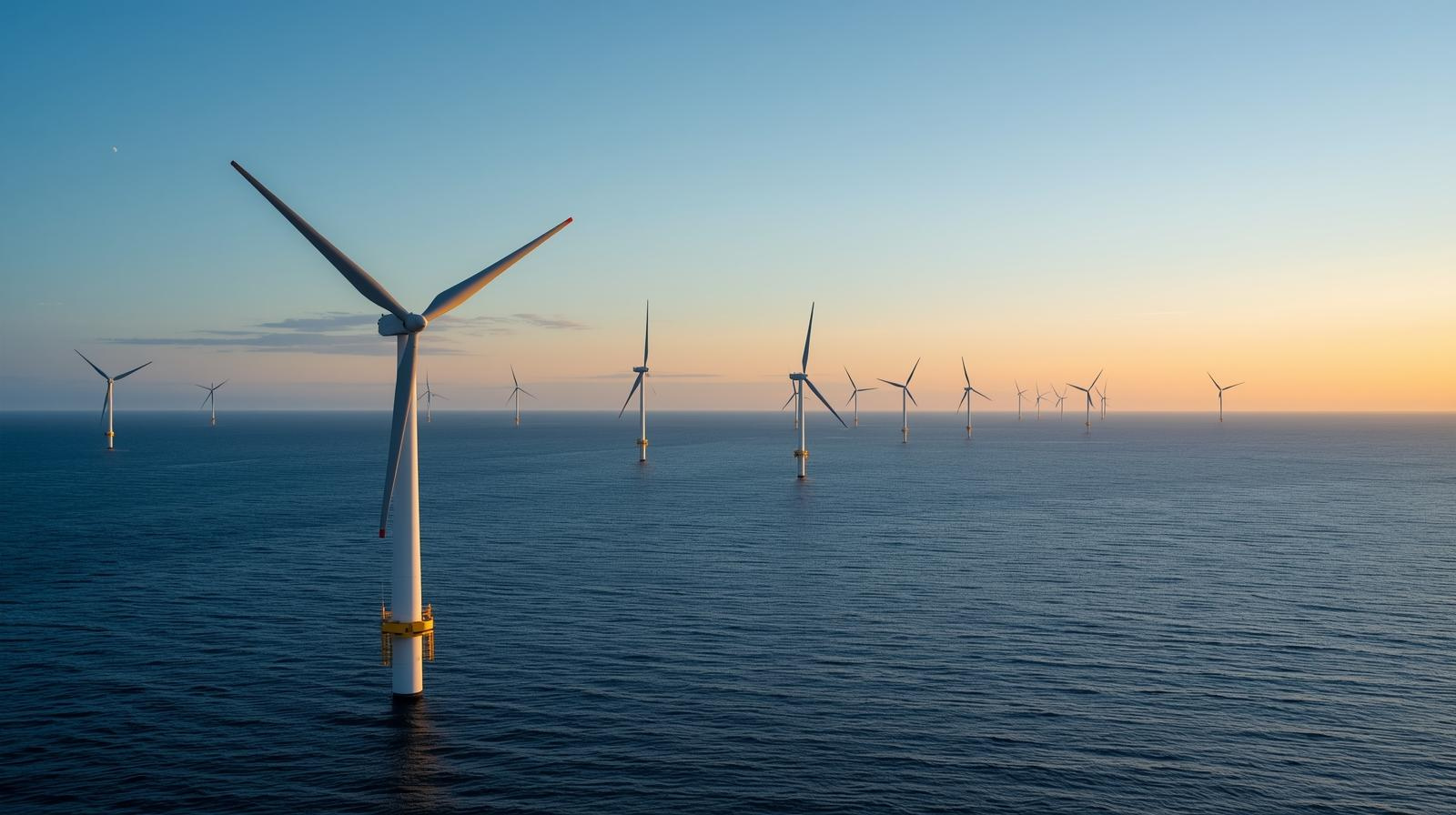
Economically, sprawling production in China has pushed global prices for solar panels and wind components to historic lows. China solar and wind growth is good for developing countries with demand for affordable, clean energy, but it is also putting pressure on Western manufacturers, some of whom are pushing for trade barriers and subsidies to shield their domestic clean energy industries.

Politically, these numbers give China the ability to leverage climate diplomacy, particularly at a time when the United States and the E.U. are pressing for steeper emissions cuts even as they struggle with their own internal policy divisions. Now that China’s momentum in clean energy has become tightly linked to its economic strategy, the country will have an upper hand in future climate talks — especially since some Western powers are rethinking their dependence on Chinese-made technologies.

China clean energy expansion surge also speaks to a bigger pattern: the global center of gravity for energy innovation is shifting east. If the trajectory holds, China will be not only the largest emitter or the largest builder of clean energy, but it will also become the yardstick by which we measure whether, in the next generation of energy infrastructure, we will have a livable planet or not.

As China continues to pull ahead with the deployment of clean power, the geopolitics and economics of energy transition are changing. The sheer magnitude of the country’s manufacturing and installation has driven down worldwide prices but has also spawned concerns about sustainability, labor practices, and market fairness.

Meanwhile, nations like the U.S. and those in the EU are re-evaluating trade and subsidy strategies to safeguard domestic clean energy industries while attempting to achieve net zero goals.

As new solar and wind capacity is added at record-breaking rates—and political rhetoric is tightly intertwined with industrial strategy—China is, for once, not just competing in the race, Ms. Hsu said. It’s setting the pace.

China solar and wind power growth: Jan–May 2025

🌬️ 46 GW of wind power added

☀️ 198 gigawatts of solar power added

May only: 93 GW solar, 26 GW wind

🏆 Total installed solar: 1,000+ GW

📈 Enough new capacity to power Poland, Sweden, Indonesia, Turkey

So that China renewable energy record in 2025 represents a turning point for how the world uses energy. And with 46 GW of wind and 198 GW of solar deployed in only the first five months of the year, the country isn’t just outpacing its own climate targets, or lucrative wind and solar installation in china but redefining the global clean energy market.

Challenges endure—from economic hardship facing domestic producers to mounting geopolitical suspicion—but China’s sheer scale, speed, and strategic linking of clean energy with economic policy have made it an unparalleled force in the field. As the world once again contemplates the urgent need for climate action and for secure energy, China’s market moves are making clear that the race to dominate renewable energy is no longer some nod to a green future—it’s on.

Why Equinor Says Trump Offshore Wind Ban Decision Is ‘Unlawful’

Trump Offshore Wind Ban Decision

The Trump administration has abruptly halted an offshore wind project already under construction off the coast of New York, which it has labeled “illegal,” with the Norwegian energy company Equinor behind the development. Equinor’s leadership is frustrated and concerned about what it sees as an unprecedented disruption to a fully approved project under Trump Offshore Wind Ban Decision.

On April 16, U.S. Interior Secretary Doug Burgum issued a stay on Equinor, citing “serious flaws” in the project’s environmental review process and claiming that the approval was “rushed.”

The $4.5 billion offshore wind power in the united states, Empire Wind, was expected to provide clean energy to millions of New York homes.

The sudden political shift has rattled industry

The announcement has shocked both investors and clean energy analysts, even though it has long been clear that former President Donald Trump opposes offshore wind – having previously criticized it during his first term – and industry insiders have assumed that federal permits issued would be honored under the existing legal framework.

U.S. Interior Secretary Doug Burgum
U.S. Interior Secretary Doug Burgum, Photo Credit: The Atlantic

“There were some political risks to the industry, but shutting down a project in the middle of construction – especially after years of permitting – is really disruptive,” said one analyst. Several other offshore wind projects along the US East Coast are now being reviewed for potential risks, creating widespread uncertainty in the renewables sector.

Equinor: ‘Stop-work orders are illegal’

Two weeks after the stop-work order, Equinor said it had yet to receive a detailed explanation from the US Department of State.

“Our position is clear: the stop-work orders are illegal,” said Equinor CFO Torgrim Reitan. “We had all the necessary permits in place by last year. Construction, including port development and seabed preparation at the turbine site, had already begun.”

According to Reitan, more than 30% of the project is already complete. The company has invested more than $2.5 billion in the project — $1.5 billion empire wind equinor of which was financed through debt — and expects strong returns over the next decade.

“It’s now a question of the sanctity of the deal,” Reitan added. “We invested in good faith and we are seriously considering our legal options.”

Questionable U.S. stability on ?

The suspension raises larger questions about political risk in the U.S. renewable energy market—questions typically related to countries experiencing political instability or regulatory chaos.

An analyst asked on the earnings call whether Equinor could face additional exposure to U.S. political risk. The company responded that it is confident in the broader U.S. energy market and is treating the situation as an isolated challenge involving “an asset and an investment.”

Still, the implications are significant. If federal authorities were to revoke permits through retroactive action without a clear reason, global energy companies could reconsider long-term commitments to U.S.-based projects.

Equinor has not yet filed a lawsuit but said legal action is “under active consideration.” The Department of State has not publicly responded to Equinor’s complaint or media outlets’ requests for clarification.
Legal experts have noted that revoking existing federal permits midstream could face strong court challenges, especially given the scale of the investment and public interest involved in offshore wind development.

Financial Impact on Trump Offshore Wind Ban Decision

Equinor shares fell about 1% in midday trading after the earnings call. The shutdown of the Empire Wind project is not the only challenge facing the company. Equinor also reported weaker-than-expected financial results due to low oil prices and soft trading returns under the Trump Offshore Wind Ban Decision.
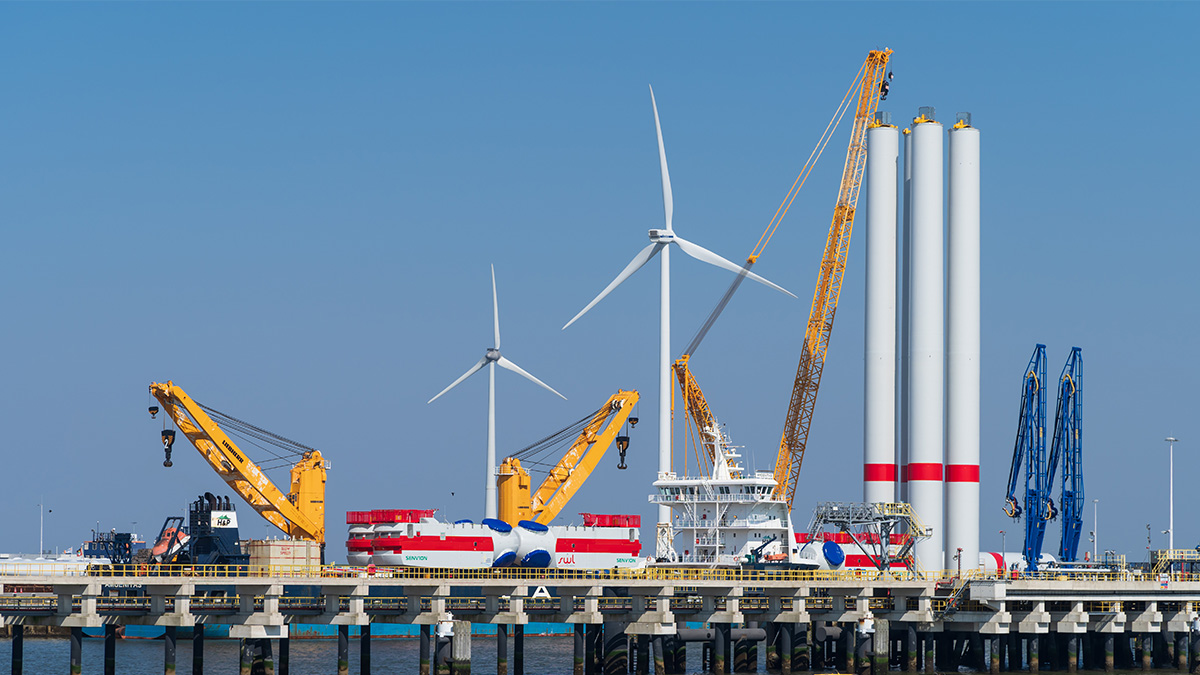
Earnings per share came in at 66 cents, below the 83 cents forecast by analysts.

Despite the headwinds, some in the financial community are optimistic that the project will resume. “Basically, we expect that the US administration will allow work on the project to resume soon, to avoid litigation,” wrote Citi analyst Alastair Syme.

A pivotal moment for US offshore wind

The fate of Equinor’s Empire Wind project could have far-reaching consequences—not just for the company but for the entire offshore wind power in the united states. This case is now being closely watched by both developers, investors and policymakers, as it could set a precedent for how future renewable energy projects will be treated under a changing political backdrop.

Significance of the policy

  • Equinor Slams Trump-Era Wind Project Halt as ‘Unlawful’ for empire wind equinor
  • Project stoped Mid-Construction: Empire Wind, over 30% complete, abruptly stopped by U.S. Interior Department.
  • Legal Dispute Looms: Equinor cites all permits were secured and calls the halt illegal; legal action under review.
  • Having $2.5 billion at risk: Major investments already made—$1.5 billion in debt, $1 billion in equity.
  • Investor confidence falters as industry worries; U.S. regultory stability questioned.
  • Response U.S. government: No detailed explanation from State Department.
  • Market Analysis: Equinor shares fall; analysts predict project could be scrapped to avoid lawsuits.

JBO Clicks Waves With 1.8 GW offshore Wind Design Win in Germany

offshore wind farm German

German clean energy asset manager Luxcara has awarded Hamburg-based engineering firm Blank – Ordemann (JBO) offshore wind foundation design contracts for two major projects in the German sector of the North Sea with a combined capacity of approximately 1.8 GW.

The contracts cover the Waterkant and Waterecke offshore wind farms, with a planned capacity of 296 MW and 1.5 GW, respectively.

JBO will act as foundation designer for both projects. At Waterkant, the company will handle front-end engineering design (FEED) and detailed design. For Waterecke, JBO will also act as a geotechnical expert in addition to the foundation design role at the FEED and detailed stages, the firm announced via social media. These projects mark an important step in JBO’s ongoing commitment to the energy transition, the company noted.

Offshore Wind Project Details

Waterkant Wind Farm


Located on site N-6.7, about 90 kilometers from the island of Borkum, Waterkant is expected to start operations in 2028. Once operational, it will supply electricity to around 400,000 households.

  • Waterecke Wind Farm


Located on site N-9.3, about 85 kilometers northwest of Heligoland, Waterecke is scheduled for grid connection by 2029, according to Luxkara’s previous update.

About Jörs – Blank – Ordmann GmbH (JBO)

Jörs – Blank – Ordmann GmbH (JBO) is a German engineering firm with a world-class engineering design and a renowned offshore wind design firm with a tradition spanning over 60 years. Known for its expertise in structural engineering since its inception, JBO offers a comprehensive range of services in the design, evaluation and supervision of buildings, civil infrastructure, offshore structures, property development and structural systems.


They started their journey offshore wind energy in 2014, under the leadership of Dr. Lueddeck. Currently, JBO employed more than 70 engineers and specialists, providing end-to-end solutions from conceptual design and engineering to construction and structural supervision. Although the smallest department within JBO, the Offshore Wind Department benefits from a team with extensive experience in the sector. And all team members fantastically in this department have at least five years of hands-on experience in offshore wind engineering.
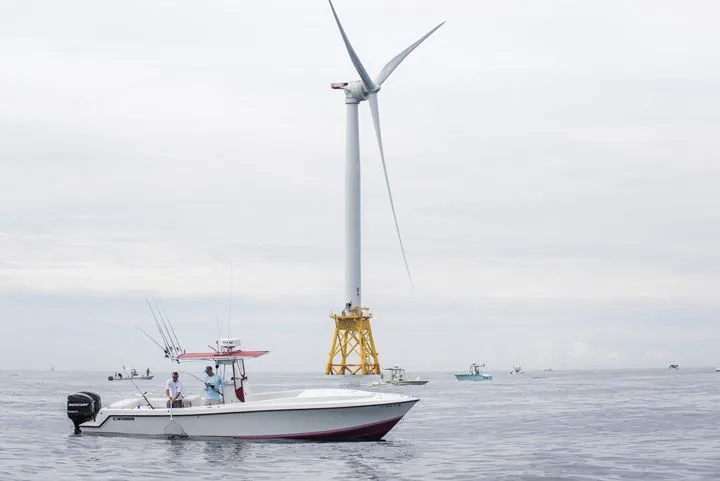
In a holistic approach, JBO integrates structural design and load simulation to provide a holistic, interdisciplinary design approach. This enables the development of cost-efficient and weight-optimized support structures designed to meet the highest standards of performance, safety and durability in the offshore environment.

Jörs – Blank – Ordmann GmbH (JBO) Links:

Website Link: https://www.j-b-o.de/en/

LinkedIn Link: https://www.linkedin.com/company/j-b-o?originalSubdomain=de

Floating Offshore Wind Energy Explained: Technology, Costs, Projects, and Future Outlook

floating offshore wind technology platform at sea

Introduction: Why Floating Offshore Wind Matters Now

Floating offshore wind energy is rapidly emerging as one of the most important technologies shaping the future of global renewable energy. As countries push offshore wind projects farther from shore and into deeper waters, traditional fixed-bottom foundations are reaching their physical and economic limits.

Unlike conventional offshore wind farms, floating offshore wind turbines are mounted on buoyant platforms anchored to the seabed with mooring systems. This allows wind energy generation in deep-water locations that were previously inaccessible, where wind speeds are stronger, more consistent, and less constrained by coastal geography.

As explained in our Offshore Wind Energy Explained: Technology, Projects, and Global Trends guide, foundation technology ultimately determines where offshore wind can be built. Floating platforms remove depth limitations and unlock vast new wind resources across the globe.

In this article, we explain what floating offshore wind energy is, how floating wind turbines work, how it compares to fixed-bottom offshore wind, where major projects are being developed, and why floating wind is becoming essential to the future of global offshore wind energy.

What Is Floating Offshore Wind Energy?

Floating offshore wind energy is a method of generating electricity at sea using wind turbines mounted on floating platforms rather than foundations fixed directly to the seabed. These platforms are stabilized using mooring lines and anchors, allowing turbines to operate in water depths ranging from 60 meters to well over 1,000 meters.

This technology addresses a fundamental limitation of offshore wind development. Fixed-bottom turbines become technically challenging and increasingly expensive beyond depths of roughly 50–60 meters. Floating offshore wind platforms overcome this constraint, enabling deployment in deep-water regions farther from shore.

According to the International Energy Agency (IEA), floating offshore wind will be critical for expanding offshore wind capacity in countries with steep continental shelves, including Japan, South Korea, Norway, and the U.S. West Coast.

How Floating Wind Turbines Work

floating offshore wind mooring system and dynamic cables
Mooring systems and dynamic export cables keep floating wind turbines stable while transmitting electricity to shore

Above the waterline, floating wind turbines operate much like conventional offshore wind turbines. The key differences lie below the surface, where advanced marine engineering ensures stability and durability.

Key Components of Floating Offshore Wind Systems

  • Floating platform (steel or concrete foundation)
  • Wind turbine tower, nacelle, and blades
  • Mooring systems (chains, ropes, anchors)
  • Dynamic export cables
  • Offshore substation or direct grid connection

The platform stays stable through ballast systems and mooring tension, enabling turbines to operate in severe offshore conditions. Together, these components form an integrated system designed to balance stability, power generation, and long-term durability at sea.

How Floating Offshore Wind Farms Are Developed

The development of a floating offshore wind farm follows a structured process combining offshore engineering with experience from fixed-bottom wind and offshore oil and gas industries.

Step-by-step development includes:

  1. Site selection: Evaluate wind resources, water depth, wave conditions, and seabed characteristics.
  2. Environmental and regulatory studies: Assess marine ecosystems, fisheries, and shipping routes.
  3. Design selection: Choose a floating platform design based on local conditions.
  4. Onshore assembly: Turbines are assembled onshore and mounted onto platforms.
  5. Tow-out and installation: Platforms are towed to the site and anchored.
  6. Grid connection: Dynamic cables connect turbines to offshore substations and the onshore grid.
  7. Operation & monitoring: Digital systems track performance and structural health.

Unlike fixed-bottom turbines, floating units are often towed into position, reducing reliance on heavy-lift installation vessels and allowing more work to occur in controlled port environments.

Types of Floating Offshore Wind Platforms

types of floating offshore wind platforms diagram
Main floating offshore wind platform designs include spar-buoy, semi-submersible, and tension leg platforms

There are three primary floating wind foundation designs currently in development and deployment:

Spar-Buoy Platforms

  • Deep vertical cylinder
  • Stability from ballast weight
  • Requires deep ports for assembly

Semi-Submersible Platforms

  • Multiple columns connected by pontoons
  • Easier port integration
  • Most commonly deployed design today

Tension Leg Platforms (TLP)

  • Anchored by vertical tendons
  • Minimal platform motion
  • Higher engineering complexity

Floating Offshore Wind vs Fixed-Bottom Wind

Floating and fixed-bottom offshore wind farms differ significantly in terms of foundation design, cost structure, and geographic reach.

FactorFloating Offshore WindFixed-Bottom Offshore Wind
Water Depth60–1,000+ metersUp to ~50–60 meters
Cost (Current)HigherLower
Technology Maturity
Emerging
Commercially mature
Expansion PotentialVery highLimited by the seabed
Geographic ReachDeep-water regions worldwideShallow continental shelves

As offshore wind energy expands globally, floating wind is expected to complement rather than replace fixed-bottom projects.

Global Floating Offshore Wind Projects

floating offshore wind project Hywind Scotland
Hywind Scotland was the world’s first commercial-scale floating offshore wind farm

Floating offshore wind is transitioning from demonstration projects to commercial-scale developments worldwide.

Notable Projects:

  • Hywind Scotland (UK/Norway)
  • WindFloat Atlantic (Portugal)
  • Kincardine Offshore Wind Farm (UK)
  • U.S. West Coast lease areas (California, Oregon)

These projects demonstrate the technical viability of floating platforms under real-world ocean conditions.

Floating Offshore Wind in the United States

The United States is one of the largest long-term markets for floating offshore wind, particularly along the Pacific coastline.

Key Drivers of U.S. Floating Wind Growth

  • Deep coastal waters unsuitable for fixed-bottom turbines
  • Strong offshore wind resources
  • State-level clean energy mandates
  • Federal offshore leasing programs

According to the U.S. Department of Energy (DOE), floating offshore wind is essential for unlocking wind resources along the U.S. West Coast, where water depths increase rapidly near the shore.

Costs and Economics of Floating Wind Energy

Cost remains the primary barrier to large-scale floating offshore wind deployment today. Floating wind projects are currently more expensive than fixed-bottom offshore wind due to:

  • Limited supply chain scale
  • Specialized mooring and platform systems
  • Early-stage manufacturing costs

However, research from the National Renewable Energy Laboratory (NREL) indicates that floating offshore wind costs are expected to decline significantly as turbine sizes increase, manufacturing scales up, and standardized platform designs are adopted. Industry projections suggest cost competitiveness within the next decade.

Environmental and Grid Considerations

Floating offshore wind offers several environmental advantages compared to traditional offshore installations:

  • Reduced seabed disturbance
  • Ability to site projects farther from shore
  • Lower visual impact for coastal communities

Grid integration remains a challenge, requiring advanced offshore transmission planning, dynamic cables, and upgraded onshore infrastructure.

Future Outlook for Floating Offshore Wind

Floating offshore wind represents more than a technological upgrade—it is a geographic expansion of where clean energy can be deployed.

Key trends shaping the future include:

  • Larger 15–20 MW floating wind turbines
  • AI-based turbine monitoring
  • Hybrid wind + energy storage systems
  • International collaboration on standards

Floating offshore wind is widely viewed as the next frontier of offshore wind development, creating long-term opportunities across global clean energy markets.

Frequently Asked Questions

What is floating offshore wind energy?

Floating offshore wind uses turbines mounted on floating platforms to generate electricity in deep ocean waters.

Is floating offshore wind commercially viable?

Yes, several projects are already operational, with many large-scale developments planned.

Why is floating wind important for the U.S.?

Most West Coast offshore wind resources are located in deep water unsuitable for fixed-bottom foundations.

Sources:

International Energy Agency (IEA)
U.S. Department of Energy (DOE)
National Renewable Energy Laboratory (NREL)