WindNewsToday

What Is Wind Energy? Technology, Costs, Jobs & Future — Complete Guide

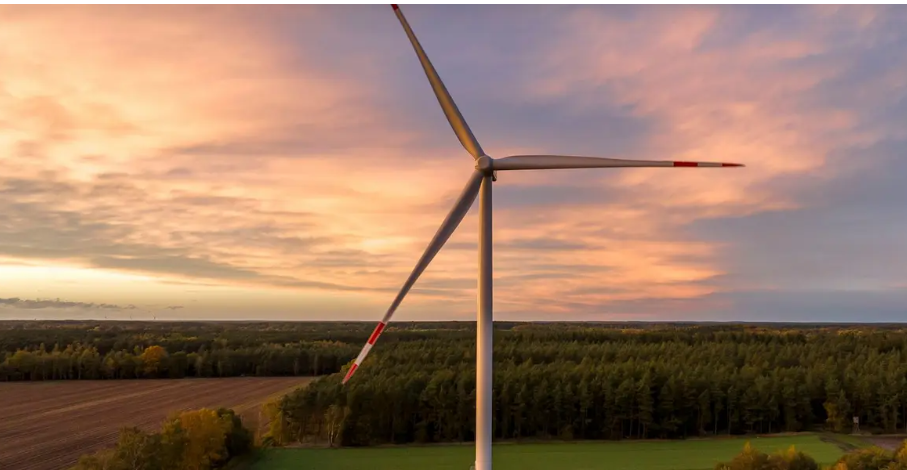
modern wind turbines generating renewable electricity

What is wind energy?

If we want to understand what wind energy is, in simple terms, it is a clean, renewable energy source that converts the kinetic energy of moving air into electricity using turbines. Wind farms are installed onshore, across plains or hilly areas, and offshore, in oceans or large bodies of water, where winds are stronger and more consistent. Unlike fossil fuels, wind power does not burn fuel or consume water, making it environmentally friendly.

According to the U.S. Department of Energy – Wind Power Technology Office, wind energy is one of the fastest-growing sources of electricity worldwide and plays a key role in reducing carbon emissions.

Once operational, wind farms can generate electricity for 20 to 25 years with regular maintenance, providing stable and relatively low-cost energy while reducing carbon emissions and improving energy security. Today, wind energy supplies electricity to millions of homes worldwide and continues to grow rapidly, driven by technological advances, supportive policies, and increasing demand.

This article explains how wind power works, its types, technologies, jobs, policy context, wind energy costs, and prospects, all in a clear, easy-to-understand way with real-world examples and actionable insights

How Does Wind Energy Work?

Wind turbines capture kinetic energy from moving air and convert it into electricity. The blades rotate when wind passes over them, turning a generator inside the nacelle. Modern turbines adjust the blade pitch and orientation automatically for maximum efficiency, even at variable wind speeds.

Detailed Explanation:

Wind energy works by converting the kinetic energy of moving air into mechanical power and then into electricity. When wind flows across turbine blades, it creates lift, causing the blades to rotate. This rotational motion turns a shaft connected to a generator, where mechanical energy is converted into electrical energy. The electricity is then conditioned and transmitted through cables to the power grid for distribution.

Modern wind turbines are equipped with sensors and control systems that continuously adjust blade angle and orientation to maximize efficiency and protect equipment during high winds. Power electronics ensure that the electricity produced meets grid requirements for voltage and frequency, allowing wind energy to integrate smoothly into existing power systems.

Main turbine components:

  • Rotor blades
  • Nacelle (gearbox, generator, control systems)
  • Tower
  • Transformer

Types of Wind Energy Systems

Wind energy projects are generally categorized based on location.

Onshore Wind Energy

Onshore wind farms are built on land—often in open plains, agricultural regions, or ridgelines with strong, consistent winds.

Why onshore wind dominates today:

  • Lower construction costs
  • Easier grid connection
  • Faster permitting
  • Proven technology

Onshore wind farms are installed on land and remain the most widely deployed due to lower construction and maintenance costs. In countries like the United States, onshore wind is one of the cheapest sources of new electricity, particularly in states such as Texas, Iowa, and Oklahoma.

Offshore Wind Energy

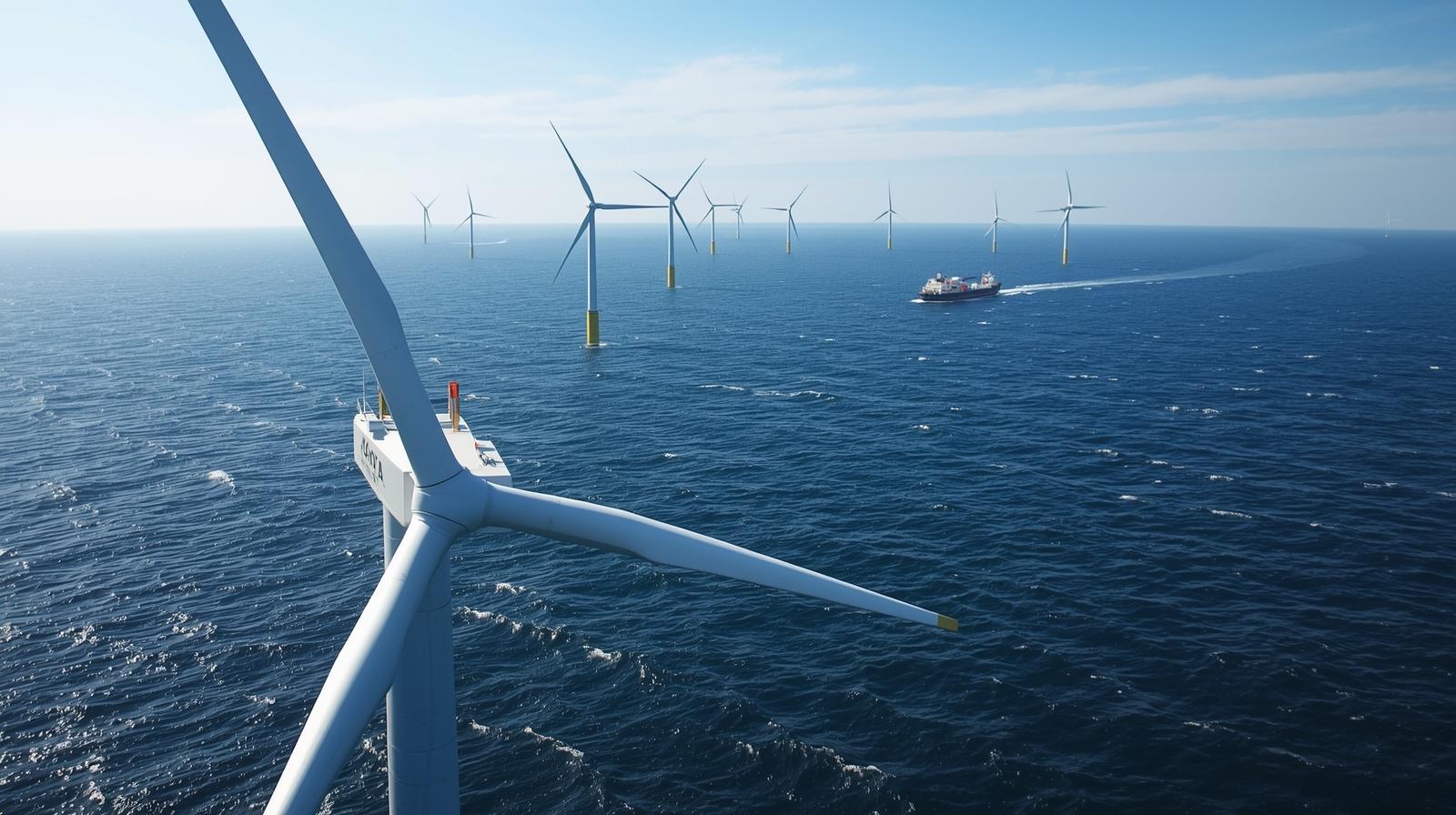
offshore wind turbines in the ocean
Offshore wind farms provide reliable, large-scale renewable electricity

Offshore wind farms are located in oceans or large lakes, where winds tend to be stronger and more consistent, allowing for higher energy output.

Advantages:

  • Higher capacity factors
  • Massive power potential near coastal cities
  • Less land-use conflict

Challenges:

  • Higher costs
  • Complex installation
  • Longer development timelines

Offshore wind is expanding rapidly in Europe and Asia and is now gaining momentum in the United States. Fixed-bottom turbines are anchored directly to the seabed in shallow waters, while floating offshore wind systems are designed for deeper waters where traditional foundations are not feasible. Each approach plays a role in expanding wind energy into new geographic areas.

To understand the technical and economic differences between offshore technologies, you can explore our comparison of fixed-bottom and floating offshore wind systems

Fixed-Bottom vs Floating Offshore Wind

Most offshore wind turbines use fixed-bottom foundations, ideal for shallow waters (<60 meters). Floating turbines allow installations in deep waters (>60–80 meters), expanding potential sites.

Fixed-Bottom Foundations:

  • Economical, proven technology
  • Used extensively in Europe and the North Sea

Floating Offshore Wind:

  • Ideal for deep waters with stronger winds
  • Anchored using mooring lines and tethers
  • Reduces seabed disturbance
  • Examples: Scotland’s Hywind and the U.S. Gulf of Maine pilots

Key Considerations:

  • Cost: Floating systems are currently more expensive but declining
  • Installation: Floating turbines can be assembled onshore and towed to the site
  • Environmental Impact: Minimal seabed disruption, but requires monitoring of mooring lines

Wind Energy Costs and Economics

Wind energy is among the most cost-competitive electricity sources globally. According to the International Energy Agency (IEA)

Onshore Costs:

  • LCOE: $30–50/MWh in optimal regions
  • Low operational costs, no fuel required

Offshore Costs:

  • LCOE: $60–100/MWh
  • Costs declining with larger turbines, floating technology, and better logistics
Comparison of levelized cost of energy (LCOE) for onshore and offshore wind power, showing costs in USD per megawatt-hour for global regions
Levelized cost of energy (LCOE) for onshore and offshore wind projects. Onshore wind remains the most cost-competitive in optimal regions, while offshore costs are declining due to larger turbines and floating technology innovations. Source: International Energy Agency (IEA).

Financial Advantages:

  • Long-term predictable energy costs
  • Government incentives and renewable energy credits reduce investment risk

Wind Energy and Grid Integration

Integrating wind energy into electricity grids is one of the most important challenges—and opportunities—of large-scale renewable deployment. Because wind speeds vary, grid operators rely on advanced forecasting, energy storage, and flexible generation resources to balance supply and demand in real time.

Advances in digital forecasting tools and grid management software have significantly improved system reliability. Wind power often complements solar energy by producing more electricity at night and during winter months, helping stabilize grids with high shares of renewable generation. At the same time, continued investment in transmission infrastructure is essential, particularly for offshore wind projects that require subsea cables and upgraded coastal substations to deliver power efficiently to population centers.

As wind capacity expands, grid integration will increasingly depend on smarter networks, expanded transmission corridors, and closer coordination between renewable generation and storage technologies.

Environmental Impact

Wind energy reduces carbon emissions, but it has environmental considerations:

  • Wildlife interactions: Birds and bats
  • Visual and noise impact
  • Marine ecosystems for offshore installations

Mitigation Strategies:

  • Careful turbine siting
  • Seasonal operational adjustments
  • Monitoring programs to protect wildlife

Wind Energy Jobs and Workforce

The rapid expansion of wind energy is not only transforming power systems but also creating a strong global workforce. From manufacturing and construction to operations and maintenance, the wind sector now supports millions of skilled jobs worldwide and continues to grow as new projects come online.

Wind turbine technicians have emerged as one of the fastest-growing occupations in the renewable energy sector, particularly in countries expanding offshore and utility-scale onshore wind. Alongside technicians, the industry relies on engineers, project managers, environmental specialists, and grid experts to plan, build, and operate increasingly complex wind projects.

Globally, the wind workforce is estimated at around 1.3 million jobs as of 2025, with steady growth expected through the next decade. In the United States alone, employment for wind turbine technicians is projected to grow by around 50% by 2030, reflecting strong investment in both onshore and offshore wind development.

For readers interested in career paths, required skills, salaries, and long-term job prospects, see our detailed guidelines on wind energy jobs, which explain how the industry is shaping the future renewable workforce.

Policy and Regulation

Government policy plays a decisive role in how quickly wind energy scales. Stable regulatory frameworks reduce investment risk and enable developers to commit to long-term projects. In many regions, wind deployment only accelerated after clear policy support was introduced.

Key policy tools include tax incentives, renewable energy targets, and streamlined permitting processes. In the United States, federal incentives such as the Production Tax Credit have helped reduce costs and encourage private investment. At the state level, renewable portfolio standards ensure steady demand for clean electricity. In Europe, coordinated policy efforts have positioned offshore wind as a central pillar of the energy transition.

For ongoing coverage of federal and state-level developments, incentives, and regulatory updates, explore our U.S. wind energy policy section, where we track the latest policy changes shaping the industry.

The Future Outlook of Wind Energy

The future of wind energy is defined by scale, innovation, and integration. Larger turbines, longer blades, and floating platforms are unlocking new markets and improving efficiency. At the same time, digital technologies such as artificial intelligence and predictive maintenance are reducing operational costs and downtime.

As countries race to meet climate targets, wind energy is expected to remain one of the fastest-growing sources of new electricity generation. Continued investment in grids, energy storage, and policy stability will determine how quickly wind power can replace fossil fuels and support a fully decarbonized energy system. In the coming years, success will depend not only on technology but on how effectively wind power is integrated into modern electricity networks.

Why Wind Energy Matters

After explaining what wind power is, in a nutshell, wind power is one of humanity’s most important resources and a cornerstone of a sustainable future. At its core, wind power produces electricity with zero direct greenhouse gas emissions, making it a vital tool in combating climate change – the defining challenge of our time. Every turbine that turns in the wind represents a step toward avoiding pollution, cleaner air, and less dependence on fossil fuels.

Beyond its environmental benefits, wind power strengthens energy security. Reducing reliance on imported energy, it helps insulate countries from volatile global energy markets and geopolitical disruptions. Wind power keeps energy costs local, supporting domestic industries, and stabilizing long-term electricity costs for both consumers and businesses.

The wind industry is also a powerful economic engine. It supports millions of well-paying jobs in manufacturing, construction, installation, and long-term maintenance. Many of these jobs are created in rural and coastal communities, where wind projects provide new income opportunities, stable tax revenues for local governments, and lease payments for landowners. In regions facing economic decline, wind energy has become a source of renewal and long-term resilience.

Unlike fossil fuels, which are limited and increasingly expensive to extract, wind is a renewable resource. It will not run out and will not become more expensive as it is used. Wind energy provides important public health benefits by eliminating air pollutants from coal and gas plants that cause asthma, heart disease, and premature death – often impacting vulnerable communities the most.

Today, wind energy is no longer a niche or experimental technology. In many regions, it is one of the cheapest sources of new electricity, providing clean energy without a premium price. Wind works particularly well alongside solar power, producing electricity at different times of the day and year – often stronger at night and in winter – creating a more balanced and resilient energy system.

With proven technology, rapidly improving efficiency, and the ability to deploy projects faster than many other forms of power generation, wind power is one of the most scalable and practical solutions available. It is not just a vision for the future – it is a solution that can be built today, at the speed and scale needed to meet urgent climate, economic, and energy security goals.

  1. U.S. Department of Energy
  2. International Energy Agency
  3. GWEC – Global Wind Reports
  4. NREL – Grid Integration of Wind

PNE France Wins 10th Wind Tender, Securing Two New Onshore Project

PNE France 10th wind tender – Romescamps and Chéry onshore wind projects

PNE France has strengthened its position in the European onshore wind market after winning projects in France’s 10th national wind power tender. The company, through its subsidiary, secured approval for two onshore wind farms—Romscamps (10.8 MW) and Chery (10 MW)—marking another step forward in France’s renewable energy expansion.

The tender results reflect growing policy alignment between developers and regulators as France accelerates wind deployment to meet its climate and energy security targets. For the broader European wind sector, PNE France’s success highlights how competitive tenders continue to drive cost efficiency, innovation, and long-term market confidence amid evolving energy policies.

Why the 10th Wind Tender Matters for France’s Wind Market

France’s 10th onshore wind tender is part of the country’s broader renewable energy strategy under its multi-year energy program (PPE). The auction aimed to expand wind capacity while encouraging cost efficiency, technical optimization, and regulatory compliance among developers.

The competition was intense. Around 90 projects, representing more than 1.6 GW of potential capacity, competed for a government target of 925 MW. Ultimately, 42 projects were awarded contracts totaling 952.8 MW, underscoring France’s continued commitment to scaling onshore wind power.

The average awarded price of approximately €86.6 per megawatt-hour reflects a balance between maintaining investor confidence and controlling electricity costs for consumers, a key objective of France’s renewable energy policy

Inside PNE France’s 10th Wind Tender Win

The Romescamps wind farm will be developed in the Hauts-de-France region in northern France. The project will consist of three wind turbines with a combined capacity of 10.8 MW and is expected to be commissioned by 2027.

The Chéry wind farm will be located in the Centre-Val de Loire region. It will feature two turbines with a total installed capacity of 10 MW, with commissioning planned for 2029.

For both projects, PNE France optimized turbine selection and project layouts to improve efficiency, operational reliability, and long-term performance—factors that are increasingly critical in competitive tender processes.

PNE France wins two onshore wind projects in the 10th wind tender
Roland Stanze, image: PNE

Roland Stanze, the COO of PNE AG, said they were super happy about winning. He gave a shout-out to his team at PNE France for making the projects even better, which will help them make more clean energy and support France in reaching its climate goals.

We are very pleased to have been successful in this tender. First of all, thanks to the dedication of our colleagues at PNE France, we have been able to increase the efficiency of both projects. This success will help us deliver clean energy and support France’s climate goals.

Why the PNE France 10th Wind Tender Matters

Strengthening France’s renewable energy pipeline
France’s tender system continues to attract experienced European developers, signaling long-term policy stability and sustained investment in onshore wind.

Demonstrating technical and regulatory expertise
PNE France’s ability to upgrade projects within permitting frameworks illustrates how regulatory alignment and technical innovation can improve approval outcomes.

Reinforcing PNE’s market position
The successful tender reinforces PNE France’s role as a reliable developer in the French renewable energy market.

Supporting European climate targets
The projects contribute to the European Union’s 2030 renewable energy and emissions-reduction goals by increasing clean power generation and energy independence.

PNE’s Growing Success in France

The 10th wind tender win builds on PNE Group’s broader track record in France. In 2025, the company completed the sale of two onshore wind projects:

  • Clermont-en-Argonne (14.4 MW) in the Grand Est region, sold to JP Energie Environnement, with construction beginning in September 2025.
  • Genouillé (11.3 MW) in Nouvelle-Aquitaine, sold to Sorégies and operational since July 2025. PNE continues to manage the project through its Energy Consult France subsidiary.

According to Heiko Wuttke, CEO of PNE AG, these transactions demonstrate the company’s ability to develop, optimize, and deliver high-quality renewable energy assets.

France’s 10th Wind Tender: The Numbers

CategoryDetails
Tender Round 10th (PPE2 Onshore)
Total Capacity Awarded 952.8 MW
Projects Selected 42
Average Price €86.6/MWh
PNE Projects Approved 2 (Romescamps & Chéry)

PNE’s Broader Clean Energy Strategy in Europe

Beyond France, PNE continues to expand its renewable energy footprint across Europe through onshore wind, offshore wind, solar, and hybrid projects. The company’s clean energy solutions strategy emphasizes diversification and system stability.

Current strategic priorities include:

  • AI-enabled monitoring systems to improve turbine performance
  • Hybrid wind-solar projects to support grid resilience
  • Cross-border collaboration to accelerate EU-wide decarbonization

This approach positions PNE not only as a project developer, but as a long-term clean energy partner in Europe’s energy transition.

Industry Perspective

Energy market analysts view the outcome of France’s 10th wind tender as a sign of a maturing onshore wind market. Developers are increasingly focused on efficiency gains, technology upgrades, and regulatory adaptability rather than capacity expansion alone.

These trends are critical for maintaining momentum in Europe’s renewable energy transition amid supply-chain constraints and rising global competition.

Frequently Asked Questions—PNE France 10th Wind Tender

Q: What did PNE France win in the 10th Wind Tender?

A: PNE secures two onshore wind projects—Romescamps (10.8 MW) and Chéry (10 MW).

Q: When will these projects be in operation?

A: Romescamps is planned for2027, and Chéry is planned for 2029.

Q: What modifications are important?

A: They allowed PNE France to integrate wind turbine technology to promote efficiency and output.

Q: How much total energy was awarded?

A: France’s 10th Wind Tender awarded 952.8 MW across 42 projects.

40 MW Shizen Energy Wind Project Vietnam Hits COD Milestone

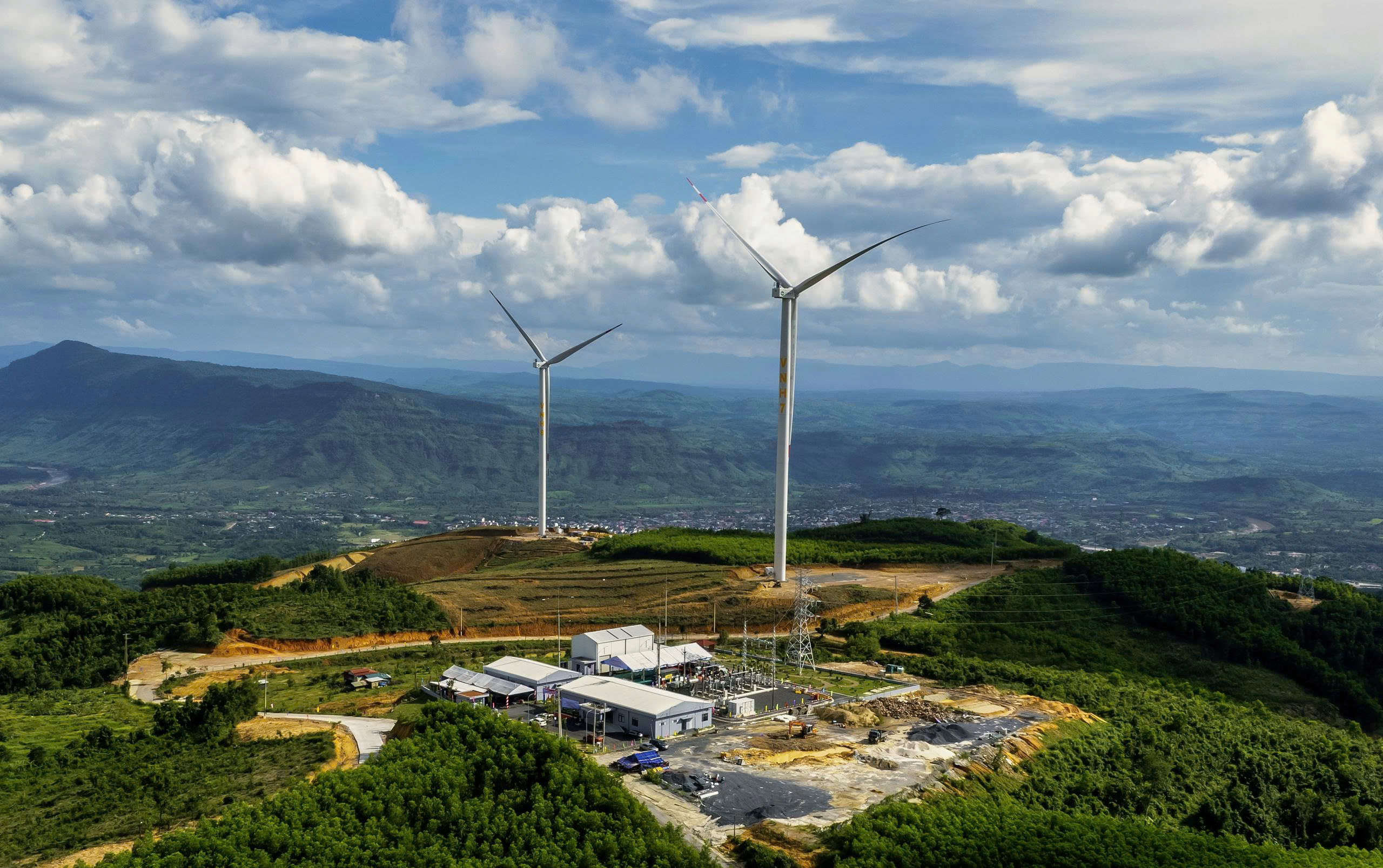
Shizen Energy wind project Vietnam turbines in Quang Tri Province generating clean energy

A significant milestone in Vietnam’s wind power development has been reached with the official Commercial Operation Date (COD) granted to the wind power company, Shizen Energy Wind Project Vietnam. The 40 MW onshore wind farm in Quang Tri Province’s Huong Hoa District was developed in partnership with Hai Anh Quang Tri Wind Power JSC. It is expected to produce clean electricity for thousands of households and cut down on approximately 35,344 tons of CO₂ emissions annually.

Hugh Kelly, the CEO of Shizen Energy, stated:

“The project is an important step toward Vietnam’s transition to a greener future. We are honored to collaborate with Japanese partners and Hai Anh Quang Tri to provide clean, dependable energy to nearby communities.”

By fusing local knowledge with international creativity, the project shows how international collaboration can hasten Vietnam’s wind power development.

40 MW Onshore Wind Power Project Vietnam

Eight 5,000 kW Shanghai Electric turbines, totaling 40 MW in power, are part of the Shizen Energy Renewable project in Vietnam. Construction began in January 2024, and in November 2025, following extensive testing and governmental inspection, the project was formally certified as COD.

An estimated 106 GWh of electricity will be produced by the wind farm each year, which is sufficient to power thousands of homes and cut greenhouse gas emissions by 35,344 tons annually. Vietnam’s dedication to sustainable growth and the expansion of renewable energy is demonstrated by this milestone.

Driving Renewable Projects with Shizen Energy and Hai Anh Quang Tri

Shizen Energy Group was established in 2011 and has since grown its renewable footprint internationally, completing projects in Brazil and Southeast Asia. With this onshore wind project, Shizen Energy—which is well-known for its innovations in wind, solar, biomass, and energy management systems (EMS)—now directly supports the growth of wind power in Vietnam.

Anh Quang Hai Tri Wind Power JSC, a subsidiary of Hai Anh Trading and Technologies JSC, led local development and construction efforts. Their partnership with Shizen Energy serves as an example of how global alliances can advance Shizen Energy’s renewable projects while also helping local communities.

A representative for Hai Anh Quang Tri stated:

“Achieving COD makes us very happy. In addition to producing clean energy, this project fortifies Vietnam’s renewable energy infrastructure and international

Support from Japan—the Joint Crediting Mechanism (JCM)

Under Japan’s Joint Crediting Mechanism (JCM), this project is the first to be approved in Vietnam wind power development. The initiative, which is funded by MOEJ, guarantees accurate measurement, reporting, and verification (MRV) of greenhouse gas reductions.

The MOEJ project coordinator, Hiroshi Tanaka, stated:

“Japan’s commitment to global decarbonization and renewable energy partnerships in Southeast Asia is demonstrated by its support of the Shizen Energy wind project in Vietnam.”

Effect on the Growth of Renewable Energy in Vietnam

As a result of its rapid economic growth, Vietnam’s electricity consumption increased from 158 TWh in 2016 to 276 TWh in 2024. Vietnam’s Hai Anh Quang Tri Wind Project intends to increase onshore and nearshore wind capacity to 26,066–38,028 MW by 2030, eventually surpassing 90,000 MW by 2050, in accordance with Power Development Plan VIII (2025–2030).

This objective is directly aided by the Shizen Energy wind project in Vietnam, which serves as a prototype for upcoming 40 MW onshore wind power projects in Vietnam and illustrates how Shizen Energy renewable projects can grow to accommodate the country’s energy needs.

Expanding Clean Energy

Shizen Energy and Hai Anh Quang Tri intend to create more wind power projects throughout Vietnam in the wake of this success. These initiatives seek to boost the Vietnam wind power development strategy, generate more clean energy, and generate jobs locally.

In addition, the project establishes a standard for the adoption of technology, such as Shanghai Electric turbines, and demonstrates how public-private cooperation can hasten the expansion of renewable energy in Southeast Asia.

Shizen Energy Wind Project Vietnam—Quick Overview

  • Project Name: Hai Anh Quang Tri 40 MW Onshore Wind Power Vietnam
  • Project Location: Quang Tri Province, Vietnam’s Huong Hoa District;
  • Developer: Hai Anh Quang Tri Wind Power JSC;
  • Investor: Shizen Energy Inc. (through a subsidiary)
  • Turbine: 8 × Shanghai Electric Turbines turbines with a capacity of 5,000 kW
  • Annual Total Output: 40 MW/~106 GWh
  • Beginning construction: January 2024, COD in November 2025
  • Environmental Impact: Approximately 35,344 tons of CO₂ are reduced each year.
  • Japan MOEJ Support Program: Joint Crediting Mechanism (JCM)

Conclusion

More than just a technical accomplishment, the Shizen Energy wind project Vietnam COD achievement marks a sea change in Vietnam wind power development. The Hai Anh Quang Tn wind project offers a roadmap for the expansion of sustainable energy through local development, JCM support, and international expertise. Shizen Energy and Hai Anh Quang Tri show how 40 MW onshore wind power Vietnam projects can promote both environmental and economic growth at the same time.

Germany Expands Green Power: Energiequelle Starts Construction on a New Thuringian Wind Farm

Energiequelle wind farm Germany starts construction in Thuringia with four Nordex N163 turbines, boosting the renewable energy future of Germany.

Germany’s renewable energy push has reached another milestone as Energiequelle GmbH begins construction of a new onshore wind farm in Thuringia, located between Werther and Bleicherode. Featuring four next-generation Nordex N163 turbines, the project will generate clean electricity for around 15,000 homes, reduce 37,000 tonnes of CO₂ annually, and strengthen Germany’s progress toward its 2030 renewable energy targets.

More than just turbines, the Energiequelle wind farm reflects a decade of careful planning, local cooperation, and community-driven development—a model increasingly shaping Germany’s clean energy transition.

This project also illustrates how Germany’s onshore wind sector is scaling up alongside offshore developments, supporting both national climate goals and regional energy security.

Read our full breakdown of Germany’s wind energy expansion and national renewable targets.

Powering 15,000 Homes with Clean Wind Energy

The Energiequelle wind farm in Thuringia will feature four Nordex N163 turbines, each with a hub height of 164 meters and a 6.8 MW capacity. Once operational, the project will deliver renewable electricity to roughly 15,000 households, significantly reducing dependence on fossil fuels. The use of Nordex N163 turbines highlights how modern turbine design improves efficiency, grid stability, and output—an evolution explained in our guide on how next-generation wind turbines increase clean power production.

With estimated annual CO₂ savings of nearly 37,000 tonnes, the project ranks among the most impactful Thuringia wind energy projects currently under development, reinforcing Germany’s national clean power ambitions.

A Decade in the Making—From Permits to Power

Planning for the Werther wind farm began over ten years ago, highlighting the persistence required to navigate Germany’s rigorous permitting process. The formal application under the Federal Immission Control Act (BImSchG) was submitted in November 2022, with final approval granted in September 2024.

Following a successful wind power tender win in April 2025, construction is now moving forward. Groundworks are scheduled for 2026, with full commissioning expected by January 2027. Germany’s strict approval process is part of a broader system designed to balance environmental protection with energy security, which we previously explained in our article on Germany’s wind tender and permitting system.

Voices of Dedication and Optimism

Maria Löther, project manager at Energiequelle GmbH in Erfurt, thanked everyone involved in bringing this long-awaited project to life.

“Both the municipalities and the landowners, as well as our cooperation partners, have shown great patience,” Löther said. “The start of construction marks an important milestone and confirms that our trust in the project has paid off.”

The Thuringia wind energy project was developed in close partnership with local organizations Helmetal eG and FEUER powerair GmbH to ensure community interests are central to this green initiative.

Hans-Jürgen Weidt, Chairman of the Supervisory Board of Helmetal eG, shared this enthusiasm:

“Revenue from the wind farm will help refinance a community wind turbine and allow local citizens to benefit from the growth of wind energy in Thuringia.”

Strengthening local communities in Thuringia

The Werther Wind Farm seeks to empower rural communities in addition to producing turbines and megawatts. The project guarantees direct benefits for Germany’s energy transition by reinvesting wind revenues locally. The secret to long-term support for German renewable energy expansion is this strategy, which blends private investment and public involvement.

Energiequelle’s Growing Footprint in Germany

The Werther project marks Energiequelle’s second major wind development in Thuringia, following the Sommerda wind farm. With additional projects planned for 2026, the company is strengthening its role in Germany’s onshore wind sector.

Energiequelle’s expansion mirrors a wider trend among European developers, many of whom are scaling both onshore and offshore assets, as highlighted in our coverage of major wind developers expanding across Europe.

Quick Summary — Energiequelle Wind Farm Germany

Impact: Boosts Germany’s renewable energy expansion

Location: Werther & Bleicherode, Thuringia

Turbines: 4 × Nordex N163 (6.8 MW each)

Homes Powered: ~15,000

CO₂ Reduction: ~37,000 tonnes/year

Timeline: 2025–2027

Partners: Helmetal eG, FEUER powerair GmbH

Conclusion

The Energiequelle wind farm in Germany is more than another onshore renewable development — it represents what’s possible when long-term planning, advanced turbine technology, and strong community partnerships come together. From supplying clean electricity to 15,000 households to reducing nearly 37,000 tonnes of CO₂ emissions each year, the Thuringia wind farm demonstrates how regional projects can achieve a national impact.

Equally important, the project highlights how local communities can directly benefit from the energy transition through shared revenues, cooperative involvement, and long-term economic resilience. As Energiequelle expands its footprint across Germany, initiatives like this are helping turn climate ambition into real-world progress.

Projects like this also support Germany’s long-term clean energy goals and renewable growth trends — as seen in recent updates, such as Germany’s Gnutz wind farm, which powers over 16,000 homes.

With construction underway and commissioning expected by 2027, the Energiequelle wind farm stands as a clear signal that Germany’s renewable future is not just planned — it is already being built.

faq

Q: Where is the new Energiequelle wind farm located?
A: The wind farm is in Thuringia, Germany, between Werther and Bleicherode, supporting local energy supply and community development.

Q: How much energy will the project produce?
A: With four Nordex N163 turbines, the project will generate enough electricity to power approximately 15,000 homes annually.

Q: What is the environmental impact of this wind farm?
A: The project will reduce 37,000 tonnes of CO₂ emissions each year, contributing to Germany’s 2030 renewable energy targets.

Q: How does this project fit into Germany’s renewable energy strategy?
A: It reflects Germany’s broader push for onshore wind expansion alongside offshore projects, supporting clean energy growth, energy security, and long-term climate goals.

Q: Who benefits from the Energiequelle wind farm?
A: Local communities, utilities, and regional energy planners benefit from clean electricity, local investment, and sustainable development.