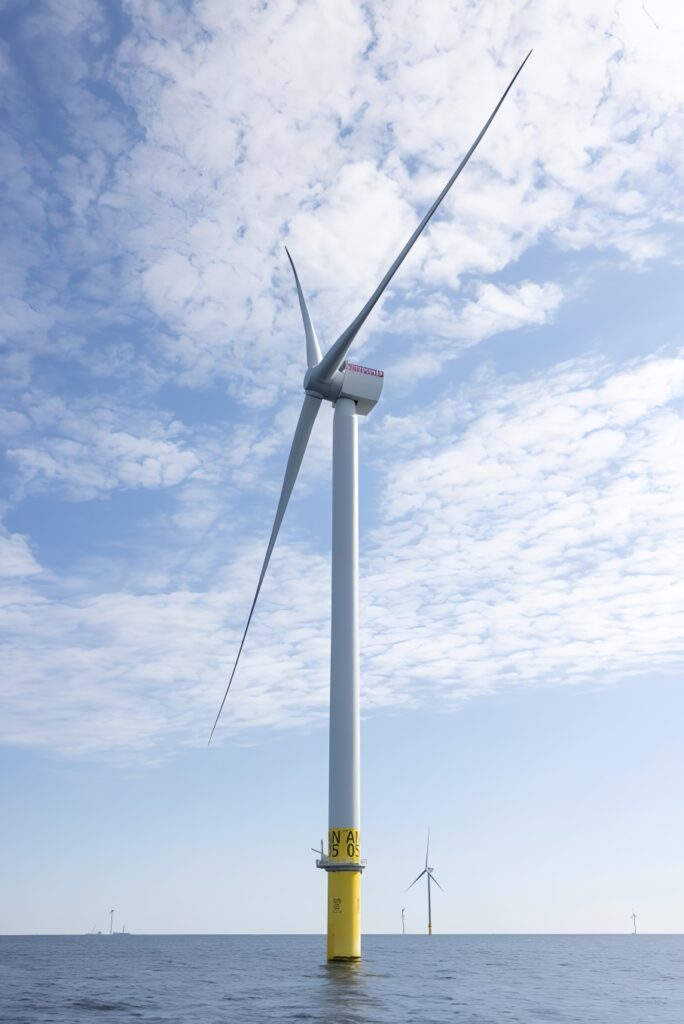
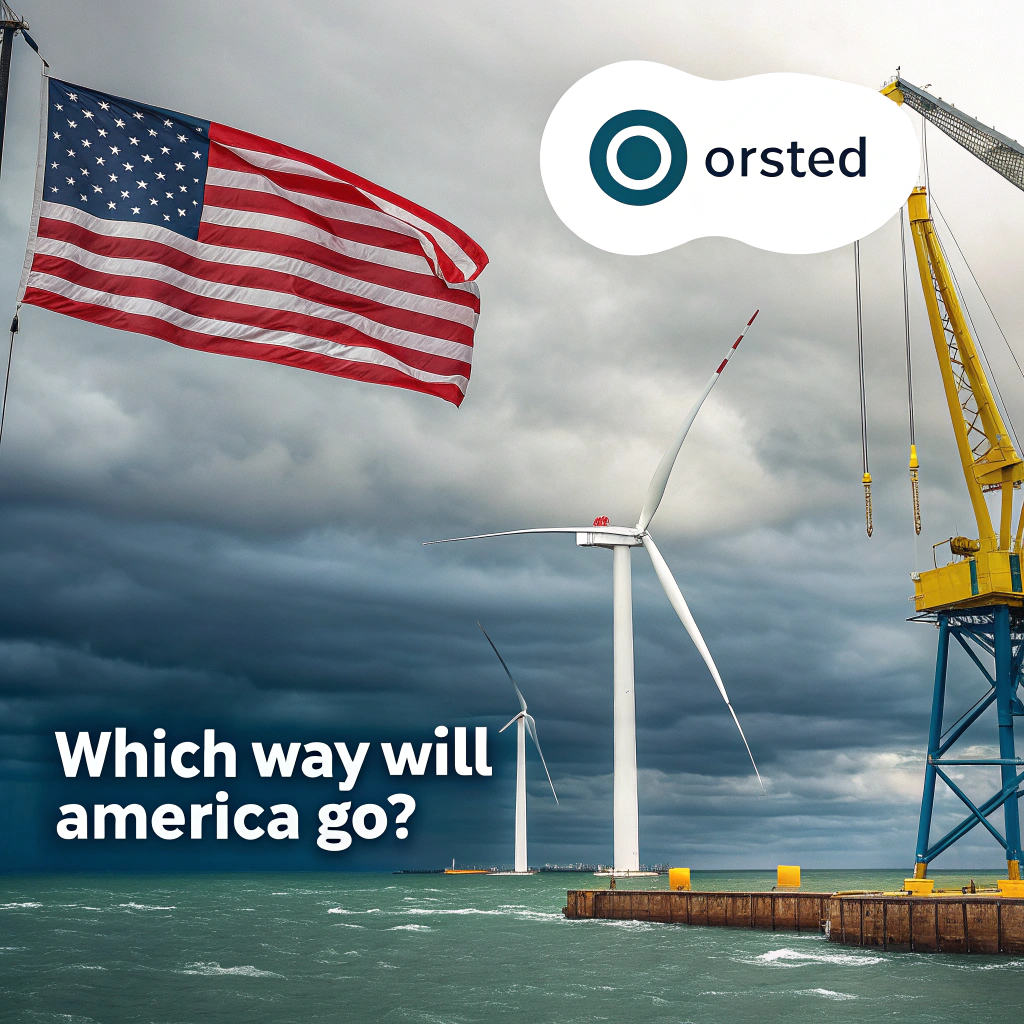
Wind energy policy and regulation directly influence project development, investment confidence, and long-term market growth. This category covers wind energy policies, regulatory changes, and government decisions across major global markets.
WindNewsToday explains how permitting rules, tax incentives, national energy strategies, and political decisions affect offshore and onshore wind projects.
Our policy coverage helps readers understand the real impact of regulatory shifts on the wind energy sector.
The Trump offshore wind pause marks a significant turning point for America’s clean energy transition. Citing offshore wind national security risks, the U.S. Department of the Interior announced that U.S. offshore wind leases have been paused for all large-scale projects currently under construction.
At the center of the decision is growing concern over offshore wind radar interference, which defense agencies warn could weaken the nation’s ability to detect real threats near critical East Coast population centers. The move raises urgent questions about whether offshore wind projects and national defense can safely coexist.
Table of Contents
Government Announcement: U.S. Offshore Wind Leases Paused
The Department of the Interior, working with the Department of War and other agencies, announced an immediate pause on large-scale offshore wind projects. The action affects major leaseholders and state partners while authorities assess the potential for mitigating national security risks.
Interior Secretary Doug Burgum stated:
“The prime duty of the United States government is to protect the American people. This pause ensures that emerging national security risks are addressed before these projects proceed.”
Offshore Wind National Security Risks Explained
Radar Interference and “Clutter.”
One key concern is the interference from offshore wind radar, commonly referred to asradar clutter. According to unclassified U.S. government reports:
Massive turbine blades create moving reflections
Highly reflective towers distort radar signals
These distortions can obscure actual threats or generate false targets
The Department of Energy noted in a 2024 report that radar thresholds can be adjusted to reduce false alarms; however, this may increase the likelihood of missing real targets. More details are available at the Department of Energy – Wind Energy Technologies Office
Projects Affected
The following U.S. offshore wind leases have been paused:
Vineyard Wind 1 (OCS-A 0501)
Revolution Wind (OCS-A 0486)
CVOW – Commercial (OCS-A 0483)
Sunrise Wind (OCS-A 0487)
Empire Wind 1 (OCS-A 0512)
These projects represent billions of dollars in investment and are pivotal to East Coast renewable energy plans.
Defense officials warn that radar interference from offshore wind near these zones could reduce situational awareness and response capability, creating vulnerabilities as adversary technologies evolve.
Next Steps
Federal agencies will:
Review classified defense assessments
Collaborate with developers to explore mitigation measures
Decide whether leases can resume or require modifications
Potential solutions include:
Advanced radar-compatible turbine designs
Modified turbine layouts
Partial or permanent project cancellations
Implications for the U.S. Offshore Wind Industry
This pause introduces uncertainty for:
Investors
State renewable energy targets
Supply chains for turbine manufacturing
It also signals that future offshore wind development will need to carefully consider national security constraints, particularly near strategic defense zones.
Ismot Jerin is the founder and Editor-in-Chief of WindNewsToday, an independent publication covering offshore wind, renewable energy policy, and clean power markets with an analytical focus on the United States and global energy transition.
Last Updated: January 2026 Author: WindNewsToday Editorial Team
For nearly a decade, the promise of US offshore wind 2025 has oscillated between bold ambition and structural uncertainty. Yet as 2025 comes to a close, the narrative is quietly shifting. After canceled power purchase agreements (PPAs), inflation-driven cost resets, and supply chain disruptions, the US offshore wind industry is no longer stalled—it is recalibrating.
This moment matters because what once looked like stagnation in 2023–2024 has evolved into a more disciplined and resilient phase of development. Projects moving forward today are driven by realistic pricing, regulatory clarity, and execution-focused planning.
After years of uncertainty, 2025 marks a turning point for US offshore wind. Projects moving forward today will define the industry’s scale, cost structure, and credibility for the next decade.
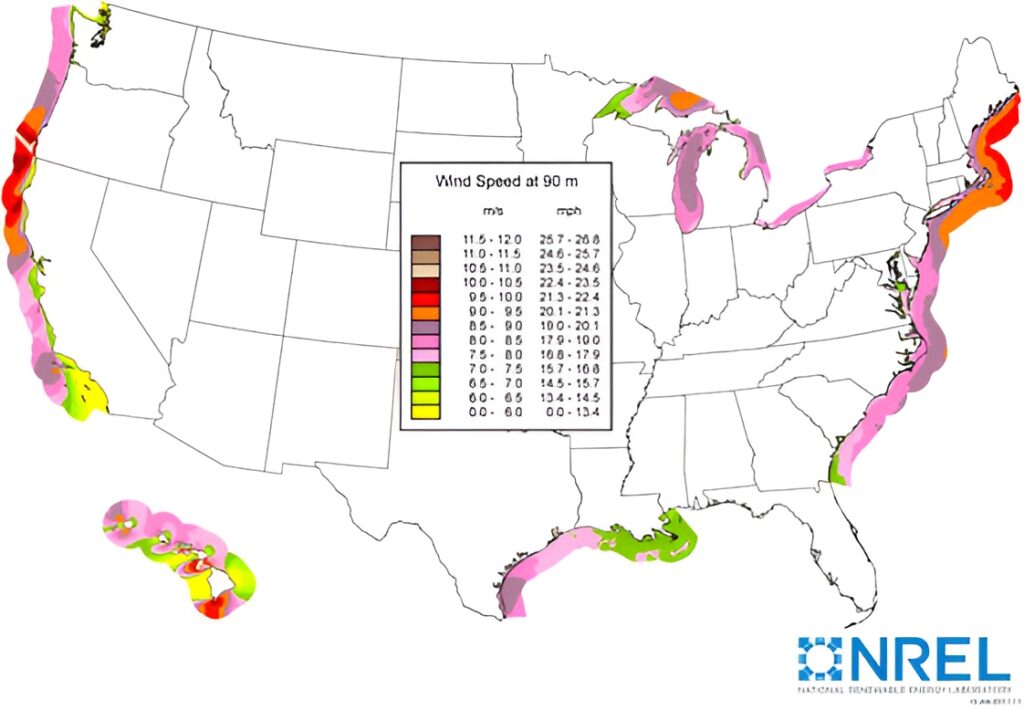
Map of US offshore wind projects moving forward in 2025, Image: NREL
While headlines over the past two years focused on delays and developer exits, underlying industry data tells a more nuanced story.
By the end of 2025:
Federal offshore wind approvals reached record levels
Domestic supply chains stabilized after inflation shocks
Port infrastructure investments accelerated
Several major projects moved from planning into active construction
This is not a boom cycle. This is foundation-building for long-term offshore wind capacity in the United States.
US Offshore Wind Projects Actually Moving Forward (End of 2025)
Below is a project-by-project snapshot based on public progress updates, developer statements, and federal filings—summarized into clear, analytical insights.
Vineyard Wind remains the closest example of a stabilizing project. After slowdowns caused by weather windows and marine logistics, 2025 saw steady turbine installations and export cable integration.
Why it matters: It proves that large-scale offshore wind is technically deliverable on US coastlines despite early policy turbulence.
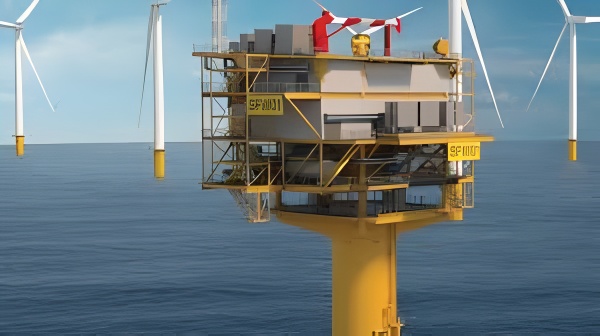
South Fork Wind — New York
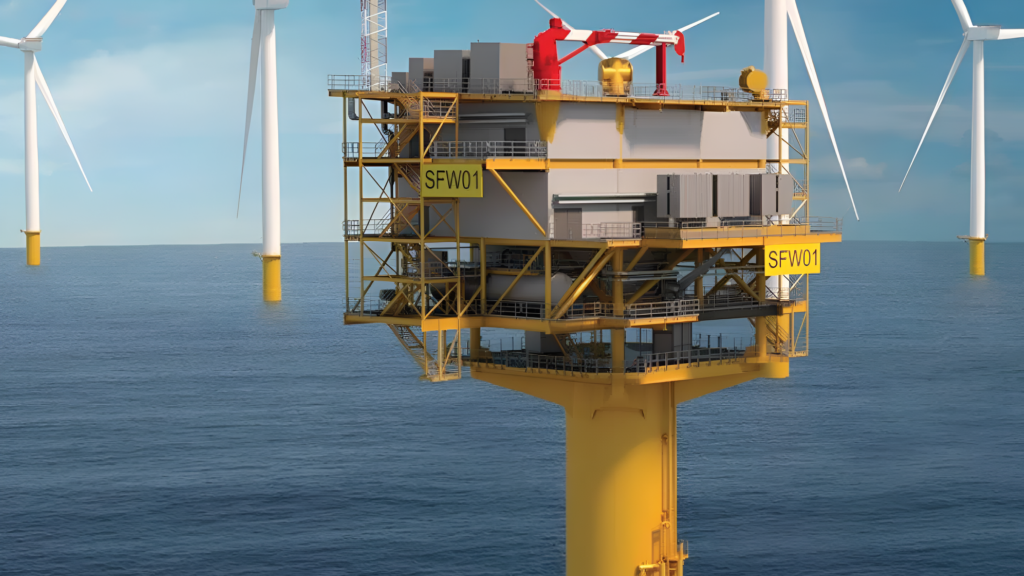
South Fork Wind to Build the First-Ever American-Made Offshore Wind Substation. Image: South Fork Wind
Status: Fully operational Capacity: 132 MW
South Fork wind, NY’s first offshore wind farm and the first operational commercial-scale US offshore wind farm. Its full operation has given policymakers and investors something they critically needed: a domestic success story.
Key takeaway: South Fork’s operational uptime and grid performance are exceeding early expectations—something that strengthens the case for subsequent New York and New England procurement rounds.
Coastal Virginia Offshore Wind (CVOW) — Virginia
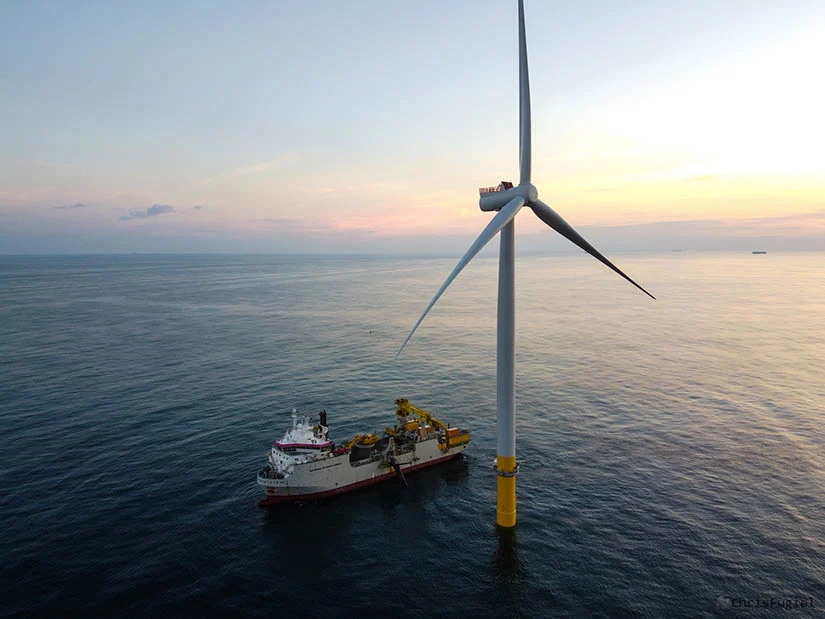
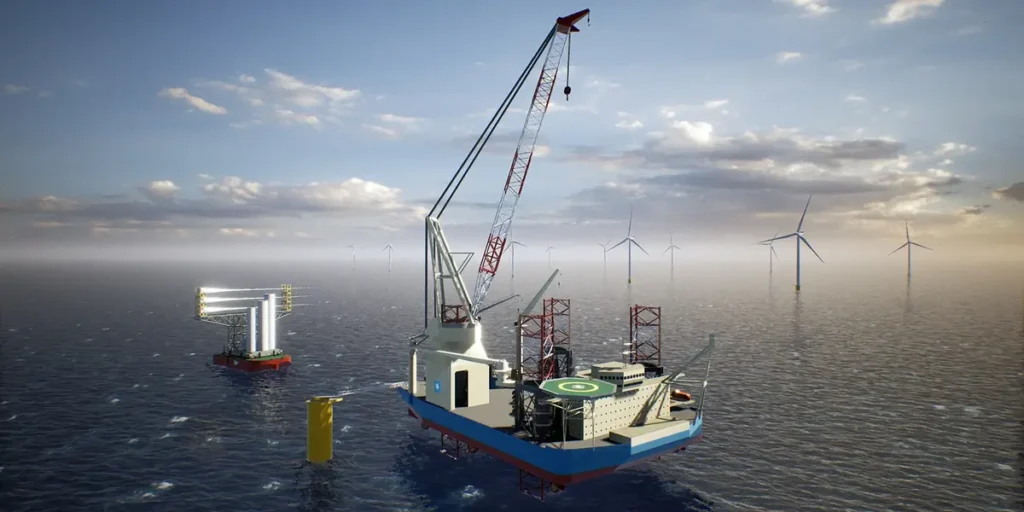
Offshore wind turbine Installation can take advantage of faster wind speeds off the coasts. Image: Installation Vessel Image: Dominion Energy
Status: Rapid advancement in foundation installation Capacity: 2.6 GW (full buildout)
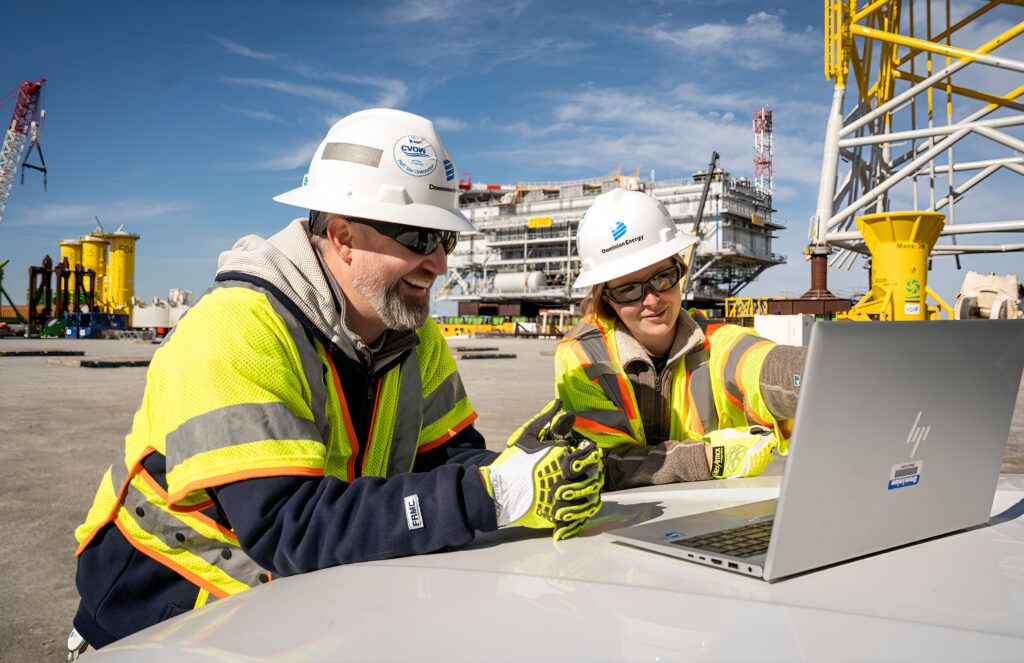
Dominion Energy’s enormous CVOW project is the most structurally important development of 2025. The scale, engineering precision, and logistics coordination have become a national benchmark.
Why is it moving forward: Stable cost recovery mechanisms and long-term planning have allowed construction to proceed despite broader industry headwinds.
Empire Wind & Beacon Wind — New York
Status: Permitting clarified, contracts renegotiated, development back on track Developer:Equinor
After a turbulent period of contract restructuring, Equinor realigned its financing model and returned these projects to active development.
Signal to watch: New York’s procurement strategy has shifted toward realistic pricing and long-term grid planning—an essential correction.
Ocean Wind Area Developments (Post-Orsted Exit) — New Jersey
US offshore wind port construction showing heavy equipment and a staging area for turbine components. Image: Equinor
Status: Redevelopment phase Importance: High political visibility
Following Orsted’s withdrawal in 2023–2024, the area is now being revived through alternative partnerships and state-level interest.
Why this matters: New Jersey remains one of the strongest long-term resource zones. Developers understand this region will return—it’s a question of timing and cost structure, not viability.
Avangrid shifted these projects into revised bidding structures that better reflect current costs. Unlike cancellations seen in earlier cycles, these redesigns are strategic pauses, not project failures.
Key point: Developers are learning to price with real-world US supply chain realities—not European assumptions.
Floating Offshore Wind Progress — US West Coast
An offshore wind technician working on an undersea cable connection during the 2025 US offshore wind project
Status: Early-stage momentum but meaningful forward movement Regions: California & Oregon
The Pacific Coast remains early in deployment but is seeing real movement:
Port upgrades
Design partnerships
Federal planning zones
Commercial-scale deployment remains post-2029, but groundwork is finally visible.
Developers and analysts agree that the biggest differences between progressing and paused projects come down to three factors:
1. Contract Structure
Projects with flexible PPAs—or the ability to renegotiate—survived. Fixed-price contracts did not.
2. Supply Chain Readiness
Virginia, New York, and Massachusetts invested early in ports. This is now paying dividends.
3. State Procurement Strategies
States that adapted fast to inflation (MA, NY, VA) unlocked progress. States that waited (NJ earlier on) faced setbacks but are now recovering.
What This Moment Really Means for US Offshore Wind 2025
The US offshore wind industry has shifted from ambition-first to execution-first.
This reset was not a collapse—it was a correction.
Projects advancing today are stronger, better priced, and structurally aligned with long-term energy planning. If permitting clarity and infrastructure investment continue, the period from 2026–2030 is likely to resemble early-stage UK offshore wind scaling.
The projects moving forward now will form the backbone of the industry’s next decade.
Conclution
As 2025 comes to a close, the story of US offshore wind is finally shifting from uncertainty to direction. The early turbulence—contract failures, inflation pressures, supply chain delays—was not a collapse but a correction the industry ultimately needed. The projects advancing now are stronger, better structured, and far more realistic than the first wave of procurement.
Vineyard Wind 1 and South Fork have demonstrated that large-scale offshore wind is technically viable in US waters. Coastal Virginia Offshore Wind has shown how long-term planning and stable utility models can unlock multi-gigawatt progress. New York’s restructured projects reflect a more disciplined, cost-aligned development path. And even states that faced setbacks, like New Jersey, are beginning to reposition themselves for a more reliable next chapter.
The most important shift is not in the number of turbines installed, but in the maturity of the industry itself. After years of hype and volatility, the United States finally has an offshore wind sector built on measurable progress, phased construction, and credible economic value. That foundation will shape everything that happens from 2026 to 2030.
If policymakers remain consistent and developers continue designing with real-world costs, the next decade will move the US from an emerging offshore wind player to a global competitor. The reset is over—and the rebuilding has begun.
FAQ
Q: Why is US offshore wind 2025 important?
A: 2025 represents a turning point as projects move forward with realistic pricing, regulatory clarity, and execution-focused planning.
Q: Which factors affected offshore wind progress before 2025?
A: Delayed PPAs, inflation-driven cost resets, and supply chain disruptions slowed development in 2023–2024.
Ismot Jerin is the founder and Editor-in-Chief of WindNewsToday, an independent publication covering offshore wind, renewable energy policy, and clean power markets with an analytical focus on the United States and global energy transition.
With 99% renewable energy and a 98% emission cut, Ørsted Green Transformation build a new benchmark for the energy sector
With global leaders meeting in Brazil for COP30, Ørsted has reached a historical milestone, becoming the world’s first energy company to complete a full green transformation.Since 2006, Ørsted has cut its carbon emissions by 98%. The company moved away from heavy fossil fuel use to become a world frontrunner in offshore wind and renewable energy. Now, 99% of Ørsted’s energy comes from renewable sources, setting a standard for cutting carbon in the energy world.
With the science-based targets guiding its journey, Ørsted carbon emissions reduction success shows that renewable energy milestones are highlighted and how important renewable energy and offshore wind are for meeting global climate targets.
Table of Contents
How Ørsted Green Transformation achieved
Ørsted’s big accomplishmentis the result ofmore than a decade of strategic efforts across its business. The company used several ways to lower pollution and switch to renewable energy:
Switching to Renewables: Ørsted now generates 99% of its energy from renewable sources like wind, solar, and biomass.
Ending Coal Use: They shut down their last coal power plant in 2024 and changed their remaining power plants to use biomass.
Selling Fossil Fuel Assets: Ørsted sold its oil and gas business to get rid of fossil fuels.
Electrifying Vehicles: The company switched to electric vehicles and equipment to lower pollution.
Growing Offshore Wind: Ørsted built 18.5 GW of renewable energy capacity, with offshore wind being a leader in renewable energy.
Using Renewable Certificates: The company used renewable energy certificates to cover its own energy use, making sure its operations don’t produce carbon.
The fact is, Ørsted’s pollution levels dropped by over 98% compared to 2006, reaching just 4 g CO₂e/kWh.
Ørsted’sRoleinGlobalClimate Leadership
Ørsted’s achievement presents more than a business win; it showsa big changein the energy world.
World First: Ørsted is the world’s first energy company to completely switch from fossil fuels to renewable energy.
COP30: This renewable energy milestone lines up with COP30 in Brazil, which stresses how important it is to act on climate change and lower emissions.
Global Example: Ørsted carbon emissions reduction journey sets an example for other energy companies seeking science-based decarbonization
Focus on Scopes 1-3: The company’s plan to reach net-zero includes emissions from suppliers and customers, like steel, copper, and ship fuels.
Quote from Ingrid Reumert, SVP for Global Stakeholder Relations,
“Cutting carbon emissions is what Ørsted is all about. With 99% of our energy from renewable sources and a 98% cut in emissions, our green move is now done.”
Roadmap to Net-Zero by 2040
Ørsted isn’t stopping at the 2025 milestone. Their plan to reach net-zero by 2040 focuses on:
Reducing Remaining Emissions: targeting emissions in upstream and downstream operations.
Decarbonizing the Supply Chain: Methodically cutting emissions from materials like steel and copper, and also from maritime fuels.
Partnership: collaborations with industry partners to scale renewable energy use.
Offshore Wind Leadership: Continuing to grow in main markets for clean power growth.
Working with Policymakers: Pushing for stable and appealing government policies to encourage large investments.
Quote from Reumert:
“Quickly switching to renewable electricity is important to meeting climate goals. Businesses and governments need to team up to secure a clean energy future.”
Key takeaways—Ørsted Green Transformation
Ørstedisthe world’s firstenergy companyto go green.
They’ve cut their direct carbon emissions by 98%.
99% of energy production is now from renewable sources.
They’ve built 18.5 GW of renewable capacity, mostly offshore wind.
Science-based targets guide their net-zero strategies for 2040.
This proves that big changes are possible in the energy business
Conclusion
Ørsted’s shift from a utility dependent on fossil fuels to a top global renewable energy leader is a landmark event for the energy industry. With a 98% drop in emissions and 99% renewable energy milestone generation, Ørsted is a role model for corporate climate actions.
Given the urgency for emissions cuts at COP30, Ørsted’s green shift shows that energy firms can guide the world to a sustainable,carbon-neutral future through clear, science-based goals, innovative strategies, and investment in renewable tech. Becoming an offshore wind leader and the renewable energy revolution aren’t just dreams anymore—Ørsted Green Transformation is now a worldwide standard for achievement.
Ismot Jerin is the founder and Editor-in-Chief of WindNewsToday, an independent publication covering offshore wind, renewable energy policy, and clean power markets with an analytical focus on the United States and global energy transition.
That’s right—from 2010 to 2023, Britain’s investment in clean, indigenous wind power has paid off massively, with gas and electricity prices falling dramatically.
A UCL wind power study shows that wind power has saved electricity bills by £14.2 billion and natural gas prices by £133.3 billion. And astonishingly, after paying out £43.2 billion in green subsidies, the country is celebrating being £104.3 billion ahead—a significant win for the UK, both for the economy and the environment.
Needless to say, in the 13 years between 2010 and 2013, the UK’s wind power capacity grew from just 5 terawatt-hours (TWh) to 80 TWh, accounting for almost 30% of total electricity generation. This has driven gas generators out of the market and directly reduced electricity prices for millions of customers.
Table of Contents
Wind power UK: From humble beginnings to national power
In 2010, the UK was generating just 5 terawatt-hours (TWh) of wind power. In 2023, this figure is expected to grow to 80 TWh, providing around 30% of the country’s clean electricity on the national grid.
Researchers argue that this rapid growth has not only boosted clean electricity—showing the world that clean power is not just a fantasy—it has also pushed gas generators out of the market forever, reducing pressure on demand for one of the world’s most important fuels and lowering prices for both households and businesses.
Lead author Colm O’Shea, from UCL Geography, put the finding in perspective:
“Far from being a financial burden, this study shows how wind power has consistently delivered substantial financial benefits to the UK. This £104 billion net benefit is more than the £90 billion extra the UK has spent on gas since the war in Ukraine in 2021.”
Next, rather than focusing on short-term subsidies or market fluctuations, the study shows how wind power has reshaped the UK’s entire energy landscape—from delivering sustainability, affordability, and security. The researchers argue that wind power should be considered a public good, like roads or schools, where shared government support leads to national prosperity.
“Energy transition is not an expensive environmental luxury,” the authors write. “It is a sound financial investment that strengthens our economy while protecting our planet.”
Experts agree: It’s time to reward renewables
Professor Mark Maslin, co-author and leading climate scientist at UCL, believes the time has come for market reform:
“The UK government needs to double the price of gas and electricity. Gas should follow the global market, while electricity prices should reflect real savings from wind and solar.”
Anna Musat, policy director at RenewableUK, highlighted the importance of homegrown renewables:
“The only way to sustainably reduce energy costs is to reduce our exposure to volatile global fossil fuel prices and increase clean, domestic electricity generation.”
Their message is clear: wind power is not just good policy—it’s smart economics. Meanwhile, Will Glover of Gowling WLG sees this finding as a wake-up call for policymakers:
“This research reinforces the case for accelerating renewable investment. The scale of savings highlights the strategic value of wind power—not just for energy security, but for financial stability.”
Professor Christopher Vogel of the University of Oxford has another impressive piece of information:
UK wind power turbines pay for their production and installation in just 12-24 months and continue to generate clean electricity for up to 25 years—a return on investment that most industries can only dream of.
Wind Power UK’s journey is an incredible tale of foresight, creativity, and enduring influence. Wind power has completely changed the UK energy market landscape in just over ten years, demonstrating that renewable energy sources do more than just power homes; they also reduce costs, generate employment, and ensure a cleaner future.
What happens when a nation commits entirely to wind power?
Here’s a powerful answer from the story of Wind Power UK — a country that has built on ambition, innovation and real-world evidence of rewards.
In just over a decade, the UK has transformed its energy system, built on its trust, built on its commitment and today shows the world how renewable energy can reduce costs, create green jobs and strengthen energy independence. The result has been savings of more than £104 billion for UK consumers since 2010 — a milestone that is reshaping energy thinking globally.
Why does it matter now?
Because Wind Power UK’s success is not just a national achievement — It is a message and a lesson for a global community. The thought-provoking question is if the UK can save billions by embracing wind power, what could the US, Germany or Japan achieve with a similarly bold commitment to clean, indigenous energy?
Ismot Jerin is the founder and Editor-in-Chief of WindNewsToday, an independent publication covering offshore wind, renewable energy policy, and clean power markets with an analytical focus on the United States and global energy transition.
Ho Chi Minh City, Vietnam — In a strategic move to strengthen its position in the fast-growing renewable energy market in Vietnam, Refrigeration Electrical Engineering Corporation (REE Energy) has announced the establishment of two new subsidiaries dedicated to developing wind power projects in southern Vietnam. This initiative marks another major step in REE’s long-term ambition to become a leading renewable energy investor in Vietnam.
Table of Contents
REE’s New Subsidiaries Powering Vietnam Wind Power Ambitions
According to the company’s latest board resolution, REE Duyen Hai 2 Wind Power Co., Ltd. and REE Duyen Hai 3 Wind Power Co., Ltd. will spearhead the development of phase two nearshore wind power projects in Vinh Long province.
REE Duyen Hai 2 will oversee the V1-3 phase-two wind power plant, with a projected investment of VND2,260 billion ($85.79 million), including VND677 billion ($25.7 million) in equity.
REE Duyen Hai 3 will manage the V1-5 and V1-6 phase-two wind farms, with a total investment of VND3,860 billion ($146.53 million).
Both companies will be fully owned and funded in cash by REE Energy and are expected to complete investment by Q4 2025. The projects are designed to enter commercial operation by late 2026, contributing an estimated 80 MW of clean power to the grid.
According to Vietcap Securities, Vinh Long Wind projects could generate VND123 billion ($4.67 million) in post-tax profit, with an average selling price of 7.7 US cents/kWh, potentially driving 10% of REE’s earnings growth by 2027. The projects boast an internal rate of return (IRR) of 11.8%.
Vietnam Wind Power Transformation: From Policy to Progress
Vietnam has become one of Asia’s most ambitious wind power nations, targeting 6–17 GW of offshore wind capacity by 2030–2035 and 26–38 GW of onshore capacity by 2030.
The country’s Ministry of Industry and Trade recently issued Decision 1508/QĐ-BCT, raising tariff caps for wind energy—by 18% for onshore and 9% for nearshore projects—providing new financial incentives for investors like REE.
Phu Lac 2 Wind power project Vietnam with 48 MW capacity, Location: Tra Vinh Provience, Image: REE
REE’s current renewable portfolio already includes successful projects such as Tra Vinh V1-3, Phu Lac 2, and Loi Hai 2, all operational since 2021. These wind farms benefit from fixed preferential FiT rates of US 9.8 cents/kWh for offshore and US 8.5 cents/kWh for onshore projects for 20 years.
Vietnam’s wind energy developments now contribute approximately 90,000 MWh of clean electricity annually to the national grid, powering 48,000 households and reducing CO₂ emissions by about 72,000 metric tons every year.
Why This Matters
REE Energy was Vietnam’s first company to transform from a state-owned enterprise into a public company under equitization in 1993 and became the first listed company on the Vietnam Stock Exchange in 2000.
Its proactive shift into wind and solar investmentsacross the Mekong Delta and central regions reflects Vietnam’s wider vision of achieving carbon neutrality by 2050. With these two new wind subsidiaries, REE is not only diversifying its energy assets but also reinforcing its role as a driving force in Vietnam’s renewable energy revolution.
Vinh Long Wind Project Key Takeaways
Company: REE Energy (HoSE: REE)
Projects: V1-3, V1-5, V1-6 Wind Power (Vinh Long Province)
Capacity: 80 MW (phase-two nearshore wind)
Total Investment: ~VND6,120 billion (~$232 million)
Expected ROI: 11.8%; 10% contribution to 2027 earnings
National Goal: 6–17 GW offshore & 26–38 GW onshore wind by 2035
Conclusion: Vietnam’s Renewable Energy Future Gains Momentum
As Vietnam continues to modernize its power mix, REE Energy’s expansion symbolizes the next phase of clean energy leadership. With the new subsidiaries and favorable tariff policies, the country is well on track to becoming a major player in the global wind energy landscape—fueling sustainable growth, cleaner air, and a stronger green economy for generations ahead.
Ismot Jerin is the founder and Editor-in-Chief of WindNewsToday, an independent publication covering offshore wind, renewable energy policy, and clean power markets with an analytical focus on the United States and global energy transition.
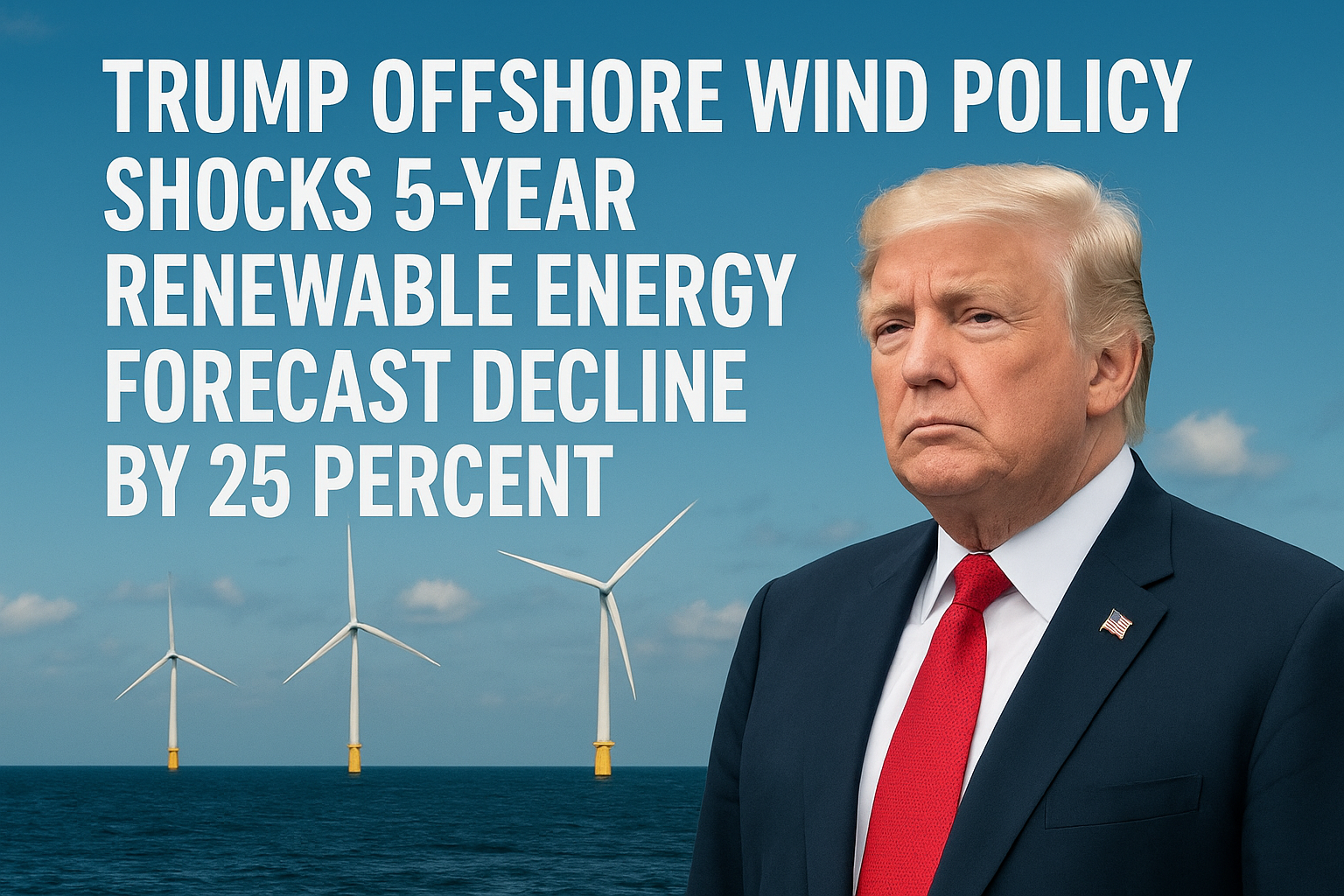
The global renewable energy market is bracing for turbulence as President Donald Trump offshore wind policy sends shockwaves through the industry. According to a new report from the International Energy Agency (IEA), the forecast for global offshore wind capacity growth has been cut by more than 25% over the next five years—a direct result of the Trump administration’s renewed push for fossil fuels and tightened restrictions on clean energy projects.
Table of Contents
U.S. Policy Shift Alters Global Renewable Trajectory
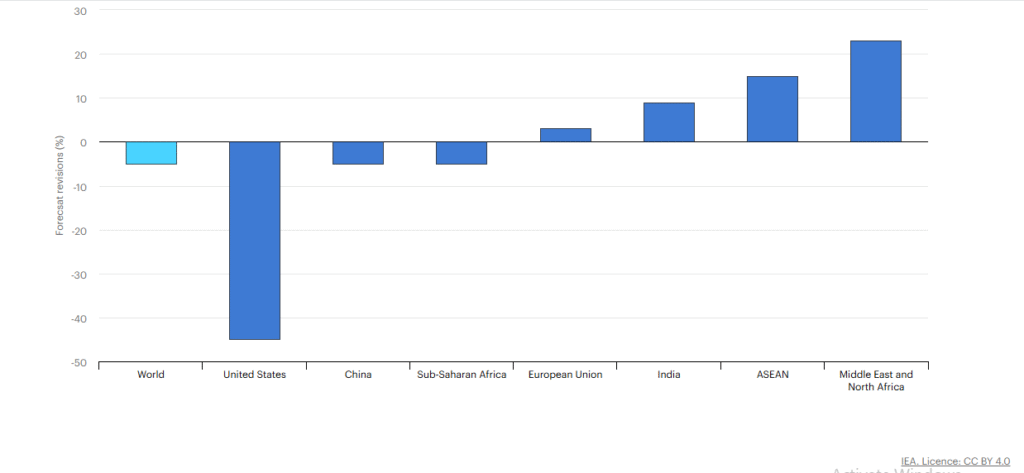
The IEA’s revised outlook paints a stark picture: the forecast for renewable energy generation between 2025 and 2030 is now 5% lower than last year’s estimate, with the U.S. share slashed by nearly 50%.
Renewable capacity expansion changes from Renewables 2024 to Renewables 2025 in selected countries or regions, 2025-2030, Image: IEA
Trump renewable energy policy changes really dragged things down. Take the offshore wind industry outlook, for example.
Developers lost federal tax credits sooner than expected.
The government stopped offering new offshore wind leases.
They also put a lid on permits for wind and solar projects on federal land.
Plus, import restrictions made it harder to get wind turbine parts and rare-earth materials.
All of this led to canceled projects, delays, and lots of nervous investors—renewables in the U.S. took a real hit.
Offshore Wind Industry Faces a 25% Growth Collapse
Offshore wind has taken the hardest hit—once the pride and joy of America’s clean energy push, now it’s losing momentum fast. The IEA says offshore wind capacity growth is 25% less than they thought just a year ago. That’s a big drop. Developers like Ørsted, RWE, and Equinor aren’t just talking about slowing down.
They’ve actually cut their 2030 goals for new offshore wind forecasts, blaming higher costs, endless waits for permits, and a wave of new federal rules that have spooked the whole industry.
“The new Trump renewable energy policy changes everything,” one analyst said. “It threatens to wipe out years of progress in offshore wind, right when the U.S. was finally starting to catch up to Europe and China.”
China Surges Ahead Despite Policy Adjustments
While the U.S. pulls back, China just keeps pushing forward. Right now, it’s driving about 60% of the world’s growth in renewable power. China did slow down a bit when it dropped fixed tariffs and switched to competitive auctions, but that pause didn’t last long. The country’s still set to hit its 2035 wind and solar goals five years ahead of schedule.
When you look at the two biggest economies side by side, the gap in clean energy leadership just keeps getting wider.
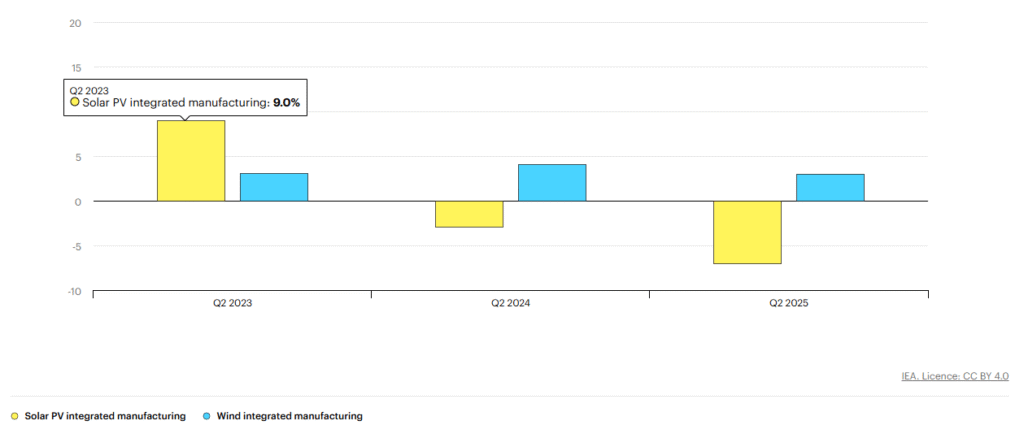
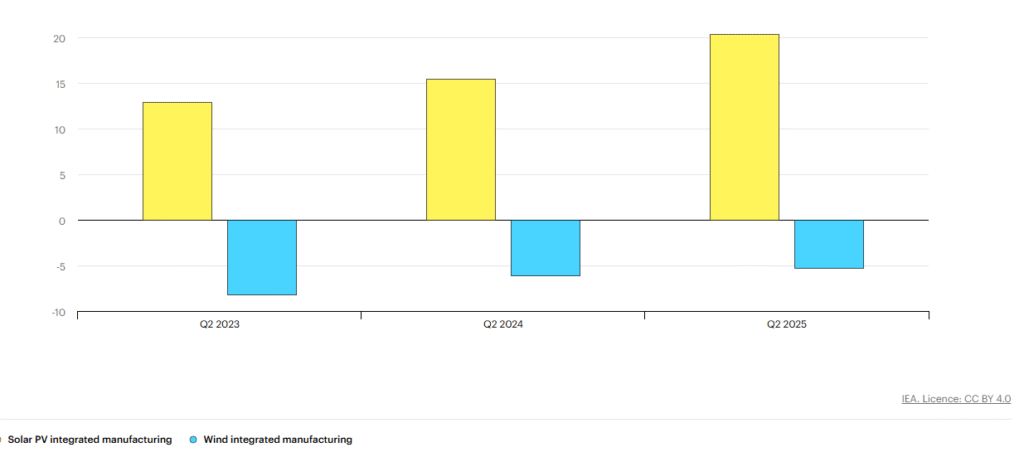
Weighted average net margins of renewable energy companies in China, Q2 2023-Q2 2025. Source: IEAWeighted average net margins of renewable energy companies excluding China, Q2 2023-Q2 2025 Source: IEA
Trump’s Fossil Fuel Agenda Returns
The IEA report also notes that President Trump’s return to the White House in January for a second term has brought with it a clear shift in energy priorities. Trump has pledged to expand oil, gas, and coal production while arguing that renewables are “too costly and unreliable.”
Critics warn that such a stance could undermine America’s climate commitments and job growth in the renewable sector. Offshore wind projects—particularly those planned off the East Coast—are already facing multi-billion-dollar setbacks.
Global developers are hitting pause on U.S. expansion.
Investors and energy companies are pulling back, shifting their focus to Europe and Asia, where the rules are clearer and governments are still offering strong support.
“Uncertainty is the biggest threat,” one senior executive from a European renewable firm said. “When policies flip-flop, it’s almost impossible to plan for the long haul.”
States like New York and Massachusetts aren’t giving up—they’re trying to keep their offshore wind projects alive on their own. But without help from the federal government, they’re staring down delays and shrinking incentives, especially with Trump’s latest stance on renewables.
The Broader Impact on Clean Energy Ambitions
Cutting offshore wind targets by 25% isn’t just about fewer turbines in the water. It means thousands of jobs lost, billions in investment slipping away, and progress on emission goals stalling. Industry experts don’t mince words: offshore wind is essential for hitting net-zero targets.
It’s one of the few options for large-scale, reliable clean energy. If this slowdown drags on, expect ripple effects—supply chains strained, ports underused, and coastal economies taking the hit.
Outlook: Can the U.S. Regain Momentum?
The short-term picture looks rough, but there’s still hope for the U.S. offshore wind industry. If the political winds shift before 2030, things could turn around. Both sides of the aisle care about energy security and local jobs, so there’s a real chance for new growth. Right now, Trump’s offshore wind policy marks a big shift.
It’s not just changing the path for clean energy in the U.S.—it’s shaking up the global race for renewables, too. Want the latest on U.S. offshore wind, global investments, and what’s next for the offshore wind industry outlook?
Follow U.S. Wind News for real-time updates and expert takes.
Ismot Jerin is the founder and Editor-in-Chief of WindNewsToday, an independent publication covering offshore wind, renewable energy policy, and clean power markets with an analytical focus on the United States and global energy transition.
A major shift in the UK’s clean energy landscape is coming—and it’s set to center on how China’s $2 billion wind turbine investment in Scotland could reshape the country’s renewable ambitions.
Chinese wind giant Ming Yang Smart Energy has proposed building a massive turbine manufacturing facility at the port of Ardshear in the Scottish Highlands, promising 1,500 new Scotland renewable energy jobs and a new industrial ecosystem for offshore wind manufacturing generation.
While the plan could boost the UK’s renewables supply chain, it has also raised concerns within Whitehall about national security and foreign investment in vital energy infrastructure. Let’s find out why.
Table of Contents
$2 Billion Wind Turbine Investment UK
Ming Yang says its proposed Scottish factory would represent a multi-phase investment of around £2bn (£1.5bn). The first phase—expected to start production in late 2028—will cost around £750m and will focus on producing advanced turbines for the European market.
In the next phase, the company plans to build a complete offshore wind industry ecosystem, including supply chain partners, training programs, and research facilities.
Ming Yang chairman Zhang Chuanwei called the project a “commitment to accelerating the global energy transition through innovation and community-centric energy solutions.”
UK government hesitation over Chinese wind investment
Despite Ming Yang’s public optimism, the UK government has yet to approve the plan.
A senior UK government source said the company “seems to be trying to outmaneuver us,” insisting that national security concerns should be fully assessed before any approval is given.
A UK government spokesman confirmed the latter and cited:
“This is one of a number of companies looking to invest in the UK. Any decision taken will be consistent with our national security.”
The government’s delay is said to be due to intelligence and security reviews surrounding the involvement of foreign technology in the UK’s energy infrastructure—particularly in light of tensions over China’s strategic role in key sectors.
Scotland’s renewable energy vision and industrial strategy
However, the Scottish government sees the proposed project as strategically important.
First Minister John Sweeney has repeatedly said that floating offshore wind is “central to my vision for Scotland’s future as a modern and dynamic nation.”
Edinburgh officials argue that the Ardersea project is fully aligned with Scotland’s industrial strategy, which identifies floating wind turbines as a “first-mover advantage” sector. With more than 40 gigawatts of potential offshore capacity—including 25 gigawatts of floating wind—Scotland sees Ming Yang Investment UK as crucial to achieving its renewable energy expansion goals.
The Scottish Government, however, views the proposed project as strategically important. First Minister John Swinney has repeatedly said that floating offshore wind is “central to my vision for Scotland’s future as a modern and dynamic nation.”
Officials in Edinburgh argue that the Ardersier project aligns perfectly with Scotland’s industrial strategy, which identifies floating wind turbines as a “first-mover advantage” sector. With over 40 GW of potential offshore capacity—including 25 GW of floating wind—Scotland sees Ming Yang’s investment as critical to realizing its renewable energy expansion goals.
Economic Promise vs. Political Risk
While supporters highlight the 1,500 jobs, technology transfer, and offshore wind capacity expansion, critics warn about overreliance on Chinese manufacturing. Some MPs and U.S. officials have urged caution, noting that even though Ming Yang is privately owned, Chinese companies can face state influence under Beijing’s policies.
A government insider described the approval process as “delayed but deliberate,” adding that “patience is finite—there’s a lot of investment and jobs waiting for this decision.”
Meanwhile, Kate Forbes, Scotland’s Deputy First Minister, said there remains “room for Ming Yang to open a factory in Scotland,” stressing that final approval rests with the UK government.
What’s Next
A government official recently told the Financial Times that a decision on the Ming Yang project is “imminent.” If approved, construction could begin as early as 2026, with the factory fully operational by 2028, producing turbines for projects across the UK and Northern Europe.
However, the project’s fate will depend on how London balances economic opportunity, energy security, and geopolitical caution—three pillars shaping the UK’s clean energy policy.
Conclusion
As the UK strives to become a global clean energy leader, the debate over how China’s $2 billion wind turbine investment in Scotland continues to test the balance between sustainability and sovereignty.
Whether seen as a bold step toward green industrialization or a risky geopolitical gamble, the outcome will reveal how open Britain truly is to global partnerships in its clean energy future.
FAQ
Q1: What is the value of China’s wind turbine investment in Scotland? The proposed investment is up to $2 billion by Ming Yang Smart Energy to build a large-scale wind turbine manufacturing facility.
Q2: Why is this project controversial? Concerns revolve around national security, foreign influence, and the strategic control of energy infrastructure.
Q3: What benefits does the project offer Scotland? It could create hundreds of local jobs, boost offshore wind supply chains, and support Scotland’s 2045 net-zero target.
Q4: When could the project start? If approved, construction could begin by 2026, with turbine production starting around 2028–2029.
Ismot Jerin is the founder and Editor-in-Chief of WindNewsToday, an independent publication covering offshore wind, renewable energy policy, and clean power markets with an analytical focus on the United States and global energy transition.
Europe’s biggest renewable energy producers—Spain, France, and Germany—have cut back record amounts of wind power this year, as electricity grids struggled to handle an unprecedented surge in renewable output. (Bloomberg News)
From January to September 2025, these nations, along with southern Sweden, recorded the steepest declines in wind generation, according to data from the London Stock Exchange Group (LSEG).
—highlight The curtailments—the deliberate reduction of renewable generation—highlight a growing problem for Europe’s clean energy transition. While the region rapidly expands its wind and solar capacity, grid investments and storage systems lag far behind.
Table of Contents
Why It Matters
Curtailment happens when the power grid cannot absorb all the renewable energy being generated. In such cases, some wind farms are ordered to shut down, while others voluntarily reduce production when prices drop too low.
These shutdowns represent a significant loss of clean energy potential and often translate into higher costs for consumers, as grid operators compensate producers for lost generation.
Energy analysts warn that these record levels of curtailment reflect a structural challenge in Europe’s renewable rollout: generation capacity is growing faster than transmission infrastructure can handle.
“We’re producing more renewable energy than the grid can transport,” said one analyst familiar with the LSEG data. “Without faster grid upgrades, much of that green power will continue to go to waste.”
Country Highlights
📊 Spain recorded the highest rate of wind curtailment this year, cutting 19.6% of total generation in May—three times more than in the same month last year.
🇫🇷 France saw a record decline in August, with 11.2% of wind energy curtailed. 🇩🇪 Germany, Europe’s renewable powerhouse, reported its largest reduction of 7.3% in March.
Western Denmark also saw a modest decline, while the U.K. was not included in the dataset.
The Bigger Picture
The issue reflects a paradox in Europe’s green energy push: the continent is producing more clean electricity than ever, yet wasting more of it due to outdated infrastructure.
Rapid renewable expansion without parallel investments in storage, smart grids, and cross-border interconnections could undermine progress toward net-zero goals.
Experts stress that solving the grid bottleneck is essential for ensuring every megawatt of renewable power is used effectively—rather than being shut off during peak production.
What’s Next
European policymakers are under increasing pressure to accelerate grid modernization and battery storage investments. The European Commission has identified grid congestion as a top priority for achieving its 2030 renewable targets.
In the meantime, wind power curtailments are expected to remain high through winter 2025, as strong seasonal winds meet limited grid capacity.
If grid upgrades lag further behind, Europe could face not just wasted clean power but also higher energy costs and a slower decarbonization pace.
Conclusion
Europe’s wind energy success story now faces a critical challenge: turning record renewable generation into usable power. Without urgent infrastructure investment, even the cleanest energy will continue to be curtailed — and the continent’s climate goals could drift further out of reach.
FAQs
1. Why are European countries cutting back on wind power?
European nations like Spain, France, and Germany are reducing wind generation because their power grids can’t absorb excess renewable electricity. When supply exceeds grid capacity, operators deliberately shut down turbines to prevent overloads — a process known as curtailment.
2. What does “wind power curtailment” mean?
Curtailment is when wind or solar energy production is intentionally reduced or stopped, even though the source is available. This happens when the grid is overloaded or electricity prices drop too low to sustain operations.
3. Which European countries are most affected by curtailment?
According to LSEG data, Spain, France, and Germany recorded the highest levels of curtailment in 2025. Spain cut nearly 20% of its wind output in May, France reduced 11% in August, and Germany 7% in March.
4. How does wind power curtailment affect consumers?
Curtailment can raise consumer energy costs because grid operators often compensate power producers for lost generation. It also wastes renewable energy that could otherwise replace fossil fuels.
5. How can Europe reduce wind power curtailment?
Experts recommend expanding grid capacity, investing in battery storage, and improving cross-border energy connections. These upgrades will help Europe store or transmit excess wind energy instead of wasting it.
6. Will wind power curtailment slow Europe’s clean energy goals?
If not addressed quickly, yes. Curtailment reduces the effective use of renewable energy and could delay Europe’s 2030 clean energy and net-zero emission targets. Modernizing the grid is key to maintaining momentum.
Ismot Jerin is the founder and Editor-in-Chief of WindNewsToday, an independent publication covering offshore wind, renewable energy policy, and clean power markets with an analytical focus on the United States and global energy transition.
Danish renewable energy leaderØrsted Hornsea 3 is reportedly preparing to sell a 50% stake in its flagship Hornsea 3 offshore wind project to US investment firm Apollo, highlighting the financial and political pressures shaping the global wind sector. Sources familiar with the negotiations said the £8.5 billion project, located 160 km off Yorkshire and 120 km off Norfolk, is expected to generate 2.9 gigawatts of clean energy—enough to power more than three million UK homes.
Table of Contents
Ørsted Hornsea 3 Plans $5.5B Stake Sale
The decision to sell stems from mounting financial pressures. Rising construction costs, global supply chain disruptions, and investor hesitancy in US projects have all strained Ørsted’s balance sheet. While European governments remain broadly supportive of renewable energy expansion, US policy uncertainty—particularly stemming from the Trump administration’s historical skepticism of offshore wind—has created challenges for US projects such as Sunrise Wind off the East Coast. Analysts say selling a stake in Hornsea 3 is a strategic step to secure funding for future offshore projects while managing risk.
Ørsted aims to raise at least DKr35 billion ($5.5 billion) through asset sales, including Hornsea 3, a Taiwanese offshore wind project, and its European onshore business. Additionally, the company is seeking around DKr60 billion from shareholders through a rights issue. These combined measures reflect the growing complexity of financing large-scale renewable energy projects while navigating global economic and political pressures.
Hornsea 3 Wind Farm is not just another offshore wind project; it is a symbol of the industry’s ambition. Part of the Hornsea zone, it follows Ørsted’s Hornsea 1 (1.2 GW) and Hornsea 2 (1.3 GW), which together supply electricity to 2.5 million UK homes. Hornsea 3 alone will contribute up to £8.5 billion to the local, national, and global economy through supply-chain investment and the creation of thousands of high-skilled jobs during both construction and operation. The project is central to UK energy security and supports government climate and clean energy targets, underscoring its strategic importance.
UK vs US Renewable Energy Policy Landscape
The sale also highlights the stark contrast between UK and US renewable energy policies. The UK has consistently supported offshore wind through subsidies, stable permitting frameworks, and ambitious climate targets, making it an attractive market for developers and investors. In contrast, the US has faced regulatory uncertainty and political headwinds, slowing project development and deterring some investment. Yet recent developments, such as the lifting of a US court order on Ørsted’s Revolution Wind project in Rhode Island, suggest opportunities are emerging even in the US market, particularly as private investment firms like Apollo step in to fund large-scale offshore projects.
Selling a stake in the Hornsea 3 wind farm is widely seen as a strategically positive move for Ørsted. By partnering with Apollo, the company secures capital to accelerate construction, mitigate financial risk, and maintain its global leadership in offshore wind. This reflects a broader trend of renewable energy developers leveraging private investment to fund ambitious green projects, ensuring the continued expansion of clean energy capacity worldwide.
Ørsted’s Legacy in Offshore Wind
Ørsted’s history reinforces its pioneering role in offshore wind. The company built the world’s first offshore wind farm in Vindeby, Denmark, in 1991, generating 5 MW and powering 2,200 Danish homes. After more than three decades of innovation and scaling, Ørsted has developed more offshore wind farms than any other company outside China, now delivering some of the largest projects ever built.
Hornsea 3, with a 2.9 GW capacity, will make a significant contribution to UK energy security and climate goals. Managed from Ørsted’s operations and maintenance hub in Grimsby, it is the company’s third gigawatt-scale project in the Hornsea zone. The project joins Hornsea 1 and 2 and is part of an ongoing expansion that includes Hornsea 4, projected to reach up to 2.6 GW. Once operational, Hornsea 3 will provide millions of homes with renewable energy, sustain thousands of jobs, and strengthen the UK’s leadership in offshore wind.
Positive Outlook
Ørsted Hornsea 3 demonstrates the power of renewable energy finance partnership. Investors, policymakers, and industry stakeholders should watch this project closely, as it illustrates how adaptive financing, supportive policies, and global collaboration can drive the clean energy transition forward. The offshore wind project sale is not a setback—it is an opportunity to accelerate offshore wind development, strengthen energy security, and invest in a sustainable future.
Ismot Jerin is the founder and Editor-in-Chief of WindNewsToday, an independent publication covering offshore wind, renewable energy policy, and clean power markets with an analytical focus on the United States and global energy transition.
Why is Trump shutting down Biden-approved offshore wind projects—and what does it mean for US clean energy goals?
After shutting down two other large offshore wind projects, New York’s Empire 1Wind Project and Lava Ridge, it is moving to shut down Rhode Island’s Revolution Wind. Trump’s offshore wind ban policy will destroy Ørsted’s multi-billion dollar offshore project. Approved during the Biden administration, the projects were celebrated as the backbone of America’s clean energy transition. Now, with Trump’s shutdown looming, critics are warning that the United States is backing away from its climate commitments at the very moment the world is moving toward a low-carbon future.
The Trump administration argues the opposite: these projects represent expensive, unreliable, and risky ventures that harm national security and American taxpayers. But we all know that renewable energy comes entirely from nature. All of Trump’s decisions are raising one of the most divisive energy debates in modern American history.
Ørsted’s $1.5 billion project: 80% Complete, Now in Limbo
On Friday, August 22, 2025, the Trump administration issued a surprise order: all work on Orsted’s $1.5 billion Revolution Wind project must cease.
The Bureau of Ocean Energy Management (BOEM) wrote to Orsted that the moratorium was necessary to protect “the national security interests of the United States” and “prevent interference with the reasonable use of the exclusive economic zone, high seas, and territorial waters.”
“You may not resume operations until BOEM notifies you that BOEM has completed its required review,” the agency clearly told Orsted.
The order halted a project that was 80% complete, already employs hundreds of union workers, and was scheduled to be completed by 2026. If it works, Revolution Wind will provide 704 megawatts of clean electricity—enough to power more than 350,000 USA homes across Rhode Island and Connecticut.
Table of Contents
A Decade of Progress
Ørsted has been operating in the US for a long time and is considered a leader in offshore wind. It has completed and is operating each project with great efficiency and success.
Revolution Wind is no speculative venture. It has spent nearly a decade undergoing environmental, technical, and regulatory reviews and then received every federal and state permit, including approval of the construction and operating plan in November 2023.
In essence, it has signed 20-year power purchase agreements (PPAs) to deliver 400 megawatts of electricity to Rhode Island and 304 megawatts to Connecticut, which the states plan to rely on as part of a strategy to reduce emissions and stabilize electricity prices.
Ørsted stressed that the project is fully permitted and contractually binding—an issue that could become the focus of an upcoming legal battle.
Ørsted’s investment in the US
Since the suspension, Oersted’s statements have been both defiant and defensive. The company has emphasized its role in building US energy infrastructure:
Investing billions in offshore wind, ports and grid upgrades
Building shipbuilding and manufacturing supply chains in more than 40 states
More than 4 million union workers are working hours on US offshore wind projects.
2 million hours at Revolution Wind alone.
After Trump’s ban, it said, “Revolution Wind is employing local union workers who support both onshore and offshore construction operations.”
The company is also assessing its financial situation, including legal action. Investors were warned that the suspension could affect its rights issue, due in August 2025, which could potentially put further financial pressure on Ørsted’s US operations.
Empire 1 wind project and Lava Ridge: Casualties
Revolution Wind is not one. The Rhode Island project is the third major renewable project to be shut down by the Trump administration this year:
Empire 1 Wind Project (New York): First, in April, Interior officials revoked approval for the offshore project off Long Island, which was scheduled to power millions of New York homes.
Lava Ridge Wind Project (Idaho): Second, in August, the administration revoked Biden’s approval for this land-based wind farm that would have powered 500,000 homes.
Revolution Wind (Rhode Island): Third, now on hold despite being near completion.
These projects, together representing more than 1.5 gigawatts of renewable capacity, represent significant progress toward Biden’s clean energy goals—progress that is now almost certain.
Empire 1 Wind Project:
The Empire 1 Wind Project, an offshore anchor in New York off the coast of Long Island, was designed to be one of the largest offshore wind farms in New York. With the potential to generate more than 816 megawatts of clean electricity, it is said to be capable of providing clean power to millions of homes, and the project has been a major contributor to America’s ambitious climate goals.
In terms of economic opportunity, various industry reports say that Empire 1 wind project, if fully operational, would create thousands of construction jobs, long-term maintenance positions, and billions in local investment. In many ways, it is the cornerstone of New York’s renewables strategy, and its success or failure could build investor confidence in the entire US offshore sector.
Empire 1, in essence, could make New York the epicenter of renewable energy in America. But with other mega-projects like Revolution Wind under Trump’s leadership, the administration has expressed doubts that Empire 1 will survive political interference.
For clean energy advocates, this makes Empire 1 a test case: The question is can state-level ambitions outpace federal rollbacks?
Lava Ridge Wind Project
Trump’s executive order initially halted Lava Ridge Wind Project. The Lava Ridge Wind Project, a proposed 1,000 megawatt (MW) wind farm in Magic Valley, Idaho, was designed to provide clean electricity to California. Initially approved by the Bureau of Land Management (BLM) in 2024, the project was abruptly halted in January 2025 by an executive order from former President Donald Trump.
Trump’s executive order halted Lava Ridge Wind Project Image: US Department of Energy
The project was located on 104,000 acres northeast of Twin Falls and planned for more than 200 turbines, each up to 660 feet tall.
Trump declared the project “unconscionable to the public interest and subject to legal error” in his order, which effectively terminated Magic Valley Energy’s right to proceed. And on his first day in office, Trump fulfilled a campaign promise by halting the project. In a press release, he citied:
“I promised the people of Idaho that I would not rest until the Lava Ridge Wind Project was shut down. On the first day, I kept that promise.”
South Fork Wind
South Fork Wind: A small project with a large symbol Compared to Empire 1—about 132 megawatts—Orsted project — its significance is enormous. As one of the first offshore wind projects approved in U.S. federal waters, South Fork was built to prove that offshore turbines are technically feasible and can be accepted by the public. Located near the South Fork of Long Island, the project is already generating enough electricity to power 70,000 homes.
Image: South Fork Wind website
It also suggests that offshore wind is not just about large industrial projects; smaller, regionally concentrated wind farms can play an important role in diversifying America’s energy mix. South Fork also has symbolic significance: If the Trump administration continues to target larger projects for cancellation, small but viable farms like South Fork could become the backbone of early offshore deployment in the United States.
Opportunity amidst controversy Despite the political turmoil, both Empire 1 and South Fork demonstrate that offshore wind is one of the biggest opportunities for US clean energy goals.
Together, they represent: Job creation: Thousands of direct and indirect jobs in construction, manufacturing, shipping, and long-term operations. Energy security: Reducing reliance on fossil fuel imports through reliable, domestic power generation.
Climate progress: A solid step toward New York’s mandate to generate 70% of its electricity from renewable sources by 2030. Global investment appeal: An opportunity to keep the United States competitive with Europe and Asia, where offshore wind is already growing rapidly. Still, the controversy is hard to ignore. Biden approved several projects early in his term, but Trump’s recent shutdowns have eroded investor confidence and shaken local economies.
Image; South Fork Wind website
New York officials argue that canceling or delaying projects like Empire 1 could jeopardize billions of dollars in clean energy promises, while fossil fuel allies argue that offshore wind is still too expensive and disruptive. The big question is, ultimately, that Empire 1 and the South Fork are the realization of the crossroads that America now faces.
Will political agendas derail projects that promise jobs, clean air, and long-term savings—or will these wind farms stand as proof that the United States is serious about leading the renewable energy revolution?
For now, both projects are alive and well, but the future of America’s offshore wind sector could depend on whether Empire 1 and the South Fork can weather the political turmoil and deliver on their clean energy promises.
Trump’s offshore wind ban: Energy dominance
The US has taken a stand against the shutdown as part of a broader strategy to protect energy interests.
Interior Secretary Doug Burgum has dismissed large offshore wind farms as “massive, unreliable, non-stop energy projects” that are holding America back. He argues that they put a heavy burden on taxpayers and threaten the US “energy dominance” that Trump has been borrowing from his first term.
Beyond the rhetoric, the Trump administration launched a national security investigation into wind turbine imports, focusing on potential foreign subsidies and supply chain vulnerabilities. It has invited public comment, but unfortunately, critics say the process is opaque and politically motivated.
Then, in the next blow, Congress recently passed theOne Big Beautiful Bill, which further strengthens the strict regime by removing clean energy incentives from Biden’s inflation reduction law. For renewable developers, this is a sign of an increasingly hostile investment environment.
The government has repeatedly implemented various laws and policies that have cornered wind energy, especially offshore wind projects, causing companies to suffer huge losses and forcing them to shut down projects.
Biden’s view versus Trump’s opposite
The stark divide between the two administrations is clear:
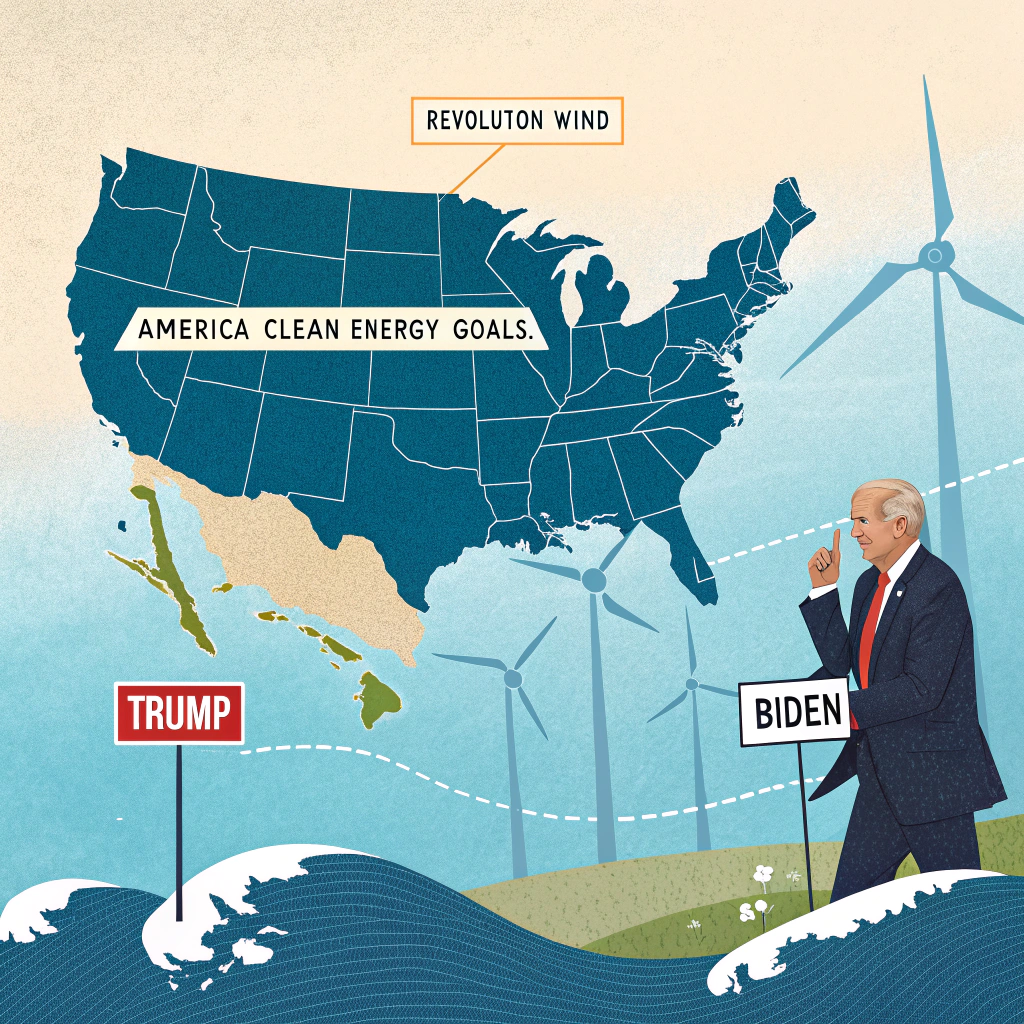
Biden’s plan: to approve projects like Empire 1, Revolution Wind, and South Fork to deliver 30 gigawatts of offshore wind by 2030, bringing clean electricity to more than half of homes. These projects were designed not only to provide clean electricity but also to help the United States reduce emissions, compete with countries such as China and Europe, and create massive jobs in clean energy.
Trump’s opposite: Trump has repeatedly called for canceling, delaying, or severely reviewing these projects, citing national security risks, cost burdens, and energy insecurity. All of the arguments Trump made have since been proven wrong.
Biden saw offshore wind as a path to climate leadership; Trump sees it as a liability.
AI generated
State pushback and legal action
The response from states has been swift. In May, Connecticut Attorney General William Tong joined 17 other AGs in suing the Trump administration over its offshore wind regulation efforts.
With Rhode Island and Connecticut directly affected by Revolution Wind, further legal challenges are likely. Given its contractual obligations under the PPA and the billions of dollars already spent, Ørsted could end up in court, as could others.
The court could now decide whether the federal government can unilaterally halt projects that have been fully approved and are already under construction.
US Clean Energy Goals at Risk
If these project closures become permanent, the impact would be huge:
First, 1.5 GW+ of offshore wind capacity would be completely lost
Nearly a million homes would be without clean power
Billions in investments by developers like Oersted would be frozen
Thousands of union jobs would be lost
State climate goals in New York, Rhode Island, and Connecticut would be thwarted
Finally, Biden’s 30 GW by 2030 goal would be weakened
image: AI genertaed
The U.S. would lose credibility in the global race for renewable energy leadership, not just in terms of targets. While Europe and China are aggressively expanding offshore wind; the U.S. would lag behind.
Orsted’s future in the US
The crisis raises questions about whether Oersted and other developers will continue to invest in the US market. Ørsted has already built the South Fork Wind project, which is supplying power to New York at a 53% power factor—compared to baseload sources.
For the company, South Fork proves that offshore wind can be both reliable and efficient. But with Revolution Wind stalled and Empire 1 canceled, Ørsted faces increasing uncertainty. If political risks become too high, developers could redirect capital to friendlier markets in Europe or Asia.
A Nation at a Crossroads
The changing political landscape has brought about a major shift in US energy policy. The United States is currently at a crossroads. On the one hand, the country could accelerate its deployment of renewable energy, reduce its reliance on fossil fuels, and secure a place as a global leader in clean energy.
On the other hand, it could expand its fossil fuel dominance, questioning its leadership position with foreign competitors. The fight against Oersted’s Revolution Wind will be emblematic of this struggle. Will America commit to a clean energy future, or will politics derail decades of progress?
In the Bottom
In the last words, the Trump administration’s shutdown of Ørsted’s Revolution Wind would be more than a bureaucratic delay—it would be a symbolic and practical blow to US clean energy goals. Biden’s approval of projects like Empire 1 and Revolution Wind promised to transform the U.S. energy landscape, but Trump’s shutdown is shattering that vision, throwing states, companies, and workers into turmoil.
As the lawsuits pile up and political divisions deepen, the future of U.S. offshore wind—and with it, America’s clean energy goals—hangs in the balance. For Ørsted, the fight is about rescuing a $1.5 billion investment. For America, it’s about deciding whether to lead the global race to renewable energy or fall behind. The question is which way America will go!
With US clean energy goals under threat! it remains to be seen whether the U.S. will lead the global renewable energy race—or fall behind? Stay tuned to https://windnewstoday.com/ for the latest on offshore wind, clean energy policy.
Ismot Jerin is the founder and Editor-in-Chief of WindNewsToday, an independent publication covering offshore wind, renewable energy policy, and clean power markets with an analytical focus on the United States and global energy transition.