WindNewsToday

AI Wind Turbine Maintenance: How It’s Transforming U.S. Wind Energy

AI-Wind-Turbine-Maintenance: How It's Transforming U.S. Wind

Wind power is really taking off, isn’t it? As demand for clean energy grows, wind turbines are becoming a common sight across the United States. If you’re new to the topic, it helps to first understand [what wind energy is and how it works] before diving deeper into how these systems are maintained and optimized.

Today, AI-driven wind turbine maintenance is transforming the way U.S. wind farms operate. By reducing unexpected downtime and improving overall energy efficiency, artificial intelligence is replacing the old trial-and-error approach that once relied heavily on manual inspections. In the past, this guesswork wasted both time and money.

Now, advanced data analytics and automation are powering smarter wind turbine optimization techniques. From predictive maintenance to performance monitoring, making wind farms more reliable, efficient, and cost-effective than ever before.

Here’s What’s Important

Revolutionizing Wind Turbine Operations with AI

Why We Need AI Wind Turbine Maintenance

Wind farms are getting bigger and more complicated. Keeping all the turbines up and running is tough, and just waiting for something to break isn’t good enough anymore. When a wind turbine stops working when it’s not supposed to, it can cost a lot of money. You lose power and have to pay for repairs. Parts like gearboxes and blades can wear out slowly, so it’s easy to miss problems until they’re big. A lot of older wind farms still use systems that can’t tell you what’s happening right away. That’s why we need smart wind energy solutions to watch what’s going on and fix stuff before it gets really expensive.

How AI Helps with Wind Farm Maintenance

AI is a game-changer for taking care of wind turbines. Think of it as giving each turbine its own doctor who checks on it all the time and knows when it might get sick. AI systems use data from sensors on the turbines—things like shaking, temperature, and wind speed—to see tiny changes that people might miss.

Here’s a quick look at how AI helps:

  • Watching all the time: AI keeps an eye on turbines 24/7, looking at data as it comes in.
  • Finding problems early: It can see when something’s starting to go wrong, like a bearing wearing out, way before it breaks down.
  • Checking things fairly: AI can look at pictures and data from inspections, so there are fewer mistakes, and things are checked the same way every time.

Basically, we’re switching from fixing things after they break to taking care of them ahead of time. It’s about keeping turbines running well and for longer. Eberdrola’s AI wind turbine maintenance is an example:

What they do:

  • Avangrid, which is Iberdrola’s U.S. subsidiary, is rolling out a generative AI tool called “First Time Right Autopilot” to assist the technicians at its American wind farms.
  • The AI system works using Amazon Bedrock models through Amazon Web Services (AWS).
  • It’s part of the mobile devices used by field technicians and can be turned on with voice or text.
  • When there’s a turbine problem, the AI gathers info, figures it out, and gives the technician repair steps, documentation, or training videos right away.
  • This means quicker fault finding, less downtime, and better operations for Avangrid’s wind setup.

This shows how AI tools are changing wind turbine maintenance in the U.S.

AI in Action

This isn’t just a cool idea; AI is already making a big difference. Companies are seeing real wins—less surprise downtime and lower repair costs. Check it out:

  • One study showed that using AI to find unusual activity in a wind farm cut operational costs up to 70% and made equipment last around 20% longer.
  • A look at digital twins and AI in wind farms showed that these systems can spot tiny issues and point them out before they cause a breakdown.
  • One study estimated that using AI to handle wind farm stuff could make energy production 10–15% better and cut down on manual inspections by about 30%.

These aren’t small wins—they’re big changes that are helping the wind industry grow and be more reliable. It’s about making wind power cheaper and something people can count on.

Advanced Monitoring and Fault Detection

Keeping wind turbines in good shape is hard work, and it used to be a guessing game. People would fix stuff when it broke or just on a schedule. That meant fixing things that didn’t need it or waiting too long to fix what did. AI is changing how we keep an eye on these machines.

Real‑Time Sensor Data Analysis

Imagine the turbine has tiny doctors inside, always checking on it. These doctors are sensors, and they collect data on things like vibration, temp, oil, and electricity. AI looks at all of this nonstop, making sense of it all. It finds patterns that people might miss or that show up slowly. This info helps us see how healthy everything is.

Izomind: Spotting Problems Early in Wind Farms

  • Izomind’s platform uses AI to find unusual activity in data from wind turbine sensors, like vibrations and temperature.
  • They say one study showed unplanned downtime dropped by about 70%, and parts lasted around 20% longer.
  • Even though they don’t always name the wind farm, this shows how AI can change how we take care of wind turbines, moving from fixing things after they break to watching for problems ahead of time.
  • This could be a general example of how AI helps wind farm operators across the board.

Early Detection of Component Failures

This is where AI is super helpful. It looks through all the data and finds small problems way before they become big ones. If the vibration in the gearbox changes a bit, it might mean a part is wearing out. Instead of waiting for it to break and mess up the gearbox (which costs a lot to fix), AI can point it out early. Then, the repair is smaller and cheaper.

Objectivity and Fewer Mistakes

During Checks Let’s face it, people mess up sometimes. If we only trust people to check machines like turbines, they might miss things. AI is more objective, doesn’t get tired or lose focus, and always checks data the same way. That means fewer problems are missed, and checks are more consistent.

Smart Wind Energy Solutions

Wind farms are tricky, and keeping them running well is hard work. Usually, maintenance is just done on a set schedule. Sometimes you end up fixing things that weren’t even broken, or you don’t spot a real issue until it gets bad. But AI can really shake things up. Instead of guessing, now we can use smart tech to find the best time and way to do maintenance.

Smart Maintenance Schedules

AI checks out tons of info – stuff like weather, how much energy is being made, and readings from the turbine sensors. It uses this to guess when maintenance will mess things up the least. Think about it: It’s way smarter to plan a repair when there’s not much wind than to stop a turbine when it’s windy. This smart planning helps keep things running and avoids wasted energy.

An AI-powered Computerized Maintenance Management System (CMMS) has been created especially for renewable energy assets, such as wind farms, by the digital maintenance platform MaintWiz.

The system analyzes performance data from several turbines in real time, plans preventive maintenance, and tracks turbine health using machine learning algorithms.

It maintains digital records of all maintenance operations for compliance and analytics, automates maintenance scheduling, and assigns tasks according to technician availability and priority.

The CMMS platform helps operators take action before breakdowns happen by integrating SCADA data and IoT sensors to detect early warning indicators of turbine problems.

Important advantages include:

  • Predictive alerts and optimized scheduling can reduce maintenance costs by up to 20–30%.
  • better use of resources, guaranteeing that parts and technicians are available when needed.
  • Improved safety because AI minimizes emergency responses and cuts down on turbine downtime in dire situations.
  • improved decision-making, including data-driven insights for budgeting and long-term asset management.

Cutting Down on Downtime and Revenue Loss

When a turbine is down when it shouldn’t be, that really hurts the money you make. If it’s not running, it’s not making power, and that’s lost income. AI can stop this from happening by pointing out possible problems early on. If you fix a small issue before it gets big, you can often handle it when you already planned to, or maybe not even have to shut things down at all. Doing things this way means you get more power all the time and make more money.

Lowering Operation & Maintenance Costs

Besides just helping you not lose money, AI also brings down the cost of keeping the turbines going. Instead of checking every single part all the time, AI can figure out exactly which parts might need a look. So, the repair people can put their time where it’s most needed. You also won’t have to replace parts you don’t need and spend less time on checks that don’t find anything. If you do things this way, you use your resources better and save a lot of cash over time.

Using Digital Twins for Better Simulations

A digital twin is basically a virtual copy of your wind turbine or whole wind farm. It’s not just a 3D model; it’s a copy that updates with real data from the real turbines. It acts like the real thing, showing you what’s happening, but in a safe, digital area.

Copying How Turbines Act

These digital twins use data like vibration, temperature, and electrical output, plus past data. AI then uses this info to make the virtual model act like the real turbine when things change. So, if a real turbine vibrates oddly, the digital twin will show the same thing. This lets us see how parts are doing under stress without being there.

Trying Out Maintenance and Upgrades

This is where digital twins are useful. Before you send people to a turbine, you can use its digital twin to test different maintenance plans. Want to see what happens if you change a bearing? You can try that in the digital world. Wondering how a software update might change how it works? Test it on the twin first. This testing helps you find the best plan, guess what might happen, and avoid mistakes on the real thing. It’s like having a crystal ball for your wind farm

Adding AI to Your Wind Farm

So, you’re thinking about adding AI to your wind farm. If you have older equipment, that might seem difficult—but it is easier than you think. A lot of new AI can work with what you already have. It can connect with your old sensors and control software. Because of this, you can get what AI offers without spending too much. What matters is making connections, not changing everything.

Easy to Add to Old Systems

This point is important for your budget. No one wants to replace working equipment just to add new software. Instead, AI tries to be compatible with what you have. Consider this: You’re adding a smart thermostat to an old house. You don’t need to rewire everything. AI can usually work with your current stuff, getting data from sensors and talking to your systems. This saves money, time, and stress.

Making Data Easy to See and Use

For AI to work, data is needed. And the data needs to be easy to get. There are methods to get information that AI needs, even with old systems. This may mean creating better data flow or using tools that act as a bridge between old and new things. The goal is to easily see what the AI is doing and the reasons why it does it. If you see how AI looks at your turbine’s information, you will be more confident in using what it suggests!

Making Wind Turbines Safer and Last Longer

When we talk about wind turbines, you know, the huge ones in fields or offshore, safety is super important. And we want to keep those pricey machines running as long as we can. It’s key to the money and keeping power flowing. AI is helping a lot, making it safer for workers and keeping turbines running well for years.

Less Need to Check Things by Hand

Before, checking a turbine meant someone climbing up, looking at parts, and writing notes. It took forever and was a bit risky. AI changes that. Sensors and cameras send data constantly, so we know how healthy a turbine is without sending people to risky spots so much. Now, there are fewer trips up the tower for basic checks.

Keeping Workers Safe

This goes with the last thing. Less manual checking in tough or unsafe spots means fewer risks for workers. AI can spot possible issues from the ground, so techs can prep for work. They can grab the right tools and gear, knowing what’s up. That cuts down on accidents a lot.

Smart Part fixes for Long Life

No one wants a gearbox or blade to break suddenly. That’s expensive and shuts down a turbine. AI can guess when a part might fail, which is great. Instead of waiting for a break, AI warns us early. So, we can plan fixes when it’s not windy. Fixing small stuff early is cheaper than dealing with big breaks. Smart fixes keep turbines running well and help them last longer, so we get more clean power from them.

AI-powered Wind Turbines Maintenance

Getting AI to work in wind turbine maintenance isn’t always easy. Operators should know about a few potential problems. It takes thought and money; it’s not a simple thing.

System Compatibility Issues

Since many wind farms are older, their equipment might also be old. It can be hard to get new AI tools to work with these older systems. You probably don’t want to replace everything just to use the new AI. Luckily, many AI solutions are made with old tech without big changes. Finding something that fits what you already have is what matters.

Making Sure Data Is Good

AI needs good info to work well. If the data from sensors is bad or wrong, the AI’s guesses won’t be good. It’s like baking a cake with bad ingredients; you will have a bad meal. So, ensure your data collection is solid and the data is clean before using it in the AI.

Training People

AI tools are great, but people need to use them. You need folks who know how to use these systems, read the data, and do what the AI suggests. This often means teaching your current staff or getting new people with the needed skills. It’s a change from old maintenance jobs to data analysis and tech.

Following the Rules

There are rules when dealing with lots of data, mainly from important stuff like wind farms. These include data privacy rules and security stuff. You must gather, store, and use data ethically and legally. Keeping important data safe from hackers is a big deal.

AI’s Role in the Future of Wind Energy

So, what’s coming up for AI in wind power? It’s not just about fixing stuff when it breaks down now. We’re finding smarter methods to guess what could happen and get turbines running even better. The aim is to keep those blades spinning in a good way for as long as we can.

Better Weather Prediction

Weather forecasts are getting better all the time, right? AI is doing that for guessing wind patterns. Smart math stuff can now check loads of info – past wind speeds, air pressure, where things are located – to give us a clearer idea of what the wind will do. This means wind farm bosses can better plan how much power they’ll make and when to fix things.

Next-Level Digital Copies

We’ve chatted about digital twins – but they’re getting even cooler. Think of a computer version of your whole wind farm, not just one turbine. These new digital twins can show how everything acts in different situations. They can also test new ways to fix things across the whole farm and even guess how upgrades might change how well things work. It’s like having a magic ball for your wind farm.

Measuring Greenness

Since the world wants cleaner energy, showing how green we are is a must. AI is helping us measure and tell people about how sustainable we are. By checking repair info and power output, AI can figure out how much less carbon we’re making because we’re running things better and keeping equipment around longer. This is key for companies trying to hit green goals and talk about how they’re doing.

The move to green energy means more turbines, more info, and more stuff to handle. AI isn’t just a nice thing to have; it’s becoming something we need to run these big operations well and save money. It’s about making wind power more able to be guessed, more good, and a larger part of our clean energy future.

The future is now for looking after wind turbines.

What does this mean for AI wind turbines maintenence in the US? AI isn’t just a future thing—it’s changing how we keep those big turbines running well. It’s about spotting issues early, planning upkeep when it’s best, and just making things safer and better. There are still some things to sort out, like getting all the data together and teaching people how to use the new tech, but the path is clear. Using AI- powered wind turbines is how wind farms will stay ahead, save money, smart wind energy solutions, and be a bigger part of our clean energy future. It’s a big change, but it’s already going on.

Frequently Asked Questions

Q1. What’s AI, and how does it assist wind turbines?

A1. AI, or Artificial Intelligence, is basically giving computers the ability to think and learn. When it comes to wind turbines, AI keeps an eye on how they’re doing using sensors. It can catch little issues—like a shaky piece—before they turn into major, expensive breakdowns. This helps get stuff fixed early and keeps the turbines running without a hitch.

Q2. Why is guessing when things might go bad (predictive maintenance) a big deal for wind farms?

A2. Wind farms are full of large, pricey machines. If one goes kaput, it costs a fortune since it stops making power. If we guess when things will break, we can repair them beforehand, saving cash and keeping the farm creating clean power without extended pauses.

Q3. Can AI assist in planning maintenance more smartly?

A3. Yep! Instead of fixing turbines on a specific day, AI can check the weather and how the turbines are working. It suggests fixing them when it’s not too windy, so not much power is lost. This makes sure repairs happen at the ideal time, saving both money and energy.

Q4. What are digital twins in wind power?

A4. A digital twin is essentially a phony version of a real wind turbine on a PC. It shows precisely how the real turbine is running. Engineers can use this phony version to try out new thoughts or see what could happen if something breaks—without endangering the actual turbine.

Q5. Is it hard to add AI to older wind farms?

A5. It might seem complicated, but many AI tools are designed to work with older setups. You often don’t have to swap everything out. These recent tools can hook up with the old tools, making it simpler to get the cool parts of AI without a super big, costly change.

Q6. Does using AI make working on wind turbines safer?

A6. For sure. AI assists in spotting problems from far away, so workers don’t always need to climb way up high or go into small areas for checks. This translates to fewer dangerous jobs for people—and a safer spot overall. Plus, fixing stuff before it breaks means the machines last longer.

India Takes Flight: L&T and US Giant General Atomics Partner to Build Advanced Combat Drones Under Atmanirbhar Bharat

L&T GA-ASI partnership to develop Drones for Indian Armed Forces

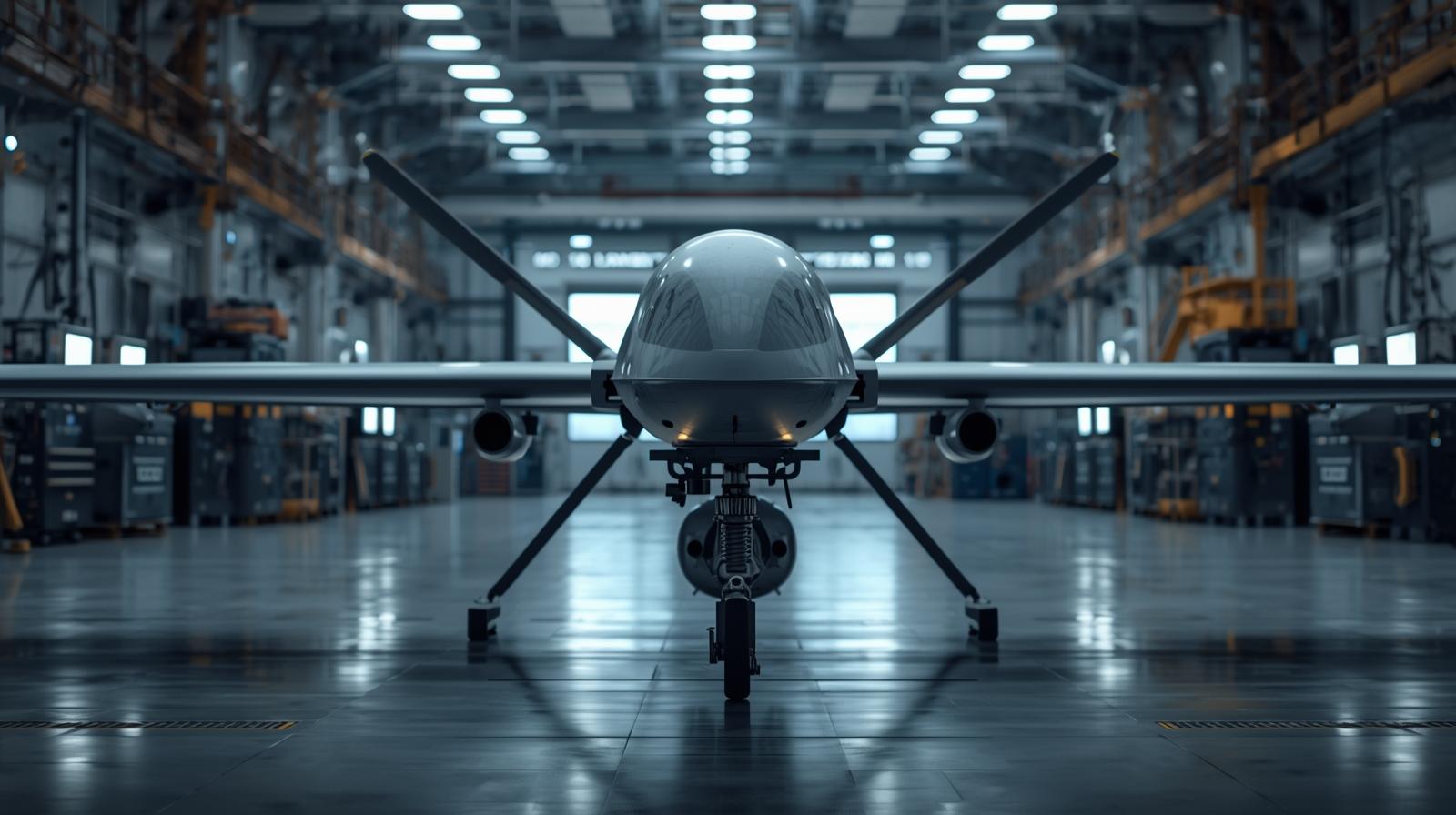
Mumbai, November 1, 2025 – India is taking a bold leap toward defense self-reliance. Larsen & Toubro (L&T) has teamed up with US defense leader General Atomics Aeronautical Systems, Inc. (GA-ASI) to produce advanced Medium Altitude Long Endurance (MALE) combat drones domestically. This landmark partnership is a major milestone in India’s Atmanirbhar Bharat defense initiative, strengthening operational readiness, technological independence, and domestic aerospace manufacturing capabilities.

By combining L&T’s precision engineering expertise with GA-ASI’s combat-proven unmanned aircraft systems, India will now manufacture drones that have already flown millions of hours worldwide, entirely on Indian soil. This initiative is expected to enhance India’s surveillance, intelligence, and strike capabilities while creating a foundation for long-term defense technology self-reliance.

Advancing Atmanirbhar Bharat in Defense

Under the Partnership, GA-ASI is the technology partner, and L&T is the highest bidder for the Ministry of Defense’s 87 MALE RPAS program. By bringing vital drone technologies to India, the project will directly support the Make in India Drones and Atmanirbhar Bharat defense programs.

Known for their intelligence, strike, and surveillance capabilities, these MQ-series drones are already in use all over the world and are valuable resources for India’s changing security requirements. The Indo-US defense collaboration will see L&T act as the prime bidder for the Ministry of Defence’s 87 MALE RPAS program, with GA-ASI as the technology partner, producing world-class MQ-series drones entirely on Indian soil. By integrating MALE RPAS, India is set to strengthen operational readiness while maintaining Indo-US defense collaboration at the forefront of technological innovation.

What are remotely piloted aircraft systems?

RPAS are unmanned aerial systems that are operated from a ground station and are intended for tactical and surveillance purposes.
They vary in size and capability—from lightweight quadcopters to medium-sized drones with endurance up to 8 hours and advanced satellite communication systems for long-range missions.

Types and Capabilities

  • Medium-sized long-endurance aircraft for long- or medium-range missions
  • Medium VTOL aircraft capable of vertical take-off and landing
  • Lightweight VTOL drones such as quadcopters

Operational Range

RPAS operate within Radio Line of Sight (RLOS) or Beyond Radio Line of Sight (BRLOS) via satellite links, enabling both coastal and inland operations. They provide real-time data and video feeds to ground control stations, enhancing situational awareness and mission efficiency.

Leaders Talk

L&T Chairman and MD S.N. Subrahmanyan stated:

India now has a rare chance to produce cutting-edge unmanned platforms domestically thanks to this partnership. We are honored to work with GA-ASI to improve India’s defense capabilities and hasten its aerospace independence.

Additionally, General Atomics Global Corporation CEO Dr. Vivek Lall stated:

“Our goal is to provide top-notch MALE RPAS solutions that improve India’s operational readiness and defense ecosystem by fusing GA-ASI’s successful technology with L&T’s reliable manufacturing.”

Strategic Impact on the Indian Armed Forces

L&T GA-ASI Partnership Enhanced Operational Capabilities

The adoption of MALE RPAS India strengthens the armed forces’ surveillance, intelligence, and strike capabilities while reducing risks to personnel. These make-in-India drones act as a strategic force multiplier, providing persistent monitoring, rapid response, and precision targeting across multiple operational theaters.

Global Competitiveness and Self-Reliance

By embracing this advanced technology, India positions its defense sector as a globally competitive hub for aerospace innovation, supporting self-reliance in critical technologies and reinforcing its strategic autonomy in defense manufacturing.

India’s Defense Future Takes Flight

The L&T GA-ASI partnership is setting a benchmark in Atmanirbhar Bharat defense innovation. By combining cutting-edge drone technology with domestic manufacturing, India is strengthening national security, operational readiness, and technological independence.

As MALE RPAS India drones become operational, the project will enhance the armed forces’ capabilities and inspire other sectors to pursue self-reliant technological growth. Similar to India’s defense autonomy efforts, other domestic innovation projects are shaping the country’s long-term strategic and economic future.

China Unveils World’s First Offshore Wind-Powered Underwater Data Center

China Offshore Wind Data Center Unveiled as World’s First

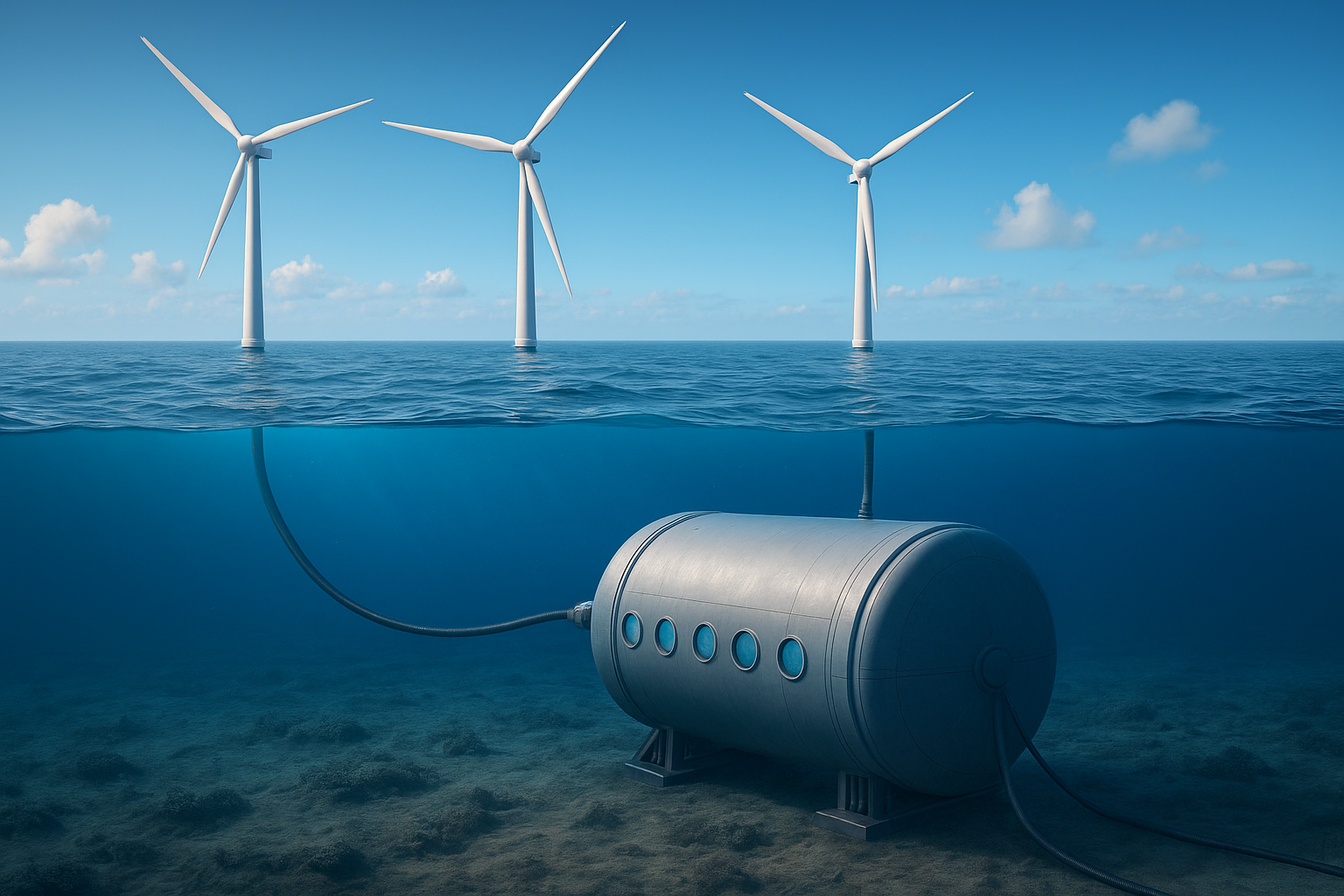
China is setting a global benchmark by launching the world’s first offshore wind-powered underwater data center (UDC) in Shanghai’s Lingang Special Area. Developed by HiCloud, the 500 MW subsea project combines renewable energy and digital innovation, redefining sustainable cloud computing. This milestone highlights the potential for AI, data infrastructure, and offshore wind energy to converge for a low-carbon digital future.

Learn more about wind energy and AI in wind turbines to see how technology and clean energy intersect.

China Offshore Wind Data Center Sets a Global Benchmark

China has officially finished the construction of the world’s first offshore wind data center, an underwater data center (UDC) in Shanghai’s Lin-gang Special Area. The project, inaugurated on Tuesday, represents a significant milestone in integrating renewable energy with digital infrastructure. With an investment of 1.6 billion yuan (approximately 226 million U.S. dollars) and a total power capacity of 24 megawatts, the UDC is designed to showcase green and low-carbon computing on a global scale.

Unlike traditional land-based data centers, this innovative project utilizes over 95% green electricity, reduces power consumption by 22.8%, and cuts water and land use by nearly 100% and 90%, respectively. These measures demonstrate China’s commitment to sustainable digital development and offshore wind energy consumption.

HiCloud Demonstrates Wind-Powered Underwater Data Center

Chinese underwater data center firm HiCloud, a division of Highlander, also launched a demonstration project that connects servers directly to an offshore wind farm. The initiative marks the first stage of a plan to scale subsea deployments up to 500 MW. The demonstration site, offering 2.3 MW of data center space, is located off the coast of Shanghai near the Lingang Special Area of the Shanghai Pilot Free Trade Zone.

HiCloud highlighted the significance of this project, stating on LinkedIn:

“This marks a significant milestone for the Lingang Special Area in deeply integrating the digital economy, new energy, and the marine economy. It also represents a major initiative by Shanghai to support national strategies and build a global hub for technological innovation.”

Industrial partners—including Shenergy Group, Shanghai Telecom, Shanghai INESA, and CCCC Third Harbor Engineering Company—signed a cooperation agreement to collaborate on building a 500 MW underwater data center. While the exact location and timeline for large-scale construction have not been disclosed, the announcement signals an ambitious roadmap for wind-powered subsea computing in China.

The Rise of Underwater Data Centers Globally

The innovation of underwater data centers is not entirely new. Microsoft pioneered the effort with Project Natick, launching the first U.S.-based underwater data center off the Pacific coast in 2015 and following up with a pilot in the North Sea in 2018. However, Microsoft later abandoned these projects, leaving room for other companies to innovate. At least two start-ups, Subsea Cloud and NetworkOcean, are now planning their own underwater data centers, positioning China as a global leader in this niche.

HiCloud’s experiments date back to 2021, starting with deployments off Hainan Island. Its first commercial UDC went live in 2023, and in February 2025, an additional module containing 400 high-performance servers was added. This iterative approach highlights the growing viability and scalability of underwater data infrastructure when coupled with offshore wind energy.

Renewable Energy and Data Centers: The Global Trend

Currently, data centers globally consume 2–3% of the world’s electricity, and a single hyperscale data center requires the equivalent power of roughly 10,000 homes per day. Recognizing the environmental impact, major tech companies are increasingly turning to renewable energy.

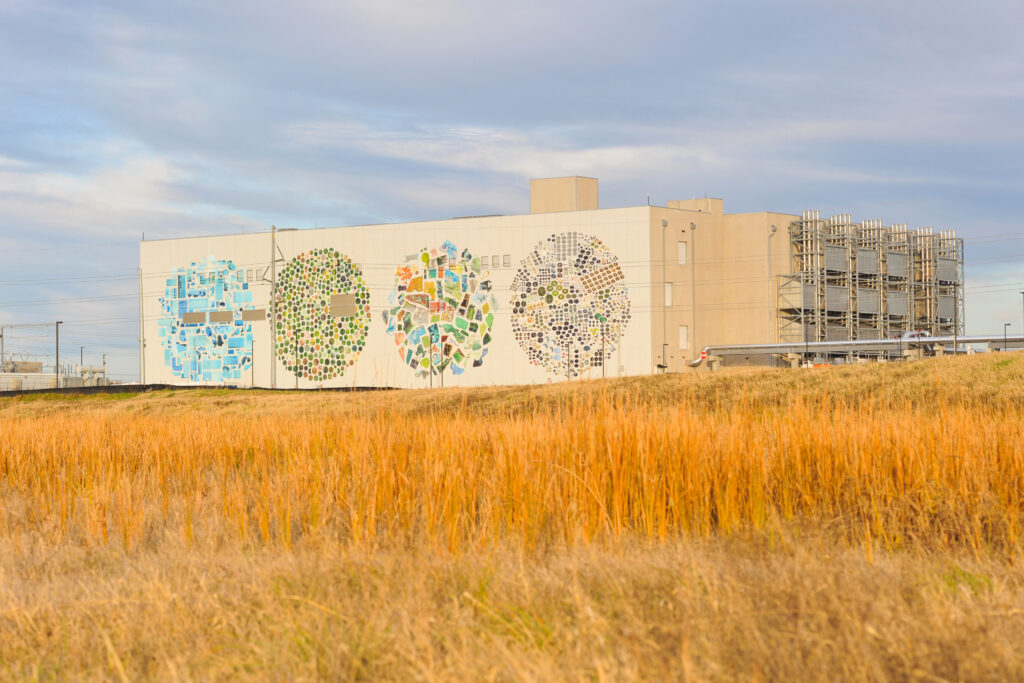
A colorful mural by digital artist Jenny Odell brightens up the Mayes County, Oklahoma, data center. Image: Google

Amazon, Google, Microsoft, Equinix, Digital Realty, and Schneider Electric have made significant commitments: purchasing clean energy, partnering with renewable developers, and building data centers powered by wind and solar energy. For instance, Google recently connected its Oklahoma data center directly to a wind farm, while Amazon aims to operate all of its global operations using 100% renewable energy.

China’s offshore wind-powered underwater data centers follow the same global trend, demonstrating how AI, digital infrastructure, and offshore renewable energy can converge to reduce emissions, improve efficiency, and set benchmarks for sustainable cloud computing worldwide.

Advantages of China’s Offshore Wind-Powered UDCs

Reduced Environmental Impact: Nearly total eradication of land and water use, 22.8% reduction in power consumption, and over 95% green electricity usage.

  1. Scalable Design: A 500 MW subsea deployment is planned after the 2.3 MW pilot demonstration.

2. Technological Leadership: Showcases innovation by combining wind energy, underwater modules, and AI-powered servers.

3. Economic Integration: Promotes the growth of the digital economy and the marine industry while supporting national strategies.

4. Global Benchmarking: Establishes China as a pioneer in data infrastructure driven by renewable energy, encouraging comparable initiatives around the world.

Conclusion: A Green Digital Future

China’s offshore wind-powered underwater data center is a game-changer for the global energy and technology sectors. Projects like HiCloud’s 500 MW plan, which integrates digital infrastructure, renewable energy, and sustainable practices, not only lessen their impact on the environment but also establish new benchmarks for the combination of clean energy and computing.

China’s innovative efforts will probably serve as a model for sustainable data centers globally as major global players opt for renewable energy, showing how the next generation of cloud computing can be both environmentally friendly and high-performing.

Source: Xinhua

Al Yamamah Steel Launches Wind Factory in Saudi Arabia

Al Yamamah Steel Industries Company has officially launched commercial production at its Wind Energy Systems Factory in Yanbu Industrial City

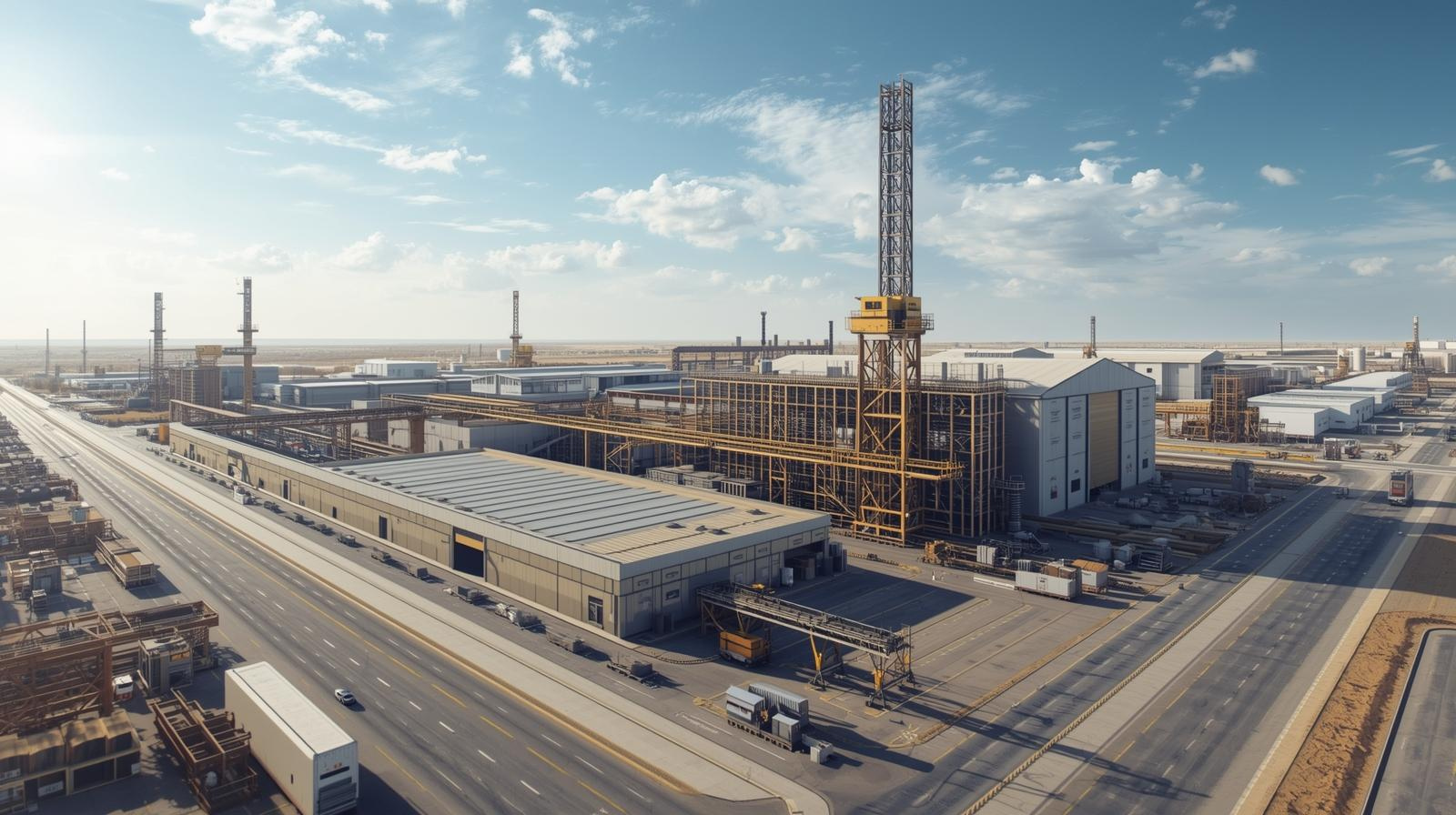
Al Yamamah Steel Industries Company, a specialist in steel tower manufacturing, has officially entered the Saudi Arabian wind energy sector with the launch of its Al Yamamah Wind Energy Systems Factory in Yanbu Industrial City. Supported by the Arab Ministry of Energy, the factory marks a major step toward achieving the ambitious goals of Saudi Vision 2030, which seeks to generate 50% of the nation’s electricity from renewable energy sources, to reach a total installed capacity of 130 GW, aiming for a target of 40 GW from wind power.

A Landmark for Saudi Vision 2030

The new facility represents a significant leap in the Kingdom’s clean energy transformation. The project is designed to advance the Saudi Vision 2030 Clean Power roadmap, reducing reliance on fossil fuels while creating new opportunities in the green manufacturing sector.

With the Ministry of Energy’s supervision, Al Yamamah Steel Industries Company demonstrates its growing commitment to sustainable development, aligning with the nation’s broader clean energy strategy and global sustainability goals.

One of the Most Advanced Steel Tower Facilities

The Al Yamamah Wind Energy Systems Factory in Yanbu Industrial City is equipped with cutting-edge technology and precision engineering capabilities. The plant boasts an annual production capacity of 50,000 tons of high-quality steel towers, each capable of reaching heights over 130 meters and diameters up to 6 meters—specifically designed to support the latest generation of wind turbines. Managed by a team of specialized engineers and industry professionals, the Yanbu facility offers an innovative work environment that promotes technical excellence and continuous improvement. The factory not only supplies local projects but also positions itself as a global supplier to international wind energy markets, strengthening Saudi Arabia’s industrial export base

At the dawn of the new millennium, the Kingdom of Saudi Arabia witnessed remarkable development across all sectors—unprecedented in both speed and scale. The nation moved far beyond constructing modern homes and city roads to establishing vast economic and industrial cities strategically located throughout the Kingdom.

To strengthen logistics and connectivity, these economic and industrial hubs were linked through an extensive network of modern highways and railroads, forming part of Saudi Vision 2030—a bold national initiative aimed at diversifying the economy and positioning the Kingdom as a global hub connecting three continents.

In 2003, Al Yamamah Company for Reinforcing Steel Bars was founded, marking a new chapter in the nation’s industrial progress. The company built a state-of-the-art manufacturing plant in Yanbu Industrial City to meet the growing demand for reinforcing steel bars essential to Saudi Arabia’s massive infrastructure and development projects—introducing a strong new name in the global steel manufacturing industry

— Eng. Mohammed Al Wehaiby

This facility is one of the most advanced of its kind in the region, placing Saudi Arabia at the forefront of localized wind tower manufacturing and reinforcing its leadership in renewable energy innovation.

Strengthening Saudi Arabia’s Clean Energy Future

This initiative underlines Al Yamamah Steel Industries Company’s national responsibility and active role in advancing the Yanbu Industrial City renewable energy transition. By supporting domestic wind turbine tower manufacturing and technology development, the company helps to solidify the Kingdom’s position as both a regional and global leader in the renewable energy sector.

The successful start of commercial production in Yanbu highlights the rapid growth of the Saudi wind energy industry, signaling a new chapter in the Kingdom’s ongoing journey toward sustainability, innovation, and economic diversification.

Saudi Arabia’s Going Green: Clean Energy by 2030

With the Saudi Vision 2030 clean power plan, it is changing its energy game plan. They want to mix up their economy and rely less on oil. The goal is to get half of their electricity from clean sources by 2030, using big solar and wind projects.

By 2025, Saudi Arabia had over 4 GW of renewable energy up and running. Big projects like Sudair Solar PV (1.5 GW) and the Dumat Al Jandal Wind Farm (400 MW) are helping make the switch.

The country is putting lots of money into green hydrogen and energy storage, trying to become a big player in sustainable energy in the area. With support from the Public Investment Fund (PIF) and help from companies around the world, Saudi Arabia’s push into renewable energy, like wind turbine tower manufacturing at Al Yamamah Steel, shows they want a strong, carbon-neutral economy that runs on clean, reliable, and affordable energy.

Google 27 Years Journey: From Garage Startup to Renewable Energy Giant

Google 27 Years Journey: From Garage Startup to Renewable Energy Giant

Google 27 Years Journey is more than the story of a search engine—it is the extraordinary rise of a company that has become both a technological powerhouse and a renewable energy investments leader. What began in a California garage in 1998 has grown into a global empire shaping how the world communicates, navigates, and works every single day.

Even in an age dominated by artificial intelligence rivals like ChatGPT and Bing AI, Google remains unmatched in its influence. As of September 4, 2025, the company controls a staggering 90.4% of the global search market, cementing its status as the backbone of the internet. But Google’s evolution isn’t limited to algorithms and digital dominance. Over the past 27 years, it has steadily built a parallel legacy—one rooted in clean energy, sustainability, and a bold ambition to achieve 24/7 carbon-free operations by 2030.

What makes Google’s journey truly remarkable is not only its ability to adapt to technological shifts but also its willingness to lead on the most urgent challenge of our time: the climate crisis. Today, Google is no longer just a consumer of energy—it is a pioneer, investor, and global advocate for renewable power, shaping markets from Taiwan to the Netherlands.

What Sparked Google 27 Years Journey Toward Sustainability?

When Larry Page and Sergey Brin founded Google in a Menlo Park garage in 1998, their mission was simple yet ambitious: to organize the world’s information and make it universally accessible and useful. What they could not have fully imagined back then was how the company’s trajectory would eventually reshape not just the digital landscape but also the global clean energy movement.

Over the past 27 years, Google has grown into one of the world’s most powerful technology companies, processing billions of searches daily, running massive cloud data centers, and driving advancements in artificial intelligence. Yet, behind this technological growth lies another equally ambitious mission—to achieve 24/7 carbon-free energy across all its global operations by 2030.

The question of sustainability emerged as Google’s data needs skyrocketed. Power-hungry servers required enormous electricity, which, if sourced from fossil fuels, would lock the company into a high-emission future. To solve this, Google decided to lead rather than follow, reshaping its corporate DNA around clean energy innovation.

How Did Google Move From Early Carbon Commitments to Global Leadership?

Google was one of the first major corporations to declare itself carbon neutral in 2007. At that time, the tech industry was only beginning to acknowledge its environmental footprint, but Google had already set the tone. The company balanced its energy consumption with investments in renewable energy credits (RECs), offsetting emissions while beginning to build real renewable projects.

By 2017, Google became the first major company to match 100% of its global electricity consumption with renewable energy purchases. That milestone positioned Google as both a climate-conscious innovator and a market shaper, forcing utilities and policymakers to pay attention.

But Google didn’t stop there. Rather than being satisfied with annual matching, it announced in 2020 its most ambitious energy goal yet: to power its entire business on 24/7 carbon-free energy (CFE) by 2030. Unlike traditional renewable commitments, this means ensuring that at every hour, in every region, Google’s operations are fueled by clean sources—solar, wind, geothermal, and emerging technologies like advanced energy storage.

This commitment pushed Google beyond offsets into deeper partnerships with developers, utilities, and governments. Its approach became an energy model for industries worldwide.

From Big Tech to Big Green: The Sustainability Race

The world’s biggest technology companies are no longer just competing on products and AI — they are also racing to decarbonize. Google, Apple, and Microsoft have each set ambitious climate targets that go far beyond their own operations, reshaping supply chains, energy use, and global sustainability standards.

By mandating renewable energy adoption among suppliers, investing in low-carbon materials, and funding carbon removal projects, these companies are rewriting the rulebook on how technology is made—and pushing the entire industry toward net-zero with ambitious AI and clean energy goals.

Apple: Full Carbon-Neutral Supply Chain 2030

Apple’s commitment to carbon neutrality, covering global operations, supply chain, and product life cycles
Apple has achieved carbon neutrality for its global operations and is striving to make its entire supply chain and products fully carbon neutral. Image: Apple

Apple has committed to achieving a fully carbon-neutral supply chain by 2030, covering offices, retail, manufacturing, logistics, and the entire product life cycle—responsible for over 75% of its emissions. To reach this goal, Apple is pushing suppliers to adopt renewable energy, prioritizing recycled materials, and shifting to 100% renewable electricity across operations. Apple introduced Clean Energy Charging in the U.S. via iOS 16, optimizing iPhone charging for times when cleaner power sources, like solar or wind, are on the grid.

Through its scale and influence, Apple is not just cutting emissions in its own operations but reshaping global supply chains and supporting climate resilience in vulnerable communities.

Beyond its operations, Apple is driving community-based climate solutions worldwide:

  • Africa (Namibia & Zimbabwe): Partnering with WWF’s Climate Crowd to promote climate-smart agriculture, clean cookstoves, beekeeping, and rainwater harvesting.
  • China: Working with the China Green Carbon Foundation to expand nature-based carbon sinks in Sichuan and pilot carbon removal in urban Chengdu.
  • Kenya (Chyulu Hills): Partnering with Conservation International to restore rangelands, store carbon, and train Maasai communities in sustainable grazing.
  • Europe, Middle East & North Africa: Launching with ChangemakerXchange to empower 100 youth-led climate innovators with skills, networks, and funding, beginning at COP27 in Egypt.

“Fighting climate change remains one of Apple’s most urgent priorities, and moments like this put action to those words,” said Tim Cook, Apple’s CEO.

“We look forward to continuing our partnership with suppliers to achieve a carbon-neutral supply chain by 2030. Climate action at Apple doesn’t stop at our doors—through this work, we aim to be a ripple in the pond that drives broader change.”

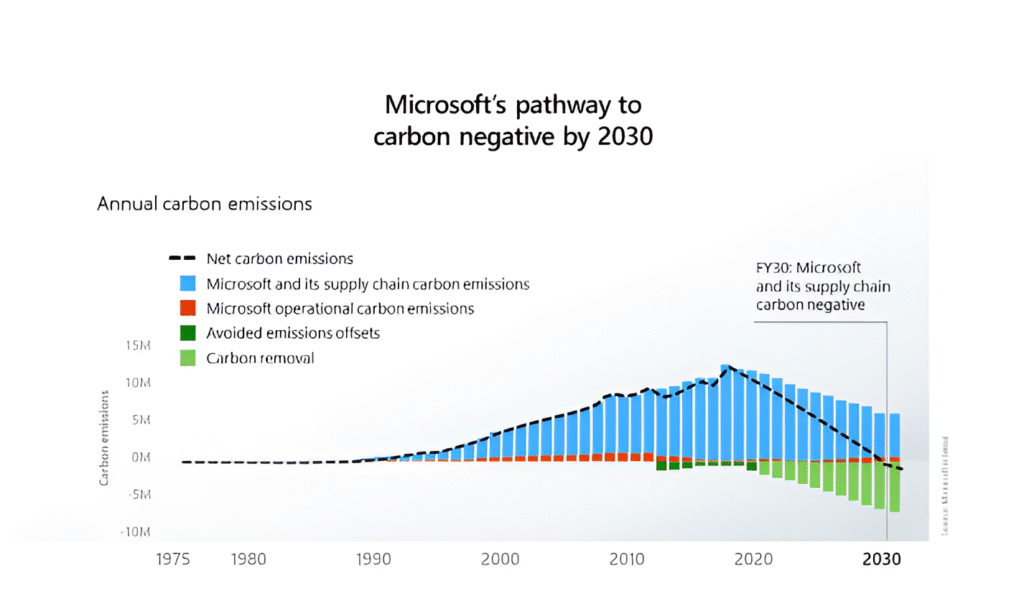
Microsoft: Carbon-Negative by 2030

Microsoft has committed to becoming carbon negative by 2030, removing more carbon from the atmosphere than it emits. Its plan includes using 100% renewable energy by 2025, halving supply chain emissions (Scope 3), and investing in large-scale carbon removal technologies.

Microsoft’s commitment to carbon negativity, including renewable energy use, supply chain emission cuts, and large-scale carbon removal initiatives.
Microsoft aims to become carbon negative by 2030 and remove all historic emissions by 2050 through renewable energy, supply chain reductions, and carbon removal technologies. image: Microsoft

By 2050, Microsoft aims to remove all carbon it has emitted since 1975. The strategy involves cutting direct and value chain emissions by more than half by 2030, supported by an expanded internal carbon fee covering both direct and supply chain emissions.

Google: AI-Powered 24/7 Carbon-Free Data Centers 2030

Google stands out with perhaps the boldest vision: to run all data centers and offices on 24/7 carbon-free energy by 2030. Unlike traditional offsets, this means every search, every YouTube stream, and every AI model it powers will come from clean energy around the clock.

Google is using AI to optimize energy efficiency and has invested heavily in solar and wind projects worldwide. Its data centers are already 50% more efficient than the industry average, yet still consume massive amounts of electricity to process trillions of searches and power billions of user services.

The company now operates 20 renewable energy projects across the globe—from Oklahoma and North Carolina to Chile’s Atacama Region and municipalities in Sweden. These projects represent more than $3.5 billion in infrastructure investments, with two-thirds located in the United States.

Adding to this, Google recently announced a $20 billion renewable energy initiative in partnership with Intersect Power and TPG Rise Climate. Covering wind, solar, and battery storage, this plan is set to roll out its first phase within just two years.

Google Accelerates $20 Billion Renewable Energy Investments

Google has launched a strategic partnership to accelerate $20 billion in renewable energy investments aimed at powering its AI-driven carbon-free data centers. The company is reimagining data center development with a “power-first” approach, prioritizing clean energy at every stage of operations.

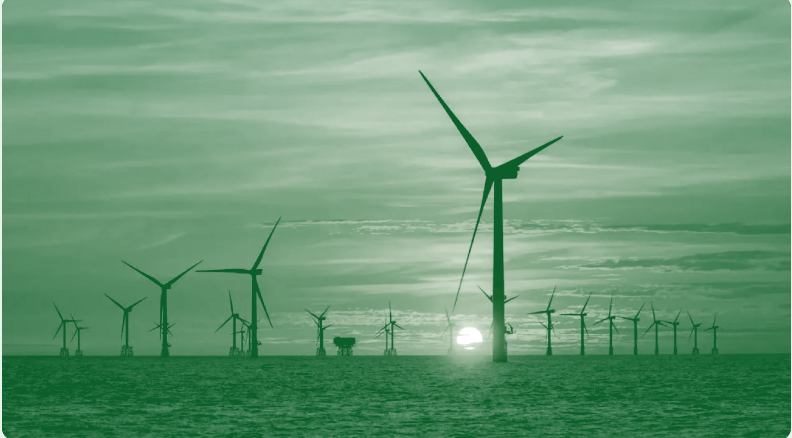
Windmills at the Norther Offshore Wind Projects in Belgium, Image: Google

It has teamed up with Intersect Power and TPG’s climate investment unit to provide renewable energy and storage solutions specifically designed for new data centers. According to Google’s Global Head of Data Center Energy, AI’s growth presents a unique opportunity to rethink how power and data centers interact.

Offshore Wind Projects & Global Expansion

In addition to onshore renewable energy, Google is expanding into offshore wind projects to meet its 2030 carbon-free energy goal:

Google’s First Offshore Wind Projects: Taiwan’s Fengmiao I

In 2025, Google announced its first offshore wind power purchase agreement (PPA) in the Asia Pacific region, marking a pivotal moment in its clean energy journey. The deal centered on the Fengmiao I Offshore Wind Project in Taiwan, developed by Copenhagen Infrastructure Partners.

As the first project from Taiwan’s Round 3.1 auction to achieve financial close, Fengmiao I is not only an energy milestone but also a policy catalyst. When it comes online in 2027, it will power Google’s data centers, cloud regions, and offices in Taiwan, providing the backbone for digital growth in one of Asia’s key innovation hubs.

Google’s investment builds on its earlier mix of solar and geothermal projects in Taiwan. These clean technologies already supply reliable and cost-effective energy to meet the country’s growing electricity demand. The offshore wind projects, however, elevates Google’s role in Asia to a new level—from energy consumer to transformative energy investor.

Extending the Lifespan of the Netherlands’ First Offshore Wind Farm

Also in 2025, Google took an unprecedented step in Europe with Shell by entering into a PPA that extended the lifespan of the Netherlands’ first offshore wind projects, NoordzeeWind.

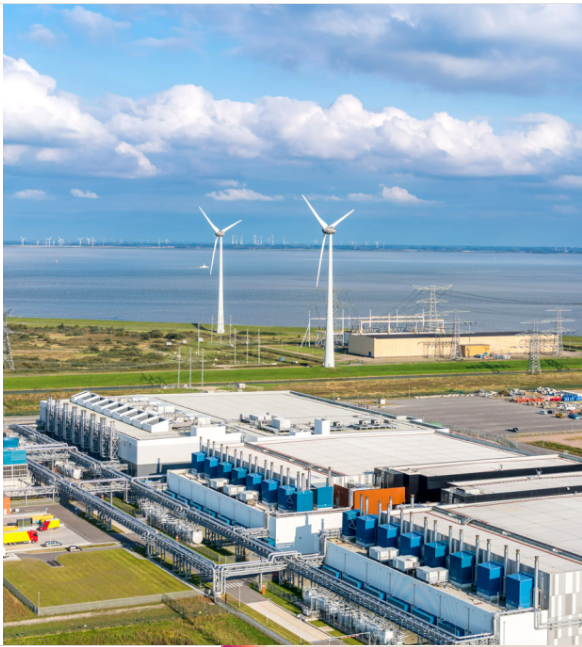
Wind turbines spin Eemshaven, Netherlands, data center. Image: Google

For the first time in history, a corporate PPA didn’t just finance new capacity—it kept existing clean energy resources online. Google purchased 100% of the farm’s 108-megawatt output, which enabled Shell to secure permit extensions and fund critical upgrades. This agreement will extend the wind farm’s life by at least four years beyond its original retirement date.

The initiative underscores Google’s strategic approach: not only to build new offshore wind projects but also to safeguard existing infrastructure from premature shutdown. In a grid struggling with fossil dependency, every megawatt of carbon-free energy matters.

This project added to Google’s clean energy portfolio in the Netherlands, where the company has already supported over 1 gigawatt of renewable generation capacity.

These moves solidify Google’s role as a renewable energy giant, driving global sustainability.

When Will Google Achieve Its Carbon-Free Energy Goals?

In 2025, Google made notable sustainability strides—reducing data center energy emissions by 12%, replenishing 4.5 billion gallons of water, procuring over 8 GW of clean energy, improving TPU power efficiency by 30x, enabling 26 million tCO2e in emissions reductions, and signing the world’s first corporate agreement for small modular nuclear reactors.

These achievements are key milestones on Google’s path toward its ultimate carbon-free energy goal by 2030, a symbolic year aligned with the Paris Agreement and the UN Sustainable Development Goals. Google aims to run entirely on clean energy every hour of every day, across all locations, setting a global precedent for large-scale carbon neutrality.

Google’s ambition is not merely a corporate checkbox but a test case: can a trillion-dollar tech company run entirely on clean energy, every hour of every day, across every location?

If achieved, Google would set a precedent for global industries, showing that carbon neutrality and even real-time carbon-free operations are possible at scale. The journey, however, is complex. It requires massive infrastructure, new market designs, partnerships with regulators, and a steady flow of capital investment.

Already, Google has taken major steps in this direction. The company operates more than 20 renewable energy projects across the globe, representing over $3.5 billion in infrastructure investment. Two-thirds of these projects are in the United States, creating jobs and tax revenue, while others span Chile, Sweden, and Asia.

Notably, Google has signed a groundbreaking offshore wind power purchase agreement in Taiwan with the Fengmiao I project, set to power data centers and offices by 2027. In the Netherlands, Google partnered with Shell to extend the life of the country’s first offshore wind farm, purchasing 100% of its 108 MW capacity to ensure valuable renewable assets remain online.

These renewable energy investments show that Google is not only consuming renewable energy but also protecting, creating and built carbon-free data centers — driving systemic change across industries and regions.

How Does Google’s 27 Years Journey Inspire the Future?

Google’s trajectory from a garage startup in 1998 to a renewable energy giant in 2025 tells a story of evolution — not only in technology but also in responsibility.

This journey proves that innovation and sustainability can coexist. By integrating clean energy into its business model, Google has redefined what corporate leadership looks like in the climate era.

It has shifted from being a consumer of energy to a producer, protector, and innovator in the clean energy landscape. Every wind turbine supported, every solar project financed, and every data center optimized by AI demonstrates a blueprint for the future

Conclusion: What Does Google’s 27 Years Journey Mean for the World?

The Google 27 Years Journey is not just a corporate timeline — it is a roadmap for industries navigating the climate crisis. From the Fengmiao I project in Taiwan to the NoordzeeWind farm in the Netherlands, Google’s renewable energy investments show how companies can push beyond carbon offsets and deliver real systemic change.

If Google achieves its 24/7 carbon-free energy goal by 2030, it will mark one of the most transformative sustainability milestones in corporate history. It will prove that the largest corporations in the world can align profitability, technological growth, and environmental responsibility.

And as energy transitions accelerate worldwide, Google’s story sends a clear message: the future of technology must also be the future of clean energy. The journey from a garage startup to a renewable energy leader shows that bold visions, backed by innovation and investment, can reshape industries and societies.

The time to act is now — and Google is showing the world how.