WindNewsToday

US Offshore Wind Projects Roadmap (2026–2030): Capacity, Policy, and What Comes Next

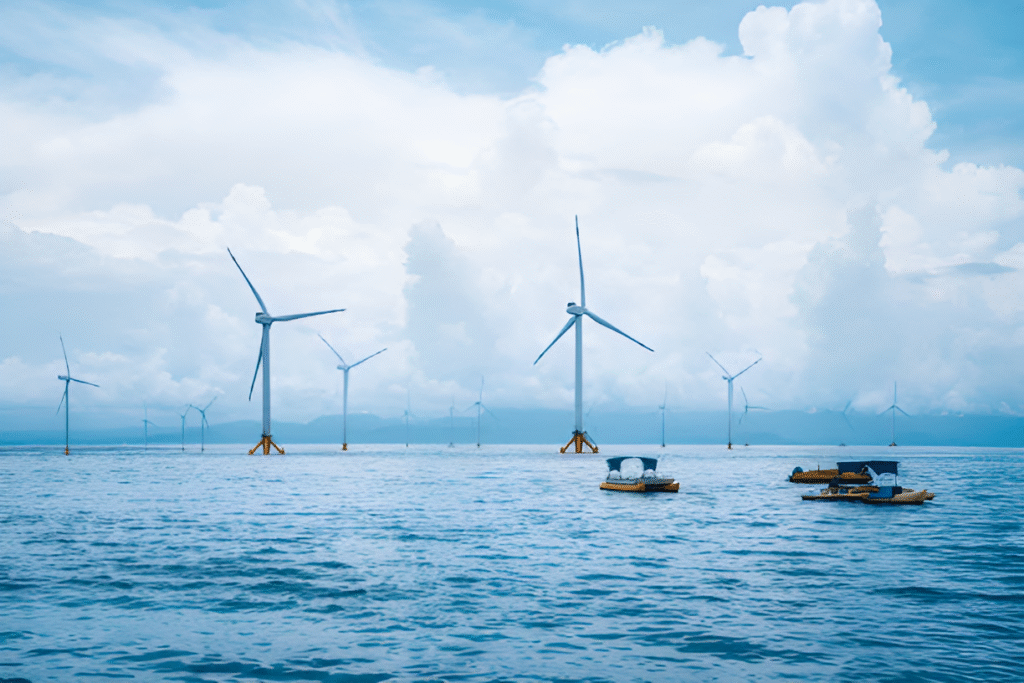
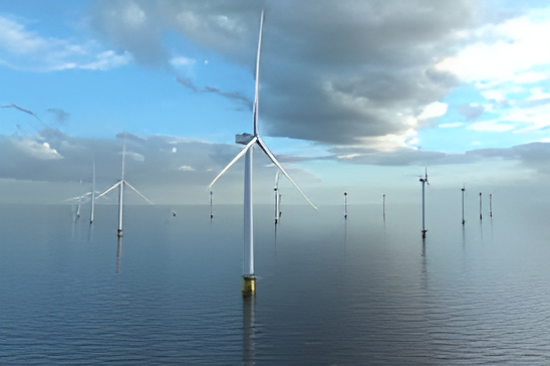
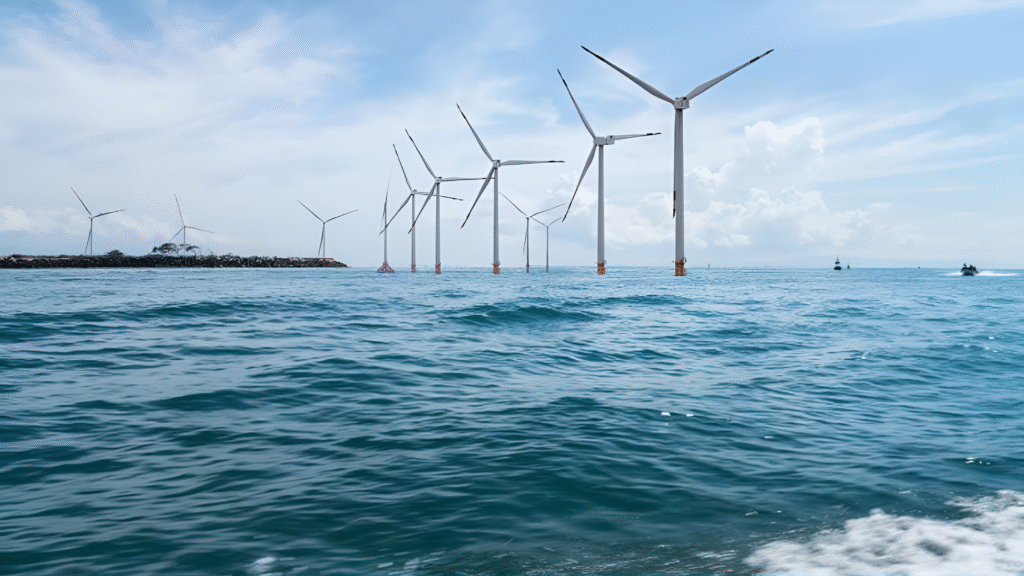
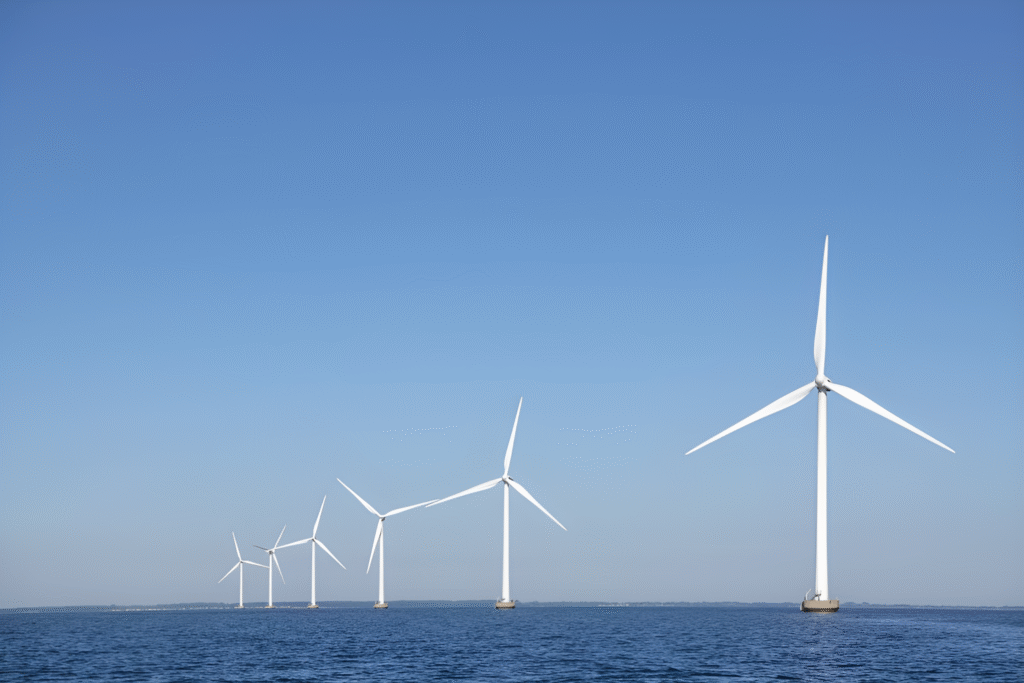
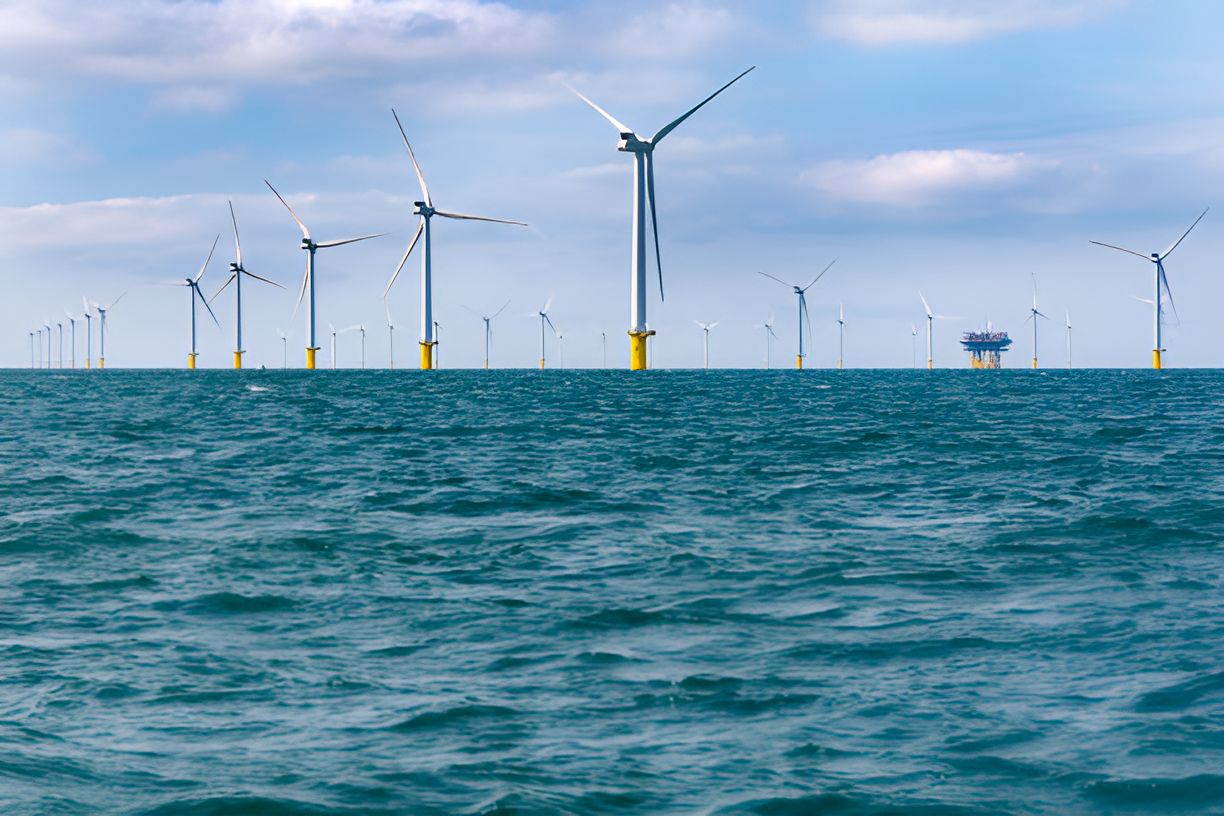
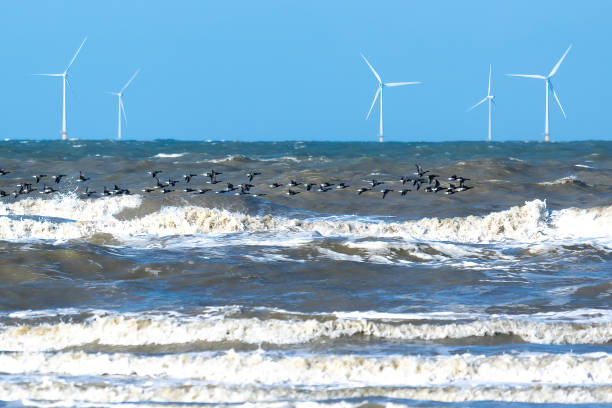
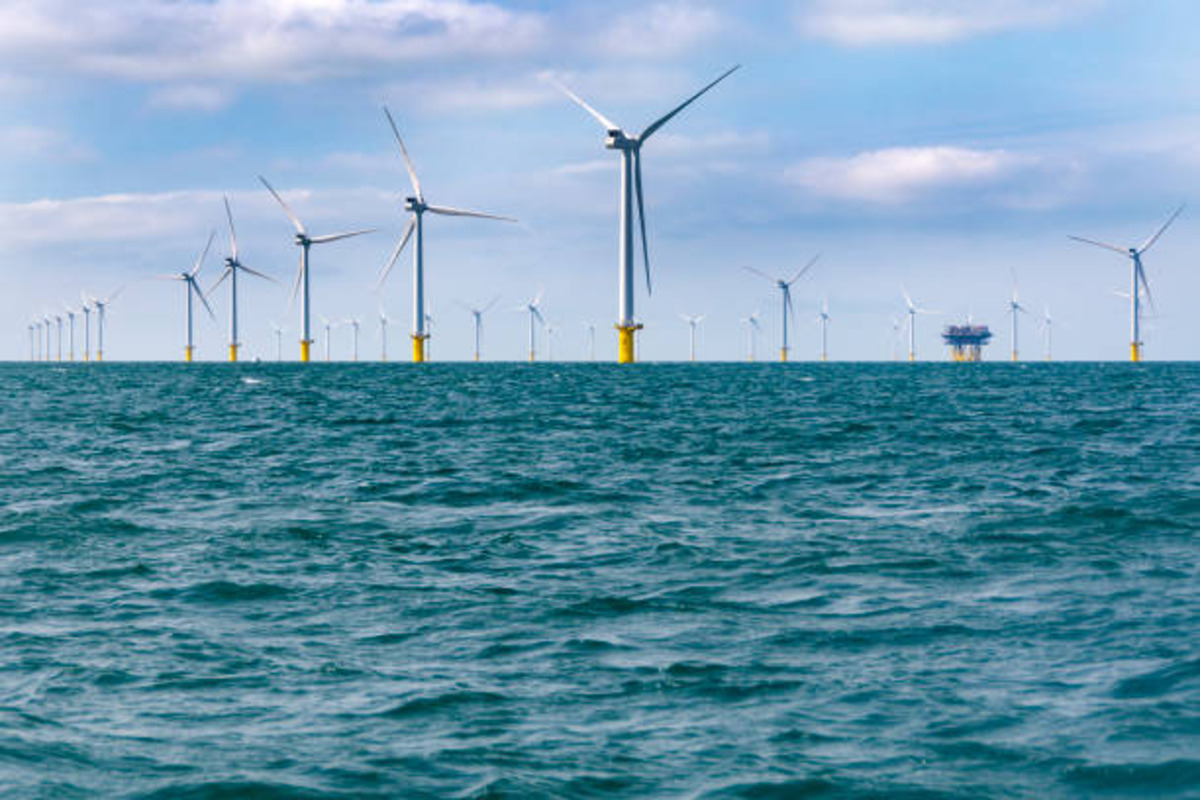
US offshore wind projects roadmap showing East Coast wind farms and long-term capacity outlook through 2030

The United States offshore wind industry is entering a decisive phase.

After years of planning, leasing, and early construction, the period from 2026 to 2030 will determine whether offshore wind becomes a foundational pillar of the U.S. energy system—or remains a slower-moving niche technology.

This roadmap is not just about turbines in the water. It reflects policy stability, supply chain maturity, grid readiness, financing confidence, and state–federal coordination. While early projects faced delays and cost pressures, the next five years are expected to define the industry’s long-term trajectory.

As outlined in our Offshore Wind Energy Explained guide, offshore wind is central to U.S. decarbonization, coastal energy security, and industrial revitalization. The question now is not whether offshore wind will grow—but how fast, where, and under what conditions.

Why 2026–2030 Is a Critical Window for US Offshore Wind

The offshore wind timeline is front-loaded with complexity.

Leasing, permitting, environmental review, financing, and supply chain development often take 7–10 years before electricity reaches the grid. That means projects delivering power between 2026 and 2030 were largely conceived years earlier.

This window matters because:

  • First utility-scale projects will reach full operation
  • Federal leasing areas transition into construction zones
  • State procurement targets move from paper to delivery
  • Floating offshore wind enters early commercialization

Success—or failure—during this period will shape investor confidence well into the 2030s.

Current Status of US Offshore Wind (As of 2026)

As of early 2026, the U.S. offshore wind sector is moving from pre-commercial to early commercial deployment.

Key characteristics of the current market include:

  • Operational projects remain limited but expanding
  • Most capacity is concentrated on the East Coast
  • Federal leasing has accelerated under BOEM
  • Supply chain localization is still incomplete

The industry has faced headwinds, including inflation, interest rate volatility, and contract renegotiations. However, these challenges have also forced structural improvements in procurement models and risk allocation.

US Offshore Wind Capacity Outlook (2026–2030)

Expected Installed Capacity Growth

Between 2026 and 2030, U.S. offshore wind capacity is expected to move from single-digit gigawatts to multi-tens of gigawatts, depending on project execution and policy continuity.

While projections vary, the roadmap generally includes:

  • Initial large-scale power delivery from East Coast projects
  • Incremental annual capacity additions
  • Early floating offshore wind pilots entering construction

This growth phase is less about speed and more about execution quality.

East Coast: Backbone of US Offshore Wind Growth

The U.S. East Coast will remain the backbone of offshore wind deployment through 2030.

Why the East Coast Leads

  • A shallow continental shelf supports fixed-bottom foundations
  • Proximity to major load centers
  • Strong state-level procurement mandates
  • Existing port and grid infrastructure

States such as New York, New Jersey, Massachusetts, and Virginia anchor the national offshore wind pipeline.

Projects in this region are expected to:

  • Move from construction to full operation
  • Establish long-term O&M ecosystems
  • Normalize offshore wind power pricing

Many of these developments align with the fixed-bottom offshore wind model described in our Floating vs Fixed-Bottom Offshore Wind Comparison.

West Coast: Floating Offshore Wind Takes Shape

Unlike the East Coast, offshore wind on the U.S. West Coast is defined by deep waters and steep seabed drop-offs.

Why Floating Offshore Wind Is Essential

  • Water depths exceed fixed-bottom limits
  • Narrow continental shelf
  • High wind resources close to shore

As explained in our Floating Offshore Wind Energy Explained guide, floating platforms are the only viable solution for California, Oregon, and Washington.

Between 2026 and 2030, the roadmap includes:

  • Completion of early floating wind design and permitting
  • Port upgrades for floating assembly
  • Initial pilot and demonstration projects

Gulf of Mexico: Emerging Opportunity

The Gulf of Mexico presents a different offshore wind profile.

Advantages include:

  • Extensive offshore energy experience
  • Established oil and gas supply chains
  • Favorable port infrastructure

While wind speeds are lower than in the Atlantic, the region benefits from industrial readiness and workforce expertise. Hybrid energy hubs and smaller-scale projects may emerge between 2026 and 2030.

Federal Policy and BOEM Leasing Outlook

At the federal level, offshore wind is increasingly positioned as a strategic energy resource rather than a niche renewable technology.

U.S. Department of Energy analysis highlights offshore wind’s role in long-term grid reliability, domestic manufacturing, and emissions reduction, particularly as electricity demand grows from electrification and data centers. DOE planning documents also emphasize the need for coordinated transmission development, port infrastructure upgrades, and supply chain investment to support large-scale offshore wind deployment beyond the initial project pipeline.

Key federal drivers include:

  • Lease auctions and site designations
  • Environmental impact assessments
  • Transmission coordination

Policy clarity during this period is essential to maintaining investor confidence.

Grid Infrastructure and Transmission Challenges

Grid integration is one of the most underestimated constraints in the U.S. offshore wind roadmap.

Key Challenges

  • Limited offshore transmission planning
  • Onshore substation congestion
  • Permitting delays for grid upgrades

As offshore wind capacity increases, grid readiness—not turbine availability—may become the primary bottleneck.

Supply Chain and Port Development (2026–2030)

A resilient domestic supply chain is critical to meeting U.S. offshore wind targets. Supply chain readiness remains one of the most critical constraints on offshore wind growth, particularly as projects scale between 2026 and 2030. Global Wind Energy Council (GWEC) market assessments show that port capacity, installation vessels, and localized manufacturing are now the primary bottlenecks for offshore wind deployment globally, including in emerging U.S. markets.

Between 2026 and 2030, priorities for strengthening the supply chain include:

  • Turbine assembly ports
  • Blade, tower, and foundation manufacturing
  • Installation vessel availability
  • Skilled workforce development

GWEC has repeatedly highlighted that without synchronized investment in ports and manufacturing, project timelines could face structural delays, regardless of permitting progress.

For a more detailed view of supply chain challenges and solutions, see our Offshore Wind Supply Chain analysis.

Investment, Financing, and Market Confidence

The financial environment from 2026 to 2030 will influence how quickly offshore wind scales.

Key factors include:

  • Power purchase agreement (PPA) structures
  • Interest rate trends
  • Risk-sharing between developers and states

While early projects faced renegotiations, newer procurement models are showing greater flexibility—an essential condition for long-term market stability.

What the 2026–2030 Roadmap Means for the Future

The U.S. offshore wind roadmap through 2030 is less about headline capacity numbers and more about institutional maturity.

By the end of this period, the industry is expected to have:

  • Operational reference projects
  • A trained offshore wind workforce
  • Improved grid coordination
  • Early floating wind commercialization

If these foundations hold, offshore wind can scale rapidly in the 2030s.

Frequently Asked Questions

How much offshore wind capacity will the US have by 2030?

Capacity estimates vary, but the U.S. is expected to reach multi-gigawatt operational levels by 2030 if current projects proceed as planned.

Which US regions will lead offshore wind development?

The East Coast will dominate through 2030, while the West Coast will lead floating offshore wind deployment.

Is floating offshore wind included in the US roadmap?

Yes. Floating offshore wind is essential for deep-water regions, particularly along the Pacific Coast.

What are the biggest risks to the roadmap?

Grid delays, supply chain constraints, and policy uncertainty remain the primary risks.

Floating Offshore Wind United States—2025 Deep Dive Guide

Floating Offshore Wind United States—Wast Coast floating wind projects

Floating offshore wind is becoming a critical pillar of the broader offshore wind energy transition, reshaping U.S. clean power strategy—especially in deep-water regions where fixed-bottom turbines are not viable.

Backed by billions of dollars in public and private investment, floating wind technology offers a path to unlock America’s vast deep-water wind resources along the West Coast, the Gulf of Maine, and parts of the Mid-Atlantic. Yet despite its promise, deployment remains constrained by permitting delays, shifting federal policy, and supply-chain limitations.

Advanced digital technologies are already helping the industry overcome these barriers. Tools such as predictive maintenance, digital twins, and turbine-level automation are reducing operational risk and long-term costs—topics explored in our in-depth guide to AI in wind energy.

Today, the United States holds one of the world’s largest untapped floating wind resources. The question is no longer whether floating offshore wind will transform America’s energy future—but how quickly it can scale amid economic, regulatory, and technological constraints.

As offshore wind policy in 2025 continues to evolve, this guide examines the forces shaping the U.S. floating wind market—from state leadership and federal permitting dynamics to investment signals and global competition.

What This Guide Covers

This comprehensive analysis explains:

  • Floating offshore wind technology fundamentals
  • U.S. offshore wind policy and political risks
  • State-by-state project status (California, Oregon, Washington, Maine, Hawaii)
  • Supply-chain readiness and technology innovation
  • Costs, financing, and investment outlook
  • Global competition and U.S. positioning
  • A 2025–2040 market forecast

Understanding Floating Offshore Wind United States

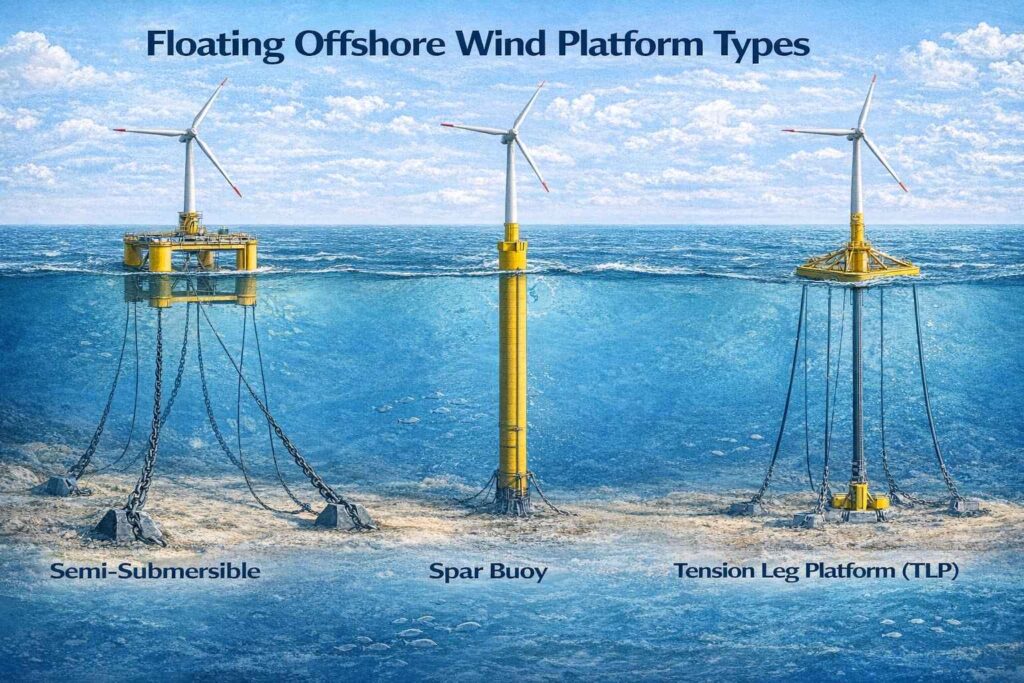
Types of floating offshore wind platforms including semi-submersible, spar buoy, and TLP designs

Floating offshore wind refers to turbines installed in deep waters (60–1,200 meters) where fixed-bottom foundations cannot be deployed.

How Floating Wind Works

Floating wind turbines are supported by platforms anchored to the seabed using mooring systems and dynamic cables. Common designs include:

  • Semi-submersible platforms
  • Spar-buoy structures
  • Tension-leg platforms (TLPs)
  • Dynamic subsea export cables

These systems allow turbines to remain stable while capturing strong offshore winds far from shore.

Why Floating Offshore Wind Matters for the U.S.

  • 80–85% of U.S. offshore wind potential lies in deep water
  • Fixed-bottom turbines cannot access these regions
  • Floating wind could unlock hundreds of gigawatts of clean electricity

According to NREL, the United States has 2.8 terawatts (TW) of deep-water offshore wind potential. By 2045, the West Coast alone could support 25–55 GW of floating offshore wind capacity.

For project-level updates, visit our Offshore Wind Energy Guide

Historical Momentum (Biden Administration 2021–2024)

Before 2025, the U.S. floating wind sector showed strong growth potential:

Federal Actions

  • 15 GW floating wind target by 2035
  • Accelerated BOEM leasing and environmental reviews
  • Tax incentives: ITC, advanced manufacturing credits
  • DOE Floating Offshore Wind Shot: cost reduction goal of 70% by 2035

Major Lease Areas

  • California: Morro Bay + Humboldt, ~4.6 GW awarded
  • Oregon: Planning areas under review
  • Washington: Early-stage preliminary studies

Private Investment

Developers such as Equinor, RWE, Ocean Winds, Shell, and Copenhagen Infrastructure Partners began:

  • Site surveys
  • Port redevelopment planning
  • Grid interconnection studies

This created high expectations that the U.S. would soon rival European floating wind deployment.

2025 Policy Reality—Temporary Slowdown

With federal policy shifts in 2025 under the Trump administration, the floating offshore wind sector faces delays:

Key Changes

  • BOEM slowed environmental reviews and leasing
  • Reduced federal permitting support
  • Halted new offshore lease sales
  • Investor uncertainty due to policy delays

Impact on Projects

  • No major floating wind construction expected in 2025
  • Site surveys delayed
  • Ports and supply chain planning slowed

Although state-level initiatives and developer commitments suggest the sector is paused, not dead.

According to NREL, the floating offshore wind sector has stalled at the federal level; it is actively advancing at the state level in California and Maine. The future of the industry depends on whether developers can address federal policy uncertainty while building the necessary port infrastructure and state commitments.

State-by-State Floating Offshore Wind Analysis (2025 Status)

California

  • Morro Bay (4 GW) and Humboldt Bay (0.6 GW) leases were awarded pre-2025.
  • Construction is delayed due to federal permitting slowdowns.
  • State-level policies remain supportive: The California Energy Commission continues environmental and grid studies.
  • Ports in Los Angeles and San Francisco are being upgraded to handle turbine components.

Oregon

  • Lease areas in early BOEM review, ~1.2 GW potential.
  • Developers: Equinor, Principle Power, and others are conducting site surveys.
  • Environmental assessments are paused, but state incentives remain active.

Washington

  • Early-stage studies are underway for floating wind sites near Puget Sound.
  • 2025 delays due to federal review, but ports and grid connections planning continue.
  • Focus on deep-water floating wind turbines USA to meet the Pacific Northwest wind potential.

Maine

  • Gulf of Maine lease areas (~1 GW) remain on track with local support.
  • State initiatives encourage workforce development and supply chain readiness.
  • Developers are preparing detailed environmental assessments, pending federal approvals.

Hawaii

  • Islands have massive deep-water potential (~6 GW).
  • Projects are delayed due to permitting, but interest remains high.
  • Floating wind could complement solar + battery storage to achieve renewable targets.

You can explore more regional market insights in our Global Wind Markets section

Technology Innovations and Supply Chain Readiness

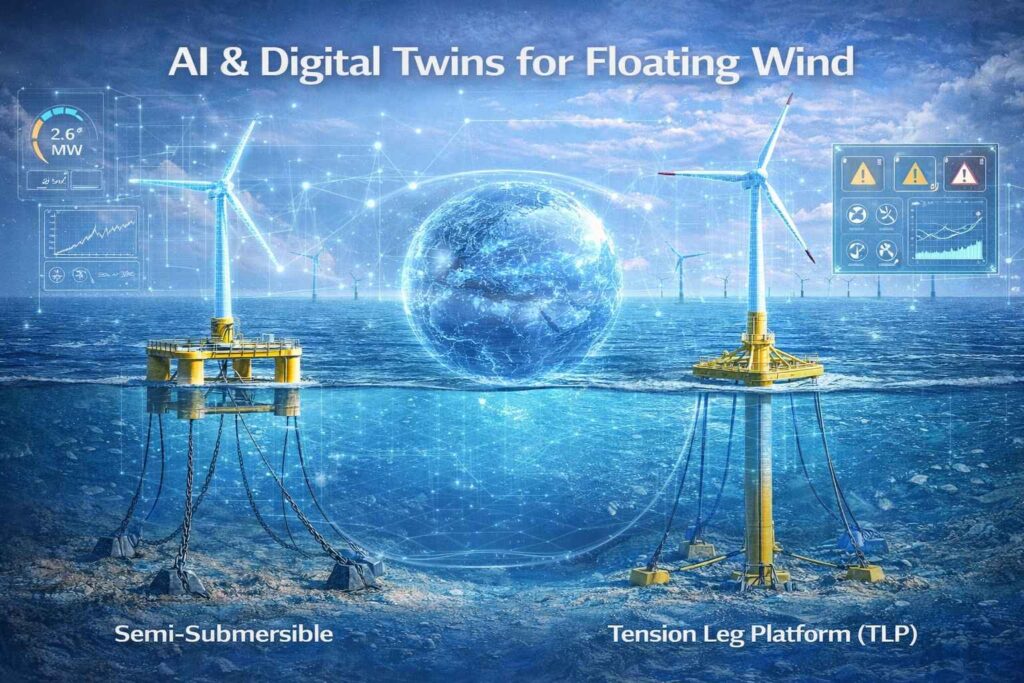
AI-driven digital twins and predictive maintenance in floating offshore wind turbines

Key Technological Advancements

  • 15–20 MW turbines are under development to reduce the Levelized Cost of Energy (LCOE).
  • Semi-submersible and TLP designs tested in Europe were adapted for U.S. conditions.
  • Advanced mooring systems improve stability in deep waters and hurricanes.

Digital Tools

  • AI-driven predictive maintenance reduces downtime.
  • Sensor-based monitoring allows real-time ocean and turbine analysis.
  • Digital twins simulate turbine behavior for risk mitigation.

Supply Chain Challenges

  • U.S. ports require upgrades to handle massive turbine components.
  • Limited U.S.-based floatable platform manufacturing.
  • Dependence on European/North American component suppliers for 2025 projects.

For full coverage on innovations and engineering breakthroughs with the deepwater offshore wind technology USA, visit Wind Turbine Innovations

Costs, Financing, and Investment Landscape

Cost Trends

  • Current floating offshore wind United States LCOE: ~$120–150/MWh (early-stage)
  • Target (DOE Floating Offshore Wind Shot): 70% reduction by 2035 → ~$40–45/MWh.
  • Higher costs than fixed-bottom turbines due to deep-water foundations and mooring.

Financing Considerations

  • Investment slowed in 2025 due to permitting uncertainty.
  • Developers leverage EU experience and global green finance for partial risk mitigation.
  • Insurance costs are higher for deep-water turbines; long-term contracts are essential.

Investment Outlook

  • The 2025 slowdown is temporary; global interest remains high.
  • Private-public partnerships and offshore wind bonds are being explored.
  • Early movers like Equinor, Shell, and RWE maintain strategic positions.

Developer Positioning and Project Timelines

Major Developers in U.S. Floating Wind

  • Equinor: Pioneer, focusing on California and Maine.
  • Shell: Long-term plan for Pacific Coast turbines.
  • RWE & Ocean Winds: Active in Oregon and Washington studies.
  • Copenhagen Infrastructure Partners: Portfolio diversified with European floating wind experience.

2025 Timelines

  • Few projects are breaking ground; most are in pre-permit or environmental assessment.
  • Expected construction resumes: 2026–2027 for some Pacific Coast sites.
  • Workforce training and port readiness are ongoing, preparing for post-permit acceleration.

U.S. Floating Offshore Wind Market Forecast (2025–2040)

2025–2027 (Stagnation + Slow Development)

  • Minimal new approvals due to paused BOEM activity.
  • Developers focus on engineering, environmental studies, and port upgrades.
  • California, Maine, and Oregon remain the most active planning zones.
  • Expect no major construction starts in 2025.

2028–2030 (Gradual Restart + Policy Rebound Likely)

  • Historical trend: every U.S. administration eventually supports offshore wind for economic growth.
  • New BOEM reviews are expected by 2027–2028.
  • Ports like Humboldt, Morro Bay, and Portland (Maine) are operational with upgrades.
  • The first floating prototypes in U.S. waters are likely by 2029.

2030–2035 (Major Scaling Phase)

  • 10–12 MW turbines replaced by floating 18–20 MW class machines.
  • U.S. manufacturing capacity expands—fewer imports from Europe.
  • DOE expects a dramatic cost decline (up to 70% by 2035).
  • At least 3–5 GW of floating projects could begin construction.

2035–2040 (Rapid Deployment + Cost Parity)

  • Floating wind becomes cost-competitive with new natural gas plants in coastal states.
  • The U.S. grid begins integration of multi-state offshore transmission networks.
  • 8–15 GW of floating wind could be operating across the West Coast and Northeast.

Supply Chain Gaps Holding Back U.S. Leadership

Port Infrastructure

  • U.S. ports were designed for shipping containers—not massive turbine blades or floating platforms.
  • Only a few ports can handle 15–20 MW turbines without upgrades.
  • California needs deepwater assembly hubs due to turbine height.

Manufacturing

  • Floating platforms rely on heavy steel fabrication; the U.S. lacks sufficient domestic capacity.
  • Europe dominates spar buoy & semi-sub platform technology.
  • The U.S. must build modular fabrication yards to avoid costly imports.

Workforce

  • The U.S. will need 30,000–40,000 trained offshore workers for floating wind by 2035.
  • Electricians, marine engineers, and rope access technicians are in short supply.
  • The Gulf of Mexico oil workforce offers strong transition potential.

Transmission

  • Offshore-to-onshore grid upgrades are too slow.
  • West Coast grid congestion limits near-term floating wind integration.
  • Requires coordinated federal and state investment.

Global Competition (Where the U.S. Stands in 2025)

Countries Leading Floating Wind

  • UK & Scotland – First commercial-scale floating wind farms (Hywind Scotland, Kincardine).
  • Norway—global leader in floating turbine design and offshore engineering.
  • Japan – Testing multiple deep-water prototypes.
  • South Korea – Aggressive investment, 6–8 GW pipeline.

The U.S. Position

  • Gigantic deep-water wind resources (West Coast, Hawaii, Gulf of Maine).
  • Strong research institutions: NREL, DOE, and Pacific Northwest labs.
  • But policy pauses keep the U.S. behind Europe and Asia in 2025.

Opportunity

If permitting stabilizes post-2025, the U.S. could become the world’s #1 floating wind market by the 2030s, due to >80% of offshore wind potential being in deep waters.

Investment Outlook—Will Floating Wind Recover After 2025?

Short-term (2025–2027)

  • High uncertainty.
  • Investors pause large commitments.
  • Only engineering, environmental, and port studies continue.

Mid-term (2028–2032)

  • Offshore wind rebounds historically after slowdowns.
  • Tax incentives return under new federal policy or bipartisan energy laws.
  • American utilities begin signing long-term power contracts.

Long-term (2032–2040)

  • U.S. floating wind becomes a major global industry.
  • Low-cost floating turbines are produced domestically.
  • Supply chain jobs exceed 50,000+.
  • Hydrogen and offshore wind integration becomes common.

For insights on how floating wind competes globally with the offshore wind policy 2025, visit Global Offshore Wind

Will Floating Offshore Wind Succeed in America?

More than 40 federal grants totaling $50 million were suspended or canceled across the University of Maine system in 2025, impacting research and student programs. According to expert assessments by NREL, McKinsey, Wood Mackenzie, major U.S. universities, GWEC Global Offshore Wind Report, PNNL, and Hitachi Energy,

  • Floating offshore wind is technically feasible and strategically essential to the United States.
  • These experts consistently warn that it will require more than $20 billion in investments between the late 2030s and 2040s to achieve success. But investment also depends on port upgrades, long-term policy stability, a mature domestic supply chain, and expected cost reductions.
  • While the United States faces temporary setbacks and global competition, the consensus among experts is clear: Floating offshore wind will ultimately succeed in America if investment, infrastructure, and political commitment come together—but not immediately, but steadily.

The reason why floating offshore wind will ultimately succeed in the US is significant:

  • The global resource potential is unmatched.
  • Energy demand from data centers, EVs, and AI is doubling the grid’s demand.
  • Coastal states cannot rely solely on solar power, which is one reason.
  • Deepwater wind provides regular nighttime power.
  • Technology costs are expected to drop significantly by 2030.
  • Each administration ultimately helps with energy security and job creation.

2025 = Pause

2028 onwards = Restart

2035-2040 = Massive scaling

To understand technician and workforce needs in floating wind, read our Wind Energy Jobs section

Conclusion

Floating offshore wind in the United States is experiencing a temporary slowdown in 2025—but not a stop.

With unmatched deep-water resources, rising electricity demand, and long-term cost reductions ahead, floating wind will become a core pillar of U.S. clean energy between 2035 and 2040.

The U.S. is stalled—but still on track.

FAQ

Q: Where is floating offshore wind being developed in the U.S.?
A: Primarily in deep-water regions like the West Coast, which require floating foundations due to water depth.

Q: What limits faster deployment?
A: High capital costs, technical complexity, and infrastructure constraints slow large-scale development.

India Takes Flight: L&T and US Giant General Atomics Partner to Build Advanced Combat Drones Under Atmanirbhar Bharat

L&T GA-ASI partnership to develop Drones for Indian Armed Forces

Mumbai, November 1, 2025 – India is taking a bold leap toward defense self-reliance. Larsen & Toubro (L&T) has teamed up with US defense leader General Atomics Aeronautical Systems, Inc. (GA-ASI) to produce advanced Medium Altitude Long Endurance (MALE) combat drones domestically. This landmark partnership is a major milestone in India’s Atmanirbhar Bharat defense initiative, strengthening operational readiness, technological independence, and domestic aerospace manufacturing capabilities.

By combining L&T’s precision engineering expertise with GA-ASI’s combat-proven unmanned aircraft systems, India will now manufacture drones that have already flown millions of hours worldwide, entirely on Indian soil. This initiative is expected to enhance India’s surveillance, intelligence, and strike capabilities while creating a foundation for long-term defense technology self-reliance.

Advancing Atmanirbhar Bharat in Defense

Under the Partnership, GA-ASI is the technology partner, and L&T is the highest bidder for the Ministry of Defense’s 87 MALE RPAS program. By bringing vital drone technologies to India, the project will directly support the Make in India Drones and Atmanirbhar Bharat defense programs.

Known for their intelligence, strike, and surveillance capabilities, these MQ-series drones are already in use all over the world and are valuable resources for India’s changing security requirements. The Indo-US defense collaboration will see L&T act as the prime bidder for the Ministry of Defence’s 87 MALE RPAS program, with GA-ASI as the technology partner, producing world-class MQ-series drones entirely on Indian soil. By integrating MALE RPAS, India is set to strengthen operational readiness while maintaining Indo-US defense collaboration at the forefront of technological innovation.

What are remotely piloted aircraft systems?

RPAS are unmanned aerial systems that are operated from a ground station and are intended for tactical and surveillance purposes.
They vary in size and capability—from lightweight quadcopters to medium-sized drones with endurance up to 8 hours and advanced satellite communication systems for long-range missions.

Types and Capabilities

  • Medium-sized long-endurance aircraft for long- or medium-range missions
  • Medium VTOL aircraft capable of vertical take-off and landing
  • Lightweight VTOL drones such as quadcopters

Operational Range

RPAS operate within Radio Line of Sight (RLOS) or Beyond Radio Line of Sight (BRLOS) via satellite links, enabling both coastal and inland operations. They provide real-time data and video feeds to ground control stations, enhancing situational awareness and mission efficiency.

Leaders Talk

L&T Chairman and MD S.N. Subrahmanyan stated:

India now has a rare chance to produce cutting-edge unmanned platforms domestically thanks to this partnership. We are honored to work with GA-ASI to improve India’s defense capabilities and hasten its aerospace independence.

Additionally, General Atomics Global Corporation CEO Dr. Vivek Lall stated:

“Our goal is to provide top-notch MALE RPAS solutions that improve India’s operational readiness and defense ecosystem by fusing GA-ASI’s successful technology with L&T’s reliable manufacturing.”

Strategic Impact on the Indian Armed Forces

L&T GA-ASI Partnership Enhanced Operational Capabilities

The adoption of MALE RPAS India strengthens the armed forces’ surveillance, intelligence, and strike capabilities while reducing risks to personnel. These make-in-India drones act as a strategic force multiplier, providing persistent monitoring, rapid response, and precision targeting across multiple operational theaters.

Global Competitiveness and Self-Reliance

By embracing this advanced technology, India positions its defense sector as a globally competitive hub for aerospace innovation, supporting self-reliance in critical technologies and reinforcing its strategic autonomy in defense manufacturing.

India’s Defense Future Takes Flight

The L&T GA-ASI partnership is setting a benchmark in Atmanirbhar Bharat defense innovation. By combining cutting-edge drone technology with domestic manufacturing, India is strengthening national security, operational readiness, and technological independence.

As MALE RPAS India drones become operational, the project will enhance the armed forces’ capabilities and inspire other sectors to pursue self-reliant technological growth. Similar to India’s defense autonomy efforts, other domestic innovation projects are shaping the country’s long-term strategic and economic future.

Bangladesh Clean Energy Revolution: Will Yunus Create a Superpower?

Bangladesh Clean Energy

Is Bangladesh at a crossroads in clean energy?

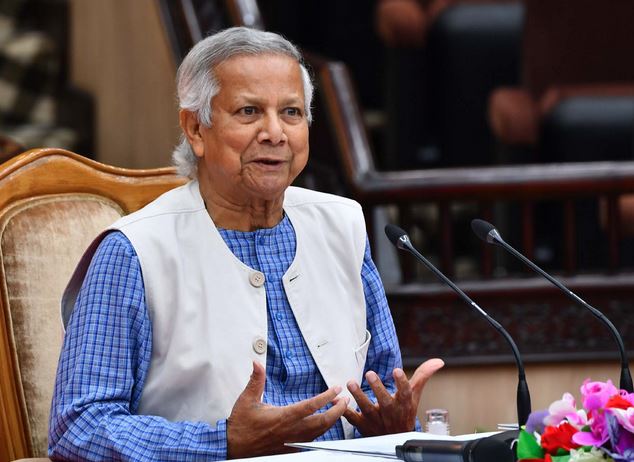
Bangladesh’s interim government, led by Chief Adviser Prof. Muhammad Yunus, is taking decisive steps to address the country’s fossil fuel dependence and transition toward renewable energy. With rising energy costs, power shortages, and climate risks, officials say the time for a Bangladesh clean energy transition is now.

“Bangladesh cannot afford prolonged reliance on fossil fuels. It is time to seriously consider clean energy alternatives, including large-scale solar deployment,” Yunus said during a virtual conference with Carl Page, chairman of the Anthropocene Institute.


Bangladesh Renewable Energy Future: Solar Power on the Rise

Bangladesh has gained global recognition for its solar home system (SHS) program, providing electricity to over six million rural homes. Now, the Yunus government is pushing for a Bangladesh renewable energy future that includes industrial-scale solar farms.

“With strong investment and policy support, Bangladesh can become a hub for solar innovation in South Asia.”

Key Drivers of Bangladesh’s Renewable Energy Future

  • Government target: 40% electricity from renewable sources by 2041
  • Utility-scale solar projects underway in Feni, Gaibandha, and Teknaf
  • Rooftop solar solutions growing in industrial zones

Challenges such as land scarcity, grid capacity, and financing gaps remain. Strong policy incentives and foreign partnerships will be crucial to realize the Bangladesh renewable energy future.


Bangladesh Clean Energy Transition

Alongside solar, the government is exploring nuclear power for large-scale, stable electricity supply. The Rooppur Nuclear Power Plant, built with Russian collaboration, is expected to generate 2,400 MW.

“Next-generation nuclear technologies, including barge-mounted reactors, offer reliable, zero-carbon power at lower costs,” said Page.

Prof. Yunus emphasized that nuclear expansion requires rigorous research, safety assessments, and feasibility studies.

“We will explore these opportunities carefully, but there is no question—Bangladesh must drastically reduce its dependence on fossil fuels,” Yunus added.


Economic Implications of the Clean Energy Push

Bangladesh spends billions annually on fossil fuel imports, straining its foreign reserves. Analysts say a strategic pivot toward Bangladesh clean energy could:

  • Reduce energy import bills significantly.
  • Create jobs in solar installation, nuclear operations, and renewable technology sectors.
  • Attract climate financing from the World Bank, ADB, and private investors.
  • Ensure industrial competitiveness through a reliable and affordable power supply.

Industry observers believe that integrating solar and nuclear power into the energy mix could also stabilize electricity prices and enhance economic resilience.


Regional and Global Context

Bangladesh is among the most climate-vulnerable nations globally. Rising sea levels, cyclones, and floods make dependence on fossil fuels increasingly unsustainable.

Experts say a successful clean energy transition would position Bangladesh as a regional model in renewable energy, demonstrating how a developing nation can balance economic growth with environmental responsibility.


Economic Impacts: Green Jobs and Industrial Growth

Bangladesh spends billions on fossil fuel imports, straining the economy. A strategic shift to Bangladesh clean energy could:

  • Reduce import bills and strengthen reserves
  • Create thousands of jobs in solar, nuclear, and renewable sectors
  • Attract international climate financing from the World Bank, ADB, and private investors
  • Stabilize electricity prices and boost industrial competitiveness

“Clean energy is not just an environmental imperative—it’s an economic opportunity for Bangladesh.”


Policy Outlook: Next Steps for the Yunus Government Energy Policy

The interim government plans to:

  • Accelerate solar power projects through public-private partnerships
  • Conduct feasibility studies for nuclear power expansion
  • Encourage private sector investment in renewable energy
  • Expand regional energy trade with India, Nepal, and Bhutan

“We need in-depth studies on promising technologies. But with strong policies, Bangladesh can achieve its renewable energy goals,” Yunus said.

Conclusion

Bangladesh’s energy landscape is at a pivotal juncture. With a clear focus on solar and nuclear power, the Yunus government’s energy policy could drive a historic Bangladesh clean energy transition.

The ultimate question remains: Will Bangladesh seize this opportunity to become a regional clean energy superpower, or will challenges slow its progress?

China Wind Energy 2025: 223 GW Under Construction & Global Leadership

China Wind Energy 2025

Updated January 2026 | Originally published July 10, 2025

China’s wind energy expansion in 2025 is reshaping the global renewable energy landscape. With 223 GW of wind power under construction, China accounts for nearly 45% of global wind projects currently being built. This scale of development is unprecedented and reinforces China’s position as the world leader in wind power capacity and manufacturing.

According to a report from Global Energy Monitor (GEM) and reporting by the Financial Times, China is developing a combined 510 GW of utility-scale solar and wind, representing almost 74% of global renewable capacity under construction. This rapid build-out supports China’s goals of energy security, industrial growth, and climate commitments.

China’s wind leadership is also supported by a record-breaking 2024, when the country added 357 GW of new renewable capacity. This growth is driven by onshore wind bases, offshore expansion, and a rapidly expanding supply chain that now dominates global wind manufacturing.

China’s Wind Power Leadership in 2025

China’s total installed wind power capacity has now surpassed 700 GW, supported by a massive 593 GW wind-and-solar pipeline that includes announced, permitted, and under-development projects. In 2024 alone, the country added a record 357 GW of new renewable capacity, driven largely by large onshore wind bases and rapidly expanding offshore projects.

Unlike earlier phases of development, today’s wind expansion is tightly aligned with national priorities such as energy security, industrial competitiveness, and long-term climate commitments. Wind power is no longer treated as a niche clean-energy option; it has become a core component of China’s national development strategy.

Offshore Wind Takes Center Stage Along China’s Coast

Offshore wind is a key growth area for China. Installed offshore capacity has jumped from less than 5 GW in 2018 to 42.7 GW operational in 2025. Another 28 GW is under construction, and the offshore pipeline now stands at 67 GW.

Coastal provinces such as Guangdong, Jiangsu, Shandong, and Fujian are leading offshore development, linking new projects to industrial zones, ports, and emerging green hydrogen hubs.

China’s move into deeper waters is also growing, with floating wind projects and advanced grid connections being developed to support industrial decarbonization. For a deeper technical comparison, see our article on floating vs fixed-bottom offshore wind.

Wind Energy and China’s Energy Security Strategy

Wind power plays a central role in China’s effort to reduce reliance on imported fossil fuels while modernizing its electricity system. Data from the National Energy Administration shows that in the first quarter of 2025, wind‑generated electricity supplied nearly 12 percent of national power consumption, surpassing several traditional thermal sources.

This expansion is supported by heavy investment in ultra‑high‑voltage (UHV) transmission lines, allowing wind‑rich regions such as Inner Mongolia and Xinjiang to deliver electricity to coastal demand centers. These grid upgrades are essential to maintaining reliability as wind penetration continues to rise, a challenge also facing other major wind markets worldwide.

Mega Wind Projects Reshaping the Global Market

China’s leadership in wind energy is most visible in the scale of its flagship projects. Notable developments include:

  • Ningxia onshore wind bases exceeding 16 GW
  • Shandong offshore wind clusters surpassing 10 GW, including early floating platforms
  • UHV wind‑to‑grid corridors linking western provinces with coastal industrial zones

These projects increasingly deploy next‑generation 16 MW wind turbines, a trend now spreading across major offshore markets in the United States and Europe. As a result, China’s domestic demand is influencing global turbine design, manufacturing standards, and cost curves.

Wind Projects Under Construction in China (2025)

Metric
Capacity
Wind‑Solar Energy Pipeline (Announced + Development)593 GW
Wind Projects Under Construction223 GW
Share of Global Wind Construction~45%
Operational Wind Capacity700+ GW
Offshore Wind Operational42.7 GW
Offshore Wind Under Construction28 GW
Offshore Wind Pipeline
67 GW

Global Leadership and Economic Impact

Chinese wind turbine manufacturing facility exporting components worldwide

China’s wind energy growth extends beyond domestic power generation. The country now hosts the world’s largest wind fleet and dominates global manufacturing, producing more than 70% of wind turbine components, including blades, towers, nacelles, and power electronics.

Leading manufacturers such as Goldwind, Mingyang, and Envision export wind technology worldwide, supplying projects across Asia, Africa, Latin America, and Europe.

According to the Centre for Research on Energy and Clean Air (CREA), clean energy led by wind accounted for 25% of China’s GDP growth in 2024, while supporting over 3 million jobs. This shows wind power is not just a clean-energy solution but also a major economic engine.

Looking Ahead to COP30 in Belém

With COP30 in Belém, Brazil, approaching, China is expected to announce stronger national climate targets. Analysts predict new policies around:

  • Higher national wind capacity goals
  • Dedicated offshore wind industrial zones
  • Expanded wind-to-hydrogen integration
  • Streamlined offshore leasing programs

These policies could influence global renewable energy investment and technology deployment.

For additional context on China’s clean energy transition, see our China renewable energy growth article.

Offshore Wind: Opportunities and Challenges

Offshore wind farm in coastal China powering industrial decarbonization efforts

Despite rapid growth, China’s offshore wind sector faces structural challenges, including grid connection delays, overlapping permitting systems, and the technical demands of typhoon resilience. Deep-sea floating wind projects also carry higher costs due to complex foundations, subsea cables, and specialized installation vessels.

Ongoing investment in typhoon-resistant turbine design and offshore grid infrastructure is expected to gradually reduce these barriers and support long-term scalability.

Offshore Wind: Opportunities and Challenges

China’s offshore wind sector faces challenges including:

  • Grid connection delays
  • Overlapping permitting systems
  • Typhoon resilience requirements
  • High cost of floating wind foundations and deep-water logistics

However, government support, green financing, and technological R&D are expected to reduce these barriers over time, helping the sector scale sustainably.

From Energy User to “Electrostate”

Wind power now supplies a growing share of electricity for China’s high-speed rail, smart manufacturing, urban heating and cooling networks, and rapidly expanding data centers. As explored in our coverage of renewable-powered data centers and AI infrastructure, this shift is helping transform China into an emerging renewable-powered “electrostate.

Final Takeaway

China’s wind energy surge in 2025 is reshaping the global renewable‑energy landscape. With 223 GW under construction, accelerating offshore deployment, and unmatched manufacturing scale, China is not only leading the wind sector—it is redefining how quickly a large economy can transition to clean power.

As global attention turns toward COP30, China’s policy direction and execution will play a decisive role in determining the pace and trajectory of the worldwide energy transition.

FAQs: China Wind Energy 2025

How much wind power does China have in 2025?
China has over 700 GW of installed wind capacity, with 223 GW under construction.

What share of global wind projects are in China?
China accounts for nearly 45% of all wind projects under construction worldwide, according to GEM.

Why is offshore wind important for China?
Offshore wind supports industrial decarbonization in coastal provinces and provides large-scale clean power close to demand centers.

Who are China’s leading wind turbine manufacturers?
Goldwind, Mingyang, and Envision are among China’s top wind turbine companies.

How does wind energy impact China’s economy?
Wind energy contributed roughly 25% of GDP growth in 2024 and supports more than 3 million jobs, according to CREA.

How Trump Energy Policy is Killing 22 Offshore Wind Projects, $114B Investment

How Trump energy policy is Killing 22 Offshore Wind projects, $114B Investment

The offshore wind sector has been stagnant with federal leasing halted, tax credits eliminated and developers pulling out of core markets

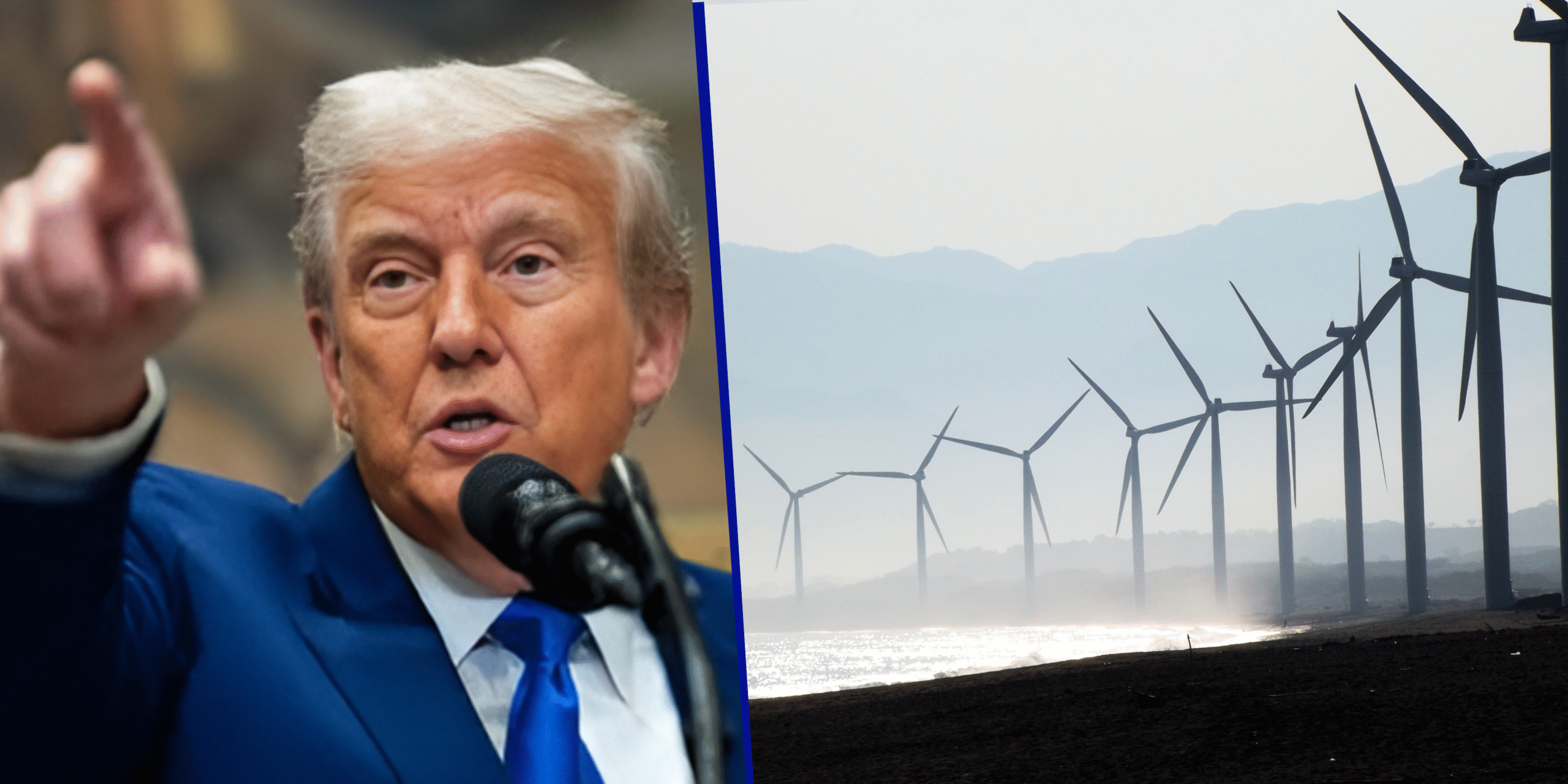
President Donald Trump energy policy changes are putting America’s offshore wind industry in jeopardy, with more than 22 projects on hold and an estimated $114 billion in clean energy investments at risk.

The Biden administration has been making some dramatic strides in its push toward renewable energy, particularly wind power. Several offshore wind project policy decisions involving billions of dollars in investment, projects, and infrastructure were made before he took office. But Trump’s reversal of that Biden-era clean energy aid — along with an executive order suspending offshore wind leasing and permitting — has brought development along the East Coast to a near standstill. Energy experts warn that the stalling could hurt states’ climate goals and derail America’s renewable energy ambitions for the next decade, potentially costing billions of dollars.

Trump Energy Policy Halts Offshore Progress

On his first day in office, President Trump signed an executive order halting new and renewal approvals for offshore wind projects pending a full federal review. The order effectively withdraws federal waters from offshore wind leasing and suspends agency operations across multiple departments, including the Bureau of Ocean Energy Management (BOEM).

While the review remains incomplete, the White House has declined to provide details or a timeline for a resolution.

“The result I fear is unexplained delays,” said Jonathan Elkind, a senior research scholar at Columbia University’s Center on Global Energy Policy. “There’s no transparency here.”

Permits revoked, projects canceled

Since the order, numerous wind projects have had their air permits revoked, environmental assessments delayed, and construction halted. As a result of regulatory uncertainty, a major offshore project in New Jersey has pulled out of its state power contract after the EPA’s decision to revoke its permit. France-based renewable energy developer EDF has formally withdrawn from its $5 billion Atlantic Shores offshore wind project in New Jersey, which was set to generate up to 1,500 megawatts of power, decarbonize the U.S. power grid, and provide clean electricity to more than 700,000 homes.

Industry data shows that 22 wind farms spanning states from Massachusetts to North Carolina are either on hold in the planning stages or have been pulled out of the pipeline entirely. In the New York Bay, once a centerpiece of Biden’s offshore wind campaign, at least two projects have been formally canceled.

The delays would affect about 22 gigawatts of planned capacity — enough to power millions of homes.

$114B Offshore Wind investments at risk

Natalie Gunnell, Shell’s renewable energy division imge: linkedln

According to an April analysis by BloombergNEF, the Trump’s energy policy changes have forced developers to pull out of projects that have yet to reach a final investment decision (FID). Without assurances of federal support, companies are delaying supplier contracts, canceling financing rounds and exiting joint ventures.

Shell and Equinor, the two largest investors in the sector, have already pulled out of key offshore developments in New Jersey. Shell has confirmed that it will not be building any new offshore wind projects in the United States.

“The commercial situation is no longer viable,” said Natalie Gunnell, a spokeswoman for Shell’s renewable energy division.

The Republican Party has moved to repeal the Clean Energy Tax Incentive.

The industry slowdown comes amid efforts in Congress to repeal key provisions of the Inflation Reduction Act, including the Clean Energy Investment Tax Credit. Clean energy projects would have to begin construction within 60 days to qualify for the home-grown energy package, and would be phased out entirely by 2028.

The current Senate version drops the 60-day provision while maintaining the phase-out provision. Industry advocates argue that the proposed changes add another layer of uncertainty, further cooling investment.

“It’s creating an environment where financing and procurement deals are not moving forward,” said Harrison Schoeller, an offshore wind analyst at BloombergNEF.

Supply chain expansion stalls nationwide

Beyond the coast, the impact is being felt across the U.S. wind supply chain. For example, Siemens Gamesa’s plan to open a Virginia blade manufacturing facility in 2023 was canceled due to insufficient demand. Vestas’ proposed nacelle assembly plant in New Jersey has been quietly shelved.

As domestic suppliers retreat, future U.S. wind projects could become more reliant on imports—with developers facing potential tariffs on European components proposed by the Trump administration.

As a result, analysts estimate that production costs could increase by up to 25% over current policy conditions.

Climate Goals at risk

The United States is now expected to generate just 6.1 gigawatts of offshore wind power by 2030, 20% of the Biden administration’s original 30-gigawatt goal. Eleven states with offshore wind targets are unlikely to meet them, according to a project-by-project review by BloombergNEF.

“There’s been a chilling effect across the industry,” said Katharine Collins, president of the Southeastern Wind Coalition. “We’re seeing projects being scrapped and approvals being delayed nationwide.”

The impact extends beyond power generation. Thousands of green jobs, from technicians to engineers, are at risk in shipbuilding, steelmaking and port construction. State officials have begun revising energy roadmaps as the federal government restricts wind development.

South Fork Wind Farm

One example of Biden’s success in offshore wind projects is the name of South Fork Wind Farm. It is New York’s first commercial offshore wind farm and is considered a milestone toward meeting the United States’ 2030 renewable energy goals.

The 150-megawatt offshore wind farm is a groundbreaking project in the search for sustainable energy solutions. It is the first offshore wind project in the United States to connect to the national grid in 2024. It is one of the achievements of the Biden-Harris administration, symbolizing the 2030 wind policy.

Jointly owned by Danish multinational Orsted and US energy supplier Eversource, the wind farm has a capacity of 130 megawatts and can generate clean energy for more than 70,000 homes. It is a major step towards achieving New York’s goal of generating 70% of its electricity from renewable sources by 2030. Located about 35 miles off the coast of Montauk, the wind farm is expected to eliminate up to six million tons of carbon emissions over its lifetime, the equivalent of taking 60,000 cars off the road for the next 20 years.

South Fork Wind is providing more than 1,200 direct construction jobs and thousands more indirect and induced jobs. Hundreds of New Yorkers, engineers, electricians and conservationists are operating the South Fork Wind project. It aims to create thousands of long-term and temporary environmentally friendly jobs, support training programs, fund scientific research and provide opportunities for underserved communities.

Some Hope, But Not Clear

Despite the stalemate, a handful of offshore wind farms are under construction, including Empire Wind in New York, and are expected to be completed by 2027, adding about 5.7 gigawatts of power to the East Coast grid. But experts warn that these projects represent legacy investments from previous administrations, not signs of future progress.

“There are still opportunities here,” said Hilary Bright of the national offshore wind advocacy group Turn Forward. “But without policy coordination, those opportunities won’t materialize.”

The Bottom line

The future of offshore wind in the U.S. under the Trump’s energy policy with administration’s current energy strategy is highly uncertain. With billions in clean energy investments on hold and dozens of projects stuck in regulatory deadlock, the path to a low-carbon energy grid is narrowing. The U.S. is moving away from green policies, lower greenhouse gas emissions, and efforts to limit warming to 1.5 degrees Celsius. Absent major federal policy changes or legislative compromises, America’s offshore wind projects ambitions will likely remain on hold for the next decade.

Why is the US Warning the UK Over Chinese Wind Energy Investment?

Why is the US Warning the UK Over Chinese Wind Energy Investment?

The US has warned the UK over Chinese Wind Energy Investment in its offshore wind industry, amid fears over national security. At the heart of the argument is Mingyang Smart Energy, one of China’s largest wind turbine manufacturers, which is preparing to build a plant in Scotland that will supply large floating wind farm projects in the North Sea andCeltic Sea. The move offers the prospect of local job creation and supply chain development, but Washington and some British officials fear it could leave sensitive infrastructure exposed to potential surveillance risks — part of an emerging debate over how to balance green energy goals with security concerns.

But the plan has caused alarm in Washington, which has put pressure on London behind closed doors over the national security implications of allowing a Chinese state-owned energy company to get so near the UK’s critical infrastructure.

US Worries: Security vs Sovereignty over Chinese Wind Energy Investment?

The White House is concerned about spy and cyber threats posed by, for example, Chinese-made wind turbines if they were to be installed near sensitive maritime zones or military installations, according to a senior US official quoted by the Financial Times. This echoes long-held American concerns that some Chinese companies — even those that are not state-owned — might act at the behest of Beijing.

The US has previously sounded similar warning bells to Germany, to which Mingyang has been contracted as a preferred supplier on a North Sea wind farm. Washington’s message to its allies is unmistakable: energy independence must not be achieved at the cost of technological sovereignty or security.

Mingyang’s Plans in the UK: A Green Vision or a Risky Bet?

Mingyang is now in discussions with UK developers, such as:

  • Flotation Energy and Vårgrønn on the Green Volt floating wind project
  • Cerulean Winds for another North Sea development
  • Hexicon, a Swedish firm with projects planned in the Celtic Sea

Supporters say a Mingyang wind turbines Scotland would provide hundreds of green jobs, cut supply chain costs and enable the UK to speed up the launch of its offshore wind power. The UK requires fast industrial scaling if it is to achieve its aims of constructing 50GW of offshore wind by 2030.

Reconciling National Security with Net-Zero Ambitions

The UK government has the power to scrutinize and potentially block foreign investments in the strategically important sectors under the National Security and Investment Act. The case is still under review, with opinions varied, according to UK officials.

This is complicated by the fact that the UK offshore wind energy needs to attract foreign investment in order to live up to its ambitious net-zero targets. Blocking Mingyang could risk a row with Beijing at the time British ministers have been trying to come to terms on how to work with China in tackling climate change under Energy Secretary Ed Miliband.

In the meantime other unrelated tensions have been exacerbated by tensions— like that of Jingye Group’s ownership of British Steel in Stunthorpe, which the British government recently took emergency action to protect.

Voices From the Government and the Industry

A spokeswoman for the UK government did not comment directly on the Mingyang case, but said that “investment in the energy sector is scrutinized for national security at the highest levels.”

A spokesman for the Green Volt project welcomed investment from overseas that helped “to grow the UK wind energy supply chain and create jobs.”

Andrew Bowie, the Conservative shadow secretary of state for Scotland, told parliament that Chinese Wind Energy Investment could be deployed to track UK waters and submarine movements and that the government should favor British and European suppliers in any case.

Others in renewable energy, however, question the US’s motivation, just as Washington isn’t really investing serious

UK Floating Wind Powers Up 4M Homes, Create 5,000+ Jobs – “A Generational Win”

UK Floating Wind Powers Up 4M Homes, Create 5,000+ Jobs

UK Floating Wind Farms Lights Up Millions and Transform Coastline Economies

A huge project to harness the power of the wind 15 miles out to sea south of the coastlines of south Wales and south-west England is “breathtaking” and a “generational win” for clean energy and the UK economy, according to the government. The government has now named the companies that will build the farms, pledging a “green industrial revolution” that will feed enough renewable energy to the grid to supply power to up to four million homes — and to produce more than 5,300 in renewable energy jobs.

The project, led by joint venture partners Equinor and Gwynt Glas (EDF Renewable UK and ESB), was supported by the Crown Estate, and is set to see building some of the world’s biggest floating wind turbines – standing as tall as 300m and mounted on platforms the size of football pitches in deep waters some distance away from the coast.

They are to be built in Port Talbot and Bristol providing long term jobs, economic benefits and training in the regions. The UK government expects the windfarms to be operational in the early 2030s, with the added benefit of lower energy bills and energy independence to thousands of clean energy workers

“This is great news for future generations,” said sustainability consultant Andy Middleton. “Teenagers of today will be the workforce of tomorrow driving a UK green energy future that is clean, secure and affordable.

UK Floating Wind Lights Up 4M Homes

£400m Crown Estate investment Sparks Economic Boost

Image: GOVT. UK

The Crown Estate, responsible for managing seabed rights and with more than £603m of holdings in land in wales, is putting £400m into boosting the UK’s offshore wind supply chain. The scheme fits with the UK’s push to ramp up net-zero actions to drive green jobs and green infrastructure.

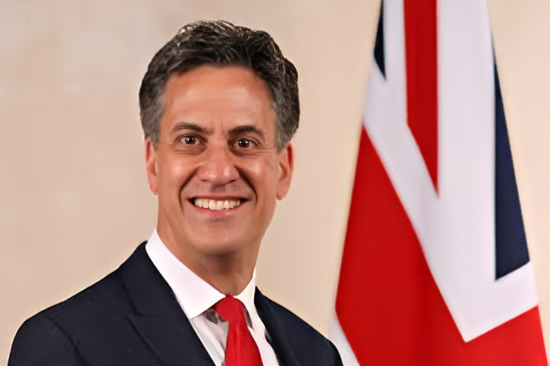
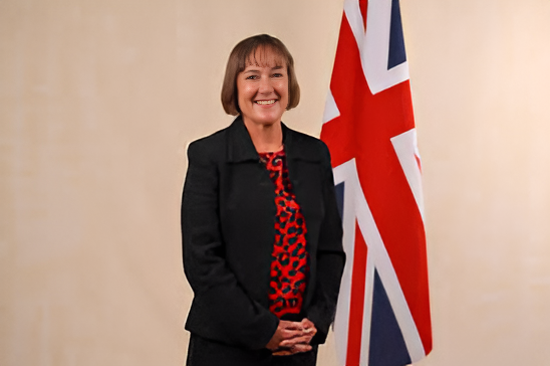
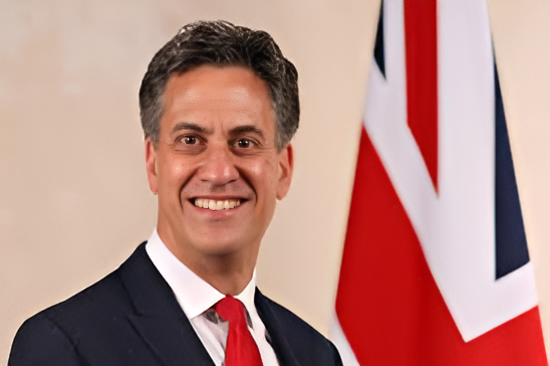
Welsh Secretary Jo Stevens said the initiative was “hugely significant” while Energy Secretary Ed Miliband said it would be “transformative,” pointing to industrial renewal, energy independence and economic renewal in places like Port Talbot and Bristol.

Image: GOVT. UK

“We’re backing thousands of jobs while ensuring everyone can rely on clean, affordable energy at the flick of a switch for decades to come,” said Miliband.

Youth & Inclusion of UK Floating Wind

At least 10% of new recruits are pledged to be drawn from the stagnant 19 to 24 NEET market. This guarantees the renewal that the next generations are involved in the energy transition and can find sustainable and skilled careers.

The Welsh Government, meanwhile, has promised to contract with developers directly in an effort to ensure the maximum number of jobs for local people.

Image: BBC

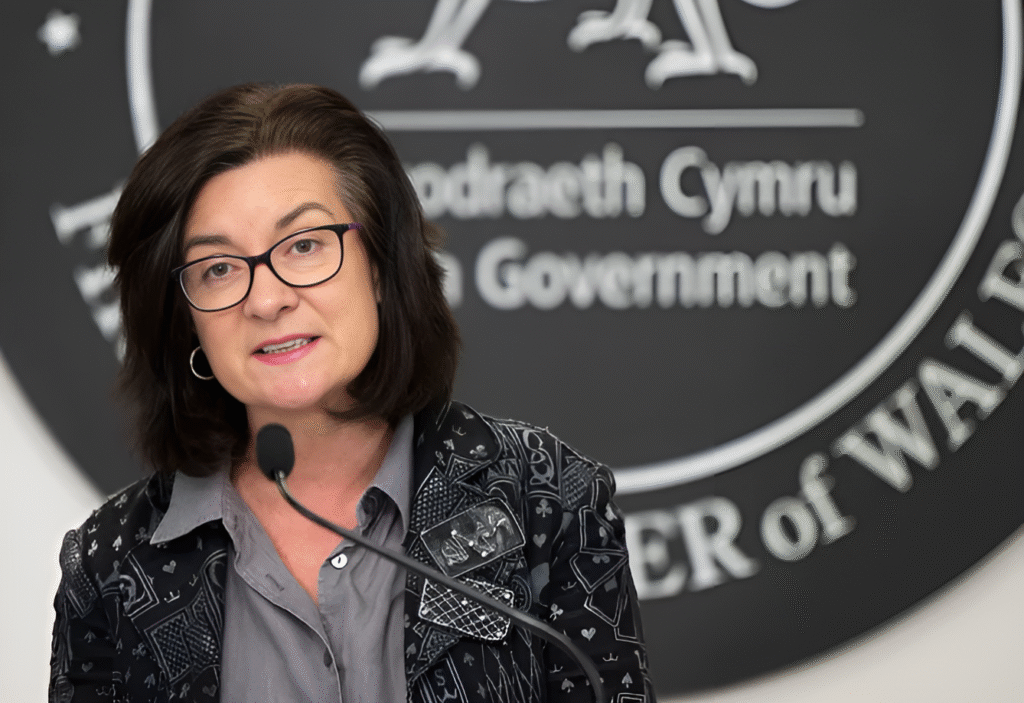
“We’ll be getting on the phone to these companies to get jobs into Wales,” the first minister, Eluned Morgan, said.

Voices of Concern and Opportunity

The move has been welcomed by many, but some Welsh politicians raised concerns over the redistribution of profit. Plaid Cymru’s energy spokesperson Llinos Medi MP criticised that money would be going to Whitehall rather than being retained in Wales after making use of Welsh natural resources.

Even so, the scale of that opportunity is difficult to dismiss.

Image: Linkedln

“This is more than simply an energy project — it represents a major turning point for the U.K.’s clean energy economy,” said Rebecca Williams, the director of the Crown Estate portfolio in Wales.

With UK floating wind farms in the pipeline, supported by billions of pounds of investment and thousands of jobs, the UK is cementing its position as a world leader in offshore renewable energy. And as construction accelerates and turbines are assembled in Port Talbot and Bristol, this clean energy surge holds the potential to power homes, train future generations and transform regional economies — all while driving the U.K. toward a net-zero future.

FAQ: UK Floating Wind Farms

What is a floating wind farm?

A floating wind farm is a wind farm with turbines installed on floating platforms instead of fixed substations embedded on the seafloor. Rather than stationary, bottom-fixed turbines, floating wind farms can be placed in deeper waters where wind is stronger and more consistent.

Why is the UK invest in floating wind farms?

The UK has fantastic offshore wind potential globally, especially in deeper water. The UK investing in floating wind technology enables it to:

Increase renewable generation of electricity

Power millions of homes

Help net-zero missions objectives

Produce tens of thousands of green jobs in coastal communities

Where are the UK floating wind farms being built?

New floating windfarms are planned for the coasts of south Wales and south-west England, and Port Talbot and Bristol are earmarked for turbine assembly and supply chain hubs.

Who are the UK’s floating wind leaders?

The UK’s key floating wind projects are being driven by:

Equinor (a dominant global offshore wind company)

EDF Renewables UK and ESB JV Gwynt Glas

The Crown Estate Offshore wind investment £400m in UK offshore wind supply chain

How many households will floating wind farms supply in the UK?

The proposed floating wind farms, which are expected to be operational by the early 2030s, could produce clean energy to power more than 4 million homes in the UK.

What economic value will these projects add?

Floating wind is expected to:

Generate more than 5,300 renewable energy jobs Wales

Inject a £1.4 billion benefit to the UK economy

Boost local jobs, particularly in Wales and the south-west of England

How do floating wind farms differ from fixed-bottom offshore wind farms?

Floating windmills can be placed in depths of water down to 60+ meters whereas fixed-bottom windmills need shallow shoreline seas. This opens up new frontiers for development, notably in the Celtic Sea.

How does this help young workers and local communities?

Developers have pledged to take on a minimum 10 per cent of NEET workers aged 19-24. That supports long-term clean energy careers and makes sure local talent profits right from the green shift.

When will the UK floating windfarms be up and running?

The UK’s first commercial floating wind farms are anticipated to be operational by the early 2030s, with early stage development and investment in the supply chain already taking place.

Vestas Secures 124 MW EDF Wind Project in Québec, Boosting Canada’s Green Energy Goals

Vestas Secures 124 MW EDF Wind Project in Québec

Vestas has received an order for 124 MW of V117-3.45 MW turbines for a wind project located in Québec from EDF power solutions North America. The order comprises 20 EnVentus V162-6. 2 MW turbines and a 10-year Active Output Management (AOM) 5000 service contract. This strategic alliance contributes to Hydro-Québec’s objective of building 10 GW of wind power by 2035, and brings economic development and jobs by building the renewable energy supply chain in the province.

EDF Power Picks Vestas Turbine

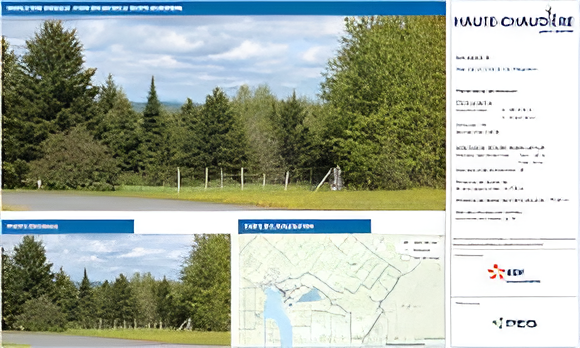
Project Briefing – Haute-Chaudière Wind Project in Quebec

20-Turbine Project to Power Tens of Thousands of Homes

The Haute-Chaudière development will feature 20 of the high efficiency V162-6. 2 mega watt turbines to produce 124 megawatts of clean power. When it is up and running in late 2026, the site is projected to deliver power for tens of thousands of homes throughout Québec. Delivery of the turbines is planned for Q2 2026, leaving final commissioning to take place by Q4 2026.

The Local Economic Impact and Job Creation

Marmen, a major Québec-based wind tower manufacturer, has been selected by Vestas and EDFps to provide towers for both projects. 130 sustained jobs directly in Trois-Rivières and further strengthen the regional renewable energy manufacturing industry.

Marmen President Patrick Pellerin. Image: The Business Journals

As Stated By Vestas And EDF – Long Term Collaboration

Vestas has been supplying EDF Renewable Energy with turbines for over 20 years and the contract amount represents 2.9 GW of combined North American projects.

The Haute-Chaudière project is a great example of what becomes possible when experienced partners join forces to combine industry-leading supply chain with cutting-edge technology Laura Beane, President, Vestas North America.

“With Hydro-Québec looking to grow its wind power capacity by over 10GW by 2035, the province has both the scale and the ambition to be at the very forefront of this issue, and that is only made possible with strong partnerships like this.

Tristan Grimbert, President & CEO, EDF power, Image: EDF Website

Vestas’ interest in the Canadian wind sector

Vestas remains the number one wind turbine manufacturer in Canada, with over 5 GW of installed capacity in all 10 provinces. In Québec, Vestas has a service holding of 428 MW turbines, and as of 2024 a project of 347 MWs under construction.

“With our decades of experience in the province, we’re prepared to make local expertise available and work with trusted regional partners to help deliver this project.

EDF $7 Billion in Clean-Energy Investment

EDF power solutions has invested over $7 billion in Canadian renewable energy infrastructure, building 2.6 GW of wind and solar projects since 2008. The business is one of the largest independent power producers in North America with solutions that include integrated onshore/offshore wind and solar products as well as green hydrogen, battery storage, and electric vehicle charging.

Their development pipeline of 23 GW of assets with 16 GW under service makes them a top player in the transition to net-zero energy.

Haute-Chaudière wind project Key Factors

Project Cost & Investment

  • Total estimated cost of project: Approximately $440 million
  • Significant Capital investment in local infrastructure and clean energy

Job Creation

  • ~150 construction jobs created
  • Permanent operational jobs after project finish
  • Priority hiring for local companies, workers and Indigenous communities when equal skills, capacity and price are in play
  • Community Partnership & Ownership
Haute-Chaudière wind project

Joint venture:

  • 50% through controlled entities owned by EDF Renouvelables Canada Inc.
  • owned half by Énergie Renouvelable du Granit Inc.

Common goal: Regional economy development and green power generation

Annual payments to local authorities

  • $3,500 / MW installed per year, adjusted to Québec’s Consumer Price Index (CPI)
  • $30000 / year for the electrical substation, CPI indexed
  • $450000 in the first operating year
  • Total payments after 30 years More than $18 million

Québec’s Wind Future is Surging Ahead

The project in Haute-Chaudière demonstrates how private-public cooperation, proven OEMs, and nearby supply chains can lead to cost-effective, secure, and clean energy. With Québec and Canada’s broader energy industry steaming ahead towards ambitious renewable targets, partnerships such as between Vestas and EDF renewables power solutions will be crucial to delivering a green and economically strong future.

Crown Estate £400M Offshore Wind Investment to supercharge to UK Infrastructure

Crown Estate £400M Offshore Wind Investment to supercharge to UK Infrastructure

Crown Estate Offshore Wind Investment Plan Explained

In a significant move to super-charge the UK’s offshore wind industry, The Crown Estate has announced plans to invest up to £400 million in a new round of leasing for offshore wind sites. This was an ambitious declaration made at the ‘2025 Global Offshore Wind conference’ summit in London when — dubbed the powering wind energy plan — aims to unlock the next phase of wind energy growth in the UK by the supporting vital onshore.

UK offshore Wind Investment Set for Major Expansion

Under the “Powering Offshore Wind”, The Crown Land’s new capital investment plan comes on the back of a strategy to offer long-term seabed leases for new offshore wind projects, aiming to develop a world leading offshore wind market in the UK.

The plan centers on:

  • Port and harbor upgrades
  • centers of wind-turbine component manufacturing
  • Research and testing installations
  • Partners International Agency Collaboration with national energy agencies

This is vital in order to meet the UK’s renewables targets, and also a catalyst for creating jobs, spurring investment, and driving economic

Head Of the Investment, Crown Estate

Supply chain capacity has been one of the biggest hurdles to fast offshore wind growth in the UK. Ben Brinded, head of investment of The Crown Land, said that it was an investment to target the gaps.

“Without working together and investing in the UK supply chain, we will not achieve the full economic, social and environmental potential of offshore wind,” Brinded said, during the announcement.

And by de-risking future offshore wind developments, improving logistics, and cutting costs for developers, the £400 million funding is predicted to deliver long-term wins in terms of both clean energy generation and the domestic economy.

How the powering offshore wind plan support by supply chain growth

It’s not going to occur in a vacuum, this investment. Organizations including Great British Energy, the National Wealth Fund, and key private sector players will all be supported by The Crown Land to help deliver maximum impact.

Chair of the Offshore Wind Growth Partnership

“As the Offshore Wind Industry works towards delivering the aspirations of the Industrial Growth Plan, industry and the other public investors working in alignment and collaboration is the best way to achieve this,” added Tim Pick, Chair of the Offshore Wind Growth Partnership.

That aligns with efforts to speed up projects, support technology leadership in the UK and increase local content in offshore wind work, cementing Britain’s status as a global wind leader.

How the powering offshore wind plan supports by supply chain

While The Crown Land manages seabed leasing for England, Wales and Northern Ireland, the investment affects various other regions across the UK, such as Scotland and Ireland. Many infrastructure improvements will do good for regional economies while enhancing the national grid.

So whether it’s off the coast of the north-east of (England, Scotland and Wales) building out extra port capacity, in Wales manufacturing and in Northern Ireland testing facilities, this package is about making sure all parts of the UK can access the advantages of clean energy.

This is not your casual investment of the day. The Crown Land is focusing medium-term infrastructure development for resilient systems that can deliver:

  • Floating wind farms
  • Larger turbine deployments
  • Faster project permitting
  • Engineering and construction green jobs

They are also in line with the UK’s goal to reach net-zero emissions by 2050.

Why £400 million in Renewable Energy funding matters now

The UK is already a world leader in offshore wind capacity, but expansion has stagnated because of infrastructure constraints and the pressures of rising costs. As a strategic ambitious investment inducement, it unlocks stalled schemes, as well as drawing in overseas money and encouraging innovation in next-generation wind.

For developers, investors and for communities, the news is being portrayed in the media as a turning point – one that could shape the UK’s energy landscape for generations to come.

The Crown Land’s £400 million pledge to unlock the full potential of offshore wind is more than an investment – it is a statement of ambition that the UK will be the global leader in clean energy.

As new ports are developed, manufacturing scales up, and innovation progresses, this scheme could turbocharge the offshore wind industry, support thousands of green jobs and help transition the UK towards a sustainable, net zero future.

SECI Awards Torrent Green 300 MW Wind Project – Clean Energy Giant Rising in India

Torrent Green wins 300 MW SECI wind power project in Gujarat

Ahmedabad, Gujarat — Torrent Power, a major player in India’s power sector, has made a breakthrough in renewable energy by emerging as the successful bidder for a 300 MW wind power project under Wind Tranche-XVIII by the Solar Energy Corporation of India (SECI).

The project worth Rs 2,650 crore is expected to be commissioned within 24 months with a tariff of Rs 3.97 per unit and a Power Purchase Agreement (PPA) India. With this, Torrent Power’s total renewable energy capacity under development has increased to 3.3 GW-P.

Torrent Green Secures 300 MW Wind Project

A major win for Torrent Power’s Renewables Ambitions.

Torrent Power’s strategic investment underscores its long-term commitment to sustainability. Already a dominant force in power generation, transmission and distribution, the company’s aggressive foray into clean energy underscores its vision to lead India’s energy transformation.

According to the announcement, the project will further strengthen it’s wind energy footprint and is in line with India’s national target of 500GW of renewable energy expansion. It will add significant value to Torrent group energy portfolio at a time when the market is actively rewarding the clean energy transition.

SECI Wind Energy Power Details: What We Know?

Tendering Authority: SECI (Solar Energy Corporation of India) renewable tenders


Successful Bidder: Torrent Green Energy Pvt Ltd

Capacity: 300 MW

Tariff: ₹3.97 per unit

Date Commissioned: 24 months after PPA signed

Type: Onshore wind power India

Status: Under Construction

Development Status: Awarded – In Progress

Investment Size: ₹2,650 crore wind project

State/Country: India

Project Significance

There are several reasons why this project is important:

Why 300 MW Wind Project Matters For India’s Green Future :

Landscape for Gujarat wind farm for India’s 2030 renewable energy vision

It’s targeting the installation of 500 GW of non-fossil fuel-based capacity by 2030, and projects like this are the very DNA of how this will be achieved. When operational, the Torrent-SECI wind project alone will save a substantial amount of CO₂ emissions.

Torrent Power’s Growth in Renewable energy investments Portfolio Up till date, Torrent Power has developed more than 2400 MWp since the onset of its journey in this domain.

With this win, Torrent Power’s renewable pipeline swells to 3.3 GWp, established as a significant contender in the Indian clean energy evolution.

Wind projects like this are cutting India’s reliance on imported fossil fuels, strengthening energy security, and contributing to India’s transition to a low-carbon economy.

Economic & Industrial Impact

The ₹2,650 crore investment will create local employment, infrastructural growth and boost domestic WTM (wind turbine manufacturers) and EPC (engineering, procurement and construction) business.

Investor Confidence and Market Signal

The successful bid of Torrent Power demonstrates investors’ clear appetite for renewables and marks a promising portfolio pivot for the company where ESG-focused investors are concerned.

What does this mean for the market

The announcement has put Torrent Power shares in the spotlight with investors expecting positive stock movements. The large-scale investment and predictable revenue from the SECI-backed PPA will position the company for both financial stability and long-term growth in the renewable sector, which is a development in India’s drive for a green economy and Torrent Power will quickly emerge as one of the clean energy giants shaping the country’s future.

Torrent Green Powers Gujrat

The fact that Gujarat has become the capital of wind energy has been no coincidence. One of the contributing factors behind this growth has been the well-oiled (literally and figuratively) support from industry bigwigs such as the Torrent Group, who are aggressively looking to both enlarge and diversify their clean energy basket. Through its arm Torrent Green Energy Pvt Ltd, the company has recently bagged a 300 MW wind power project in Gujarat from the Solar Energy Corporation of India (SECI) under the tranche IX of SECI’s wind power projects. At stake with this SECI wind power project in Gujarat is a tariff of ₹3.97 per unit and a ₹2,650-crore investment in investment — a clear message on the economies of scale, but also the commitment to sustainability.

Torrent Group-branded green energy unit in India with capacity of 300 MW
Ostro Kutch Wind , Image : Renew bale Watch

In January 2022, India holds the 4th largest wind power capacity in the world and largest in Asia with an installed capacity of 40GW. In Vindhyas, Tamil Nadu and Gujarat are the leaders among Indian states by capacitated with holding 25% and 22% of the capacity. The central government may have pegged ambitious targets of 60 MW by 2022 and 140 MW by 2030, but ground reality’s been slow. India’s theoretical wind energy potential is 302 GW at a height of 100 meters, and even greater – 695 GW – at a height of 120 meters, according to the National Institute of Wind Energy (NIWE). But to reach that 2030 goal, India will have to be installing more than 10 GW of wind capacity a year, a level it has only ever reached fleetingly (installations scraped past the 5 GW mark only once, in 2016–17, and most other years would have come in at under 2 GW).

What makes Gujarat different from other coastal areas such as Kutch and Saurashtra, however, is not just the windiness, but also the state’s willingness to host large renewable projects, tied into pre-cleared land, streamlined per missioning, and dedicated transmission. The creation of wind-solar hybrid energy parks in Gujarat also reflects the state’s mode to derive optimal benefits from its available land resources to provide continuous and dependable green power. As a result, Gujarat is home to developers that have won SECI-backed wind energy tenders recently, further solidifying the region’s standing as a renewable energy hub.

The Torrent Group’s wind energy investments in India are indicative of a larger trend — private players are now leading the charge in connecting the dots between India’s grand climate aspirations and on-ground capacity. As we see Torrent Power’s growth in green energy surging across the country and Gujarat in particular, the state is creating milestones in the nation’s push towards 2030 renewable energy goals.

Trump’s EPA Kills $5B Wind Farm – EDF pulls out New Jersey project

Trump's EPA Kills $5B Wind Farm - EDF pulls out New Jersey project

President’s executive order Sparks uncertainty over offshore wind

EDF France-based Renewables developer has officially withdrawn from its Atlantic Shores offshore wind project in New Jersey, due to regulatory uncertainty created by the administration and policies of former President Donald Trump. The $5 billion clean energy project faces a significant setback today after the Environmental Protection Agency (EPA) revoked a key permit, halting construction plans just months after federal approval under President Biden.

Trump EPA Sinks $5B Wind Farm

Trump order and EDF withdrawal cited as key reasons

Former President signed an executive order on his first day back in office that directed the Interior Department to suspend future leases for offshore wind projects and reevaluate the permitting process. While the order did not directly affect projects already approved, it did result in the Environmental Protection Agency revoking the environmental permit granted to Atlantic Shores in October 2024. In a follow-up,

EDF Renewables filed a request with New Jersey regulators on Tuesday to terminate the power supply agreement associated with the Atlantic Shores 1 wind project. The move effectively puts the project on indefinite hold and is said to be one of the most high-profile withdrawals in the U.S. offshore wind sector.

Renewable’s filing directly blames President’s decision to revoke the original permit by the Environmental Protection Agency and broader executive actions taken by the White House targeting offshore wind development.

“The President’s wind memorandum, the subsequent loss of permits and other actions taken by the current administration have forced the applicant’s parent company to materially reduce its workforce, terminate contracts and cancel planned project investments,” the company said.

EDF cited in its filing that these actions have created “an uncontrollable level of uncertainty,” making further investment in the NJ project financially and operationally risky.

Impact on New Jersey’s Clean Energy Goals

The Atlantic Shores Wind Farm, a major Biden-era effort that was slated to generate up to 1,500 megawatts of electricity, decarbonize the U.S. power grid and provide clean electricity to more than 700,000 homes, is now a part of the now-defunct Great loss for Renewable Future initiative. It was one of 11 offshore wind projects approved between 2021 and 2024 under the previous administration.

“This filing marks the end of a chapter, but not the end for Atlantic Shore,” Atlantic Shore CEO Joris Veldoven said in a public statement. “Offshore wind continues to provide NJ with a strong value proposition that includes thousands of well-paying jobs, stable electricity prices and real economic benefits.”

However, Veldoven noted that the company is “re-evaluating” its long-term plans in the U.S. due to changing federal policy. Opponents of offshore wind development, on the other hand — including lawmakers, fishermen and environmental groups concerned about marine life — are celebrating the announcement.

“This is a huge win for South Jersey,” said longtime critic Rep. Jeff Van Drew (R-N.J.). “We have been fighting to protect our coastline, our economy and our communities from reckless offshore wind development.”

Bonnie Brady, president of the Long Island Commercial Fishing Association, added:

“Every time a wind company pulls out of a project in the United States, it’s a great day for all of us who make our living from the ocean.”

Offshore Wind Struggle Continues

This is the second major wind project in NJ to be canceled in less than two years. Earlier in 2023, Denmark’s Orsted abandoned its Ocean Wind projects due to economic pressures from inflation and global supply chain problems.

With the France-based renewable new joining the Renewal exit list, questions are being raised about the future viability of offshore wind power in the United States—especially under an administration that favors fossil fuels over renewables.


Conclusion: The Future of Energy Shifts in the Political Policies

As the political winds shift, clean energy developers are facing a new era of uncertainty in the United States. The renewable energy company, who plays a leading role, developed 23 GW over 300 projects, has withdrawal from the Atlantic Shores project could signal a broader industry withdrawal in response to federal opposition—which could have a high-impact impact on the country’s ability to meet climate goals.

Poland Opens Baltic’s Largest Offshore Wind Terminal Led By ORLEN Neptun

Poland Opens Baltic's Largest Offshore Wind Terminal Led By ORLEN Neptun

Świnoujście Becomes the a pivotal Hub of offshore Wind Energy in Poland

Świnoujście, Poland – In a groundbreaking step for Poland’s renewable energy ambitions with the launch of Świnoujście‘s First Offshore wind installation terminal led by ORLEN Neptun, a subsidiary of the ORLEN Group, in the Baltic region.

With the long-term lease signed with Ocean Winds, this state-of-the-art facility is the first of its kind in the country and is set to become a commercial and technologically advanced facility for external developers operating in the Baltic Sea, including the waters of Germany, Sweden and Denmark.

This could be a first for the entire region and for the nation and a game-changer for the entire European region, capable of supporting next-generation turbines and international cooperation, making Świnoujście a key hub for the green energy transition across Europe.

Poland Strategic agreement with Ocean Winds

ORLEN Group has signed a long-term lease agreement with Ocean Winds, a Spanish-French offshore wind consortium recognized as a global leader in wind power development, as part of the terminal’s operation. The partnership will emphasize the central European country’s strategic role in shaping the future of advanced offshore energy in Europe.

According to the agreement, Ocean Winds will use almost the entire facility to support the construction of the BC-Wind offshore wind farm, located approximately 228 kilometers from Świnoujście.

Ocean Winds Poland Managing Director Kacper Kostrzewa highlighted the importance of this facility, saying:

“We are delighted to have chosen the port of Świnoujście as a key hub for the BC-Wind offshore farm, which fully meets both our technical requirements and the project timeline.”

Advanced infrastructure built in Europe for the future of offshore wind

The ambitious proposed terminal is specifically designed to handle advances in offshore wind technology, capable of supporting the installation of next-generation wind turbines, each with a capacity of around 15 MW. The proposed key infrastructure includes:

Wind turbine blades and sub-components stored at Świnoujście terminal, for off-shore wind installation in PolandAlt Text
Jack-up offshore wind installation vessel at the Świnoujście terminal for turbine load-out

Facilities for unloading, stacking and loading large turbine components

Monopiles, towers, blades, nacelle and storage

Capacity to receive substation topsides of up to 24,000 tonnes

Jack-up and docking of heavy-lift vessels

The terminal is designed to be operated by dozens of workers and will enable efficient supply and assembly for the installation of large-scale wind farms across the Baltic Sea region.

Why Świnoujście? Prime location for offshore wind expansion

Irenuj Fafara, Image: Newspaper

Firstly, one of the reasons why Świnoujście was chosen is its inland coastal location, which offers excellent connections by rail, road, ferry and air, as well as excellent weather conditions, ensuring year-round operations. A third reason is that the location was specifically chosen for its logistical advantages and its potential to become a Baltic offshore farm logistics powerhouse.

Irenuj Fafara, CEO and Chairman of the Management Board of ORLEN, highlighted:

“We are laying the foundations for a completely new, future-ready sector of the economy. Świnoujście will be our base for the implementation of offshore farm projects with almost 50% Polish capital participation.”

Economic impact: Increased industry and job creation

In addition to the environmental benefits, the terminal will act as a major economic catalyst for the region. By employing local contractors and professionals with international experience, the project will create new jobs, create many green jobs, develop the supply chain and, needless to say, encourage industrial innovation in the renewable energy sector in Europe.

Cargo handling, storage and port services will be carried out by regional businesses, which will strengthen Poland’s ambitions to become a competitive player in the European offshore wind market.

What is the ORLEN2035 strategy: Offshore wind as a key renewable pillar

Aerial view of ORLEN Neptun’s offshore wind terminal in Świnoujście, Poland, the biggest installation hub in the Baltic Sea.
Aerial picture of the Świnoujście Offshore Wind Terminal, Image from website

The opening of the Świnoujście terminal is fully consistent with the broader ORLEN2035 strategy, which sets ambitious goals for Poland’s green transformation. ORLEN has set a target of installing 12.8 GW of renewable energy capacity by 2035, of which 6.4 GW will come from offshore wind farms.

This facility will certainly play a key role in realizing that vision, enabling ORLEN and its partners to implement projects at scale and speed.

🇵🇱 Offshore Wind Energy in Central Europe: Electricity for a Greener Tomorrow

Now, let’s take a brief look at Poland’s offshore wind energy. The 9km-diameter wind farm will be situated off the Polish Baltic Sea coast, bolstering country’s newly found position as a European power house in the area and fast-tracking the country’s transition to clean energy. It’s national goals are too ambitious, with the potential to install as much as 11 GW of offshore wind capacity by 2040, making it the regional center for renewable energy in Central and Eastern Europe, supported by the Polish government and leading investors. These investments do not only contribute to the EU’s climate ambitions, but also strengthen it’s energy sovereignty, deliver thousands of green jobs, and drive industrial innovation.

The construction of the offshore wind farms being delivered with the help of specialized infrastructure such as the new Świnoujście terminal signals a new phase in the country’s energy transition — one that turns away from coal and toward a low-carbon, future-proof economy.

About ORLEN

ORLEN is one of the leading integrated energy concerns in Central Europe, advancing the region’s transition to sustainable energy systems. The state-owned firm is pouring money into offshore wind, solar, small modular reactors (SMRs) and energy storage in a strategy to grow installed renewable capacity to 12.8 GW by 2035. Baltic Power – ORLEN’s flagship offshore wind project, with Northland Power – is the most advanced wind farm project in Poland and the first to have reached FID.

Beyond renewables, ORLEN is upgrading Poland’s energy system, exiting coal, and creating a robust, mixed portfolio of energy, that will help to drive economic growth, meet climate goals, and secure energy supplies long into the future in the region.

Conclusion: The country becomes the epicenter of European offshore wind

Above all, with the inauguration of the largest offshore wind terminal in the ocean region, Poland has firmly established itself in the field of offshore wind energy in Europe. The consortium between ORLEN Neptune and Ocean Winds will undoubtedly serve as a strong example of the public-private partnership needed to achieve climate goals and ensure energy independence.

As the world moves undouble towards clean energy sources, Świnoujście has become a symbol of innovation, sustainability and regional development in offshore wind.

Maryland Secures key Permit for US Wind’s 2GW Offshore Wind Farm

Maryland Secures key Permit for US Wind's 2GW Offshore Wind Farm

Maryland has cleared a key air quality permit for US Wind’s 2GW offshore wind farm, in a significant boost for clean energy. This accomplishment paves the way for progress on the massive Maryland offshore wind project, to be sited some ten nautical miles off the coast of Worcester County. As one of the largest offshore wind projects in the United States, the project further solidifies the Mid-Atlantic state’s commitment to clean and renewable energy and underscores U.S. Wind company’s leadership in promoting the state’s clean energy evolution.

Key Permit Granted For 2 Gigawatts Offshore Wind Farm

Maryland- the Ocean city

On June 6, 2025, the MD Department of the Environment (MDE) issued a final prevention of significant deterioration permit-to-construct and new source review permit-to-construct. These approvals allow for:

  • As many as 121 wind turbine generators
  • Four offshore substations (OSS)
  • One meteorological tower

Maryland Offshore Wind Farm Glimpse

Developer: US Wind, Inc.

Location: ~10 nautical miles offshore Worcester County, the ocean city (Outer Continental Shelf)

Components:

  • Up to 121 wind turbines
  • Up to 4 offshore substations
  • 1 meteorological tower

Applications to get the permits filed

Date Submitted: November 18, 2023 (electronic), November 25, 2023 (hard copies of submission Only)

Permit Types:

  • Permit to Construct for Air Quality
  • Amendment NSR Approval
  • Prevention of Significant Deterioration Approved

Timeline of Public Involvement

  • Briefing: 13th of June 2024
  • A public hearing was held on January 9, 2025
  • Comment Period: January 13, → March 17, 890 2025

Final Decision (June 6, 2025)

The MDE has concluded that the project will not comply with the state’s air pollution control requirements.

MDE issued:

  • Permit-to-Construct
  • NSR Approval
  • PSD Approval

What This Means

  • U.S. Wind has passed a significant regulatory milestone for construction.
  • Legal challenges remain possible but would need to happen in short order.
  • This approval furthers the state’s objective of developing clean offshore wind energy as part of a balanced energy portfolio to achieve its long term renewable energy goals.

Public Engagement and Regulatory Review

Offshore wind turbines installed approximately 10 nautical miles off the coast of Ocean City, Maryland, as part of the Maryland Offshore Wind Project
Ml Offshore Wind Farm

Input of the Community into the Review process

This ocean city’s permitting process was subject to numerous opportunities for public engagement. Informational Meeting: June 2024 Public Hearing: January 2025 According to this extended comment period is set to end on March 17, 2025.

The MDE reviewed all comments and determined that the proposed project will meet all applicable air pollution control regulation. This decision will enable U.S Wind to proceed the project development.

Next on Construction and Oversight

Although the permit is the go-ahead for construction, the project is still vulnerable to any judicial or administrative appeals. Eligible parties may file a petition for review with the EPA’s Environmental Appeals Board or seek judicial review in the ocean city circuit court by July 14, 2025.

A Milestone Maryland’s Renewable Energy Future

Maryland Offshore Wind Farm to Provide Clean Power on Large Scale

The 2GW of the offshore wind farm from U.S Wind will generate clean energy to supply hundreds of thousands of homes throughout Maryland and neighboring states. It furthers the state’s clean energy goals established under the Offshore Wind Energy Act and helps toward extreme carbon reductions on a national level.

Economic and Environmental Advantages

  • This off shore wind project will also produce:
  • Local employment during construction and ongoing operations
  • Supply chain opportunities for state businesses
  • Reduction of carbon emissions and reliance on fossil fuels
  • The project is expected to generate approximately 2,680 renewable energy jobs annually during the seven year project build and construction phase progression, making a substantial local economic impact.

About US Wind

This US company, founded in 2011, is a top developer of offshore wind energy and at the forefront of MD’s clean energy transformation. In 2014, it secured an 80,000-acre federal lease area off the coast of the state capable of generating up to 1,800 MW of offshore wind power – or enough power for more than 600,000 homes on the Delmarva Peninsula.

us wind

Beyond energy generation, the wind farm is investing in the long-term infrastructure of the state in the Sparrows Point Steel—MD’s first offshore wind supply chain manufacturing facility—at the legendary Bethlehem Steel site in Baltimore County. The facility will be a hub for the region’s emerging offshore wind industry.

It is co-owned by funds managed by Apollo Global Management, a top American investment company and Renexia SpA, a subsidiary of an Italian industrial group with global experience in renewable energy, Toto Holding SpA.

Conclusion: A Breakthrough For US Wind and Maryland

Today’s issuance of this critical air quality permit is more than a milestone for U.S Wind —it embodies state’s leadership in transitioning to clean energy. Supported by robust regulation and commitment from the public, the 2GW project is expected to be an iconic US renewable energy infrastructure project.

5 Trump Wind Energy Claims Refuted By Technology and Research

Trump Wind Energy Claims Refuted By Technology

Former President Donald Trump has made headlines for making bizarre claims about wind power – that turbines cause cancer, kill millions of birds and destroy property values. But today’s science and new renewable energy technologies tell a different story. In this article, we’ll fact-check Trump’s comments and debunk some of the most common wind power myths with real data, expert-researched evidence and advanced technology.

Wind power has become one of the world’s fastest-growing clean energy sources. But it’s often under attack – sometimes based on misinformation rather than truth. Wind power has been the subject of constant attacks by former US President Donald Trump, who has criticized both the technology and the return on investment in public speeches, interviews and campaign rallies. Much of his output has been fact-checked and debunked by credible outlets such as FactCheck.org, Deutsche Welle (DW), Time Magazine and Yale Climate Connection.

In this article, we take apart Trump’s most prominent claims about wind turbines and hold them up against the evidence-based (or not) record of experts.

Wind turbine And Cancer: What Technology Finds

One of the most ludicrous things I’ve heard from Donald Trump is that the sound wind mills make gives you cancer. We know that this statement may worry some of you, but medical professionals and studies say this is an entirely different story.

Health organizations and acoustics specialists who have studied the issue say they have found no credible evidence that the noise caused by wind turbines is related to cancer or any other serious illness. So while you may be able to hear the sound of turbine blades when they are close to your home and it can be an annoyance at times, the sound is not a danger to life in a biological or cancer=causing sense. They aren’t everywhere: An Iowa poll, for instance, found that opinion to be rejected by 84% of participants.

Wind turbine noise is dominated by low frequency noise and infrasound, which are found in many natural and artificial settings. Relatively exhaustive health reviews have also determined that these sounds do not lead to cancer or other life-threatening diseases.

❌ Claim 1: “The Noise from Wind Turbines Causes Cancer”

This was one of Trump’s most high-profile and controversial statements — he said that the sound from turbines can cause cancer.

🟢 The Facts:

  • No study has ever linked the sound of turbines with cancer.
  • This point is rejected uniformly by health experts.

In Iowa, a major wind state, 84% of the survey respondents said they disagree with that statement. Only 1% believed it.

Verdict: There is no medical reason or scientific proof for this statement. At worst, the noise from turbines is a minor annoyance to some people, with no health consequences.

❌ Claim 2: ―Wind Turbines Kill Thousands of Birds, including Eagles

Trump has been known to call turbines “bird graveyards” that are causing mass avian casualties.

🟢 The Facts:

  • Wind turbines are killing about 328,000 birds per year in the United States.
  • In contrast, cats kill more than 2 billion birds each year, and millions more die in collisions with windows and cars.
  • The wind industry is working to minimize its impact on birds, improving turbine design and location.

✔ Verdict: Bird deaths do happen, but on balance, wind turbines represent a small fraction of the human-caused dangers to them.

Are Wind Turbines Bird Murders And Value Slaughters?

Another common charge is that wind turbines are “bird graveyards,” slaughtering birds by the millions, including those from endangered species like eagles. Although wind turbines are responsible for some avian deaths, studies show that their effect is relatively insignificant compared with other causes associated with humans.

Estimates are that wind turbines kill about 328,000 birds a year in the U.S., a number that is negligible when compared to the number of birds that die from cars, buildings and cats annually — in the millions. In addition, improvements in turbine design and siting are intended to mitigate bird strikes even more.

As for property values, Trump said houses within two miles of a wind turbine lose 50 percent of their value. Yet a number of reports in various parts of the country suggest there is next to no effect on home prices. FactCheck. org; and other researchers have debunked this claim, finding that many buyers still want to live close to wind farms.

Wind turbines in rural neighborhood with stable home prices

❌ Claim 3: “Turbines Drop Home Values by 50%”

Trump falsely says that living with two miles of a wind turbine can cause a home to lose half its value or more.

🟢 The Facts:

  • Many real estate and economic studies have found little to no impact on property values from wind farms.
  • FactCheck. org has deemed this claim “false,” referring to several peer-reviewed analyses.

✔ Verdict: No, there’s no strong evidence yet for this belief. Buyers keep buying houses close to the whirring blades and exclusive golf courses, and home prices generally remain steady.

❌Claim 4: “Wind Power Is Unreliable and Leads to Blackouts”

Doubters of wind power often cite intermittency as the problem: Wind is so unstable, they say, that it makes power grids unpredictable and unreliable.

🟢 The Facts:

  • Wind power supply is limited and fluctuates by source, but utility-scale wind farms distribute output over larger geographic areas for reliable generation.
  • These studies illustrate that IT systems are able to maintain the output at 10% of predicted output 80% of time for large wind network.
  • Wind Installations run >98%+ of the time due to the way wind is monitored and maintenance is scheduled for most recent wind farms.

✔ Verdict: Wind can be very dependable when it becomes part of a diversified and modern grid.

❌ Claim 5: “The Production of Wind Turbines Produces So Much CO₂, It Undoes any Benefits”

Trump has also said that the production and the transport of wind turbines create so many emissions that the environmental benefits are “wiped out.”

🟢 The Facts:

Life-cycle assessments — of manufacturing, installation, operation and disposal — demonstrate that wind energy produces significantly less carbon than fossil fuels do.

On average:

  • Wind: 3–12 g CO₂/kWh
  • Natural gas: ~37× more
  • Coal: ~77× more

✔Verdict: Even taking all emissions from the manufacturing process into account, wind is one of the least damaging forms of power.

Why are These Myths Still Around?

Studies published in Nature and Yale Climate Communications indicated that belief in myths about wind energy tends to accompany wider conspiratorial thinking and political views.

Key findings:

  • About 25% of people buy into one or more false claims about wind energy.
  • Note that misinformation spreads more effectively when it is amplified by public figures.
  • People who believe one myth are likely to embrace others.

How to Fact-Check Anybody

Wind turbine with sound waves illustrating noise and health facts

To avoid being taken in by misinformation:

  • Turn to credible, science-based sources: FactCheck. org, Yale Climate Connections, NREL, DW, IPCC.
  • Ask critical questions: Is this claim from a peer-reviewed study?
  • Cross reference from more than 1 source.

The Summary: What the Science Says

Trump’s ClaimReality
Noise causes cancerNo medical link—myth
Wind kills many birdsLeast of all other causes
Home values drop 50%No significant effect proven
Wind is unreliableWind is well managed in the modern grids
Fumes cancel wind’s benefitsWind is 37–77 times more clean than gas/coal

Final Word: Wind Power Matters Still

Even in the face of disinformation campaigns, the scientific and environmental argument for wind power is strong:

  • Safe – No association with health risks like cancer
  • Green – Low bird kills with enhancements in the making
  • Fiscally Responsible – Little to no impact on property Values of those near by
  • Dependable – Fully integrated into the power systems of today’s world
  • Green – Lowest CO₂ emissions of any energy source

As wind power grows around the world, the focus must be on facts, not fear, in public discussions.

Stay informed. Stay skeptical. And always check the source.

For more, read: Yale Climate Connections, Fact-Check. org, and NREL. gov.

Germany Gnutz Wind Farm Expansion Powers 16,700 Homes with Green Energy

Germany Gnutz Wind Farm Expansion Powers 16,700 Homes with Green Energy

In the district of Rendsburg-Eckernförde in Schleswig-Holstein, the Gnutz Wind Farm has passed a key stage. The expansion was carried out by PNE Group, one of the top German renewables companies, which has taken the site’s combined total installed capacity to 30.8MW.

Now with four recently commissioned Vestas turbines, the gold mine produces sufficient green energy to supply around 16,700 three-person households per year. The capacity expansion will provide further impetus to the German energy turnaround and underscores the power of cooperatives for sustainable development in Northern Germany.

Gnutz Wind Farm Project Overview

A major investment in the context of Germany’s transition to clean energy:

  • The renewable expertise company PNE has just finished a large-scale expansion of the Wind Farm in the municipality of Gnutz in the district of Rendsburg-Eckernförde in the State of Schleswig-Holstein. The new Gnutz West I b, features two V162 and two V150 models, totaling 22.4 megawatts (MW) and four Vestas wind turbines, each with a capacity of 5.6 MW.
  • The addition represents 22.4 MW of green power to the grid, and the fully developed Gnutz West Wind Farm now holds an installed capacity of 30.8 MW. Already running since May 2025, the turbines are providing the region with renewable power.

Project Significance

The new extension is more than just a technological accomplishment, either – it is a clear commitment to the country’s Energiewende.

Key Impacts:

  • Enough electricity for 16,700 households The extra capacity is enough to power around 16,700 three-person households.
  • Local energy independence: This contributes to less dependency on fossil fuels and stronger security of energy supplies at the local level.
Roland Stanze
  • Enforces community participation: COO of the renewable energy company, Roland Stanze, says the project is “a demonstration that result from identification of local interests with the strategic objectives.” It’s part of a wider strategy that also includes working with citizens and landowners.
  • Boosts climate goals: Projects such as Gnutz will help the country to achieve its 2030 and 2045 climate neutrality goals.
  • This project demonstrates how advanced wind turbine technology and shared project development can lead to cleaner, community-based energy solutions.

Technical Details Visualized

Feature
Details
Project Name
Gnutz West Wind Farm
Location
Gnutz, Schleswig-Holstein, Deutschland
Developer
PNE Group
New Turbines4 (2× Vestas V162, 2× V150)
Total Added Capacity22.4 MW
Overall Capacity30.8 MW
Power Equivalent16,700 households
CommissionedMay 2025

Quote from PNE Group

“The Gnutz West wind farm is one of more than a dozen cooperation projects that we are implementing with landowners and citizens in Schleswig-Holstein”, explained Roland Stanze, the Chief Operating Officer of PNE AG. “It’s proof that local interests and the strategic direction of an IPP like PNE form the best possible basis for a dialogue that goes far beyond the usual narrow focus on the leasing of land.”

Why PNG is Becoming the Backbone of the Tomorrow’s Energy System?

PNE Group isn’t just developing renewable energy projects — it’s helping shape the future of global energy. Red’s specifically designed for players who are ready to sink their teeth into the game after getting the basics down, while Green is a little bit more streamlined, one-step short of the regular version. From wind farms and solar parks to innovative hydrogen and battery storage systems, PNE has completed the entire value-added chain in the renewable energy sector.

In a time when the world’s energy systems are undergoing significant transformation, the more than 650 experts at the company—the majority of whom are young and full of passion and idealism—on the four continents in which they work are succeeding in generating climate-neutral power, and are doing so with great accuracy, efficiency, and sustainability. What makes PNE unique PNE has the capability to design, operate and enhance an energy project completely from end-to-end– offering steady returns, regional progress and global uplift. PNE Group is leading a quiet, subtle charge in the rush towards net-zero.

Onshore Wind Development

PNE is one of the most experienced and trusted C&I project developers in the renewable energy landscape, with decades of proven experience throughout the global energy transition. PNE has been developing much of the wind power onshore in Europe for the past 30 years, and it has been providing project partners to a wide range of clients and stakeholders from the wind power industry. It’s our comprehensive knowledge of market forces, and our commitment to transparent communication and active collaboration, that enables us to appropriately address the specific dynamics and demands of all parties.
We offer turnkey solutions as a partner along the entire value chain of a wind project – from development, engineering and construction to project management, operations and maintenance. What makes us unique is that we are resolute in obtaining the best result for all parties. With decades of industry contacts and loads of expertise in all phases of projects, we’re all about projects that not only bring clean power supply, but also contribute to community and economic development.

Expanding Horizons: PNE’s Offshore Wind Projects

PNE to build $1.5 bln offshore wind farm in central Vietnam Province of Binh Dinh

Continuing our success on land, PNE is continuing to grow in offshore wind and pursuing attractive projects in international markets. As part of our strategic expansion, we are proud to announce that we have set up local operations in Vietnam and have opened a new office in Ho Chi Minh City. We have already signed a memorandum of understating with the respective Provincial authorities bringing offshore power integration in to the local grid a step closer.

PNE has formed a joint venture with the Swedish Eolus Group in Latvia to develop offshore wind energy in the Baltic Sea along the west coast of Latvia. This joint venture, which will be established in early 2023, underscores our commitment to innovation, international collaboration and the development of climate neutral energy solutions across Europe and Asia.

Conclusion

Gnutz is widely considered as a significant success story for the German energy transition. As the nation moves toward a greener future, tales like this illustrate the need for steroids innovation, regional cooperation and thoughtful planning. With a forward-thinking strategy in place, PNE is already making a difference by assisting German to produce even more clean energy — one wind turbine at a time.
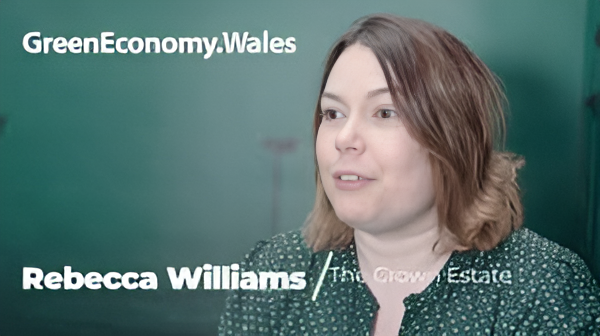
FAQ – Extension of the Gnutz Wind Farm

Q1: What is the total capacity of the Gnutz Wind Farm following the most recent extension?

A: Schleswig-Holstein -based this Wind Farm has 30.8MW of combined installed capacity following the latest expansion by PNE.

[Q2] What is the equivalent homes powered in the Gnutz Wind Farm now?

A: The wind farm is able to produce renewable power for about 16,700 three-person households over a course of a year.

Q3: What sort of wind turbines have been set up in the new expansion?

A: The expansion will comprise 2 Vestas V162 and and 2 Vestas V150 turbines both rated at 5.6 MW each, and will be in operation as of May 2025.

2GW Floating Offshore Wind Farm Makes Waves in the Philippines – Launching 2030

2GW Floating Offshore Wind Farm Makes Waves in the Philippines

With operations expected to begin in 2030, the Philippines has established itself as a pioneer in floating wind energy in Southeast Asia with the Northern Luzon Floating Offshore Wind Farm.

MANILA – The Philippines takes a pioneering step in its Floating Offshore Wind Journey. The country has received a pre-development environmental consent certificate (ECC) for a 2 gigawatt floating wind project in northern Luzon.

The floating wind project will be operated by Buhawind Energy Philippines. The project is considered one of the most ambitious offshore wind power industry efforts in Southeast Asia.

The floating wind project is set to become a model for Southeast Asia as it strengthens its clean energy ambitions in the coming decade.

Let’s take a look of project detailed, significance as well as the country’s strength, renewable energy goals, and policy with implement.

2 GW Floating Offshore Wind Project Glimpse

Project Name: Northern Luzon Floating Offshore Wind Project

Location: Off the coast of Ilocos Norte, Northern Luzon, Philippines

Capacity: 2GW – one of the largest offshore wind project in Southeast Asia

Developer: BuhaWind Energy Northern Luzon (BENL) — a partnership between

PetroGreen Energy Corporation (PGEC) – Philippines and Copenhagen Energy – Denmark

Environmental Compliance: Issued a Pre-Development ECC by the Philippine DENR

Survey Scope: ECC approval allows BENL to perform:

Geophysical surveys:

  • Geotechnical assessments
  • Assessments of marine biodiversity
  • Environmental impact studies
  • Social and community surveys

National Certification: Designated as of April 29, 2025, by the Department of Energy (DOE) as a Project of National Significance on Energy

Operational Timeline: Scheduled to be complete by 2030

Energy Impact: Seeks to provide power to millions of homes, lower country’s reliance on fossil fuels, and help achieve the Philippines’ target of 50% renewable energy by 2040

Other Projects on BuhaWind: 1GW East Panay Project (out of Iloilo & Guimaras Island) 1 GW Northern Mindoro Project (off Occidental Mindoro & Batangas)

BuhaWind Energy Philippines Leads Offshore Wind Revolution

BuhaWind Energy Northern Luzon Corporation (BENLC) is a strategic joint venture between PetroGreen Energy Corporation (PGEC) and Copenhagen Energy of Denmark, through which the country is working to reduce its dependence on fossil fuels while harnessing the vast potential of offshore wind.

PGEC has an extensive track record in developing and operating renewable generation facilities (onshore wind, solar, geothermal) throughout the country, and the nutshell of another partner,

Copenhagen, Denmark, a pioneer in renewable energy, especially offshore, has invested in many countries, including the Philippines, Bangladesh, Taiwan, Australia, New Zealand, Colombia. In the Philippines alone, CIP has a 1 GW project, where they are working to accelerate development ahead of the upcoming power auction. Through the companies’ deep expertise and partnerships in infrastructure development, the country is working to harness the vast potential of offshore wind to reduce its dependence on fossil fuels.

2GW Northern Luzon Offshore Wind Project, Image: PetroEnergy

And based on this expertise, the Department of Environment and Natural Resources (DENR) has granted BuhaWind Energy a pre-development ECC. Companies will be able to conduct the preliminary research required for feasibility assessments based on four categories: geophysical, geotechnical, marine, environmental and social surveys.

“The ECC approval will allow the team to conduct a systematic, comprehensive, and scientific study of the project site,” said Errell Ventura, assistant vice president of the PGEC’s Environmental and Community Relations Division. “This ensures that the project not only meets international industry standards but also provides a factual basis for addressing any environmental or community-related concerns.”

These studies are critical to ensuring that the design of the So that, the project is consistent with environmental sustainability principles, seamlessly integrated into the local ecosystem and socio-economic landscape.

The Northern Luzon Wind Farm Significance

  • DOE Recognition:

The Northern Luzon Floating wind Project was declared by the Department of Energy (DOE) as an Energy Project of National Significance on 29 April 2025.

  • Strategic Impact:

This certification highlights the importance of the project in providing long-term energy security, economic development, technological innovation and positive environmental impact to the country.

  • Supporting Renewables Energy Targets:

It supports the objective of the Philippine government to raise the share of renewable energy in its energy mix to at least 50% by 2040.

  • High-Capacity Clean Power:

The project, with a total capacity of 2 GW, will provide for millions of Filipino homes and help the country achieve electrification rate by providing clean energy.

  • Carbon Emission Reduction:

The floating wind farm is set to help reduce carbon emissions and move the country off fossil fuels.

  • Renewable Energy Jobs Creation:

58,000, estimated job creation during the construction period.

Floating Wind Farms: A Vision for Energy Security in the Philippines

The approval of a 2GW floating wind project in northern Luzon strengthens the Philippines’ position in renewable energy in Southeast Asia. Floating wind farms are technically complex and capital-intensive.

With international partners like Copenhagen Energy, these projects are not only building local capacity but also attracting foreign investment, accelerating technology transfer, and establishing this country as a hub for offshore wind innovation.

BuhaWind offshore wind projects, Image: Buha website

While neighboring Southeast Asian countries are rapidly expanding their wind power industries, the country with the fifth-longest coastline in the world is unfortunately still heavily dependent on fossil fuels in its energy mix. Coal is the mainstay of electricity generation, while renewable sources such as geothermal and hydroelectricity are also notable.

Therefore, it is great to see that the country has set ambitious targets for renewable energy, with the government providing incentives for projects in this regard. They are now ready to harness the vast offshore resources to meet growing energy needs, reduce dependence on imported energy, and take strong steps towards their climate goals under the Paris Agreement.

The Philippines plans to achieve 35% of its electricity mix from renewables by 2030 and 50% by 2040, including a target of installing 19-50 GW of offshore wind power by 2050. The Philippine government’s National Energy Strategy focuses on strong growth in renewable power generation, with the goal of providing electricity to over 1 million unconnected households.

In this series, Buhawind is developing three floating offshore wind farms – Northern Luzon, Northern Mindoro and East Panay, which will generate a total of 4 gigawatts (GW) of electricity once operational – Northern Luzon (2 GW), Northern Mindoro (1 GW) and East Panay (1 GW) with water depths of 80-800 meters, which create very good conditions for the implementation of floating foundation technology.

It is also a positive sign that, with international partners like Copenhagen Energy, these projects are not only building local capacity, but also attracting foreign investment, accelerating technology transfer, and establishing the Philippines as a hub for offshore wind innovation.

Last Words

The project is expected to create thousands of local jobs including engineering, construction, marine operations and environmental management.

The issuance of the pre-development ECC to BuhaWind Energy Philippines for its 2 GW Floating Wind Project in Northern Luzon is a game changer in the country’s energy sector. In a race for the future, while the rest of the world is looking to clean energy, the Philippines has put itself on the starting blocks to lead the pack on the race to the development of floating offshore wind.

Already with three large projects in the country and supportive regulations in place, the Philippines is proving that floating wind is not a in-the-future-technology, but rather a real-world solution that can power the country’s energy future.

Watch and join on as BuhaWind Energy blazes a trail towards a Filipino energy future that is renewable, resilient and sustainable for the next generation.

Aerones Secures $62M to Revolutionize Wind Turbine Blade Design With AI and Robotics

Aerones Secures $62M to Advance AI Robotics for Wind Turbine

June 5, 2025 – Aerones,a leading global company that develops tethered drone technology for autonomous wind turbine cleaning and CIGO (Cyclone Imaging Global Optimized) AI-powered wind turbine blade inspection, announced that it closed a $62 million growth round of funding, which was significantly oversubscribed.

This substantial investment is planned to advance the company’s global expansion, AI and robotics R&D, manufacturing scale, and its proven predictive maintenance technologies for the wind power industry.

New investors Activate Capital and S2G Ventures co-led the financing, along with participation from Carbon Equity and Overlap Holdings. Returning investors – such as Lightrock, Blume Equity, Metaplanet, Change Ventures, Extantia – all also participated – signaling ongoing support for Aerones’ novel solution to wind turbine upkeep.

Solving wind turbine maintenance Challenge

Wind industry worldwide is expanding rapidly, a general expectation to double the wind capacities till 2030 make it more and more difficult to manage the maintenance of wind turbines. Conventional maintenance procedures are manual, unsafe, and not necessarily effective, thus accompanied with prolonged down-time and expensive overhead.

“This is where Aerones steps in, merging high-level robotics and AI to eliminate the bottleneck in inspection, cleaning, and repair of wind turbines. With a maximum effort of 70 tons and range up to 70 meters, their online robots can operate up to 6 times faster and at 40% lower cost in comparison with current manual methods thus reducing downtime and improving safety for maintenance operators. electrek. co

Dainis Kruze, founder and CEO

“We are committed to automating inspection and maintenance of wind energy globally,” and this investment is an acceleration of our mission to bring the intelligence of robotic solutions to where the industry needs it most,”

Dainis Kruze, founder and CEO cited,

Creative AI and Robotics Solutions

Aerones’ autonomous robotic systems include AI-based analytics to make pinpoint structural issue diagnoses like identifying blade erosion, cracks, and lightning protection system malfunctions. The AI software pull these inspection data and predicts possible failure based on the data, for proactive maintenance, reducing unscheduled downtime. latvia. eu

The company’s robotics technology comprises modular types of systems that are multi-functional, such as:roboticsandautomationnews. com

Blade surface cleaning

Leading-edge erosion repair

Testing of the Air terminal Lightning protection system

Drainage hole cleaning

Robotic systems such as these can be remotely controlled, diminishing the level of high-air operations many dangers to which many technicians ca n be early workers. Using artificial intelligence and robots, company makes the maintenance of wind turbines more efficient and safer.

Record-Breaking and International Growth

2024 has been a record year for the company with almost trebled revenues and substantial operational growth. In line with a soaring customer demand, Its unveiled a new operating center in Dallas, Texas, to support and strengthen the company’s logistics on the North American market.

Among its clients, the company can count corp-giants like GE Vernova, NextEra, Vestas, Enel, and Siemens Gamesa, and they use Aerones’ technology in 30 countries to inspect and maintain their turbines. With over 10,000 turbines annually under service, the company is establishing a record for the wind industry.

This technology not only supports turbine maintenance but also contributes significantly to reducing carbon footprints globally.

  • Facilitated more than 400,000 MWh of new clean power production
  • Contributed to savings of 165,000 tonnes of CO₂
  • And is estimated to save over 170 million tonnes of CO₂ by 2030

In the Words of the Investors

Paul Neal Jordan of Activate Capital wrote in an email.

Managing Director Bala Nagarajan highlighted,

What’s Next

With the $62 million as renewable energy investment 2025, company will use this new funding to:

  • Scale robot manufacturing
  • Expand global operations
  • Speed up Artificial intelligence and automated systems R&D
  • Advanced predictive maintenance tool development
  • Improve the software platforms the customer sees
  • Push research in Artificial Intelligence based diagnosis and automation
  • Robotic manufacturing at global demand scales
  • Scale its client-side software platform for data visualization and reporting
  • Become more proactive with new predictive maintenance tools to maximize the life cycle and uptime of your turbine fleet

By empowering earlier fault detection, It enables wind farm operators to cut costly repairs, prevent catastrophic failures, and increase energy production based on their assets..

In The Future: Where the world  leading company will go from here?

With this new funding, Wide scope of robotic turbine services company is now even better equipped to retain its market advantage in the field of robotic wind turbine maintenance going forward. Some of the key priorities for 2025 and beyond are:

Creating new hubs of operations in Europe, Asia and Latin America

Sneller ontwikkelen van producten voor toepassing in offshore wind

Application of machine learning in fault prediction and auto -planning of dynamic changes!

Scaling OEM and asset manager partnerships to integrate its into regular O&M routine

Its aspires to continue improving its platform to be at the leading edge of technology for wind energy services.

Last Words

Aerones is the global leader in providing robotic inspection, maintenance and artificial intelligence-based diagnostics solutions for the wind energy industry, having started in Latvia.

The company’s proprietary robotic solutions enable rapid, safe and high-quality services that minimize turbine downtime and logistical risk. It serves the largest wind turbine owners that account for more than 50% of global capacity with unparalleled scale, performance and impact.

By 2030, 75,000 Offshore Wind Jobs Could Be Lost – Is the UK Ready?

By 2030, 75,000 Offshore Wind Jobs Could Be Lost – Is the UK Ready?

The UK is at risk of losing thousands of offshore wind jobs by 2030, prompting urgent and concerted action, RGU has warned in a report titled “Ballasts – Building a Sustainable UK Offshore Energy Workforce”.

The UK stands a crucial watershed moment in the energy transition journey. With the decline of oil and gas jobs, an alternative opens up: the offshore wind investment and green jobs boom. While fossil fuel employment continues to shrink, renewables energy are emerging as the underpinning of energy security and economic recovery.

A new report on the offshore energy workforce from Robert Gordon University identifies an important trend: while UK offshore energy total employment was stable between 2023 and 2024, the internal churn is changing quite dramatically. It is a sector changing from one based on oil and gas, to one powered increasingly by clean energy, renewable energy such as offshore wind power.

UK Offshore Wind Jobs Fuels Employment Growth

They also found that UK offshore jobs was relatively stable, sitting at about 154,000 workers each year between 2023 and 2024. But buried within that number is the elephant in the room: a massive shift. A drop of about 5,000 jobs to 115,000 workers dented the oil and jobs workforce in the traditional sector, which fell from 120,000 positions. It continues a trend of decreasing employment across fossil fuels on the back of declining production and growing decarbonization pressure on both products and firms.

By comparison, jobs in the offshore renewables industry in the UK grew sharply — up from some 34,000 to just under 39,000 within a single year. This expansion is linked directly to increased development of offshore wind energy, particularly for early-stage activities like pre-construction work and new wind farm construction phases.

This rebalancing of the workforce internally is driving an identity change of the sector. Of the offshore wind workforce, oil and gas accounted for 80% in 2023, compared to only 20% for renewables. And by 2024 that balance had changed to around 75 per cent oil and gas and 25 per cent renewables, a clear indicator of the shift in green energy jobs UK.

Green Jobs Will Exceed Fossil Fuel Jobs This Late 2020s

Professor Paul de Leeuw, RGU

Forecasts looking forward indicate that green energy jobs UK—the vast majority offshore wind jobs—will boom in the coming years and outstrip oil and gas employment. The number of offshore renewables workers in the UK is expected to rise from 31,000 in 2022 to between 84,000 and 153,000 by 2035, depending on investment levels and policy commitments.

Conversely, the UK oil and gas workforce is projected to keep declining, falling to 57,000–71,000 people by the early 2030s. This transition is not just a structural realignment in energy, but also a significant opportunity for retraining and workforce development. By acting in a coordinated fashion, we can train thousands of oil and gas workers to migrate into offshore wind and other cleaner and more sustainable roles.

Transport shifts in the UK are entering a crucial time – referred to as a “Goldilocks zone” between 2025 and2050 in the report – where appropriate investments now and plans in place can help to capitalize on the fact that workforce skills will remain highly transferrable and levels of employment can remain stable as the sector pivots.

Skills, Training, Infrastructure Needed

To maintain the existing size of the offshore workforce and that of a growing green energy economy in the UK, the proceedings report makes a number of pivotal recommendations. It must deliver a minimum of 40GW of operational offshore wind by 2030. Achieving this bold target will underpin thousands of opportunity for jobs — from wind farm construction, to operations and maintenance, to supply chain services.

“Offshore wind farm in the UK – 75,000 green jobs at risk”

Increasing the UK content — is the proportion of offshore wind capital investment that remains within the UK economy — is another important element. Currently, we deliver about 25% of the capital activities for renewables in country. This could unlock significant employment upside if UK capex content is increased up to 40%. More domestic capital expenditure in offshore wind projects translates into more jobs between 7,000 and 12,500 in fact for every 10% of capex by 2030.

Achieving this target will involve large scale transition of UK operational capacity, and operational capability — at least in manufacturing, engineering, logistics and vocational training. To ensure projects proceed and jobs are created when planned, much of this new infrastructure will have to be built before final investment decisions are made.

Finding the Way Through the Just Transition with a Workforce Plan

Supply and demand of the workforce: this is where it becomes important as the UK works its way to a just transition towards a net-zero economy. While representing less than 1 percent of global greenhouse gases, the UK is providing a template for how developed countries can transition away from fossil fuels without sacrificing jobs and communities.

Declining offshore workforce in UK wind energy sector

This means a new kind of offshore employment ever — flexible and project-based. Labor will likely transition between major renewable projects and also between regions and companies. The emerging jobs market will demand a much greater emphasis on vocational skillsets, which will in-turn require new pathways and re-skilling in areas such as offshore wind and decommissioning.

Still, before 2027, there simply might not be enough room in renewables to accommodate all the oil and gas workers being fracked out by sector decline. It emphasizes the need for early investment and targeted policy intervention to scale up renewables quicker and gear up for bigger movements of the labor force in the late 2020s.

Offshore Wind as a Foundation for the Future Green UK Economy — UKERC

UK offshore wind investment: how to make the most of it Everyone with a stake in this must know that making more clean energy at lower cost is not just about clean energy. It is about creating an adaptive and affordable economy built on better pay, our own energy independence, and a resurgence in climate leadership. Offshore wind can help raise up regional economies, establish new manufacturing centers, and build a diverse and inclusive green workforce, if the correct policies are adopted.

UK offshore wind turbines with workers – 2030 job loss warning
“Offshore wind turbines Technicians – 2030 job loss warning”

In fact, with as much as 85% of current O&M work for renewables already performed by UK companies, the skills base is already here. The question now is whether this can be emulated in capital development activities, where domestic participation remains under international levels.

Both McCarthy and his think tank saw a clear opportunity for the UK to lead the world in offshore renewable. But time is of the essence. Haqq-Misra said that postponements in action, or the lack of cooperation between government, industry and education, would lead to the loss of job and lost opportunity. But without concerted action, the offshore energy workforce could shrink from 154,000 to only 125,000 by 2030 — increasing the challenge of reaching net zero.

Conclusion: Bet on the Future of a Green Economy

This shift away from fossil fuels and toward renewables is underway. It is now up to the UK to decide if it will drive this or simply flail, trying to keep up. So, with oil and gas jobs diminishing, the offshore wind sector growing, and decarbonization around the world accelerated, we must seize the opportunity to invest in green jobs and domestic renewable infrastructure today.

By:

  • by investing in skills-based learning,
  • And investing in UK-based supply chains,
  • Adding to the UK capex basket, and
  • On delivering large scale offshore wind projects,

Britain can do to safeguard its energy future, protect good jobs, and become a clean energy superpower.

Scotland Launches Offshore Wind Consultancy — Could it Transform Energy and the Sea?

Scotland Launches Offshore Wind Consultancy— Could it Transform Energy and the Sea?

June 2025 — Edinburgh, Scotland launches national offshore wind consultancy supported by both the Scottish Government and industry leaders — a mainstay of revolution. The new initiative will combine marine science, AI-driven analytics and engineering to offer expert advice on wind development.

It is a world-leading sea-based energy innovator, with significant North Sea wind energy potential and a long-standing renewables success story.

So, what do you get when a country of only 5.5 million people dares to take on the titans of the power sector? Which is just what Scotland has just gone and done.

The UK country is positioning itself to be the great power player in the renewable game, and their new offshore development consultancy is no just another government program: it’s even got it’s own special protection for the iconic seas and coastlines.

Scotland Seeks to Strategically Boost Offshore Wind

Anyone watching offshore wind development in 2025—and beyond—will know this decision to control their own renewable fate over the dictates of remote corporations. Using decades of North Sea experience and hard-earned lessons, they are constructing what stares new-found riches in the eye.

But here’s what is truly fascinating; the consultancy will provide guidance to projects throughout Europe, the U.S., and Asia, including site optimization, environmental impact assessments, and smart-grid integration.

The effort — backed by the Scottish Government and offshore renewable energy leaders — is aimed at helping countries establish high-efficiency wind farms in a bid to develop key international capabilities and build up the supply chain. By virtue of deep knowledge of the North Sea and marine engineering experience, It is turning its geography into an export asset, becoming a hub of wind energy consulting around the world.

  • Use the latest  data and scientific evidence to inform decisions on energy developments – such as how projects will impact wildlife and nature 
  • Ensure the environmental, social, economic opportunities and constraints from offshore projects are clearly set out to help inform decision making
  • Ensure the interests and views of other marine users, including fishers, coastal and island communities and environmental groups are taken into account  

The consultancy isn’t trying to top down implement solutions. Instead, they’re partnering with fishing communities, island populations, and traditional maritime industries to devise community-driven methods.

This isn’t just good politics, it’s also good business. New Haven Strategy of better involving stakeholders early on is helping avoid the conflicts that have dogged the development of offshore projects elsewhere. The consultancy acts as an interface between where tech innovation and the communities that will eventually live with these great works.

And this method is already paying dividends. Festering lawsuits and protests on one side, and partnerships between fishing cooperatives and wind developers on the other. Attitudes are changing, and the idea that the sea should be widely shared for the benefit of all continues to gain ground.

The Global Knowledge Export

This EU country is not hoarding its lessons learnt Scotland positioned as “global knowledge center” for the world’s offshore energy industries – where others learn, train and plan strategies, according to the consultancy.

Even now, they have delegations visiting from Japan, Chile and South Africa. They’re not merely on the hunt for more spinning turbines—they’re there to see what makes its model distinctive, to learn how to integrate it all.

In turn, this export of knowledge produces a virtuous cycle. Every international partnership introduces fresh perspectives and challenges which itself continuously hones the Scottish method. The consultancy grows stronger with every exchange, solidifying the country as the global center of excellence in wind power.

In the Words of the Government Bodies and Experts

Gillian MartinSecretary, Acting Net Zero and Energy Highlighted,

Gillian Martin, Image: Linkedln

MIKE SPAIN – Director of Marine, Crown Estate Scotland cites,

MIKE SPAIN, LinkedIn

Scottish energy minister Paul Wheelhouse said

Paul Wheelhouse, Image: Paul Weehhouse

Benefits to the Community and Justice

Their consultancy is about more than just megawatts and money. They are questioning the very basics of who profits from offshore development, and how to share those profits in an even manner.

They’ve built community benefit types where local communities experience the upstream benefits of nearby projects. These can include lower electricity prices and shares of community ownership stakes in the projects themselves.

This approach takes into account that development is not done in a vacuum. Sustainable support from the public, on which the long-term success of our sector depends, can only be maintained if each citizen feels the benefits in their everyday lives.

The consultancy is pushing back on the traditional lowest-common-denominator measure of community engagement that developers have used. This has resulted in a new wave of projects that local communities are embracing, rather than fighting.

Conclusion

Lastly, in countries like the United States, where large-scale this wind development is expanding on both coasts, country’s four proposed approaches will serve as a blueprint for balancing innovation and ecosystem conservation.

The SMP-OWE draft aims to avoid conflicts between industrial development and marine conservation – providing a transparent, science-driven way to build trust between developers, communities and environmental groups so they can work on investment, technology and innovation at the same time.

Northern Lights June 2025: Sparking Solar Storm Aurora Over US skies

northern lights forecast June 2025

Brace yourselves for a sky spectacle like no other! Northern Lights June 1–3: A Strong Solar Storm Will Strike Earth, Setting The Stage For A Rare, Brilliant Lights Display Over Parts Of The U.S This is a direct hit from a coronal mass ejection (CME) and has the potential to send this cosmic event much further from the usual aurora zones✱ than Maine, Illinois, and in places across the Midwest and South.

So whether you have binged sky watching over the weekends available or you just learning about the magic that shines above you, do not miss out on this one event. Continue reading to find the best times, areas and tips to watch!

Aurora Alerts: When to Watch Northern Lights June 1-3, 2025

northern lights forecast, Norway

Sunday, June 1

  • Aurora Viewing: excellent south of Millinock (and out of the mountains).
  • How to see it: Find a dark spot away from city lights and look to the north.

Monday, June 2 – The Main Event

  • A G4 storm, second of its kind, is on the way. This is your best opportunity to see a bright light show.
  • Clear skies all over the state means that nearly everyone in the Pine Tree State will get a good look.

Tuesday, June 3

  • An even weaker G3 storm is predicted, too — one that is still expected to remain visible with the naked eye.
  • Attention, photographers: Your long exposure may reveal something amazing in the dark.

What is the Northern Light?

One of the most beautiful and enigmatic of nature’s spectacles seen on Earth, this Lights. These colorful waves of light twist through the night skies in the high-latitude areas of the Northern Hemisphere, a performance that has mesmerized, beguiled and inspired humanity for hundreds of years.

The Science Behind the Aesthetic

Because they develop around Earth’s magnetic poles, it are also known as polar lights with the respective aurora names being A.borealis in the north and A. Australis in the south. These amazing light shows are actually the result of what is going on on the surface of the Sun.

Not only is it burning fusion energy, but the Sun gives off a constant stream of charged particles (mostly electrons and protons, the solar wind). Earth’s magnetic field usually serves as a protective shield, redirecting this wind around the planet. However, when the Sun goes wild, such as during solar storms or coronal mass ejections (CMEs), enormous clouds of energetic particles break out of the Sun and race through space at greater than 2 million miles per hour.

How the Lights Are Formed

Once these charged particles reach Earth, some become trapped in Earth’s magnetic field and funneled down into the upper atmosphere close to the magnetic poles. When these particles strike against the gases (oxygen and nitrogen) of our atmosphere, they excite the atoms and molecules of gas and emit energy in the form of light.

That’s similar to how a neon sign or an old cathode-ray tube TV glowed, but works a bit differently. These microscopic collisions happen in millions at a time across the sky, yielding a spectacular display of colorful movement.

Colors and Forms

  • The most common color is green, which is derived from oxygen around 60 miles above earth.
  • At over 200 miles, red becomes rarer – created by high-altitude oxygen.
  • The nitrogen molecules create purple, blue, and pink hues.

You see the lights in many shapes, from wavy curtains to pulsing glows to spirals and arcs. Shape-shifting as it is, the aurora is dictated by the lines of Earth’s magnetic field and how strong the solar wind is at any given moment.

Northern Lights Airlines and Local Times World Map

You can see auroras in high-latitude locations in northern Canada, Alaska, Scandinavia, and Iceland. The best opportunity to do that in the Northern Hemisphere is August to May, a season where the skies are dark, and the solar activity is high.

Even at times when solar activity is low there will be an appearance of smaller auroras, but extremely powerful geomagnetic storms can send the lights as far south as the continental U.S., the UK and parts of central Europe.

About Geomagnetic storms: Boosting the Aurora

The strongest auroras typically occur in the days after significant solar eruptions called coronal mass ejections. Such CMEs release billions of tons of solar material into neighboring space. These bursts of solar wind disturb Earth’s magnetosphere, triggering geomagnetic storms—space weather events that can disrupt technology on the ground and dramatically increase aurora intensity.

These types of storms not only colour the sky — they can influence power grids, satellites and GPS systems. Nevertheless, they also afford you the memory of seeing auroras far outside the traditional viewing areas.

A Cosmic Connection

Not just a pretty sky, the northern light convey a quantitative and qualitative record of Earth’s connection with the Sun and the invisible forces of space. For scientists, photographers, and curious travelers alike, Aurora borealis is one of those once-in-a-lifetime events that borders on the spiritual.

So next time you are under a northern sky, pause and gaze at the stars. You will see the colors of the universe dancing in front of you.

How To See Aurora Borealis

  • Head North: Locate a response to the poles.
  • Dodge light pollution: Get way out of city lights.
  • Focus with a long exposure camera: Your eyes will see dim lights, but if you take a picture with a camera you can see everything is more bright.
  • To catch a glimpse (or a snap) of the aurora:
  • Find a dark northern region that has low light pollution.
  • Look at aurora forecasts (my Aurora forecast app or Space Weather Live are great ones)
  • DSLR long exposure capture – Because then you see the colors more intense than you actually can with your bare eyes!
  • Be Warmly Dressed–Even in summer, nighttime temperatures can fall below freezing.
  • Use apps like:
  • My Aurora Forecast & Alerts
  • Space Weather Live

Bottom line: Do not pass up this opportunity for a natural and rare show in the sky!

Solar storm aurora

One of the most stunning displays in nature are the N. lights — and because of this unusual, strong solar storm millions of Americans will be able to view them without a telescope from June 1–3, 2025. If you live in Maine, the Midwest or even parts of the southern U.S., this is a once-in-a-decade opportunity to catch the aurora borealis dancing in your local night sky.

So grab your camera, get out to a low-light place where you can see the northern horizon well and watch the skies. Under these levels of geomagnetic activity and with the skies in many places set to be largely clear, this could be the most stunning view weekend in many years.

The stars are showing up tonight for you so do not slip off stage either.

€2 Million Floating Wind Breakthrough Approved in Portugal

€2 Million Floating Wind Breakthrough Approved in Portugal

A Fantastic News In a major vote of confidence in Europe’s offshore wind sector, Gazelle Wind Power, a Viana do Castelo-based developer of floating wind technology, has secured an additional €2 million investment from country’s sovereign bank, Banco Português de Fomento (BPF).

This impressive funding was granted through the BPF’s deal-by-deal co-investment program, bringing the total amount of funding raised for Gazelle’s ‘Now Azul’ floating wind demonstration project to €18.8 million. John Salazar, CEO of Gazelle Wind Power Highlighted,

Nau Azul Project Glimpse

  • 2 MW floating Wind demonstrator from Aguadora, Portugal
  • Total Investment of €18.8 million, including €2 million from Banco Português de Fomento
  • Innovative modular platform with reduced capital costs and high stability
  • Real-sea trials validating deepwater wind potential
  • Backed by lead investors: BPF, Indico Capital Partners
  • Supporting employment and Portugal’s clean energy goals
  • Low environmental impact, deployed from shallow ports

Statements of Stakeholders

Founded in 2020, Gazelle aims to make deepwater wind energy more efficient, accessible and environmentally friendly. The company is headquartered in Portugal and Ireland, with additional presence in Spain and the UK.

According to Teresa Fuza, Chief Investment Officer of BPF:

In addition to BPF, Gazelle is supported by key investors such as Indico Capital Partners whose co-founder and managing general partner Stefan de Moraes noted:

Significance for Gazelle

  • With this new funding, Gazelle Wind Power will implement the following plans:
  • Expand construction of the Nau Azul demonstrator
  • Expand technical team
  • Increase operational efficiency
  • Continue its commercialization roadmap for floating wind deployments worldwide

Greenvolt Group Lights Up 33.2 MW Wind Portfolio to Enea Nowa Energia in Poland

Greenvolt Group Lights Up 33.2 MW Wind Portfolio to Enea Nowa Energia in Poland

Greenvolt Group, through its subsidiary Greenvolt Power, has finalized an agreement to sell its 33.2 MW wind power portfolio in Poland to Nova Energia. The €83.3 million transaction includes four wind farms in various stages of development and a total of 16 turbines, each with a capacity of between 2 MW and 2.2 MW.

The move follows two recent utility-scale transactions by Greenvolt Group worth an equivalent of €250 million, which sees Greenvolt Power playing a key role in growing and monetizing clean energy infrastructure in utility-scale renewable projects across Europe.

Wind Project Glimpse

Greenvolt Group is the seller through Greenvolt Power

Enea Nowa Energia subsidiary of Enea Group is the buyer

Investment Volume is €83.3 million

Total Capacity if power is 33.2 MW

Operatinng Wind Farms: 4 projects

Total Turbines USed: 16 Vestas V110 (2–2.2 MW each)

  • Operational Status: Skibno Wind Farm – 10 MW (Operational)
  • Zaklików – 10 MW (Under Construction)
  • Nowe Miasto Lubawskie – 6.6 MW (Under Cons truction)
  • Jabłonowo Pomorskie – 6.6 MW (Under Construction)

Contraction Timeline: Remaining projects to be operational by 2026

Strategic Objective:

  • Greenvolt: Asset rotation model (selling 70–80% of projects)
  • Enea: Expanding renewable portfolio under 2035 development strategy

Greenvolt’s Portfolio in Poland:

  • 731 MW Wind
  • 1,878 MW Solar PV
  • 2,712 MW Battery Storage

Wind Farm Portfolio Objectives

The wind farm portfolio includes:

Skiebno Wind Farm: a 10 MW wind farm located in northwestern Poland that is already operational.

Zakliko Wind Farm: located in the south-east of the Subcarpathian region, with an installed capacity of 10 MW.

Nowa Miasto Lubowski Wind Farm: Located in northern Poland with a capacity of 6.6 MW.

Jablonowo Pomorskie Wind Farm: Located in the north with a capacity of 6.6 MW.

Three non-operational sites are currently under construction, equipped with Vestas V-110 turbines. They are expected to start commercial operations around 2026.

In the words of Enia Nowa Energia

Enia Nowa, one of the largest electricity suppliers in Poland, continues its commitment to the development of renewable energy. Enia’s Vice President for Commercial Affairs, Bartosz Krysta, emphasized the importance of green energy:

Bartosz Kryst. Image: Linkdln

Company’s’ CEO Arkadiusz Arustowicz cited:

Greenvolt Group’s vision for 2035

This acquisition is in line with Enia Group’s development strategy 2035, as it foresees investments of £107.5 billion (€25.3 billion) – most of which will be directed towards renewable energy, energy storage and the modernisation of distribution infrastructure.

With each transaction, Enia and Greenvolt continue to push the boundaries of Europe’s energy transition, making Poland a central player in the continent’s green future. For this reason,

Bartosz Krysta, Vice-President of Enia’s Management Board, stressed that this acquisition is another important step in Enia’s transition to sustainable energy, fully in line with national environmental and energy security goals.

João Manso Neto

In addition, João Manso Neto, CEO of the Group, highlighted that this deal demonstrates company’s ability to effectively deliver and monetize large-scale renewable projects, supporting its business model of 70-80% asset turnover at various stages of preparation.

Previously, this company also sold the Pelplin wind farm and the Sompolno hybrid project – further strengthening its capital base and reaffirming its position as a top-tier renewable developer in Europe.

With this deal, Greenvolt is strengthening its 13.2 GW utility-scale portfolio, operating 18 countries, including 731 MW of wind, 1,878 MW of solar PV and 2,712 MW of battery storage in Poland alone.

Poland’s renewable energy Target Matters

The second largest Wind farm Developed by the a Woman Enthusiast, Image: Notes From Poland

Country’s energy sector is still heavily dependent on fossil fuels, particularly coal. While it has made progress in wind and solar power, coal remains the main source of electricity generation. In 2024, 57% of the country’s electricity generation will come from coal, and in 2023, 63%.

As part of the National Energy and Climate Plan, it has set a target of 56% of the electricity mix and announced an investment of PLN 792 billion (about $205 billion) to achieve the target. But the 2030 renewable energy target is important because it faces challenges in diversifying its coal fuel sources. European this country is said to a home of Europe’s largest coal mines, the Mainz.

Wind energy started supply electricity since 2019. While it has set a target, reaching it is not easy, with the Greenvolt group project accelerating discussions on four wind projects.

Last words:

The €83.3 million transaction solidifies Greenvolt’s role in Poland’s renewable energy landscape and supports Enia Group’s strategic move towards sustainability, contributing to a green, resilient European energy goals.

Ireland’s €38 Billion Offshore Wind At Danger – Who’s to Blame?

Ireland’s €38 Billion Offshore Wind At Danger

Ireland’s Offshore Wind Farms Are Danger!

Dublin, 27 May 2025Wind Energy Ireland (WEI) has issued a stark warning: country’s entire offshore wind portfolio worth €38 billion could be lost if the government does not act quickly. Offshore wind is in a state of flux. It comes as a major blow to offshore wind, as Germany warned two days ago that its wind farms could become a battlefield. It follows US President Donald Trump’s ban on wind projects, which the government was forced to lift under pressure.

However, not for the Irish.

A new Wind Plan for Offshore was formally unveiled at this year’s Conference in Dublin, setting out a path to save Ireland’s wind dream and rebuild confidence at home and abroad, which will be held again on 27 and 28 May at the Clayton Burlington Hotel in Dublin.

The plan sets out the key government priorities needed to harness Ireland’s offshore wind potential and restore confidence in Ireland’s ability to build a competitive, sustainable and resilient offshore wind industry. While welcoming the government’s progress in recent years, the plan calls for swift action to deliver on these policy commitments to reflect the seriousness of the government’s commitment to the sector.

On the positive side, the document outlines a clear and practical plan for how the Irish government can support the delivery of offshore wind projects under development and sets out a long-term framework that provides certainty and stability for future development through 24 targeted actions across four delivery areas. But the clock is ticking. Let’s see!

What’s at Stake of €38 Billion Wind Investment?

Ireland has a huge opportunity to be a world leader in offshore wind. The industry could create more than €38 billion in economic value, bring energy independence and reduce carbon emissions, estimates suggest. But in view of the Action Plan, it is now the question whether that future is possible at all. Why?

Slow process of planning and permission

No investment into ports and grid infrastructure

Opaque government policy and bottleneck regulations

Inadequate funding for top state agencies

The Industry Is Ready. Is the Government?

Noel Cunniffe, the C.E.O. of Wind Energy Ireland said. “The industry is prepared to do its part but it is only possible with the political will and whole-of-government leadership,”

Cunniffe stressed that the 24 steps in the plan are not theoretical—they are crucial. Without them, there could be no offshore wind farms in Irish waters by 2030.

“We know what needs to be done,” he said. “We are now in a critical time frame”

Noel Cunniffe, CEO of Wind Energy Ireland

Areas Ireland Must Address Immediately:

Phase One Projects Are Delivered or Face Losing an Industry altogether

This obvious country’s wind energy ambitions will never take off if the first phase one projects don’t happen. These are the projects that we have to get first in the ground for us to reach the Government’s 2030 renewable electricity targets. No turbines in the water, no offshore industry — just promises.

The Government says it fully backs these schemes, but that means nothing to developers who are repeatedly held up, not least by the long and avoidable Read more: delays caused by the planning process. These should have been dealt with earlier with greater resourcing and pre-application engagement by the state authorities.

What must happen now:

  • Urgent audit of manpower needs in all related state organizations.
  • Government’s support for each Phase One project will be through strategic intervention and direct support.
  • Acceleration of decision making to meet 2030 delivery deadlines.

And if planning delays continue through into 2026 there could be no Phase One projects for 2030 at all — leaving the country’s entire wind energy timeline going aground.

Construct the Enablers — Ports, Grid, and Demand Infrastructure

wind energy, Dublin wind conference 2025

Ireland cannot simply erect offshore wind farms when it does not have the ports and grid infrastructure to sustain them.and these transport enablers are currently lagging well behind.

Ports:

Despite several announcements, Ireland still does not have sufficient port capacity for industrial scale offshore construction.” And if Irish ports are not upgraded soon, developers may have to look elsewhere — but discover that capacity is also limited there.

Grid & Demand:

For many next-generation projects, grid access remains uncertain. Even worse, there is no one way to match power generation to demand.

What must happen now:

  • Site development should go hand-in-hand with reasonable grid capacities through TYNDP 2026.
  • Create green energy parks and private wire opportunities in the south east and other priority coastal areas.
  • Work with the IDA and DETE to develop >1 GW regional demand plans that draw in clean tech industry and provide offtake certainty.

Leveraging the South Coast DMAP – Opening Up the Next Wave of Projects

Country’s next significant offshore wind area is the South Coast Designated Maritime Area Plan (SC-DMAP). The projects in this region – Tonn Nua, Lí Ban, Manannán and Danu – must be scheduled and supported so pipeline is constant.

Tonn Nua (Site A):

This 900 MW project must qualify under ORESS 2 in 2025. But developers and investors are growing anxious about the lack of auction information and grid certainty.

Lí Ban (Site B):

Might be developed through ORESS or competitive MAC, so long as it is actually determined the grid can get there. EirGrid’s research should be fast-tracked.

Manannán & Danu (Sites C & D):

Should proceed in a MAC environment – but again, only if routeto-market (grid, private wire, etc.) is clear early on.

What must happen now:

  • conclude auction times and grid commitments for Tonn Nua.
  • Release grid studies for the southeast.
  • Speed up the competitive MAC process.
  • Allow hybrid and export-focussed project models.

Speed-up the National DMAP - A Vision of Long-Term Energy Security

The focus is on short-term projects, but Ireland has to think long-term. That means expediting the National DMAP to chart future offshore areas on the east, south, and west coasts— and in the wind industry’s case, that includes floating wind. This will have to take place without having it undermine the current projects but as a simultaneous process.

Key requirements:

  • Resource the process: DECC needs to sub-contract aspects of this to external experts for speed and quality.
  • MAC-first development model – place the risk- and timeline-reducing leasings and permitting ahead of auction.
  • Site electricity demand planning: DETE should incorporate coastal demand hubs in line with future DMAP zones.
  • Invest in floating wind demos: At least two demonstration sites need fast-tracking.

What must happen now:

  • Start National DMAP rollout NOW!
  • Tie it into grid planning, industrial strategy and export readiness.
  • Provide the plan no later than 2027 so that developers and investors have clarity about the future.

These aren’t options. They’re imperatives. Ireland needs to advance on all four of these fronts at the same time to ensure its place as the clean energy economy of the future — and stop the €38 billion offshore wind opportunity disappearing in the fog of political inaction.

So… Who’s to Blame?

wind energy policy Ireland,
wind energy policy Ireland, Image” iStock

But while business leaders stay polite, the blame is now squarely placed on government inactivity. The decisions have lagged behind for years, and agencies have been starved of funding, with unclear policies, and the sector is frustrated.

If Irish authority does not act now, it risks not only environmental catastrophe, but also forfeiting an economic bonanza, a flight of investors and international humiliation.

Summary: Change the Policy, Fuel the Future

The Wind Action Plan sends a clear political signal: political ambition has to keep pace with Ireland’s renewable energy resource. Billions property and the country’s green future are at stake.

This is a moment for bold measures, real resources and some quick action.

Offshore Wind Farm No Place for Weapons of War, Expert Says!

Offshore Wind Farm No Place for Weapons of War, Expert Says!

Offshore wind executive of Germany has issued a dire warning: Stay away, military types — or risk that renewable energy facilities become targets.

Keep the Military Out From Offshore Wind Farm

The line in the sand was drawn by the head of Germany’s Offshore Wind Federation (BWO) Stefan Thimm while addressing a high-profile conference on offshore wind.

“It is inadmissible to operate military facilities at wind farms,” stated Thimm.

Stefan argued that the offshore wind industry is prepared to protect itself in the digital sphere — where it should fight cyber attacks and report suspect vessel activity — though the infrastructure must be absolutely nonmilitarized.

The BWO is a German offshore wind farm operator’s sector platform which is essential for the development of Europe’s renewable energy supply. With geopolitical tensions on the up, and the critical infrastructure increasingly becoming a new battlefield in security debates, Thimm’s statement is a strong one:

Offshore wind should be used to power homes — not to host weapons.

EU Ambitious 2030 Energy Efficiency Goal – Almost 45% of It Must Be Renewable!

Europe is betting big on clean energy — and that bet is unlikely to be early.

The EU increased its 2020 target in the European Union Energy Directive 2009/28/EC from 20% to 38% on October 2014. The new target for renewables by 2030 of at least 42.5% but with a possibility to be raised to 45% under the revised Renewable Energy Directive EU/2023/2413 that entered into force on 20 November 2023.

This is a huge increase on the 32% level adopted in 2018 and reflects the EU’s enhanced climate ambition under the European Green Deal and in response to global energy crises.

From (20%) in 2020 to (42.5%) in 2030

Aerial drone view of wind turbines German Wind farm, Image: iStock

The 2020 target: 20 percent of the total amount of energy consumed will be from renewables.

2020 final result: 22.1%, which was a surprise according to Eurostat and the EU Commission.

2030’s ultimate binding goal: 42.5 per cent, with a 45 per cent aspiration.

This transition results from a couple of regulatory changes:

2018: Directive 2018/2001/EU establishes a 32% target.

2021: The EU Commission recommends increasing the threshold to 40%.

2022: The REPowerEU plan increases the ambition to 45%, with the goal to reduce reliance on Russian fossil fuels.

2023: The guidance is officially revised and approved.

Getting Clean Energy Deployed at Scale More Quickly

The EU has gone beyond higher targets, and has put in place emergency measures to speed up the issuance of permits for renewables projects and to boost power purchase agreements (PPAs) — in effect speeding up the switch towards solar, wind and other green sources in areas such as the industry, buildings and transport.

What’s Next?

With energy demand growing and the clock ticking, pressure is on EU countries to deploy renewable solutions at a furious pace, if at all possible. The new directive not only raises the bar; it essentially dares the bloc to nearly double its share of renewables in less than a decade.

Conclusion: A green future, not a war zone

On Europe’s ambitious renewable energy targets – and the infrastructure that supports them – must be civil, safe and sustainable. Saturang, experts are wrong

As the EU moves towards its 2030 target of 42.5% renewable energy, it must protect the integrity of its energy resources from both cyber and political threats, as the militarization of offshore wind farms risks turning them from beacons of sustainability into strategic vulnerabilities.

The future of energy is green – not a green light for conflict

Breakthrough in Offshore Wind Modelling Hits North Sea

EuroWindWakes North Sea Offshore Wind

A major breakthrough to optimize in offshore wind energy efficiency and power forecasting

in late 2024, a major collaborative effort called EuroWindWeaks, bringing together leading European industry and research institutions, was launched. The project aims to dramatically improve the accuracy of wake effect modeling in offshore wind farms, particularly in the North Sea, where offshore wind development is at its peak.


This project is tackling one of the most enduring challenges: the wake effect – a phenomenon where wind turbines reduce wind speed and create turbulence, reducing the efficiency of neighboring turbines. Focusing on the Sea, one of the world’s most turbine-dense offshore regions, this multinational project goals to deliver a breakthrough in wind wake modelling that could transform how wind farms are planned, built and optimized.

Through improved forecasting methods and cutting-edge research, it is setting a new benchmark for energy efficiency and spatial planning in renewable energy.

Eurowindweeks Project overview

Title: EuroWindWeeks (EWW) – Multidimensional Modelling of the Impact of European Wind Power Awakening

Project Duration: December 2024 – November 2027

Project Budget and Funding: Total Budget: DKK 10.91 million

Grant: DKK 7.29 million

Own Contribution: DKK 3.62 million

Funding Rate: 67%

Funding Year: 2024

Funding Source: Federal Ministry for Economic Affairs and Climate Action (BMWK), as part of the EU Clean Energy Transition Partnership (CETP)

Program: EUDP stands for Energy Technology Development and Demonstration Programme

Project Type: International (non-IEA) Development

Technology Focus: Energy Efficiency, Software Solutions, Renewable Energy Harvesting

Why in the North Sea?

 North Sea Offshore Wind
Wind turbines at sea seen with clouds from above, Image: North Sea Offshore Wind

First of all the North Sea is the world’s largest wind farm hub and is becoming a hotbed of offshore wind energy. However, this rapid development comes with a number of significant challenges: Wake effects – the turbulence and reduced wind speed caused by turbines, which can affect the performance of nearby turbines.

The wake effect can lead to:

Reduced power generation

Rapidly increasing turbine losses

Complications in spatial planning

Increased uncertainty in financial forecasts

Accurate Forecasting and Optimized Spatial Planning

Project Focuses On

The EuroWindWex project is primarily focused on reducing the loss of energy efficiency and the ability to obtain reliable forecasts of power generation. By improving wind wake models, the project aims to:

Optimized maritime spatial planning

Determine the most useful smarter wind farm designs

Reliable financial modeling

According to Dr. Bernhard Stoevsand of Fraunhofer IWES
,

What are the main goals of the project?

Eurowindweeks Project
Eurowindweeks Project Researchers

1. Reduce wake prediction inaccuracy

Bring 20-30% uncertainty from current models

Eurowindwakes aims to reduce to 10% Validation of models at a multinational scale

2. Support maritime spatial planning

Provide more accurate long-range wake impact data so that

Essential for aligning multiple countries’ goals in the North Sea

3. To improve energy generation forecasting

To help wind developers and investors to make better-informed decisions

To reduce the risks associated with financing wind farms

Develop new and improved modelling techniques

Make a combine insights from multiple small-scale wake research projects

innovate and Integrate advanced simulation tools and real-world measurements

Consortium of Experts

Industdial Partners:

  • RWE,
  • BP,
  • EnBW,
  • TotalEnergies

Research Institutes:

  • Fraunhofer IWES
  • Technical University of Denmark
  • Delft University of Technology
  • Deutscher Wetterdienst
  • University of Oldenburg
  • Consultancies & Innovators:
  • Pondera Consult
  • EMD International
  • DHI

According to Anja Schönnebeck, national project coordinator at Pondera Consult:

Anja Schönnebeck, national project coordinator at Pondera Consult

Project Supported by Europe’s Clean Energy Vision

The EuroWindWex project is co-funded by:

Germany’s Federal Ministry for Economic Affairs and Climate Action (BMWK)

Denmark’s Energy Technology Development and Demonstration Programme (EUDP)

Netherlands Enterprise Agency (RVO)

All working under the umbrella of the EU Clean Energy Transition Partnership (CETP).

Value Added

This EuroWindWeeks is not just an advanced modelling – it is about unlocking the full potential of wind farm in Europe. Modelling reduces uncertainty and enables optimal marine spatial planning, based on the project’s

Future energy production forecasts

Encourages more sustainable investment decisions

Strengthens European cooperation in wind energy innovation

wind projects face many technical challenges that make them unviable

contributes to the creation of a European Centre of Excellence for Wind Energy, under the European Energy Research Alliance (EERA JP Wind)

What Next?

Over the next three years, EuroWindWex is set to be a game-changer for offshore wind planning and performance. As countries step up their investment in wind energy renewables, the project will continue to help create a more efficient, collaborative and financially robust future for wind power in the North Sea and beyond

Queensland Axes $1 billion Wind Farm! Trump-Style Policy move?

Queensland Axes $1 billion Wind Farm!

Backlash From the Community Causes it to Shut Down

The proposed Moonlight Range Wind Farm─a Greenleaf Renewables’ flagship renewable energy project—which was to produce up to 450 megawatts of electricity to power over 260,000 homes annually. It was set to comprise 88 wind turbines and a battery energy storage facility over 24 land lots near Morinish, 40 km west Rockhampton. The project said it would create 300 jobs during construction and 10 permanent jobs once operational.

But after getting the green light from the State Assessment and Referral Agency in December 2024, the project took a brutal turn when Mr. Bleijie “called in” the development for re-evaluation in January. More than 500 public submissions were posted during a two-month consultation period, 142 of them by local residents, and 88% opposed the wind farm.

Issues mentioned: Housing, Environment and Risk of Fire

The main sticking points were the pressure it would place on the local accommodation market with 300 construction workers in town, a lack of consultation with the community, potential environmental damage and an increased risk of bushfires. Those concerns were critical.

Jarrod Pieter Bleijie, Deputy Premier of Queensland

Renewable energy projects should require community support in the same way as for other industries such as mining and agriculture,” Mr. Bleijie said. “If a community wants these projects to happen, they’re going to happen. But 88 per cent of locals did not want the Moonlight Range Wind Farm to continue on.”

A Change of Policy — or a Retreat?

The cancellation highlights what Bleijie referred to as a “new approach” to energy development that requires renewable projects to meet the same high hurdles as other industries. This change has been greeted with concern by renewables supporters who are concerned that it may undermine investment and slow progress towards Australia’s clean energy aspirations.

But for local residents and some landholders, it’s a win for local voices. John Ellrott, whose cattle ranch comes up to the Moonlight Range, said he felt relieved. “The Moonlight Range has some very significant flora and fauna that needs protecting. We don’t need every range blanketed in wind towers.”

LNP Member for Mirani Glen Kelly said the announcement was “great news” and a win for Rockhampton region communities. “The communities have to have some say on these projects… Happy days for the people who’ve been working hard to block this.”

Australia’s clean energy
Glen Kelly MP , Member for Mirani

No Appeals Allowed

The minister’s determination determines the Moonlight Range Wind Farm’s future and cannot be appealed under the Planning Act.

Moonlight Range Wind Farm

The Moonlight Range Wind Farm was set to be a major milestone in Queensland’s transition to a cleaner, greener energy system. With the Queensland Energy and Jobs Plan in its corner, the state has set targets of 70% renewable energy by 2032 and 80% by 2035 which are essential if we are to slash emissions and ensure that Queensland’s future energy is sustainable.

“There has already been more than $11 billion invested in renewables in Queensland since 2015 with 54 large-scale projects which support almost 8,700 construction jobs. The state is also a leader in rooftop solar, installed on more than 10,000MW, which helped push renewable energy to 27% of the grid.

Australia is on a national push to reduce greenhouse gas emissions by 43% of 2005 levels by 2030 and to reach net zero by 2050, with a focus on providing a clean electricity supply.

So What Now for Renewable Queensland?

The cancellation has fueled a larger discussion: Should local opposition be able to thwart large-scale renewable energy projects critical to fighting climate change? Or is consent of the community an important brake in an age of fast-paced energy transformation?

As Queensland contemplates where it goes from here, the Moonlight Range saga is a salutary reminder that green energy is not just about wind turbines and megawatts — it is also about people, place and policy.

But Australia’s energy policy aims to transform to a clean, secure and affordable energy system, with the aim of increasing renewable energy sources and reducing emissions. In light of this, the 2025 Australian election was a traditional battle for green energy sources against dirty energy. The Moonlight Range Wind Farm is more than the loss of a wind farm, it is a sign of the times and a sign of climate policies and community engagement that remain disconnected. In Australia’s net-zero push, every renewable project counts.

And now is when we need to be keeping informed, speaking up and standing up for smart, sustainable energy solutions. If you’re a policy maker, investor or simply want to make the world a better place, your voice has influence to drive the future of Australia’s energy.

Join us as we continue to cover the progress on renewable energy projects in the US.

Read More : Could 10 Environmental Groups’ Lawsuit Overturn Trump Offshore Wind Policy?

Shocking move: Germany Pulls the Plug on Oldest 60 MW Offshore Wind Project

Germany closes 60 MW alpha ventus Offshore Wind Project

Alpha Ventus Wind Farm Decommissioning Explained

Alpha Ventus, which was inaugurated on 27 April 2010 was one of the pit-stops towards Germany’s pursuit for renewable power. Situated 45 km from the island of Borkum in the German Bight, the farm comprised six Adwen M5000 and six Senvion 5M wind turbines which were installed using two types of foundations, making the site a testing ground for both technology deployed and activity offshore.

The farm wasn’t just a power producer, having been developed by the Alpha Ventus consortium, a joint venture of EWE, RWE and Vattenfall. It served as a platform for research, but also as an innovation in the ways in how the technology of the turbine works (turbine behavior and installation operation) and how the turbine would be integrated in the grid in a harsh marine environment.

This year there was rumour in the press that the consortium was considering its future options for the windfarm, including serious consideration given to decommissioning. The catalyst? The end of the subsidy period for Alpha Ventus, which expired last year. Since the project continues to work, this goal was completed, they wrote their partner.

Repowering (the replacement of ageing turbines with new equipment) was not economically or technically feasible for the small and frail infrastructure of the project. According to Eric Richter, Managing Director of the operating company DOTI:

Offshore Wind Power Project Retirement

Decommissioning On 21 May 2025, the consortium published a statement about the decommissioning of Alpha Ventus. It is closing down Germany’s first offshore wind farm, but it is also making history, as it is the first time an offshore wind farm in German waters has been decommissioned.

The work will be carried out in close cooperation with the Federal Maritime and Hydrographic Agency (BSH) and other authorities. The focus will be on:

Reducing environmental damage

🔄 Maximise recycling and reusing of elements

📚 Document and learn from that experience.

While the actual removal won’t happen right away — Alpha Ventus still has a little over four years of design life left — planning is already taking place. Vessels, and port facilities require advance booking and/must be booked well in advance, so prior arrangements are crucial.

The project developers are now working on a comprehensive decommissioning concept that favours environmental protection and will provide a blueprint for future wind-downs of offshore windfarms in Germany and elsewhere.

Legacy Of Germany Wind Farm Closure

Though its turbines may soon be quiet, Alpha Ventus is passing on a powerful legacy. It showed offshore wind could work in Germany, sparking an industry that now generates power for millions of homes. And now, by wading into the uncharted waters of offshore wind decommissioning ahead of everyone else, it is leading the way yet again.

Germany’s long view on its own greener future will see Alpha Ventus standing as a monument to innovation, daring experimentation and the cycle of life of renewable infrastructure.

South Korea’s Jeonnam 1 offshore Wind Project Powers Up to Fuel 90,000 Homes!

South Korea's Jeonnam 1 offshore Wind Project Powers Up to Fuel 90,000 Homes

Quick Project Glimpse

  • Jeonnam 1 offshore wind project is the South Korea’s largest privately-run offshore wind farm.
  • Featuring 30 turbines with a combined capacity of 96MW.
  • To power to 90,000 homes annually
  • Reduce 240,000 tons of CO₂ emissions annually.
  • Located at 9 km off the coast of Sinan-gun, Jeollanam-do, South Korea
  • Is the result of cooperation between SK Innovation E&S (51%) and Denmark’s CIP (49%).
  • Represents a significant step in South Korea’s efforts to achieve carbon neutrality by 2050.

Why Jeonnam 1 Offshore Wind Project Matters

10MW-class wind turbines installed at Jeonnam Offshore Wind Farm 1,
10MW-class wind turbines installed at Jeonnam Offshore Wind Farm 1, located in the public waters northwest of Jaeun-do, Sinan-gun, Jeollanam-do, South Korea, Source: SK innovation

Jeonnam Offshore Wind Farm 1 is the first offshore wind farm, officially started commercial operations on May 16, in a historic day for Asia’s renewable energy industry. South Korea’s area’s largest private sector offshore wind farm is located in waters about 9 kilometers off the coast of Sinan-gun, Jeollanam-do.

This offshore farm featuring 10 jumbo wind turbines that can generate a total of 301 million kWh of electricity per year, will annually offer swathes of churned-up South Korean homes enough juice to fully power about 90,000 of them, the company says. The fixed-bottom offshore wind farm now serves an average of 913,000 kWh of electricity daily, and will reduce emissions of 240,000 tons of CO₂ per year — which is about the average emissions of an equivalent-sized coal-fired power plant.

The South Korea’s Offshore Wind Farm is not just a clean energy source – it is serving as a template for future renewable projects, technologies, innovations, and investments in the country. First, it is the country’s first large-scale, privately-operated offshore wind farm and sets a benchmark in non-recourse project financing where debt is based solely on future earnings. Second, the project is a strategic step in expanding South Korea’s offshore wind capacity that supports the country’s RE100 commitments, which state that corporations will commit to operating on 100% renewable electricity.

Overview of Jeonnam Offshore Wind Farm 1
Overview of Jeonnam Offshore Wind Farm 1, Source: SK innovation

As a result, Korea’s first monopile has been installed, and a remarkable innovation here is the use of a monopile substructure, a first for Korea. These large tubular steel foundations will attach each 10MW-class wind turbine to the seabed, providing cost efficiency, rapid installation and stability in shallow water (10-20 meters deep).

In terms of economic impact, more than 70 local companies from Mokpo and Sinan regions contributed to the development of the project and 75% of the main equipment such as towers, substructures, cables were produced by local industry, presenting significantly South Korea’s offshore wind supply chain improvement. Following the economic sing, a profit-sharing program has been launched with the Sinan-gun community to ensure that local residents will enjoy from the success of the wind farm.

Looking Forward: Jeonam 2, Jeonam 3, and an 8.2 GW Vision

Building on the success of Jeonam Offshore Wind Farm 1, SK Innovation E&S and CIP are exciting to plan more wind farm, they already graphed two more wind farms named Jeonam 2, with the capacity of 399 MW, and Jeonam 3 of the equal capacity.

Total capacity: 900 MW – equivalent to a nuclear power plant, and by 2035, Jeolam-do and Sinan-gun aim to establish the world’s largest offshore wind complex, with a massive 8.2 GW of capacity. This long-term vision positions South Korea as a regional leader in renewable wind energy.

Project timeline

September 2017: Project approved for power generation

July 2022: Water surface use permit confirmed

March 2023: Construction officially begins

December 2024: All turbines installed

May 2025: Commercial operations begin

In the words of Offshore Wind Projects Shareholders

Choo Hyeong-wook, CEO of the Sk Innovation E&S said,

Choo Hyeong-wook
Jesper Krarup Holst

About Jeonnam 1 Owners

One of the two shareholders is Copenhagen Offshore Partners (COP), a global leader in the origination, development and construction of offshore wind projects. COP’s expert team is accelerating the energy transition by building a 50+ GW project portfolio across 18 offices in Europe, Asia Pacific and the Americas. As an industry pioneer, the group is leading project development in new markets, including four projects recently completed or currently under construction – Changfang and Jidao and Zhong Neng in Taiwan, Vineyard Wind 1 in the US and Geonam 1 in Korea. COP also specializes in system integration capabilities, including Power-to-X. COP is a proudly independent company with management ownership.

Another shareholder is SK Innovation E&S, which focuses on carbon-free energy supply, energy efficiency, sustainability, and onshore wind projects. It is also increasingly joining RE100, an initiative to bring together businesses that have voluntarily committed to 100% renewable electricity to reduce national greenhouse gas emissions and enhance business export competitiveness. Along with various renewable energy entrepreneurs, it is currently operating large-scale onshore wind farms in Shinan, Jeonnam Province; Pyeongchang, Gangwon Province; and Yangsan, Jeonnam Province.

The successful launch of the Jeonnam Offshore Wind Farm 1 is a significant milestone for South Korea’s clean energy future. It is proof that with the right mix of technology, public-private partnerships, and community engagement, large-scale renewable energy projects can succeed and scale up.

Since offshore wind is a cornerstone of South Korea’s green energy ambitions, this project will likely be remembered as the catalyst that changed the game.

Trump Officials Grants $5B New York Offshore Wind Project: Green energy milestone amid political adversity

Trump Officials Grants $5B New York Offshore Wind Project: Green energy milestone amid political adversity

Key Points

Offshore Wind Project Resumes Under Trump Order

Equinor Empire Wind Project site,
South Brooklyn Marine Terminal (SBMT) complex in Brooklyn, New York Offshore Wind Project site, Source: Equinor

In a surprising and significant move, the Trump administration has lifted the moratorium on Empire Wind 1 — a $5 billion offshore wind project led by Empire Offshore Wind LLC, a subsidiary of Equinor ASA. The green light marks a turning point in U.S. energy development, and is a rare moment of bipartisan alignment to advance clean energy infrastructure.

Norway-based Equinor will be able to resume construction after more than five weeks of costly delays. The move comes after months of intense opposition from industry leaders, state officials and clean energy advocates who warned that the moratorium would threaten more than 1,500 union jobs, billions in investments and America’s clean energy future.

Equinor Empire Wind ‘Back on Track’

Initially suspended by Interior Secretary Doug Burgum in April 2025 over concerns about the approval process, the project has now been reinstated after intense negotiations with 17 state and federal officials, along with more than 10 prominent environmentalists. Following a lawsuit against the Trump Executive Order, the Interior Department’s Bureau of Ocean Energy Management (BOEM) has officially lifted the offshore wind moratorium, allowing construction to resume on New York’s first offshore wind farm that will directly power the city of New York.

offshore wind project resumes construction following Trump officials approval
Oppedal, CEO, Equinor

Equinor CEO Anders Oppedal expressed gratitude for the decision, crediting President Trump, Governor Kathy Hochul and other local leaders for reviving the project and their collaborative efforts. “Construction can now resume on Empire Wind, a project that highlights our commitment to supporting the local economy while also providing energy and creating jobs,” said Oppedal.

Empire Wind 1 project resumes construction following Trump officials approval
Empire Wind project, Source: Equinor

Empire Wind 1 is a key component of New York’s renewable energy future. With 54 turbines planned – each up to 910 feet tall – the project is designed to generate 810 megawatts of clean electricity, enough to power 500,000 homes. More than 30% of the project is already complete, with $2.5 billion invested to date.

Molly Morris, President of Equinor Wind US, noted the project’s broad economic benefits: “Empire Wind brings investment to supply chains in states across the country, including New York, Louisiana, Pennsylvania, Texas and South Carolina.

President Donald Trump has been a vocal critic of wind power since his inauguration — calling the turbines bird killers and an economic burden — and his decision to lift the moratorium on Empire Wind signals a planned shift that comes alongside an apparent backchannel deal to renegotiate pipeline capacity for natural gas. Yet his decision signals a broader energy compromise.

Burgum, in a social media statement, hinted at natural gas development as a condition: “Americans living in New York and New England will see significant economic benefits and lower utility costs from increased access to clean American natural gas.”

However, Governor Hochul reiterated his commitment to clean energy without directly mentioning any fossil fuel exemptions. “New York will work with the administration and private companies on new energy projects that meet legal requirements,” he said.

Empire Wind Construction Status

New York offshore wind project construction site off the coast
Wind turbine staging operations with the Manhattan skyline in the background. Equinor

Empire Wind’s resurgence comes amid a growing momentum for offshore wind projects on the U.S. East Coast. Other major developments, including Revolution Wind, Sunrise Wind and Coastal Virginia Offshore Wind, are also moving forward, with Revolution Wind about 75% complete.

Despite numerous political headwinds, obstacles and regulatory uncertainty, offshore wind has secured its place in America’s energy mix. Equinor aims to complete Empire Wind 1 by 2027. Despite fierce opposition from the U.S. government, Empire Wind has come back online in the face of a grassroots movement, and the winds of change are once again blowing in favor of clean, renewable energy.

Conclusion: New York Wind Project Transition

The latest halt to the Empire Wind project marks a pivotal moment for U.S. Green energy development, where political coordination and economic coordination are intertwined. Because

Despite the opposition, a complex but potentially promising shift in the energy narrative under the Trump administration is creating a mix of economic benefits, job creation, and infrastructure growth. With construction now underway, the project not only reinforces Equinor’s commitment to clean energy but also demonstrates the growing national momentum behind offshore wind.

WA’s Fortescue Sparks 2.1GW Wind Farm to Crush fossil fuels

WA Fortescue Sparks 2.1GW Wind Farm to Crush fossil fuels

Australian Fortescue Limited (ASX: FMG), an iron ore giant has unveiled plans for a massive 2.1-gigawatt (GW) wind farm in the Pilbara region of WA that aims to achieve net-zero operational emissions by 2030 and declare war on fossil fuels. The project, known as the East Pilbara Generation Hub, will include up to 200 wind turbines and a large-scale battery energy storage system (BESS), signaling a major step in green industrial revolution in renewable energy initiatives.

The renowned renewable energy mega-project, known as the East Pilbara Generation Hub, will power it’s operations with green energy and eliminate diesel and gas-fired generators. Once operational, the wind farm is expected to reduce annual carbon dioxide equivalent (CO₂e) emissions at the Iron Bridge site by more than 1.5 million tonnes and will be a milestone in clean energy transition.
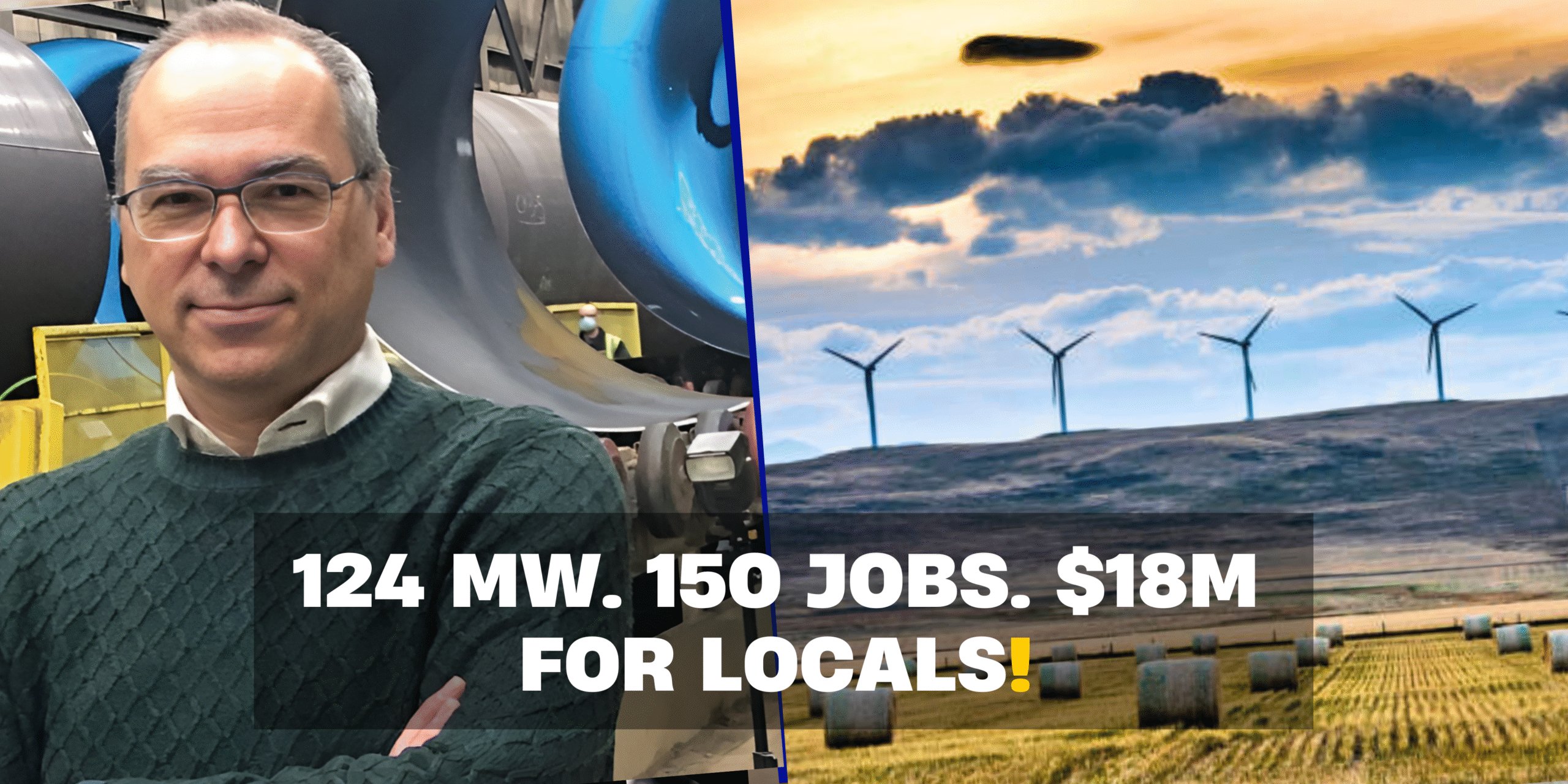
What’s in the fortescue 2.1-gw wind farm project plan?

Andrew Forrest, Image: BBC

The proposal, submitted by Pilbara Energy Generation Private Limited, has been submitted to the Environmental Protection Authority (EPA) and will go through a seven-day public comment period, according to government filings.

Here is a snapshot of the proposed infrastructure:

  • Nearly 200 wind turbines will be installed
  • A 220-kilovolt (kV) transmission line will be installed
  • Multiple substations and switchyards will be added
  • A comprehensive battery energy storage system (BESS) will be installed
  • The project will cover a total area of ​​2,318 hectares (about 5,728 acres) located nearly 40 kilometers southeast of Marble Bar
  • Expects to receive environmental approval in late 2026
  • After 42 months to construct startup around mid-2029

A clean break from fossil fuels

Fortescue’s commitment goes beyond just emissions reductions. It aims to achieve “virtually zero” Scope 1 and 2 emissions by 2030, without the use of any carbon offsets. The company has already made headlines in the green energy world by announcing a 644-megawatt solar project near Port Hedland. It will put it on track to meet renewable energy target of generating 82% of its electricity from renewable sources by 2030.

The project is a model for the world. Led by the executive chairman and billionaire founder Andrew Forrest, Fortescue is aggressively transforming itself from a traditional mining power plant to a leader in green industrialization. Company notes,

2025 Election Australia: clear message against fossil fuel use

Australia renewable energy target 2030
‘Australia renewable energy target 2030’ Image: Wind Farm, WA, Source: iStock

Australia declared war on coal by pushing for renewable energy, which has led to the closure of many of the largest coal plants. This remarkable decision is the only one in the country where coal has been phased out and renewables have been installed. And it has had a significant impact on the country’s election this year. As it is now a net contributor to reducing global warming.

Climate change was a key issue in the election 2025, and a large bloc of voters are giving climate champions a preference at the ballot box. Three-quarters of millennials and Generation Z voters named climate change as a top voting issue in the 2025 election. And in the election, supported the progress already made by the first-term Labor (ALP) government and supported a renewable energy future.

Clean Energy Council chief executive Ken Thornton said the “Albanese government’s re-election provides a continuation of strong and effective policies that are crucial to strengthening new investment in clean energy, which will deliver lower electricity prices for all people.”

What’s next?

This project is not just about powering the mines – it’s about reshaping the future of energy industry, achieving net zero emissions by 2030, 00% renewable electricity grid by 2050, creating massive green jobs, reducing carbon emissions and accelerating the transition to renewable energy. As the global race to decarbonize intensifies, This renewed iron mining company’s wind-powered ambitions could become a blueprint for the global industrial sector.

The ambitious 2.1 gigawatt wind farm proposal marks a turning point in Australia’s clean energy journey, with Fortescue setting a global standard for industrial decarbonization, more than just a mining company turning to renewable energy.

Vestas’ Bold Merger of Polish Blade Factory to Takeover Europe!

Vestas Europe wind power expansion

In a landmark move, Vestas has merged with LM Wind Power’s blade factory in Poland, expanding its production operations across EU. The move will see Vestas take the lead in the continent’s wind energy sector, providing power to onshore turbine manufacturers. The deal is a significant step for Vestas in its push into the European wind energy market.

In a major turnaround in the wind energy sector, The Danish Wind Turbine maker Vestas Wind Systems A/S has signed a game-changing agreement to acquire Danish manufacturer LM Wind Power’s blade factory in Goleniów near Szczecin, Poland, which will further strengthen its EU manufacturing dominance. The facility, which produces blades for Vestas’ state-of-the-art onshore wind turbines, is now a cornerstone of Vestas’ growth strategy that will strengthen its presence in EU’s fastest-growing renewable energy market.

While financial terms are being kept confidential, the strategic value is clear: the acquisition will strengthen Vestas’ ability to meet Europe’s growing demand for clean, sustainable energy. While financial terms are being kept confidential from the company, the strategic value is clear: The acquisition strengthens its’ ability to meet EU’s growing demand for clean, sustainable energy.

Anders Nielsen, Chief Technology and Operations Officer

“The need for EU is greater than ever for safe, affordable and sustainable energy, “We are proud to integrate this advanced facility into our European operations and are grateful for LM Wind Power’s years of collaboration.”

The move also signals a strategic move for LM Wind Power and its parent company, GE Vernova.

Hanif Mashal, CEO of LM Wind Power,

Hanif Mashal, CEO, LM Wind Power

“This proposed transaction is a strategic move for LM Wind Power and GE Vernova, enabling us to reinvest capital in our core EU manufacturing facilities, producing GE Vernova wind products, to streamline our business, and better serve our loyal customer base in the EU. We are grateful for the opportunity to collaborate with Vestas on the proposed transfer of this factory, previously dedicated to their projects, directly into their ownership to meet their needs. We will work closely with Vestas to ensure the smooth completion of the transaction.”

The factory was established in 2009 and expanded in 2017. It will continue to supply blades for onshore wind solutions of the company, featuring the V172-7.2 MW turbine. The transaction is subject to necessary regulatory approvals.

V172-7.2 MW™

V172-7.2 MW™

The V172-7.2 MW™ is a versatile, high-performance solution designed to maximize adaptability and ease of operation in different climates and geographies, while increasing energy production.

The V172-7.2 MW™ turbine is designed for high efficiency in low wind conditions, thanks to its optimized powertrain and power conversion technology, and is ideal for delivering up to 12% higher Annual Energy Production (AEP). With flexible power ratings of 6.5 MW, 6.8 MW, and 7.2 MW respectively, this turbine adapts to different site conditions and its Cooler Top options ensure optimal performance in both hot and cold climates.

Designed with the entire value chain in mind, the V172-7.2 MW™ nacelle provides easy servicing and upgradeability throughout the operational life of the unit, including increased logistics and transportability.

Is this Vestas’ first factory in Poland?

About the Szczecin — is a port city in northwestern Poland that is rapidly becoming a major hub for wind energy production. With its geographical advantage that allows for the development of both onshore and offshore wind power facilities, the city is set to play a key role in achieving Poland’s and Europe’s renewable energy goals. This industrial momentum is already making the city an important link in the European offshore wind supply chain.

As part of its long-term vision to expand offshore wind capacity in EU, the world-renowned the global wind energy company has taken significant steps in Szczecin. At the time, it was planning to establish a state-of-the-art blade factory focused on manufacturing blades for its flagship V236-15.0 MW offshore wind turbine, which is scheduled to start operations in 2026 and is expected to create over 1,000 direct jobs.

This bold acquisition will position Vestas to lead Europe’s wind energy future – in one powerful blade.

Could 10 Environmental Groups’ Lawsuit Overturn Trump Offshore Wind Policy?

10 Environmental Groups' Lawsuit, Trump Offshore Wind Policy

Trump offshore wind Policy — a legal storm is brewing over America’s clean energy future.

Seventeen states, Washington, D.C., and a leading wind industry group have filed a landmark lawsuit against the Trump administration, seeking to overturn a controversial executive order that effectively blocks all new offshore wind energy development on the East and Southeast coasts.

A coalition of ten environmental organizations, including the Arcata-based — Environmental Protection Information Center (EPIC), has filed a legal brief in support of the lawsuit challenging Trump’s policy. They argue that Trump’s offshore wind policy is “arbitrary, unlawful, and politically motivated, designed to favor fossil fuel interests by stifling the growth of clean energy.”

The question is, can the lawsuit really overturn Trump’s offshore wind ban — and what does it mean for the future of renewable energy in the United States?

What is Trump Offshore Wind Policy?

Offshore Wind Lawsuit”
Interior Secretary Doug Burgum

On his first day in office, Donald Trump signed an executive order temporarily halting the sale of offshore wind leases in federal waters and halting approvals, permits, and loans for all wind projects in key coastal states including Florida, Georgia, South Carolina, and North Carolina. While this policy is designed to protect marine ecosystems and coastal economies, but the order leaves wind energy developers hundreds of miles of federal waters. Following this, recently Trump administration halted construction of Empire Wind, a major offshore wind project by Equinor, a Norwegian company in New York, which was building the project to start generating electricity in 2026 and suppose to provide clean electricity to more than 500,000 homes.

The company finalized the federal lease for Empire Wind in March 2017, at the start of President Donald Trump’s first term. BOEM approved the construction and operation plan in February 2024, and construction began that year, but the multibillion-dollar project is stalling midway. Interior Secretary Doug Burgum ordered the Bureau of Ocean Energy Management to halt construction on the fully approved Empire Offshore Wind Farm, the first offshore Wind Farm in New York, aiming to provide clean electricity to 500,000 New York homes.

Empire Offshore Wind project,
Empire Offshore Wind project

Critics say the policy was more about politics, designed to stall the progress of green energy, cast an unspoken doubt on the safety of wind power, and appease fossil fuel allies. This legal battle is a continuation of that.

Groups’ Lawsuit challenge: Who’s behind it?

The lawsuit, initially filed in U.S. District Court in Massachusetts, was led by state attorneys general and supported by The Alliance for Clean Energy New York (ACE NY). Their lawsuit challenges both the validity of the executive order and the federal government’s refusal to process wind power permit applications that they say violate existing environmental and energy laws.

They are now joined by the Natural Resources Defense Council (NRDC), Citizens Campaign for the Environment, Conservation Law Foundation, Environmental Advocates NY (represented by Earthjustice), Environmental Defense Fund, Environmental Protection Information Center, National Wildlife Federation, New York League of Conservation Voters, Sierra Club, and the Southern Environmental Law Center, and other powerful organizations, have filed an amicus curiae (friend of the court) brief to strengthen the case for the immediate lifting of the ban.

Environmental 10 groups argue that the ban is legally unenforceable and environmentally harmful. In a joint petition, they say:

They highlight the hypocrisy of the administration’s claim to protect wildlife from wind projects, while also seeking to undermine federal wildlife protections and fast-track fossil fuel infrastructure, which has far-reaching impacts on ecosystems and the climate.

  • Threatens thousands of green-paying green jobs
  • Threatens Hinder billions and economic development in the Southeast, where more than 100 companies produce components for the wind industry
  • States’ ability to meet emissions-reduction targets
  • Customer access to affordable, clean electricity
  • States like New York, which has invested heavily in offshore wind projects, argue that the ban threatens their energy sovereignty and undermines long-term planning.

As Adrian Esposito of the Citizens Campaign for the Environment says:

Environmental Groups' Sue Trump
citizens campaign for the environment

Will the court overturn trump executive order

  • Legal experts say the case is strong. The plaintiffs argue that Trump’s blanket ban:
  • exceeds the president’s authority
  • violates established permitting laws
  • lacks any scientific or environmental justification

Furthermore, the Biden administration has since rescinded the executive order, yet the permits remain in limbo. The case could provide the legal clarity needed to force the federal government to resume processing wind energy permits. The amicus brief urges the court to grant a preliminary injunction, which would allow the permits to continue until the larger case is resolved.

As Vanessa Fajans-Turner of Environmental Advocates NY says:
The case is about more than permission – it’s about power.

The case represents a rare show of unity among states, industry, and environmentalists at this time – all determined to defend wind power as a critical and growing solution to climate change, economic development, and energy independence.

Julie Tighe, president of the New York League of Conservation Voters, is furious and insists:

Jill Tauber, vice president of litigation for climate and energy at Earth Justice cited.

Wind power plays a critical role in keeping our energy grid reliable and affordable,” Jill Tauber,

Kate Sinding, senior VP of the Conservation Law Foundation, told Daily.

Final Thoughts: Can the Ban Be Overturned?

Yes—this case has the potential to overturn Trump’s offshore wind policy, revive the permitting process, and clear the way for major offshore wind development in U.S. waters.

If it does, it would also set an important precedent. If the court finds that the executive branch cannot arbitrarily block clean energy development without due process or scientific justification, it could protect future climate policy from political interference.

For now, the wind industry—and the planet—are waiting.

EUR 1B KK Wind Solutions Opens Largest Hub in Bengaluru

EUR 1B KK Wind Solutions Opens Largest Hub in Bengaluru

KK Wind Solutions, the 1 billion euro wind energy giant owned by A.P. Moller Holding, has officially inaugurated Asia’s largest wind power generation facility, its website said. Located in Dobbspet, Bengaluru, India, the new wind power plant is a strategic step in KK Wind’s global supply chain expansion that supports its commitment to renewable energy and sustainable growth in South India.

The newly opened facility focus on manufacturing wind turbine control systems and power converters with up to 400 jobs created at the factory and 150 positions in the new shared services office, the site will be one of the biggest clean energy investments in India under the MOOWR scheme.

Briefly about MOOWR (Manufacturing and Other Activities Under Warehouse Regulation), under this scheme, duty on imported goods is suspended in advance and is payable only when the goods are released from the MOOWR unit. Among the benefits is that when the finished goods are released in the Domestic Tariff Area (DTA), duty is payable only on the imported goods, thereby saving costs. With no export obligation, overall, MOOWR provides a simple, cost-effective alternative to traditional duty exemption schemes.

KK Wind Solutions Bengaluru Project at a Glance.

Manufacturing Hub Bengaluru, Image: iStock

Mega Hub Location: Dobbaspet, Bengaluru, India

Space of the factory ( estimated): 24,000 m² total site area , 17,000 m² factory space (14,000 m² manufacturing/logistics, 3,000 m² office)

Job Creation: 400 in the factory, 150 for city office

Production: Wind power converters and control systems

licensed : MOOWR scheme for export

Factory Design: Solar-powered, with EV charging infrastructure

Facility: India’s 2030 renewable energy targets

Sustainability and Design

Sustainability and Design at the Bangalore Wind Power factory
KK Aiming 500 Jobs

Sustainability is a key focus in the development of the site. They believe in renewable energy. The Saturang factory is equipped with solar panels that will generate clean energy and support on-site EV charging stations. To meet international best practices of sustainability, the company’ demonstrates it’s commitment to sustainable wind power generation to the world.

Benefiting from an established industrial ecosystem and robust infrastructure, the facility is strategically located in Dobbspet where it will manufacture key components for wind turbines that will support the growing demand for clean energy technologies in Asia and beyond.

How Bengaluru Emerges India’s Wind Power Factory Hub

How Bengaluru Emerges India's Wind Power Factory Hub
Bengaluru Emerges India’s Wind Power Factory Hub, Image: iStock

The opening of the giant company wind farm in Dobbaspet is a significant moment in deepening cooperation under the Green Strategic Partnership between India and Denmark, it can be said its a strategic alliance that will foster joint innovation, sustainable development and the development of green technologies in both countries.

It needs to double its current installed capacity for wind power within five years to meet its ambitious 2030 renewable energy target of 99 GW, and Dobbaspet is playing a key role in enabling the country to meet this bold energy goal.

Chlinton Arendahl Nielsen

Mauricio Quintana, CEO of KK Citied:

The new wind power factory is more than just a symbol of industrial growth – it is a testament to the shared commitment between Denmark and India towards a sustainable energy future and their relation.

SK Bo Rosenberg, Consul General of Denmark in Bengaluru Citied:

“The expansion of KK underlines the close green strategic partnership between India and Denmark,” “India has made a clear commitment to a green transformation and Danish companies are ready to cooperate in achieving that goal. The new factory and office in Bengaluru – creating over 500 jobs – will further strengthen India’s position as an important hub for clean technology manufacturing.”

As wind power generation accelerates in India, Bengaluru is expected to emerge as a center of excellence, their expertise, innovation and global collaboration – driving the renewable energy transformation.

What KK Wind Solutions‘ Means for Wind Power

India has the capacity to produce 18,000 megawatts worth of turbines annually, not only meeting domestic demand, exporting turbines and blades globally is a major concern of production. This export capacity is underpinning India’s growing reputation as a reliable, cost-effective wind technology hub. But as India’s wind power industry grows stronger, one Achilles heel could slow it down: blade production. But to address these issues, a wind power hub is being built,

KK Wind Solutions is building a strong position in the wind power sector with its strategic and ambitious expansion in India. The company has opened an office in India for the first time and has hired 150 highly skilled employees dedicated to global shared services, supporting a wide range of activities from engineering and production to customer service to meet the rapidly growing demand for wind power solutions in Asia and beyond. Their track record proves that they are successful in their mission. 2024 was a record-breaking year for the company.

The company increased its top-line revenue by 40% to 7.7 billion Danish kroner (over 1 billion euros), a growth that placed them among the top 100 largest companies in Denmark, a significant achievement in the global clean energy sector. And this year they are increasing their ability to provide high-quality service and monitoring solutions in key markets such as the United States. 50% of all wind turbines rotating in the United States are made of the company’s components.

Given this momentum, their entry into India is a very promising development.

A 6.3 Mw Intense Earthquake Jolts Greece — Santorini Windmills Risk?

6.3 Magnitude Earthquake Hits Near Greece

A 6.3 magnitude tremor earthquake hits the Mediterranean Sea early Wednesday, sending tremors across southern Greece. The United States Geological Survey (USGS) said the quake struck at 1:51 a.m. EET, the local time, about 14 miles southeast of Fira and 30 miles from Kasos.

The quake was initially thought to have a magnitude of 6.1, but updated seismic data has adjusted that somewhat. Greece’s Ministry of Climate Crisis and Civil Protection issued an early tsunami warning, urging residents and tourists to “immediately evacuate the coast.

The tremors serve as a chilling reminder of the country’s fragile geography—while there have been few casualties or damage to human life, they have raised concerns about the safety of its historical monuments, particularly the centuries-old windmills.

The tremors were felt in the heart of the country, including Tel Aviv and surrounding areas. The quake was also felt in Egypt. The country’s National Institute of Astronomy and Geophysics said the quake measured 6.4 on the Richter scale, but there were no reports of casualties or property damage.

Greece is prone to earthquakes because the country is located on several fault lines and is prone to occasional tremors.

According to the Seismological Laboratory of the University of Athens, more than 18,400 earthquakes were recorded in the Cyclades archipelago between January 26 and February 13, with the largest number occurring on the tourist island of Santorini.

Santorini’s Windmills: A Symbol of Heritage

A 6.3 magnitude earthquake, Island of Santorini, Greece
A 6.3 magnitude quake, Island of Santorini, Greece, image: iStock

While the world is racing towards wind power, why is Greece different? Santorini is world-famous for its iconic whitewashed windmills, perched on rugged cliffs overlooking the azure sea. The wind is a source of energy and a tourist attraction.

While many visitors are enamored with the rich history and beauty behind these stunning structures, many are unaware of the risks they face.

Wind power is a vital source of modern electricity not only because it is historic in Greece, but also because windmills were used on this location as early as the 14th century, but none of these earliest structures have survived.

The remaining windmills mostly date from the 17th and 18th centuries, once were playing a vital role in milling wheat and barley, driven by the island’s famous northerly winds. At their peak, there were about 70 windmills scattered throughout Santorini, especially near the island’s capital, Fira (Thira).

Greece Earthquake Messages

Recent earthquake a bigger message:

Preserving history means protecting it not only from the hands of time, but also from the forces of the earth.

Calling residents and visitors:

move away from the coast immediately

Santorini Greece 6.0 Earthquake Warning

Santorini is identified as an ongoing earthquake cluster. Seismic data from the National Observatory of Athens (NOA) was released on February 9, stating that more than 1,200 earthquakes with magnitudes of 1.0 to 5.2 occurred between January 25 and February 7, 2025. The report is being continuously updated.

One of the major reason is many windmills have been creatively converted into luxury accommodation and holiday rentals, offering a unique experience for visitors while preserving the beauty of the biosphere.

Many are abandoned and unprotected. They are now vulnerable to weather and earthquakes. Recent earthquakes have raised questions about how well these ancient structures are preserved and can withstand future natural disasters.

Greece is located in one of the most earthquake in Europe, and Santorini’s windmills hold a iconic symbol and imagination that is in dire need of preservation. Not only windmills are the beautiful assets, but they are also a symbol of resilience, a reminder of how people once lived in harmony with nature. But without disaster preparedness, these mills may not be around for future generations.

Greece Wind Energy

A 6.3 magnitude earthquake, Island of Santorini, Greece
Panoramic view of traditional windmills on Mykonos island at sunrise, Cyclades, Greece, image: collected

It is worth noting that wind power is currently a key component of Greece’s efforts to transition to a renewable energy future and reduce its dependence on fossil fuels, with the largest number of wind farms located in Central Greece, followed by the Peloponnese, East Macedonia and Thrace. and wind power projects in Greece are concentrated in certain regions, with Central Greece leading the way with 2.35 GW of electricity generation. Presently, the country generates 10.7 GWh from wind power, or 20.2% of its electricity consumption. According to the IEA Wind TCP, Greece’s total installed wind power capacity in 2024 was 5,355 MW. However, Greece’s wind energy sector is growing rapidly, with an estimated total wind power requirement of 7,000 MW to achieve a 66% RES share in electricity generation by 2030.

6.3 magnitude earthquake Greece
Beautiful sunrise at Little Venice on Mykonos island, Cyclades, Greece

In last words, the 6.3 magnitude earthquake Greece reminds us the historical symbol. With such incredible advances in Greek wind power, it is essential to protect the windmills of the particular area, which have endured centuries of storms, volcanic eruptions, and earthquakes. Whether preserved as museums or reborn as luxury accommodations, these iconic Greek windmills deserve to be preserved.

Eurus Energy Japan Progress with ‘Hajang 5 Wind Park’ in S. Korea

Eurus Energy Japan Builds 'Hajang 5 Wind Park' in South Korea

South Korea Eurus Energy Japan has officially launched construction of the “13.5MW Hajang 5 Wind Park’, the fifth wind park project in South Korea. The wind farm is located in the plateau cities of Taebaek and Samcheok in Gangwon-do Province.

A high- impact wind park of S. Korea

This Wind Park will consist of three Enercon wind turbines, each with a capacity of 4.5 MW, installed at an altitude of approximately 1,080 meters.

Construction began on May 9, 2025, and the power plant is scheduled to be commercially operational in November 2026. Once launched, the wind park is expected to supply clean electricity to nearly of 13,000 South Korean homes and help to reduce carbon dioxide emissions by approximately 20,000 tons annually.

Japan’s Eurus Energy has partnered with Wind EM Energy Co., Ltd., EPC Wind EM Energy Co., Ltd. and Daehan Green Energy Co., Ltd. on the project, which comes as South Korea steps up efforts to achieve a national renewable energy target of 29.2% by 2038.

A future Focused Vision of Eurus

Helping to preserve the global environment by disseminating and expanding clean energy technologies

The corporate vision

Develop with local communities and maintain the trust of society”,

that means — Eurus will continue to work on further expansion of wind power generation and contribute to global environmental conservation and the creation of a sustainable society.

Project Overview

Project Name: Hajang 5 Wind Park

Location: Taebaek & Samcheok, Gangwon-do, South Korea
Developer: Eurus Energy Japan
Capacity: 13.5 MW (3 × 4.5 MW ENERCON turbines)
Construction Start: May 9, 2025
Commercial Operation: November 2026
Homes Powered: ~13,000 average household
CO₂ Reduction: ~20,000 tons annually
Partners: Wind EM Energy Co Ltd, EPC Wind EM Energy Co Ltd, Daehan Green Energy Co Ltd
🇰🇷 National Goal: 29.2% renewable energy by 2038

About Eurus Japan

Eurus is a Japanese company; operating in 14 countries in the world including in the US, UK, Taiwan and other locations globally, it has been said that its a global leader in renewable energy, with a strong track record in wind power development and operations across multiple continents. It is one of the oldest firms, having pioneered the US wind power market in 1987. Eurus has since steadily expanded its global footprint, providing clean energy solutions across Europe, Asia-Pacific, Africa and its home country of Japan.

With a track record of successful projects in countries such as the UK, Italy, Spain and Japan’s first wind farm (built in 1999), Eurus Energy is known for its long-term strategic approach to sustainable development. In recent years, the company has further expanded its reach into the emerging wind power markets of Asia and Africa.

In addition to wind, Eurus Energy is also involved in a variety of renewable energy initiatives, continuously investing in innovative, environmentally responsible power generation technologies.

Eurus’ core mantra is their commitment to long-term value. From the initial site survey to the ongoing operation and maintenance of the power plant, Eurus Energy’s emphasis on sustainability, technological excellence, and community involvement has enabled the company to achieve a wealth of operational efficiencies and gain domestic and global trust.

In the future, Eurus Energy will be dedicated to protecting the global environment and making a positive impact on local communities.

Finally, as the world shifts to cleaner energy, projects like Hajang 5 are moving forward—whirlwind silently over cities and valleys, powering life without polluting the planet with coal or oil. Eurus Energy’s continued investment in South Korea shows how local commitment and global vision can be combined to build a better energy future.

Aspen Floating Wind Project to Spark ‘1,000 Jobs’ in UK

Floating Wind Project Uk

A game-changing floating wind farm in the North Sea is set to create more than 1,000 high-skilled jobs, led by Cerulean Winds and a powerhouse consortium including NOV, Siemens Energy, Bilfinger and Ocean Installers. Cerulean Winds has revealed that its Aspen Wind project, part of a £10.9 billion investment over 50 years, will be the cornerstone of the UK’s renewable energy transformation.

At the heart of it all is the Ardersea Energy Transition Facility – the UK’s first center dedicated to the assembly and operation of floating offshore wind (FLOW). This strategic site will anchor an inland supply chain that will drive long-term growth, sustain investment onshore and position the UK as a world leader in floating wind technology.

The Aspen project is set to interconnect three floating wind farms in the central North Sea, which together set to use 300 turbines and generate up to 3 gigawatts of electricity. By 2028, Aspen is expected to be connected to the UK onshore grid via Aberdeenshire, a major step towards the government’s clean energy targets.

The Ardshear port in the Highlands will act as the wind farm’s assembly and supply hub, while strengthening the UK’s floating offshore wind supply chain. The strategic location is set to create more than 1,000 direct jobs in Scotland and attract significant inward investment, as Cerulean Winds partners with global companies such as Siemens Energy and NOV.

In the Voice of Cerulean Winds

Dan Jackson, the Founding Director, Cerulean Winds

Dan Jackson, founding director of Cerulean Winds, said: “The Aspen project has the potential to not only create thousands of skilled jobs but also billions in investment, helping to further cement the UK’s role as a global leader in renewable energy.”

Aspen project will be the global leader in renewable energy

UK Energy Secretary Michael Shanks is set to visit the port on the 12th May of 2025 of Ardersea to meet the Cerulean Winds team and witness the clean energy revolution. Shanks stressed: “This project is a vital part of Scotland’s rapidly growing renewable energy sector, which will bring good jobs and economic growth to the region as we work towards our clean energy targets by 2030.”

This project will be the game changer for 2030 clean energy targets.

Project Summary – Aspen Wind Project at a Glance

Project Name: Aspen Floating Wind Project
Location: Central North Sea, UK
Total Investment: £10.9 billion over 50 years
Green Jobs Created: 1,000+ (including 100 Apprenticeships)
Lead Developer: Cerulean Winds
Consortium Partners: NOV, Siemens Energy, Bilfinger, Ocean Installers, Haventus
Key Facility: Ardersea Energy Transition Facility (Scotland)
Economic Impact: £4.1 billion Gross Value Added (GVA) to UK Economy
Output Capacity: 1 GW (Aspen) – Part of Cerulean’s 3-site rollout
Milestone Visit: Visited by Energy Minister Michael Shanks on 12 May 2025

About Cerulean Offshore Wind

Aspen Floating Wind to Spark '1,000 Jobs' in UK’s Green Energy Boom
Floating Wind Farm in the North Sea, Image: iStock

Cerulean Winds is the world’s largest floating offshore wind farm, delivering clean electricity to industrial users and is pioneering the future of offshore renewable energy by enabling significant energy export capacity. As a leader in the UK’s offshore renewable grid, we are committed to accelerating the transition to net zero globally.

To that end, they are combining technological innovation with decades of expertise in marine, Deepwater and floating structures, combined with proven capabilities in renewable, offshore operations and industrial-scale delivery. Their repeatable development model is not only reducing reliance on fossil fuels but is also working to create thousands of jobs that will fuel local economies during the energy transition.
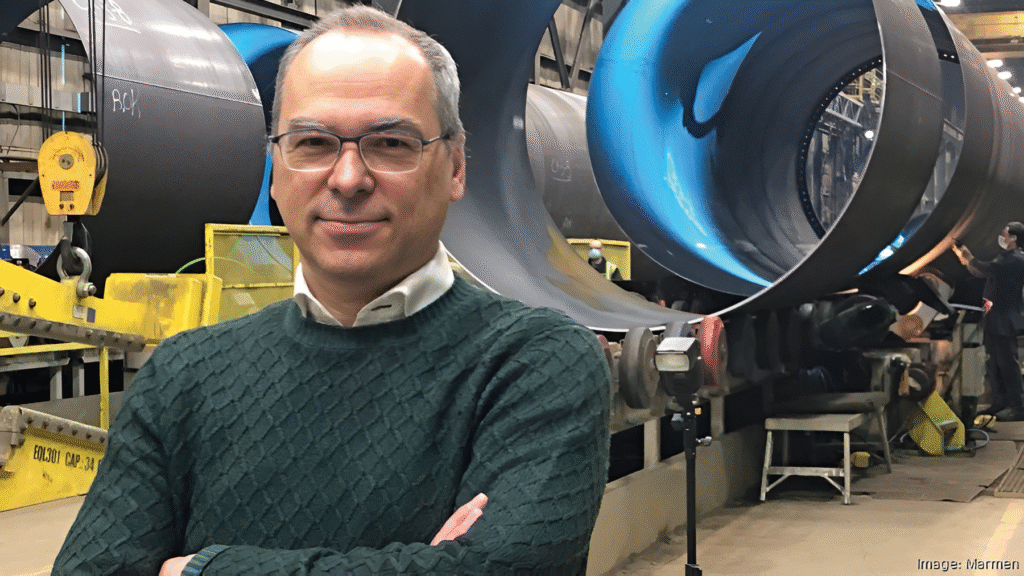
They have strong Tier 1 industry partnerships. With deep experience in project finance, capital structures and infrastructure investment, Cerulean Winds provides scalable, bankable solutions at the forefront of clean energy innovation.

Aspen Floating Wind Farm – Project Significance

The Floating Wind Project Approval, advantages and Scopes

  • The Crown Estate is secured by Scotland under the INTOG (Innovation and Targeted Oil and Gas) Lease Round (March 2023).
  • The 50-year option agreement covers 333 km² in the central North Sea.
  • The first phase of Cerulean Winds’ North Sea Renewables Grid (NSRG) will deliver over 3GW of electricity across three locations: Aspen, Beech and Sidray.

Strategic Policy Alignment, Economic and Workforce Impact

Strategic Policy Alignment, Economic and Workforce Impact

  • The project will be fully aligned with UK and Scottish Government targets including Clean Power 2030 and the North Sea Transition Deal.
  • Expected to create over 1,000 direct jobs, including apprenticeships.
  • Committed to maximizing engagement in the Scottish and UK supply chain from the outset.
  • Supports long-term regional economic growth and clean energy leadership.

Permits, National significance and Consent

  • GoBe consent supports their strategy; EIA submission scheduled for summer 2025.
  • No significant environmental constraints identified to date.
  • Will be a key contributor to the UK Government’s 5GW Floating Offshore Wind (FLOW) target by 2030.
  • Positioned to serve as a global model for scalable, clean industrial power generation

Last word

Lastly, Cerulean Winds, with deep expertise in offshore engineering, strong industry partnerships, and proven financial capabilities, is advancing the future of floating wind project through clean energy solutions that create jobs, boost local economies, and accelerate the global transition to net zero.

2025 Australian Election—Labor Party Clean Energy Mandate Begins

2025 Australian Election, Labor Party Clean Energy Mandate Begins

Australia (WindNewsToday) — 2025 Australian election sent a strong message: a majority of Australians support a rapid transition to renewable energy, particularly offshore wind. The re-election of the Labor Party (ALP) was largely driven by national support for climate action and clean energy progress.

In contrast, the Coalition has been heavily campaigning against Labor’s energy platform, which promises to scrap four of the six offshore wind zones already declared. Despite targeting key seats in New South Wales and launching community campaigns to galvanize opposition, the strategy has not resonated. In fact, the ALP’s two-party preference vote has increased in many of the seats where offshore wind has been hotly contested. The Australian federal election is a stark example of how climate change could change the landscape of voting.

Offshore wind and Clean energy: the irresistible plan

Labor’s first term success has already put Australia on a path to a clean energy future, with 40% of the national electricity grid now powered by renewables and storage. Interestingly, when Australians return to the polls, the grid will be powered by more than two-thirds of renewables – marking an irreversible shift towards cleaner energy.

party’s energy transition plan, offshore wind, is now enjoying stronger political support than ever before. Environmentalists and industry stakeholders are urging the government to capitalize on its renewed mandate by fast-tracking offshore wind development and maintaining the pace of regulatory and infrastructure support.

‘Labor is the party of opportunity’

Today The PRIME MINISTER, ANTHONY ALBANESE talked to the SKY NEWS for first after the winning and started his conversation about his party as a party of opportunity. He sees the challenge of seizing the economic transformation opportunities that come from the National Climate Agreement, which he says is part of the deal. He says it is a project that we have not backed down from, it is a project that we have relied on. So, the project in Newcastle, Tomago, the Hunter’s largest employer, the Rio Tinto aluminum smelter, and so their conversion to clean energy, which will be so important with the strong capacity there

And he calls on the community that the campaign pushed the offshore wind project further offshore to come along and see a good environmental outcome from offshore wind power.

2025 Australian Election: Nuclear rejects, climate voters rise

This 2025 election was a vote for green, clean and renewable energy as the Coalition’s support for nuclear power has failed to gain traction. Instead, it has proven politically toxic – particularly among women and undecided voters. Meanwhile, despite ongoing cost-of-living pressures, climate concern remains a top-level issue for much of the population.

And young voters, whom we refer to as Generation Z (Gen Z) have played a key role. Three-quarters of Millennials and Z voters ranked climate change among their top voting issues. This climate-conscious voting bloc has become the largest demographic group in Australian politics and is shaping the country’s political landscape with increasing influence.

Climate-friendly independent candidates performed incredibly in the election, where they increased their primary vote by 3.8% in contested seats, continuing the trend from the 2022 election. Incumbent independents retained their inner-city strongholds, suggesting a long-term shift in voter behavior. Meanwhile, the Australian Greens are expected to hold onto the balance of power in the Senate – a strategic advantage that could enable the ALP to pass strong climate legislation in its second term.

Labor Party: Climate action is a mandate

The ALP now has a 17-point lead over the Coalition as the party is most trusted to “tack on climate change”. For Labor voters, climate change was one of the top two election issues, further reinforcing that environmental leadership is not just a marginal concern – it is a central mandate.

pro-renewable energy community group Good for the Gong

The re-elected Labor government is under increasing pressure to accelerate the development of Australia’s offshore wind industry, following the election result, which saw public support for the country’s massive renewable energy transition. The message from voters was clear. Sophie Walter, a spokeswoman for the pro-renewable energy community group Good for the Gong, said Australians had shown strong support for offshore wind.

“Now that the election is over, we will be pushing the government to move quickly,” she said, “but also to ensure that these projects are developed in a way that is sustainable.”

The election is over, we will be pushing the government to move

Ty Christopher, director of the Energy Futures Network at the University of Wollongong, welcomed the continuity brought by the Labor Party’s re-election, saying it provided much-needed certainty for renewable energy investors. While he acknowledged that there were legitimate concerns about the technology and environmental impact of offshore wind, he stressed that investor confidence depended on policy stability.

Ty Christopher, Photo: LinkedIn

All investors want certainty,”

Christopher said, comparing the situation in the US under the Trump administration to what he described as a period of instability and uncertainty in the renewables sector.

“We have to acknowledge that the elephant in the room here is that Trump’s behavior in the US has created so much instability and uncertainty that it has scared a lot of global capital away from the US,” he said.

Christopher noted that this shift in investor sentiment could present a major opportunity for Australia. “What a great thing for Australia, for that global capital to find a home here and help us decarbonize our lives, decarbonize our industry and become a global powerhouse in renewable energy.”

Lastly, the 2025 election was not just a policy contest – it was a national referendum on climate action. Australians voted decisively for a future driven by clean energy, offshore wind and environmental leadership. With the political winds at their back, the ALP and its climate allies now have both the opportunity and the responsibility to accelerate clean energy transition of the country .

Bermuda Calls Procurement For ‘First Offshore Wind Farm’

Bermuda Calls Procurement For 'first Offshore Wind Farm'

In a groundbreaking move towards reducing reliance on fossil fuels and moving towards sustainable energy, Bermuda’s Regulatory Authority (RA) has officially launched the procurement process for the island’s first offshore wind farm — a historic milestone

The RA is working to secure up to 120 megawatts (MW) of renewable energy from turbines located off Bermuda’s north coast. The initial phase will start with an installed capacity of 60 MW and is expected to expand to 120 MW over time. The project has been identified as a preferred location approximately 9 kilometers north of St. George’s Island, in approximately 15 meters of water depth, with average wind speeds of 7.8 meters per second at an elevation of 100 meters.

International call for developers to build offshore wind projects

The RA is now inviting developers from around the world to express their interest in building and operating this large-scale renewable energy project. According to the RA statement:

RA’s Head of Regulation, Nigel Burgess, added:

A recent pre-feasibility study found the proposed site to be technically feasible, economically viable, and free of major environmental concerns.

Offshore wind farm construction process

In three phases, the procurement of the project will be conducted.

  • The first is an Expression of Interest (EOI)
  • The second is a Request for Qualifications (RFQ)
  • and an Invitation to Tender (ITT)

These three categorical phases will be conducted where interested developers will first be required to submit an EOI that includes a summary of their experience, technical capabilities, and a non-binding offtake price. The rest will be completed in phases.

Support Studies and Site Data for Investors

To support potential bidders, the RA will conduct additional technical studies, two of which are

  • Seabed Assessment and
  • Aerometocean Survey (to analyse combined meteorological and oceanographic conditions)

These studies will help bidders to confidently assess the opportunity and ensure the long-term viability of the project.

Offshore wind key to Bermuda’s 2030 climate goals

The initiative is aligned with Bermuda’s Integrated Resource Plan (IRP), which aims to more than halve carbon dioxide emissions by 2030 through investments in solar, offshore wind power, and biomass. Offshore wind is listed as a “key component” of the preferred energy portfolio, with operations expected to begin by 2028.

The IRP calls for the immediate procurement of 20 megawatts of solar power generation and 60 megawatts of offshore wind.

How to Participate in the Project

Interested developers can formally participate in the project by submitting the EOI and supporting documents on the website ra.bm/offshorewindfarm.
Note: Only parties who submit an EOI will be eligible to proceed to the next stage of the procurement process.

Offshore wind construction the key of Bermuda’s 2030 Energy Goal

Bermuda is a self-sufficient country with domestically produced energy but is largely dominated by imported fossil fuels and diesel, but the island is actively transitioning towards renewable energy sources, aiming for a goal of achieving 85% renewable energy generation by 2035, including massive offshore wind farm projects.

The initiative aligns with Bermuda’s Integrated Resource Plan (IRP), which aims to cut carbon dioxide emissions by more than half by 2030, with accounting for offshore wind listed as a “major component” of the preferred energy portfolio, with operations potentially supposed to start in 2028.

The IRP also calls for the immediate procurement of 20 MW in solar generation and 60 MW in offshore wind.

PD Ports Teesport Offshore Gateway Aims £200m Offshore Wind Hub

PD Ports Teesport Offshore Gateway, Source: PD Ports

Quick Project Glimpse

  • Offshore Wind Location: Teesport, River Tees, UK
  • Site Size: 180 acres
  • Investment: Approx. £200 million
  • Access: 1 km deepwater berth, open access to the North Sea
  • Status: Early planning stage, subject to changes to existing consents

PD Engages Industry Partners

In the Words of PD Ports

France Calze

France Calze, CEO of PD Ports, stressed the potential of the project not only for the industry but also for the community, saying:

Project Timeline (Estimated)

Concept Development—Completed
Planning Variation Submission—In Progress
Stakeholder Engagement—Ongoing
Funding & Partnerships—Exploring
Assigned tasks—manufacturing, logistics and Supply chain
Construction Starting Time—TBD
Operational Launching Time—TBD
Milestone—Building a UK Offshore Wind Hub

The Core Collaboration and Significance

  • PD Ports are actively involved with the project and looking for
  • OEMs (Original Equipment Manufacturers)
  • Wind farm developers
  • UK Government departments
  • Industry experts and investors

What does this mean for the UK’s clean energy targets?

  • The project is not just an infrastructure project—it is set to represent a significant step towards achieving the UK’s offshore wind targets. It is set to:
  • Accelerate clean energy generation
  • Bring together all the technologies for wind farms
  • Attract global investment
  • Increase local employment and skills training
  • Strengthen the supply chain for the UK’s growing offshore wind sector, and if successful, it will have a tremendous effect on the clean energy goal of the UK, which is 90% electricity generation from renewable and net zero emission.
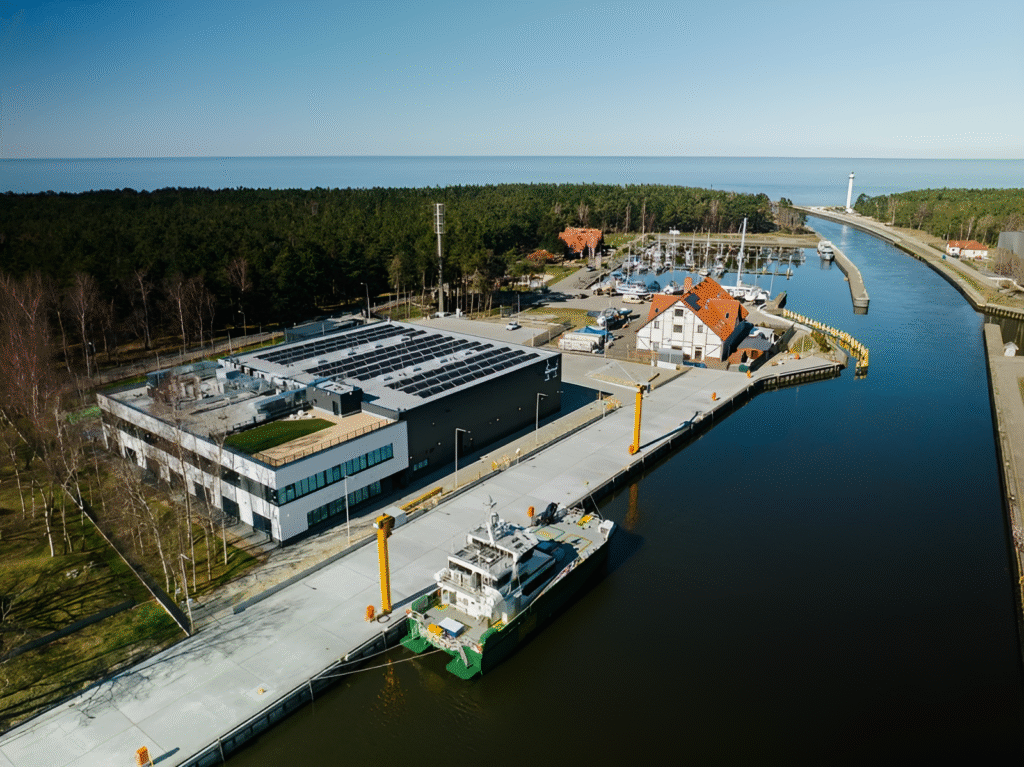
As the project journey progresses, all eyes will be on Teesport—and its role in shaping a sustainable future.

Wind turbine blade Breaks in Akita, Japan – one dead

A 40-meter-long blade has tragically fallen from a turbine in Akita Prefecture, northern Japan, killing an elderly man. Metal fatigue and regular maintenance and inspection are the issues.

Turbine Blade Breaks in Akita

One Dead


Police received a call at around 10:30 a.m. on Friday, May 2, reporting that a turbine blade had exploded in a park in Akita City. The deceased, 81-year-old Takashi Shishido, was found lying on the ground near the broken blade at Araya Seaside Park in the city’s Araya district.

Emergency services were notified at around 10:20 a.m. and Shishido was taken to a nearby hospital with a head injury.. He was pronounced dead about an hour later. Authorities are currently investigating whether the falling blade was a direct cause of his death.

The Japan Meteorological Agency (JMA) had issued a severe wind warning that morning. The highest instantaneous wind speed was recorded at 7:52 a.m., with forecasts predicting that strong winds will continue in northeastern Japan until the evening.

Turbine Breakdown, Maintenance and inspections are concern

According to Akita’s Clean Energy Industry Promotion Division, the turbine involved in the incident was installed by a Tokyo-based company, Sakura Furiyoku. The turbine is located in a city-run park along the Sea of ​​Japan that features walking paths and rest pavilions. Following the incident, police restricted access to the park via the road.

This is not the first incident in the region. In December 2010, one of the three blades of a turbine at the same location fell off, although no injuries were reported. A wind energy expert in Akita suggested that the blade failure could have been caused by metal fatigue and highlighted the importance of regular maintenance and inspection. ” and If inspections had been carried out the case, this could have been prevented. but If public concern increases, it could have a negative impact on the wind energy industry,” the expert warned.
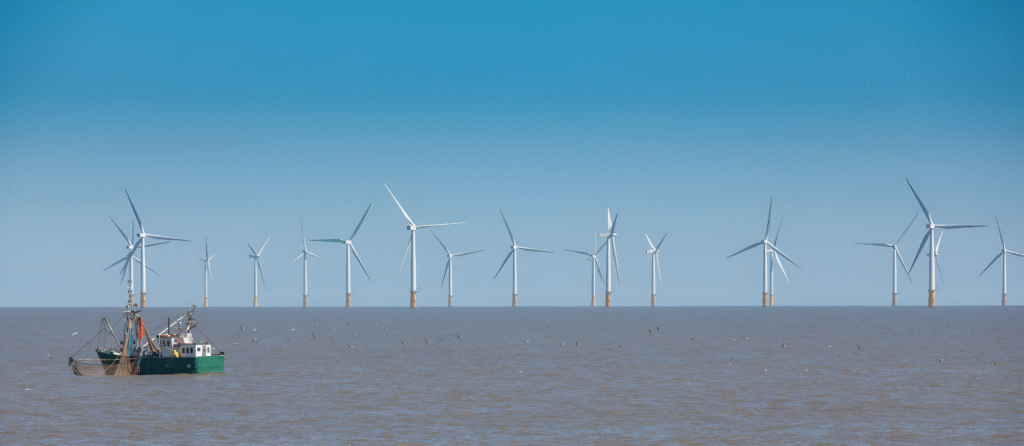
Sakura Furiyoku Japan is a Tokyo-based company specializing in wind energy development and operation. The company is headquartered in Chiyoda Ward, Tokyo. Detailed information about Sakura Furiyoku’s extensive operations is limited to the public, and the tragic incident has raised concerns about maintenance practices and safety protocols at its wind power facilities.