Introduction: Why Floating Offshore Wind Matters Now
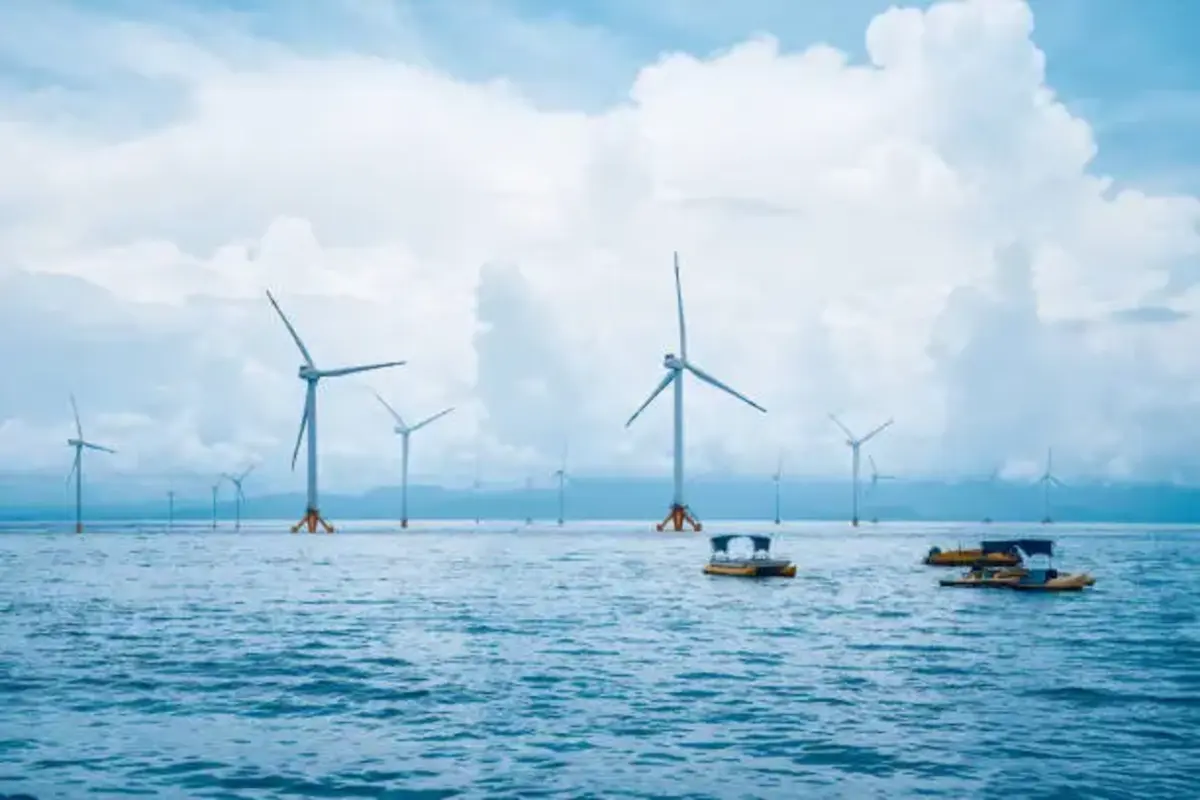
Floating offshore wind energy is rapidly emerging as one of the most important technologies shaping the future of global renewable energy. As countries push offshore wind projects farther from shore and into deeper waters, traditional fixed-bottom foundations are reaching their physical and economic limits.
Unlike conventional offshore wind farms, floating offshore wind turbines are mounted on buoyant platforms anchored to the seabed with mooring systems. This allows wind energy generation in deep-water locations that were previously inaccessible, where wind speeds are stronger, more consistent, and less constrained by coastal geography.
As explained in our Offshore Wind Energy Explained: Technology, Projects, and Global Trends guide, foundation technology ultimately determines where offshore wind can be built. Floating platforms remove depth limitations and unlock vast new wind resources across the globe.
In this article, we explain what floating offshore wind energy is, how floating wind turbines work, how it compares to fixed-bottom offshore wind, where major projects are being developed, and why floating wind is becoming essential to the future of global offshore wind energy.
What Is Floating Offshore Wind Energy?
Floating offshore wind energy is a method of generating electricity at sea using wind turbines mounted on floating platforms rather than foundations fixed directly to the seabed. These platforms are stabilized using mooring lines and anchors, allowing turbines to operate in water depths ranging from 60 meters to well over 1,000 meters.
This technology addresses a fundamental limitation of offshore wind development. Fixed-bottom turbines become technically challenging and increasingly expensive beyond depths of roughly 50–60 meters. Floating offshore wind platforms overcome this constraint, enabling deployment in deep-water regions farther from shore.
According to the International Energy Agency (IEA), floating offshore wind will be critical for expanding offshore wind capacity in countries with steep continental shelves, including Japan, South Korea, Norway, and the U.S. West Coast.
How Floating Wind Turbines Work
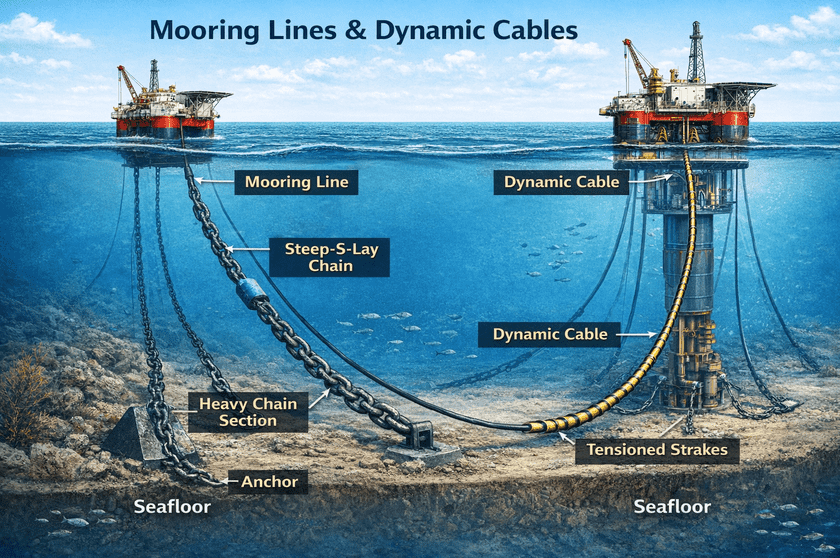
Above the waterline, floating wind turbines operate much like conventional offshore wind turbines. The key differences lie below the surface, where advanced marine engineering ensures stability and durability.
Key Components of Floating Offshore Wind Systems
- Floating platform (steel or concrete foundation)
- Wind turbine tower, nacelle, and blades
- Mooring systems (chains, ropes, anchors)
- Dynamic export cables
- Offshore substation or direct grid connection
The platform stays stable through ballast systems and mooring tension, enabling turbines to operate in severe offshore conditions. Together, these components form an integrated system designed to balance stability, power generation, and long-term durability at sea.
How Floating Offshore Wind Farms Are Developed
The development of a floating offshore wind farm follows a structured process combining offshore engineering with experience from fixed-bottom wind and offshore oil and gas industries.
Step-by-step development includes:
- Site selection: Evaluate wind resources, water depth, wave conditions, and seabed characteristics.
- Environmental and regulatory studies: Assess marine ecosystems, fisheries, and shipping routes.
- Design selection: Choose a floating platform design based on local conditions.
- Onshore assembly: Turbines are assembled onshore and mounted onto platforms.
- Tow-out and installation: Platforms are towed to the site and anchored.
- Grid connection: Dynamic cables connect turbines to offshore substations and the onshore grid.
- Operation & monitoring: Digital systems track performance and structural health.
Unlike fixed-bottom turbines, floating units are often towed into position, reducing reliance on heavy-lift installation vessels and allowing more work to occur in controlled port environments.
Types of Floating Offshore Wind Platforms
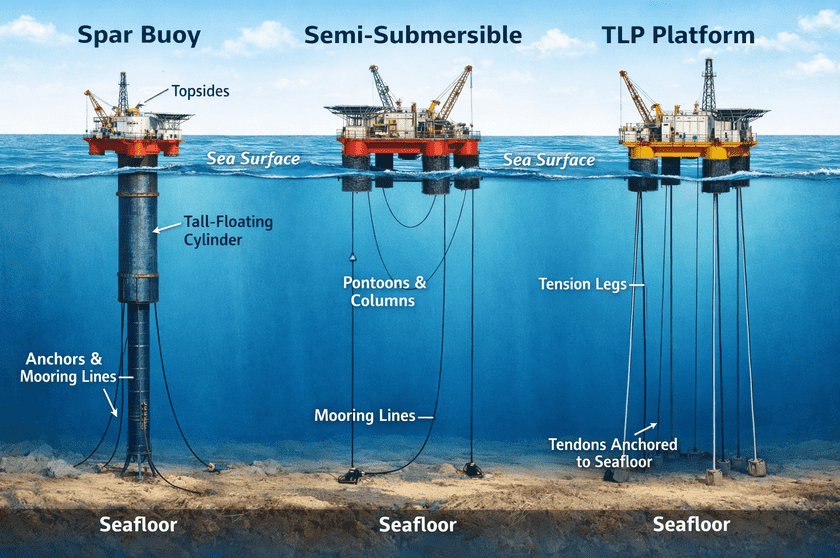
There are three primary floating wind foundation designs currently in development and deployment:
Spar-Buoy Platforms
- Deep vertical cylinder
- Stability from ballast weight
- Requires deep ports for assembly
Semi-Submersible Platforms
- Multiple columns connected by pontoons
- Easier port integration
- Most commonly deployed design today
Tension Leg Platforms (TLP)
- Anchored by vertical tendons
- Minimal platform motion
- Higher engineering complexity
Floating Offshore Wind vs Fixed-Bottom Wind
Floating and fixed-bottom offshore wind farms differ significantly in terms of foundation design, cost structure, and geographic reach.
| Factor | Floating Offshore Wind | Fixed-Bottom Offshore Wind |
|---|---|---|
| Water Depth | 60–1,000+ meters | Up to ~50–60 meters |
| Cost (Current) | Higher | Lower |
| Technology Maturity | Emerging | Commercially mature |
| Expansion Potential | Very high | Limited by the seabed |
| Geographic Reach | Deep-water regions worldwide | Shallow continental shelves |
As offshore wind energy expands globally, floating wind is expected to complement rather than replace fixed-bottom projects.
Global Floating Offshore Wind Projects
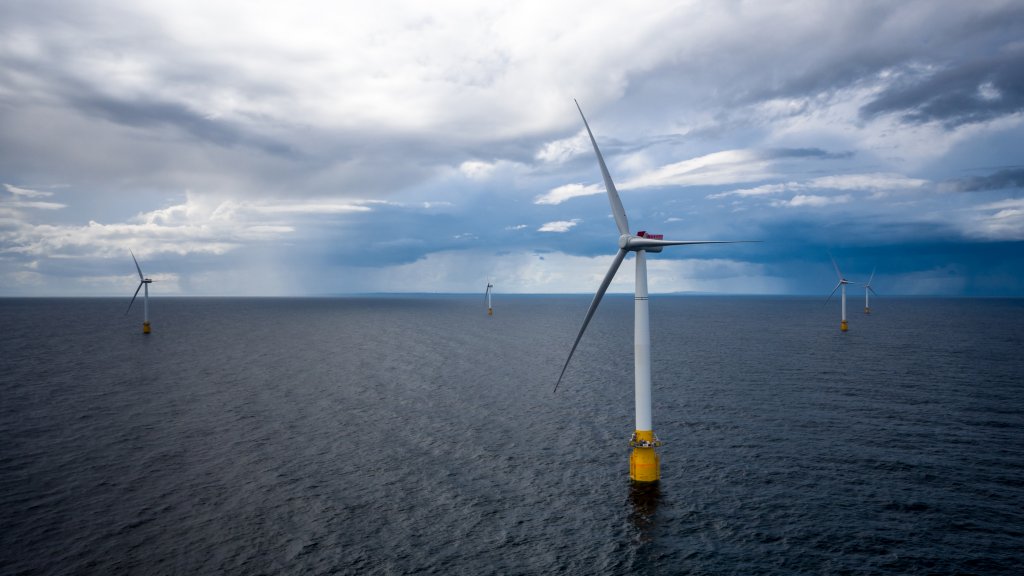
Floating offshore wind is transitioning from demonstration projects to commercial-scale developments worldwide.
Notable Projects:
- Hywind Scotland (UK/Norway)
- WindFloat Atlantic (Portugal)
- Kincardine Offshore Wind Farm (UK)
- U.S. West Coast lease areas (California, Oregon)
These projects demonstrate the technical viability of floating platforms under real-world ocean conditions.
Floating Offshore Wind in the United States
The United States is one of the largest long-term markets for floating offshore wind, particularly along the Pacific coastline.
Key Drivers of U.S. Floating Wind Growth
- Deep coastal waters unsuitable for fixed-bottom turbines
- Strong offshore wind resources
- State-level clean energy mandates
- Federal offshore leasing programs
According to the U.S. Department of Energy (DOE), floating offshore wind is essential for unlocking wind resources along the U.S. West Coast, where water depths increase rapidly near the shore.
Costs and Economics of Floating Wind Energy
Cost remains the primary barrier to large-scale floating offshore wind deployment today. Floating wind projects are currently more expensive than fixed-bottom offshore wind due to:
- Limited supply chain scale
- Specialized mooring and platform systems
- Early-stage manufacturing costs
However, research from the National Renewable Energy Laboratory (NREL) indicates that floating offshore wind costs are expected to decline significantly as turbine sizes increase, manufacturing scales up, and standardized platform designs are adopted. Industry projections suggest cost competitiveness within the next decade.
Environmental and Grid Considerations
Floating offshore wind offers several environmental advantages compared to traditional offshore installations:
- Reduced seabed disturbance
- Ability to site projects farther from shore
- Lower visual impact for coastal communities
Grid integration remains a challenge, requiring advanced offshore transmission planning, dynamic cables, and upgraded onshore infrastructure.
Future Outlook for Floating Offshore Wind
Floating offshore wind represents more than a technological upgrade—it is a geographic expansion of where clean energy can be deployed.
Key trends shaping the future include:
- Larger 15–20 MW floating wind turbines
- AI-based turbine monitoring
- Hybrid wind + energy storage systems
- International collaboration on standards
Floating offshore wind is widely viewed as the next frontier of offshore wind development, creating long-term opportunities across global clean energy markets.
Frequently Asked Questions
What is floating offshore wind energy?
Floating offshore wind uses turbines mounted on floating platforms to generate electricity in deep ocean waters.
Is floating offshore wind commercially viable?
Yes, several projects are already operational, with many large-scale developments planned.
Why is floating wind important for the U.S.?
Most West Coast offshore wind resources are located in deep water unsuitable for fixed-bottom foundations.
Sources:
International Energy Agency (IEA)
U.S. Department of Energy (DOE)
National Renewable Energy Laboratory (NREL)

Ismot Jerin is the founder and Editor-in-Chief of WindNewsToday, an independent publication covering offshore wind, renewable energy policy, and clean power markets with an analytical focus on the United States and global energy transition.