A quarter century of offshore vision: how the UK’s renewables story began
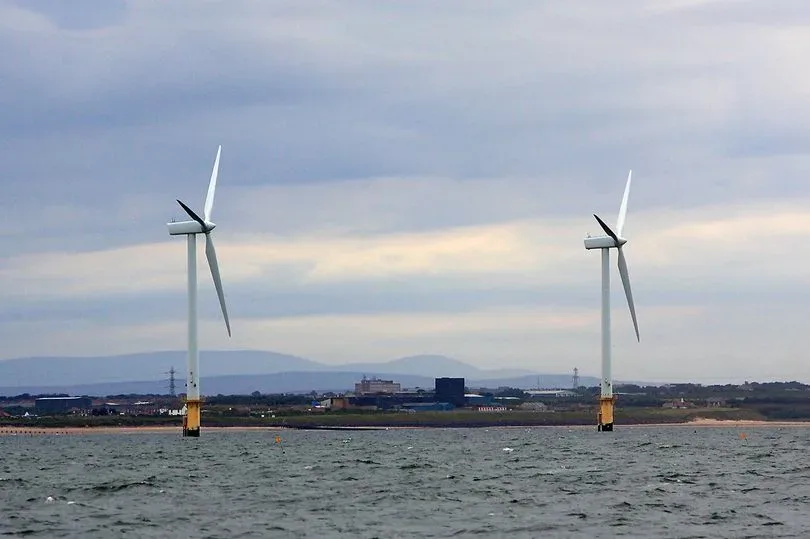
The UK is marking a quiet but significant milestone this year: 25 years since the Blyth Offshore Wind Farm first began operating off the coast of Northumberland. What started in 2000 with just two experimental turbines has since grown into one of the world’s biggest renewable energy success stories, tracing back to the early days of offshore wind energy. While offshore wind first took shape in Denmark, it is the UK that has turned the technology into a global industry leader.
When those first turbines were installed at Blyth, large-scale offshore wind was still an open question. Engineers and policymakers were only beginning to explore whether Britain’s shallow coastal waters and powerful North Sea winds could support a reliable new source of energy. There were no guarantees about performance, durability, or whether turbines could survive the harsh marine environment over decades.
A quarter of a century later, those early uncertainties feel distant, as the UK’s offshore wind sector now leads the world in installed capacity and large-scale project development, with new mega-projects continuing to reshape its energy system. Just as importantly, the offshore wind sector has helped revive coastal economies, build a globally respected supply chain, and position Britain at the forefront of clean-energy innovation.
The Blyth anniversary is more than a historical footnote. It is a reminder that the UK’s offshore wind leadership began as a modest experiment—and grew into a national industry that continues to redefine how the country powers its future.
The UK’s Renewable Transformation: A Story of Growth and Grit
The story begins in 1993 with the Blyth Harbour Wind Farm, the UK’s first onshore wind farm with nine turbines of 0.3 MW (2.7 MW total). Then, in December 2000, this UK offshore wind project was commissioned near Blyth, with two2 MW Vestas turbines (rotor diameter 66 m), built on monolith foundations, approximately 1–2 km offshore, in 6–10 m water depth.
At the time, these turbines were among the largest offshore in the world. This was a defining early moment for offshore wind worldwide. Today, offshore wind alone supplies electricity to over 11 million homes, and there are 45 operational offshore wind farms in the country.
This transition to offshore wind energy in the UK didn’t happen overnight. It grew out of:
- Strategic government funding
- World-class engineering expertise
- A skilled and evolving maritime workforce
- A consistent policy vision toward 2030 and beyond
- Ports like Blyth are becoming innovation hubs
The UK’s rapid progress turned offshore wind from a niche experiment into the backbone of Britain’s clean energy future. If we are talking about the significance of the farm, the Engineers, policymakers, and energy companies relied on Blyth to answer key questions that:
- How will turbines withstand storm-force offshore conditions?
- Can the UK build a supply chain ready for the offshore era?
- Will costs fall if technology scales?
- Can this offshore wind energy UK support long-term economic growth?
The answers, proven over 25 years of the Blyth wind farm anniversary, were all yes.
This single site helped shape:
✔ Turbine design standards
✔ Marine installation techniques
✔ Offshore cabling innovations
✔ Environmental assessment frameworks
✔ The UK’s early workforce training
The energy minister expressed his gratitude on the Blyth wind farm anniversary and noted the message that a quarter of a century after the first turbines started spinning, the UK is once again at the forefront of generating clean electricity at home. He stressed that offshore wind is central to Britain’s 2030 mission, which will help the country wean itself off the unpredictable fossil fuel market, reduce energy bills, and create a workforce that is expected to reach almost 100,000 jobs.
A senior manager from Van Oord emphasized that the inter-array cable work required a partner with deep offshore experience, and the Port of Blyth met every expectation. After supporting thousands of components across both onshore and offshore projects, Blyth’s capabilities made it the natural choice for such a complex operation.
The Sofia project lead explained why this is one of the unique UK offshore wind projects. He noted that Blyth provides a rare opportunity to test new offshore technologies designed to cut development costs and unlock previously untapped wind resources off the UK coast. Similarly, The Crown Estate brought into focus that Blyth’s test site opens the door for technologies that will define the next generation of offshore wind growth, helping the UK capture new areas of economic and energy potential.

Jane Cooper, The Renewable UK’s deputy chief, drew attention to the economic growth. She expressed that the UK’s offshore wind growth has reshaped local economies, strengthened energy resilience, and positioned the country as a global leader. She said the transformation over one generation shows how the UK turned offshore wind from a prototype into a core part of its future energy system.
Again, Julia Rose, a senior director at The Crown Estate, pointed out that 25 years of continuous progress demonstrate the power of long-term collaboration, creating an environment where investors, developers, and innovators can thrive. She noted that the UK now hosts 45 operational wind farms and has an astonishing 95 GW pipeline. Lastly.

Ed Daniels, The Venterra Group CEO, described the last 25 years of these UK offshore wind projects as a triumph of UK engineering, saying a world-class supply chain has brought tens of thousands of skilled jobs, revitalised coastal regions, and sparked innovation across the North East.
Blyth became the “laboratory” that informed multi-gigawatt projects like Dogger Bank, Hornsea, Sofia, and more.
How Blyth enabled a new offshore era
The original turbines represented more than just an energy project – they symbolised confidence in the UK’s ability to engineer the future. What makes Blyth exceptional is its long-term value:
- A living lab for innovation
Modern floating wind concepts, larger turbine blades, advanced cables, and installation vessels – all have benefited from the testing and insights gathered at Blyth.
- The birthplace of the UK’s supply chain
Companies such as Van Oord, RWE, Ventera Group, and hundreds of subcontractors build their primary offshore capacity here.
- Blyth Port: From local port to global offshore hub
Handling thousands of offshore components, the port has become a logistics powerhouse that now supports major European projects.
- Investor confidence
Blyth has proven to investors that offshore wind can be a reliable, sustainable, and profitable technology.
Wind farms typically have a lifespan of around 20-25 years, and the Blyth Offshore Wind Farm is nearing the end of its life. This means the UK is now ready to use one of the turbines for a new training facility being built in Blyth by the port’s training arm, Port Training Services.
Analyze the Blyth Offshore Wind Farm 25th Anniversary
From all the data and analysis of the wind farms above the UK offshore wind history, I would say that the story of Blyth is not about the size of the turbines but about the ambition of the dream. The UK has succeeded in the global wind energy competition in renewable energy deployment because it made offshore wind a national mission long before other countries saw the potential. From analyzing the industry’s evolution,
Blyth’s achievement is setting the tone for two decades of engineering progress, market stability, and investor confidence. Today, while offshore wind projects face challenges unimaginable in developed countries, the UK is celebrating Blyth Offshore Wind Farm’s 25 years of glorious journey.
It is clear to me that the Blyth wind farm anniversary is a template – a combination of demonstrably concrete policy, technological courage, and local expertise – that lies at the heart of a whole new economic sector. Blyth has created millions of green jobs and connected millions of UK homes to supply clean electricity.
Its journey shows that the UK offshore wind projects’ leadership today did not emerge from a single mega-project; it grew from a series of small steps.
As we move into the next phase – floating wind, deep water, and even larger turbines – Blyth reminds us that innovation begins with experimentation, iteration, and patience. To me, that is the real legacy.

Ismot Jerin is the founder and Editor-in-Chief of WindNewsToday, an independent publication covering offshore wind, renewable energy policy, and clean power markets with an analytical focus on the United States and global energy transition.