WindNewsToday

China Unveils World’s First Offshore Wind-Powered Underwater Data Center

China Offshore Wind Data Center Unveiled as World’s First

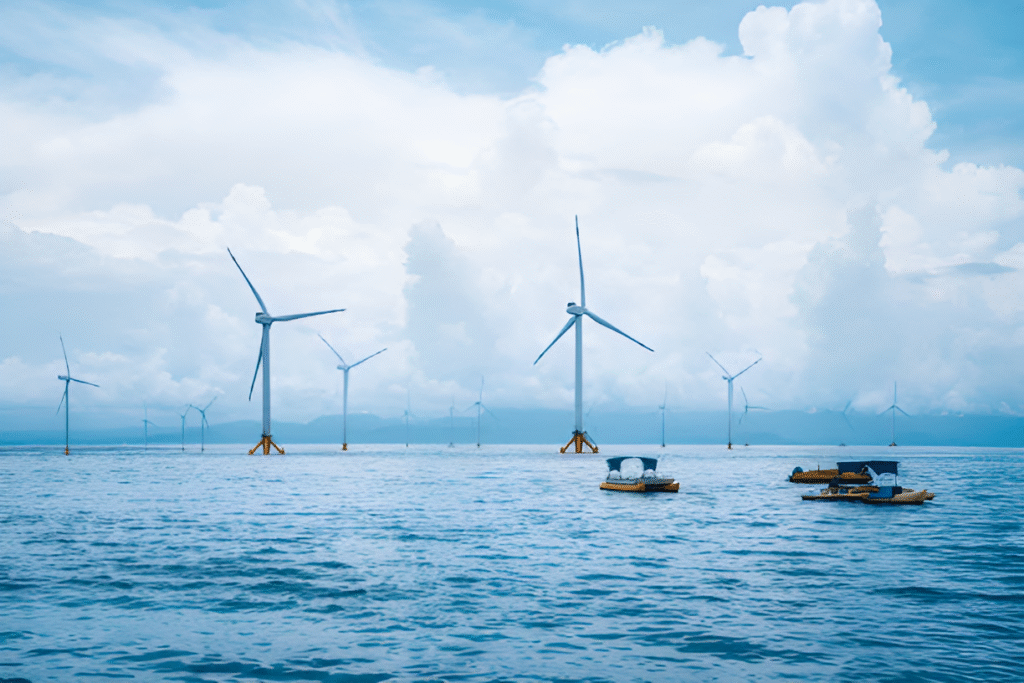
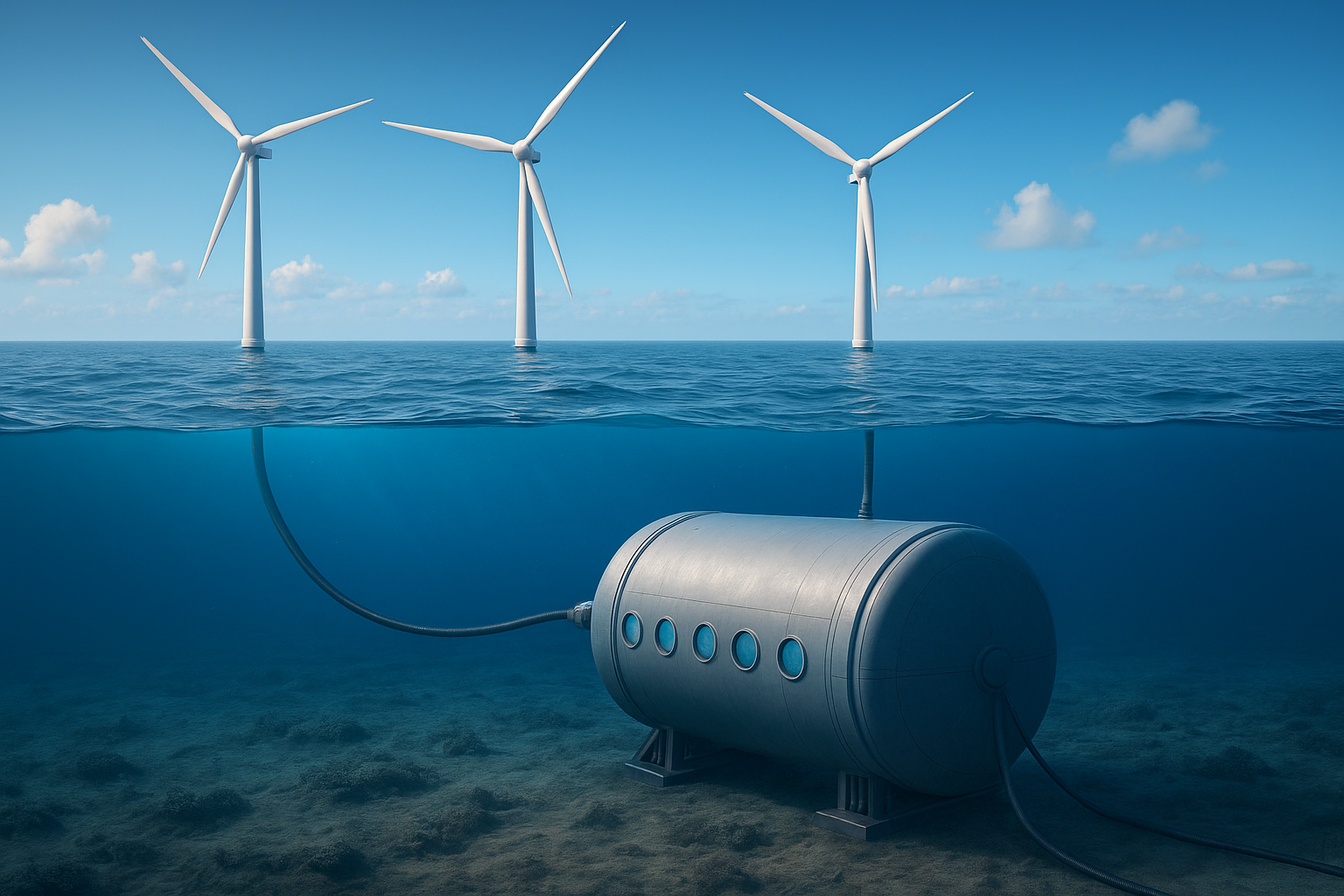
China is setting a global benchmark by launching the world’s first offshore wind-powered underwater data center (UDC) in Shanghai’s Lingang Special Area. Developed by HiCloud, the 500 MW subsea project combines renewable energy and digital innovation, redefining sustainable cloud computing. This milestone highlights the potential for AI, data infrastructure, and offshore wind energy to converge for a low-carbon digital future.

Learn more about wind energy and AI in wind turbines to see how technology and clean energy intersect.

China Offshore Wind Data Center Sets a Global Benchmark

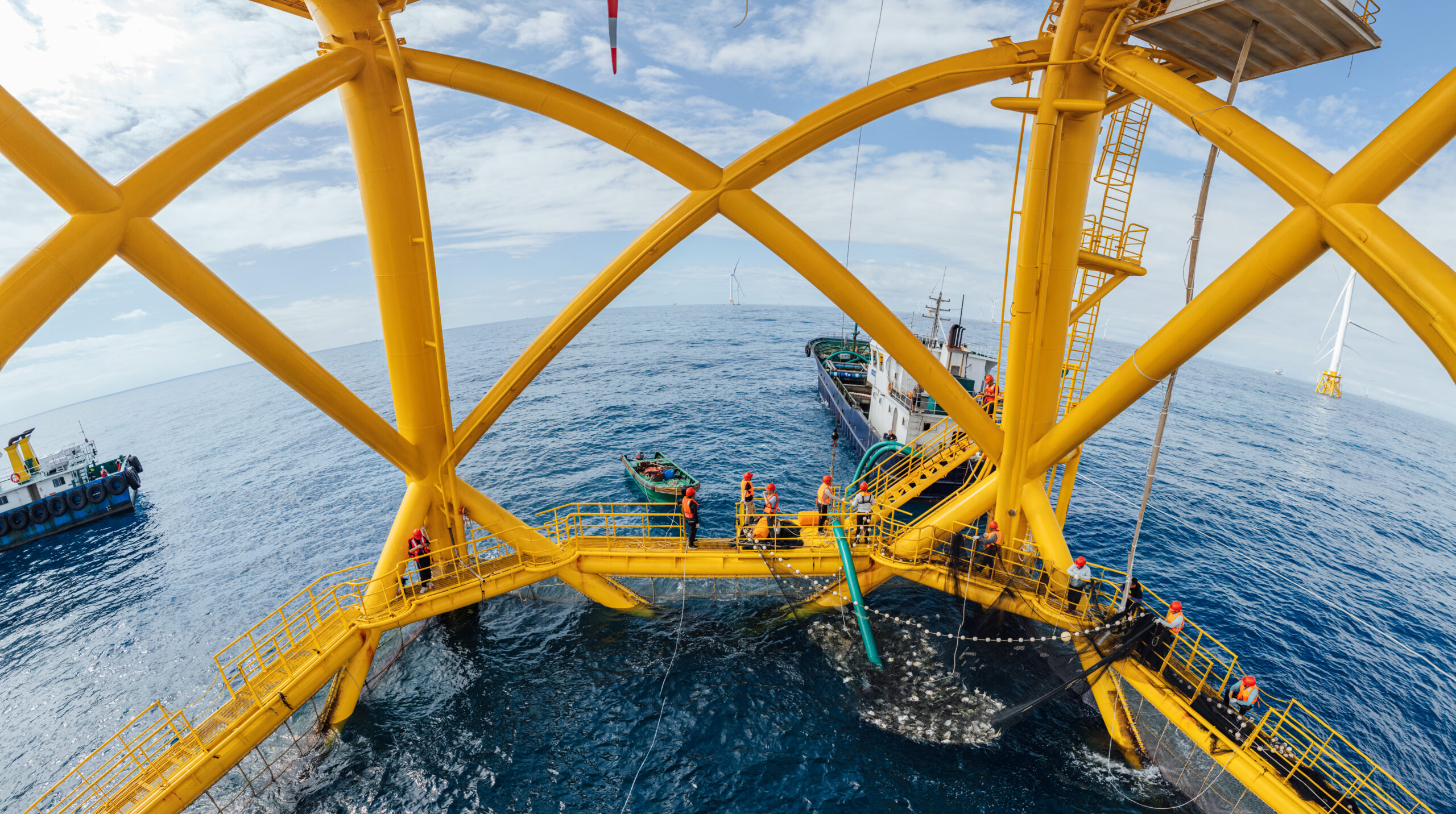
China has officially finished the construction of the world’s first offshore wind data center, an underwater data center (UDC) in Shanghai’s Lin-gang Special Area. The project, inaugurated on Tuesday, represents a significant milestone in integrating renewable energy with digital infrastructure. With an investment of 1.6 billion yuan (approximately 226 million U.S. dollars) and a total power capacity of 24 megawatts, the UDC is designed to showcase green and low-carbon computing on a global scale.

Unlike traditional land-based data centers, this innovative project utilizes over 95% green electricity, reduces power consumption by 22.8%, and cuts water and land use by nearly 100% and 90%, respectively. These measures demonstrate China’s commitment to sustainable digital development and offshore wind energy consumption.

HiCloud Demonstrates Wind-Powered Underwater Data Center

Chinese underwater data center firm HiCloud, a division of Highlander, also launched a demonstration project that connects servers directly to an offshore wind farm. The initiative marks the first stage of a plan to scale subsea deployments up to 500 MW. The demonstration site, offering 2.3 MW of data center space, is located off the coast of Shanghai near the Lingang Special Area of the Shanghai Pilot Free Trade Zone.

HiCloud highlighted the significance of this project, stating on LinkedIn:

“This marks a significant milestone for the Lingang Special Area in deeply integrating the digital economy, new energy, and the marine economy. It also represents a major initiative by Shanghai to support national strategies and build a global hub for technological innovation.”

Industrial partners—including Shenergy Group, Shanghai Telecom, Shanghai INESA, and CCCC Third Harbor Engineering Company—signed a cooperation agreement to collaborate on building a 500 MW underwater data center. While the exact location and timeline for large-scale construction have not been disclosed, the announcement signals an ambitious roadmap for wind-powered subsea computing in China.

The Rise of Underwater Data Centers Globally

The innovation of underwater data centers is not entirely new. Microsoft pioneered the effort with Project Natick, launching the first U.S.-based underwater data center off the Pacific coast in 2015 and following up with a pilot in the North Sea in 2018. However, Microsoft later abandoned these projects, leaving room for other companies to innovate. At least two start-ups, Subsea Cloud and NetworkOcean, are now planning their own underwater data centers, positioning China as a global leader in this niche.

HiCloud’s experiments date back to 2021, starting with deployments off Hainan Island. Its first commercial UDC went live in 2023, and in February 2025, an additional module containing 400 high-performance servers was added. This iterative approach highlights the growing viability and scalability of underwater data infrastructure when coupled with offshore wind energy.

Renewable Energy and Data Centers: The Global Trend

Currently, data centers globally consume 2–3% of the world’s electricity, and a single hyperscale data center requires the equivalent power of roughly 10,000 homes per day. Recognizing the environmental impact, major tech companies are increasingly turning to renewable energy.

A colorful mural by digital artist Jenny Odell brightens up the Mayes County, Oklahoma, data center. Image: Google

Amazon, Google, Microsoft, Equinix, Digital Realty, and Schneider Electric have made significant commitments: purchasing clean energy, partnering with renewable developers, and building data centers powered by wind and solar energy. For instance, Google recently connected its Oklahoma data center directly to a wind farm, while Amazon aims to operate all of its global operations using 100% renewable energy.

China’s offshore wind-powered underwater data centers follow the same global trend, demonstrating how AI, digital infrastructure, and offshore renewable energy can converge to reduce emissions, improve efficiency, and set benchmarks for sustainable cloud computing worldwide.

Advantages of China’s Offshore Wind-Powered UDCs

Reduced Environmental Impact: Nearly total eradication of land and water use, 22.8% reduction in power consumption, and over 95% green electricity usage.

  1. Scalable Design: A 500 MW subsea deployment is planned after the 2.3 MW pilot demonstration.

2. Technological Leadership: Showcases innovation by combining wind energy, underwater modules, and AI-powered servers.

3. Economic Integration: Promotes the growth of the digital economy and the marine industry while supporting national strategies.

4. Global Benchmarking: Establishes China as a pioneer in data infrastructure driven by renewable energy, encouraging comparable initiatives around the world.

Conclusion: A Green Digital Future

China’s offshore wind-powered underwater data center is a game-changer for the global energy and technology sectors. Projects like HiCloud’s 500 MW plan, which integrates digital infrastructure, renewable energy, and sustainable practices, not only lessen their impact on the environment but also establish new benchmarks for the combination of clean energy and computing.

China’s innovative efforts will probably serve as a model for sustainable data centers globally as major global players opt for renewable energy, showing how the next generation of cloud computing can be both environmentally friendly and high-performing.

Source: Xinhua

50 MW Floating Turbine—the World’s Largest—Was Built by China

China Built the World’s Largest 50 MW Floating Turbine

A Giant Rises in Offshore Wind

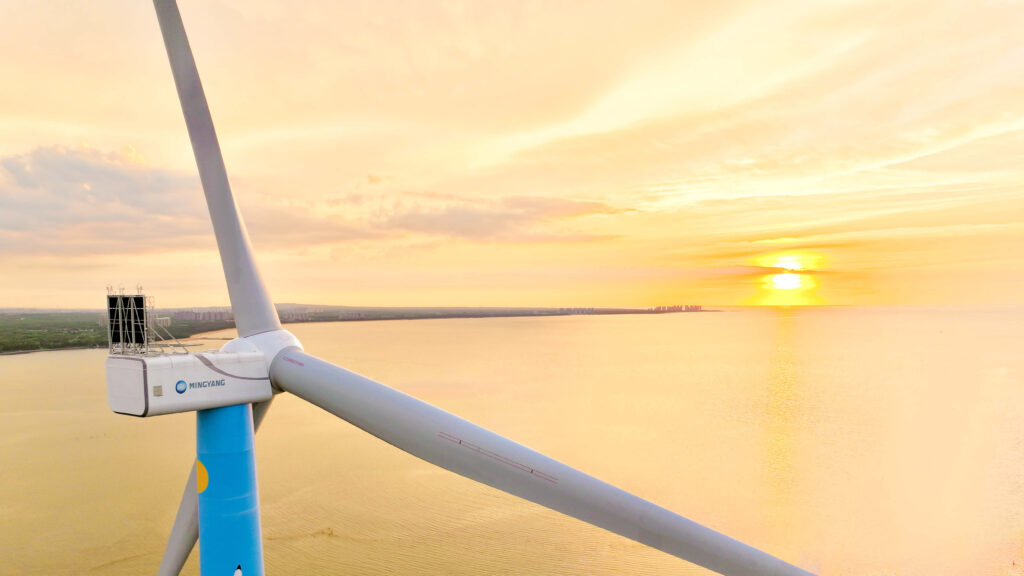
China has once again captured global attention in the renewable energy sector. An important turning point for the offshore wind sector has been marked by the announcement of plans for the largest 50 MW floating turbine in the world by Mingyang Smart Energy, one of the nation’s leading clean energy companies, according to Bloomberg.

Though it is still in its infancy, the idea goes far beyond small steps forward. It is a daring leap in ambition, scale, and design that has the potential to completely reshape the boundaries of what is technically and financially feasible in floating wind technology.

Mingyang Smart Energy—Behind the Innovation

Since its founding in 2006, Mingyang Smart Energy has emerged as a world leader in offshore engineering, smart energy systems, and wind turbine manufacturing. Record-breaking designs are nothing new to the company. By announcing a 22 MW offshore turbine in 2023, it raised the bar for turbine capacity. Mingyang is ambitious to outdo even that achievement with its 50 MW floating wind turbine concept, the largest ever proposed.

What Makes the 50 MW Floating Wind Turbine So Revolutionary?

The engineering scale of a 50 MW floating wind turbine is unprecedented. Today’s offshore wind turbines typically have a capacity of 10–18 MW. The increase to 50 MW, which is almost three times that capacity, necessitates radical adjustments to materials, structure, and floating platform stability.

According to Mingyang, this concept leverages:

MySE16-260, Image: Mingyang Smart Energy
  • lightweight composite blades of the next generation that are longer than 150 meters.
  • Large rotating structures can be stabilized with intelligent load control systems.
  • Sophisticated floating foundations are made to survive harsh maritime environments.
  • AI-powered energy optimization that enables integration with smart grids for optimal output efficiency.

By eliminating the need for numerous smaller units and lowering the cost per megawatt for offshore wind farms, this design may be able to power tens of thousands of homes with a single turbine.

Why China Is Betting Big on Floating Wind

The growth of offshore wind energy in China has been astounding. In terms of installed wind capacity, the nation leads the world, and floating wind power is becoming the next big thing. Floating turbines can function in deep offshore regions with more reliable and powerful wind resources than fixed-bottom turbines, which need shallow waters.

With the help of this technological advancement, China can now access enormous oceanic wind corridors in the East China Sea and South China Sea, opening up previously untapped potential for renewable energy.

Along with creating new investment opportunities for maritime engineering and smart grid integration, floating wind technology also lessens conflicts with coastal industries and fishing zones.

Floating Wind: The Next Phase of Global Energy Evolution

Although floating wind technology is not new, China’s large-scale entry could change the rules of international competition.
Early progress in floating wind pilot projects has been made by nations like Norway, Japan, and the United Kingdom. None, though, have suggested a design with a capacity of about 50 MW.

Mingyang hopes to reduce production costs, show grid stability, and illustrate how large turbines could power deep-sea wind farms in the future by scaling up.

This is in line with China’s long-term objective of becoming carbon neutral by 2060 and its larger clean energy strategy, which calls for 1,200 GW of renewable capacity by 2030.

Engineering Challenges Ahead

Despite the excitement, building a 50 MW floating wind turbine is no small task. Engineers must address:

  • Extreme load management: enormous wind and wave forces acting on a single massive structure.
  • Floating stability: ensuring the platform remains balanced in deep waters.
  • Transportation and assembly: moving colossal turbine components from land to offshore installation sites.
  • Grid connectivity: maintaining power stability for such a large, single-unit generation source.

Each of these challenges requires precision engineering, advanced materials, and continued research collaboration with global partners.

Global Reactions and Industry Impact

Energy analysts see Mingyang’s announcement as a symbol of China’s growing dominance in renewable technology.
If successful, this 50 MW floating wind turbine could outpace existing European designs and reshape offshore wind economics by drastically reducing per-megawatt costs.

Moreover, it would strengthen China’s position in exporting clean energy technology, enabling other nations to adopt large-scale floating wind solutions in their own coastal regions.

The Future of Offshore Wind Power

The concept also points to the future direction of offshore wind:
Fewer, larger, smarter turbines—all networked into digital energy grids.

By combining floating foundations, AI-driven efficiency, and smart energy systems, projects like Mingyang’s could accelerate the transition toward a cleaner, more sustainable global energy mix.

This innovation not only supports China’s domestic goals but also contributes to global decarbonization, offering a blueprint for how nations can harness offshore wind at scale.

Final Thoughts: The Floating Giant That Could Redefine Energy

Mingyang’s 50 MW floating turbine remains a concept, but its implications are enormous. It embodies the next generation of offshore wind innovation, combining engineering power, digital intelligence, and clean energy ambition.

If brought to life, this turbine could symbolize the moment the world’s energy landscape truly began to float—toward a smarter, greener, and more sustainable horizon.

Key Facts at a Glance

FeatureDetails
Turbine Capacity50 MW
TypeFloating Offshore Wind Turbine
DeveloperMingyang Smart Energy (China)
Innovation HighlightsAI optimization, smart grid integration, digital twin technology
Global SignificanceWorld’s largest wind turbine concept

FAQs

Q1: Why is the 50 MW floating wind turbine important?
It represents a major leap in offshore wind technology, offering higher capacity, lower costs, and access to deeper waters for clean energy generation.

Q2: What is unique about floating wind turbines?
They don’t require fixed foundations, making them ideal for deep-sea deployment where winds are stronger and more stable.

Q3: How does AI improve turbine efficiency?
AI algorithms monitor performance, predict failures, and adjust turbine settings in real time for optimal power generation and maintenance savings.

Stay updated on the world’s biggest renewable energy breakthroughs—follow WindNewsToday for daily insights into offshore wind, AI innovation, and global clean power transformation.

How China’s $2 Billion Wind Turbine Investment in Scotland

China’s $2 Billion Wind Turbine Investment in Scotland

A major shift in the UK’s clean energy landscape is coming—and it’s set to center on how China’s $2 billion wind turbine investment in Scotland could reshape the country’s renewable ambitions.

Chinese wind giant Ming Yang Smart Energy has proposed building a massive turbine manufacturing facility at the port of Ardshear in the Scottish Highlands, promising 1,500 new Scotland renewable energy jobs and a new industrial ecosystem for offshore wind manufacturing generation.

While the plan could boost the UK’s renewables supply chain, it has also raised concerns within Whitehall about national security and foreign investment in vital energy infrastructure. Let’s find out why.

$2 Billion Wind Turbine Investment UK

Ming Yang says its proposed Scottish factory would represent a multi-phase investment of around £2bn (£1.5bn). The first phase—expected to start production in late 2028—will cost around £750m and will focus on producing advanced turbines for the European market.

In the next phase, the company plans to build a complete offshore wind industry ecosystem, including supply chain partners, training programs, and research facilities.

Ming Yang chairman Zhang Chuanwei called the project a “commitment to accelerating the global energy transition through innovation and community-centric energy solutions.”

UK government hesitation over Chinese wind investment

Despite Ming Yang’s public optimism, the UK government has yet to approve the plan.

A senior UK government source said the company “seems to be trying to outmaneuver us,” insisting that national security concerns should be fully assessed before any approval is given.

A UK government spokesman confirmed the latter and cited:

“This is one of a number of companies looking to invest in the UK. Any decision taken will be consistent with our national security.”

The government’s delay is said to be due to intelligence and security reviews surrounding the involvement of foreign technology in the UK’s energy infrastructure—particularly in light of tensions over China’s strategic role in key sectors.

Scotland’s renewable energy vision and industrial strategy

However, the Scottish government sees the proposed project as strategically important.

First Minister John Sweeney has repeatedly said that floating offshore wind is “central to my vision for Scotland’s future as a modern and dynamic nation.”

Edinburgh officials argue that the Ardersea project is fully aligned with Scotland’s industrial strategy, which identifies floating wind turbines as a “first-mover advantage” sector. With more than 40 gigawatts of potential offshore capacity—including 25 gigawatts of floating wind—Scotland sees Ming Yang Investment UK as crucial to achieving its renewable energy expansion goals.

The Scottish Government, however, views the proposed project as strategically important.
First Minister John Swinney has repeatedly said that floating offshore wind is “central to my vision for Scotland’s future as a modern and dynamic nation.”

Officials in Edinburgh argue that the Ardersier project aligns perfectly with Scotland’s industrial strategy, which identifies floating wind turbines as a “first-mover advantage” sector.
With over 40 GW of potential offshore capacity—including 25 GW of floating wind—Scotland sees Ming Yang’s investment as critical to realizing its renewable energy expansion goals.

Economic Promise vs. Political Risk

While supporters highlight the 1,500 jobs, technology transfer, and offshore wind capacity expansion, critics warn about overreliance on Chinese manufacturing.
Some MPs and U.S. officials have urged caution, noting that even though Ming Yang is privately owned, Chinese companies can face state influence under Beijing’s policies.

A government insider described the approval process as “delayed but deliberate,” adding that “patience is finite—there’s a lot of investment and jobs waiting for this decision.”

Meanwhile, Kate Forbes, Scotland’s Deputy First Minister, said there remains “room for Ming Yang to open a factory in Scotland,” stressing that final approval rests with the UK government.

What’s Next

A government official recently told the Financial Times that a decision on the Ming Yang project is “imminent.”
If approved, construction could begin as early as 2026, with the factory fully operational by 2028, producing turbines for projects across the UK and Northern Europe.

However, the project’s fate will depend on how London balances economic opportunity, energy security, and geopolitical caution—three pillars shaping the UK’s clean energy policy.

Conclusion

As the UK strives to become a global clean energy leader, the debate over how China’s $2 billion wind turbine investment in Scotland continues to test the balance between sustainability and sovereignty.

Whether seen as a bold step toward green industrialization or a risky geopolitical gamble, the outcome will reveal how open Britain truly is to global partnerships in its clean energy future.

FAQ

Q1: What is the value of China’s wind turbine investment in Scotland?
The proposed investment is up to $2 billion by Ming Yang Smart Energy to build a large-scale wind turbine manufacturing facility.

Q2: Why is this project controversial?
Concerns revolve around national security, foreign influence, and the strategic control of energy infrastructure.

Q3: What benefits does the project offer Scotland?
It could create hundreds of local jobs, boost offshore wind supply chains, and support Scotland’s 2045 net-zero target.

Q4: When could the project start?
If approved, construction could begin by 2026, with turbine production starting around 2028–2029.

China Wind Energy 2025: 223 GW Under Construction & Global Leadership

China Wind Energy 2025

Updated January 2026 | Originally published July 10, 2025

China’s wind energy expansion in 2025 is reshaping the global renewable energy landscape. With 223 GW of wind power under construction, China accounts for nearly 45% of global wind projects currently being built. This scale of development is unprecedented and reinforces China’s position as the world leader in wind power capacity and manufacturing.

According to a report from Global Energy Monitor (GEM) and reporting by the Financial Times, China is developing a combined 510 GW of utility-scale solar and wind, representing almost 74% of global renewable capacity under construction. This rapid build-out supports China’s goals of energy security, industrial growth, and climate commitments.

China’s wind leadership is also supported by a record-breaking 2024, when the country added 357 GW of new renewable capacity. This growth is driven by onshore wind bases, offshore expansion, and a rapidly expanding supply chain that now dominates global wind manufacturing.

China’s Wind Power Leadership in 2025

China’s total installed wind power capacity has now surpassed 700 GW, supported by a massive 593 GW wind-and-solar pipeline that includes announced, permitted, and under-development projects. In 2024 alone, the country added a record 357 GW of new renewable capacity, driven largely by large onshore wind bases and rapidly expanding offshore projects.

Unlike earlier phases of development, today’s wind expansion is tightly aligned with national priorities such as energy security, industrial competitiveness, and long-term climate commitments. Wind power is no longer treated as a niche clean-energy option; it has become a core component of China’s national development strategy.

Offshore Wind Takes Center Stage Along China’s Coast

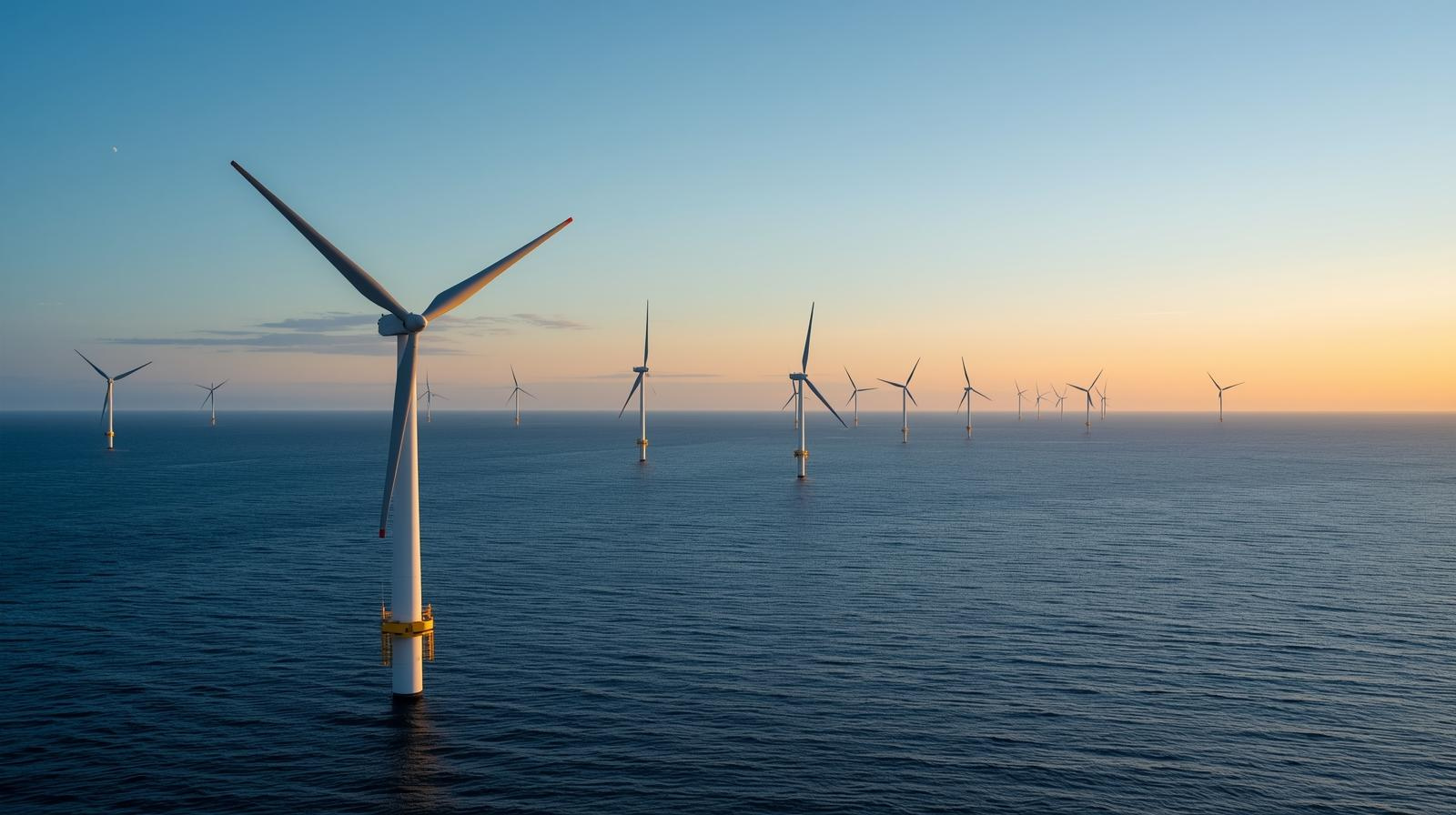
Offshore wind is a key growth area for China. Installed offshore capacity has jumped from less than 5 GW in 2018 to 42.7 GW operational in 2025. Another 28 GW is under construction, and the offshore pipeline now stands at 67 GW.

Coastal provinces such as Guangdong, Jiangsu, Shandong, and Fujian are leading offshore development, linking new projects to industrial zones, ports, and emerging green hydrogen hubs.

China’s move into deeper waters is also growing, with floating wind projects and advanced grid connections being developed to support industrial decarbonization. For a deeper technical comparison, see our article on floating vs fixed-bottom offshore wind.

Wind Energy and China’s Energy Security Strategy

Wind power plays a central role in China’s effort to reduce reliance on imported fossil fuels while modernizing its electricity system. Data from the National Energy Administration shows that in the first quarter of 2025, wind‑generated electricity supplied nearly 12 percent of national power consumption, surpassing several traditional thermal sources.

This expansion is supported by heavy investment in ultra‑high‑voltage (UHV) transmission lines, allowing wind‑rich regions such as Inner Mongolia and Xinjiang to deliver electricity to coastal demand centers. These grid upgrades are essential to maintaining reliability as wind penetration continues to rise, a challenge also facing other major wind markets worldwide.

Mega Wind Projects Reshaping the Global Market

China’s leadership in wind energy is most visible in the scale of its flagship projects. Notable developments include:

  • Ningxia onshore wind bases exceeding 16 GW
  • Shandong offshore wind clusters surpassing 10 GW, including early floating platforms
  • UHV wind‑to‑grid corridors linking western provinces with coastal industrial zones

These projects increasingly deploy next‑generation 16 MW wind turbines, a trend now spreading across major offshore markets in the United States and Europe. As a result, China’s domestic demand is influencing global turbine design, manufacturing standards, and cost curves.

Wind Projects Under Construction in China (2025)

Metric
Capacity
Wind‑Solar Energy Pipeline (Announced + Development)593 GW
Wind Projects Under Construction223 GW
Share of Global Wind Construction~45%
Operational Wind Capacity700+ GW
Offshore Wind Operational42.7 GW
Offshore Wind Under Construction28 GW
Offshore Wind Pipeline
67 GW

Global Leadership and Economic Impact

Chinese wind turbine manufacturing facility exporting components worldwide

China’s wind energy growth extends beyond domestic power generation. The country now hosts the world’s largest wind fleet and dominates global manufacturing, producing more than 70% of wind turbine components, including blades, towers, nacelles, and power electronics.

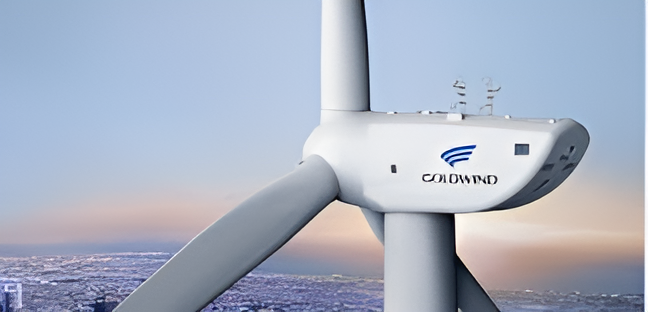
Leading manufacturers such as Goldwind, Mingyang, and Envision export wind technology worldwide, supplying projects across Asia, Africa, Latin America, and Europe.

According to the Centre for Research on Energy and Clean Air (CREA), clean energy led by wind accounted for 25% of China’s GDP growth in 2024, while supporting over 3 million jobs. This shows wind power is not just a clean-energy solution but also a major economic engine.

Looking Ahead to COP30 in Belém

With COP30 in Belém, Brazil, approaching, China is expected to announce stronger national climate targets. Analysts predict new policies around:

  • Higher national wind capacity goals
  • Dedicated offshore wind industrial zones
  • Expanded wind-to-hydrogen integration
  • Streamlined offshore leasing programs

These policies could influence global renewable energy investment and technology deployment.

For additional context on China’s clean energy transition, see our China renewable energy growth article.

Offshore Wind: Opportunities and Challenges

Offshore wind farm in coastal China powering industrial decarbonization efforts

Despite rapid growth, China’s offshore wind sector faces structural challenges, including grid connection delays, overlapping permitting systems, and the technical demands of typhoon resilience. Deep-sea floating wind projects also carry higher costs due to complex foundations, subsea cables, and specialized installation vessels.

Ongoing investment in typhoon-resistant turbine design and offshore grid infrastructure is expected to gradually reduce these barriers and support long-term scalability.

Offshore Wind: Opportunities and Challenges

China’s offshore wind sector faces challenges including:

  • Grid connection delays
  • Overlapping permitting systems
  • Typhoon resilience requirements
  • High cost of floating wind foundations and deep-water logistics

However, government support, green financing, and technological R&D are expected to reduce these barriers over time, helping the sector scale sustainably.

From Energy User to “Electrostate”

Wind power now supplies a growing share of electricity for China’s high-speed rail, smart manufacturing, urban heating and cooling networks, and rapidly expanding data centers. As explored in our coverage of renewable-powered data centers and AI infrastructure, this shift is helping transform China into an emerging renewable-powered “electrostate.

Final Takeaway

China’s wind energy surge in 2025 is reshaping the global renewable‑energy landscape. With 223 GW under construction, accelerating offshore deployment, and unmatched manufacturing scale, China is not only leading the wind sector—it is redefining how quickly a large economy can transition to clean power.

As global attention turns toward COP30, China’s policy direction and execution will play a decisive role in determining the pace and trajectory of the worldwide energy transition.

FAQs: China Wind Energy 2025

How much wind power does China have in 2025?
China has over 700 GW of installed wind capacity, with 223 GW under construction.

What share of global wind projects are in China?
China accounts for nearly 45% of all wind projects under construction worldwide, according to GEM.

Why is offshore wind important for China?
Offshore wind supports industrial decarbonization in coastal provinces and provides large-scale clean power close to demand centers.

Who are China’s leading wind turbine manufacturers?
Goldwind, Mingyang, and Envision are among China’s top wind turbine companies.

How does wind energy impact China’s economy?
Wind energy contributed roughly 25% of GDP growth in 2024 and supports more than 3 million jobs, according to CREA.