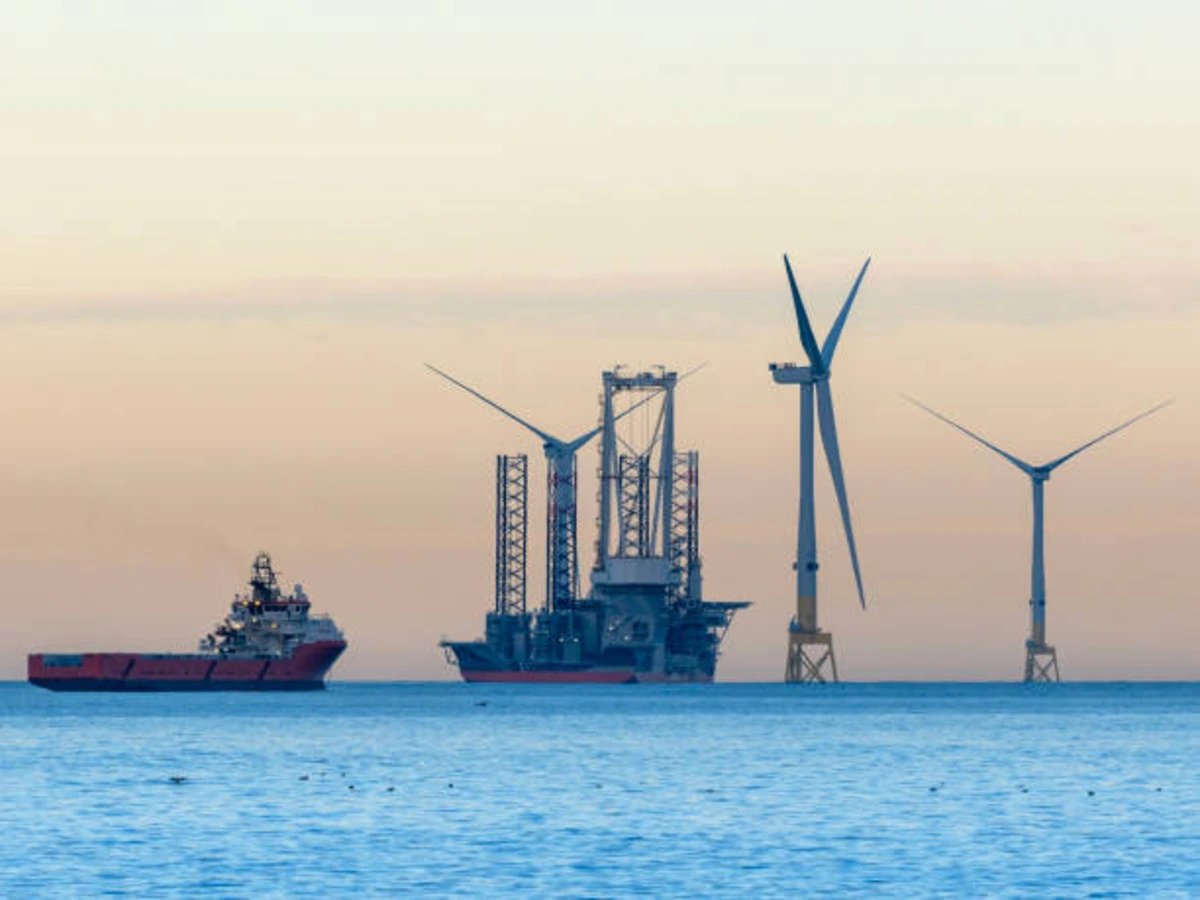
Virginia Beach, VA — The Atlantic Ocean is never still, but what is happening 27 miles off Virginia Beach is a new kind of motion — one that is reshaping America’s energy future. The Coastal Virginia Offshore Wind (CVOW) project is currently the largest offshore wind farm in the United States, and it’s not just building turbines; it’s building a national narrative.
At a time when the U.S. is trying to prove it can meet ambitious clean energy targets, CVOW is a real-world test. It is a bold demonstration that the U.S. can construct large-scale offshore wind infrastructure without relying solely on European expertise.
A Wind Farm That’s Bigger Than Electricity
Dominion Energy, one of the leading developers in wind energy in the USA, is building a project that will cover 112,800 acres of federal waters and include 176 Siemens Gamesa turbines. Each turbine will rise nearly 800 feet above sea level, with rotor blades longer than a football field.
When completed in late 2026, CVOW will generate 2.6 GW of clean energy — enough to power 660,000 homes across Virginia.
Opinion: The size alone makes this project a national benchmark. If it succeeds, it will prove that offshore wind can become a mainstream energy source in the U.S. The project is a statement: America is no longer a follower in offshore wind — it is a contender.
For readers who want to explore more offshore wind projects in the U.S., check out our Offshore Wind category, which covers the latest updates on major projects and policy changes.
From Pilot Phase to Commercial Reality
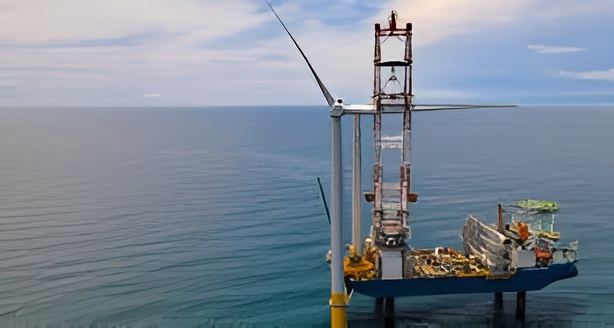
The project started modestly in 2020, when Dominion Energy and Ørsted installed two 6-megawatt pilot turbines — the first offshore wind turbines in U.S. federal waters. These early installations proved that the site was viable and that the technology could withstand the Atlantic environment.
Now, the project has moved into commercial scale. Foundations are being installed on the ocean floor, turbine parts are arriving through the Port of Virginia, and the region is becoming a major offshore wind logistics hub.
Opinion: This transition from pilot to commercial scale is the real proof of concept. If CVOW delivers on time and on budget, it will create a roadmap for future projects.
For the official project overview and timeline, visit the Coastal Virginia Offshore Wind official website
Jobs, Ports, and Economic Growth
CVOW isn’t only a clean energy project — it’s an economic engine.
The project is expected to create thousands of jobs across construction, operations, logistics, and manufacturing. More than 1,100 full-time jobs will be created once the project is operational.
In addition, new facilities such as blade finishing plants and staging hubs at the Portsmouth Marine Terminal have already emerged, revitalizing previously underused industrial zones.
One of the most significant developments is the construction of the Jones Act-compliant installation vessel “Charybdis”, built specifically for CVOW. This vessel will help reduce reliance on foreign ships and strengthen the U.S. offshore wind supply chain.
Opinion: CVOW is not just building a wind farm — it is building a domestic offshore wind industry. That’s a bigger impact than the electricity it produces.
To understand the broader economic impact of offshore wind in the U.S., read our article on how Trump’s offshore wind ban could impact Ørsted and the industry’s growth.
Environmental Review and Marine Protection
The company’s first Jones Act-compliant offshore wind turbine installation vessel, the “Charybdis,” is being constructed for CVOW. Manufactured in the U.S., it will also allow the country to cut its dependence on foreign ships, taking the country one strategic step closer to energy independence at home.
The project has undergone extensive review by the Bureau of Ocean Energy Management (BOEM). Stakeholders, including tribal nations and marine conservation groups, participated in the review process.
To protect marine wildlife, CVOW includes strict mitigation measures:
- Acoustic monitoring for whales
- Low-noise pile driving
- Seasonal construction limits
Environmental groups still demand transparency and long-term monitoring, and their concerns are valid. Offshore wind can be clean energy, but it must be built responsibly.
You can read more about BOEM’s renewable energy and offshore wind permitting process on the BOEM official renewable energy page. For more environmental impact analysis, see our article on the Netherlands’ offshore wind and bird migration pause.
Coastal Virginia Offshore Wind Project Glimpse
| Metric | Details |
|---|---|
| Project Size | 2,600 MW |
| Homes Powered | 660,000+ |
| Turbines | 176 Siemens Gamesa 14-222m |
| Area | 112,800 acres |
| Investment | $10.7 billion |
| Commercial Build-Out | Started Nov 2023 |
| Offshore Turbine Erection | Early 2024 |
| ETA | Late 2026 |
Why CVOW Matters for the 2030 Goal
CVOW is more than a state-level project; it is a national milestone. The Biden administration’s goal of 30 GW of offshore wind capacity by 2030 relies on successful projects like CVOW.
Other major offshore wind projects in the U.S. are closely watching CVOW, including the Empire Wind project and New Jersey’s Ocean Wind. They will use CVOW’s outcomes as a benchmark for costs, logistics, permitting, and environmental compliance.
Opinion: CVOW is the first true test of whether the U.S. can build offshore wind at scale. If it fails, the entire industry may slow down. If it succeeds, the U.S. will become a global leader.
Technical Challenges and Risks
Building offshore wind at this scale is not easy. The project faces several risks:
- Supply chain delays
- Cost overruns
- Weather delays
- Grid interconnection challenges
The U.S. has not built many projects of this size before, so every delay becomes a lesson.
Opinion: The U.S. offshore wind industry is still learning. CVOW is a live training ground. The biggest question is not whether the project will be completed, but whether it will be completed efficiently enough to lower costs for future projects.
Future Outlook for U.S. Offshore Wind
If CVOW is successful, it will open the door for broader offshore wind expansion along the Atlantic seaboard. As grid upgrades and energy storage improve, offshore wind will become more reliable and cost-effective.
This project also sets a precedent for:
- Permitting and regulatory standards
- Grid integration
- Vessel logistics
- Environmental monitoring
Long-term, CVOW could reduce millions of tons of CO₂ annually, supporting the U.S. role in global climate action.
Final Word
As the turbine towers rise above the waves and power moves ashore, CVOW is shaping what’s achievable in American clean energy. It’s a tribute to what vision, capital, and engineering can accomplish when aligned with the urgency of climate change.
The wind is shifting — and the future of power may be found offshore.
FAQ Section
Q1: What is the CVOW offshore wind project?
A: CVOW is the largest offshore wind farm in the US, located off Virginia Beach with 176 turbines and 2.6 GW capacity.
Q2: When will CVOW be completed?
A: The project is expected to be completed by late 2026.
Q3: How many homes will CVOW power?
A: CVOW will power over 660,000 homes

Ismot Jerin is the founder and Editor-in-Chief of WindNewsToday, an independent publication covering offshore wind, renewable energy policy, and clean power markets with an analytical focus on the United States and global energy transition.