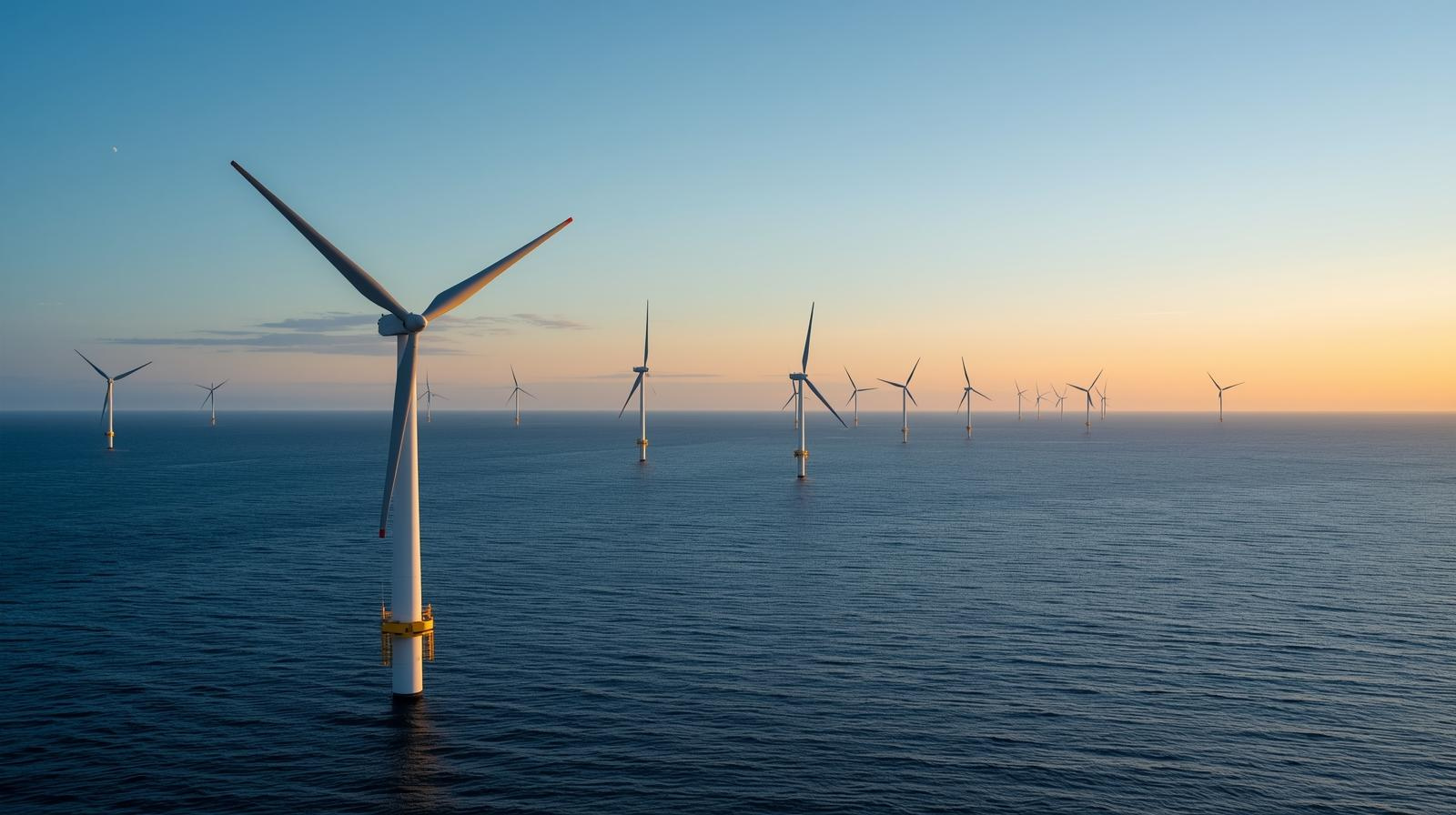
Amsterdam, Oct. 5 (WindNewsToday) – Several major offshore wind projects in the Netherlands were temporarily paused this week as authorities prioritized the safety of millions of migratory birds crossing the North Sea. The shutdowns, affecting wind farms such as Borssele I & II, Borssele III & IV, Hollandse Kust Zuid, and Hollandse Kust Noord, occurred on Wednesday and Thursday evenings, according to reports from AD.
The decision highlights the country’s commitment to balancing rapid offshore wind development with ecological protection, particularly during the peak of autumn migration. Millions of birds travel over the North Sea en route to southern Europe and Africa, raising concerns about collisions with turbine blades.
A Pause for Wildlife Protection
The temporary pause is part of the Start/Stop project, designed to reduce environmental risks posed by offshore wind operations. Using advanced predictive modeling, operators receive alerts up to two days in advance when heavy bird migration is expected, allowing turbines to slow down or halt safely.
Officials and wind farm operators believe these measures can significantly reduce bird collisions. As the Netherlands expands its offshore wind capacity, this initiative demonstrates how technological innovation can align with environmental stewardship.
Major North Sea Wind Farms Affected
Among the impacted North Sea wind farms, the Borssele Offshore Wind Farm zone is the most notable, with a total installed capacity of 1,502.5 MW:
- Borssele I & II – Developed by Ørsted, featuring 94 Siemens Gamesa 8 MW turbines with a combined capacity of 752 MW. Full operations were achieved by late 2020, and the site has been used for testing innovations like cargo drones.
- Borssele III & IV – Built by the Blauwwind II consortium, including Shell, Van Oord, Eneco, and Mitsubishi, with 77 Vestas V164 9.5 MW turbines totaling 731.5 MW.
- Borssele V – A smaller demonstration project with two Vestas V164 9.5 MW turbines, focused on testing emerging offshore technologies.
- Hollandse Kust Zuid – Located 18 km off the Dutch coast, this four-part complex, developed by Vattenfall, became fully operational in September 2023 and is one of the world’s largest offshore wind farms.
These temporary shutdowns, while minor in terms of energy output, emphasize the importance of proactive environmental management in large-scale renewable projects.
Balancing Energy Expansion and Ecology
The Dutch initiative occurs amid broader global debates about offshore wind. In the United States, political and regulatory changes have threatened projects such as Ørsted’s Empire 1 Wind Project in New York, Lava Ridge, and Revolution Wind in Rhode Island. While the contexts differ, both the U.S. and Dutch examples illustrate how offshore wind development must navigate environmental, social, and political challenges.
The Netherlands’ approach shows that temporary operational adjustments can protect wildlife without halting energy progress, offering a model for other countries with overlapping migratory routes and wind farm zones. Dutch officials and wind farm operators believe these measures.
Controversy and International Parallels
The Dutch pause comes amid broader global debates over offshore wind projects. In the United States, the Trump administration’s offshore wind ban threatens Ørsted’s multi-billion-dollar projects, including New York’s Empire 1 Wind Project, Lava Ridge, and Rhode Island’s Revolution Wind. Approved during the Biden administration, these projects were hailed as cornerstones of America’s clean energy transition. Critics argue Trump’s shutdowns represent a retreat from climate commitments at a time when the world is moving toward low-carbon energy.
The Trump administration claims the projects are expensive, unreliable, and a national security risk, sparking one of the most divisive energy debates in modern American history. Some observers see a parallel between this U.S. policy and the Netherlands’ own temporary turbine shutdowns—not in political intent, but as a reminder that ambitious renewable energy development often must contend with environmental and societal pressures.
Implications for the Offshore Wind Sector
These temporary shutdowns highlight a key question for the global offshore wind industry: How can offshore wind projects expand while minimizing environmental impacts? Initiatives like the Start/Stop project could serve as a model for other nations where major bird migration routes overlap with planned wind farm zones.
Dutch officials suggest similar measures could become standard during spring and autumn migrations. Wind farm operators note that short-term halts have minimal impact on overall energy output, showing that wildlife-friendly practices can coexist with ambitious renewable energy goals.
As offshore wind capacity scales across Europe and beyond, the Netherlands’ approach may influence international best practices for wildlife protection. Lessons from the North Sea could guide project planning from Europe to the United States and Asia, ensuring that energy transition does not come at the expense of biodiversity.
Key Takeaway
The sight of stationary turbines along the North Sea horizon underscores the complex balance between advancing offshore wind projects and protecting ecosystems. While progress in renewable energy is essential for climate targets, nature sometimes demands a pause. By integrating ecological protection into operational decisions, the Netherlands demonstrates that sustainability requires both technological innovation and environmental stewardship.

Ismot Jerin is the founder and Editor-in-Chief of WindNewsToday, an independent publication covering offshore wind, renewable energy policy, and clean power markets with an analytical focus on the United States and global energy transition.