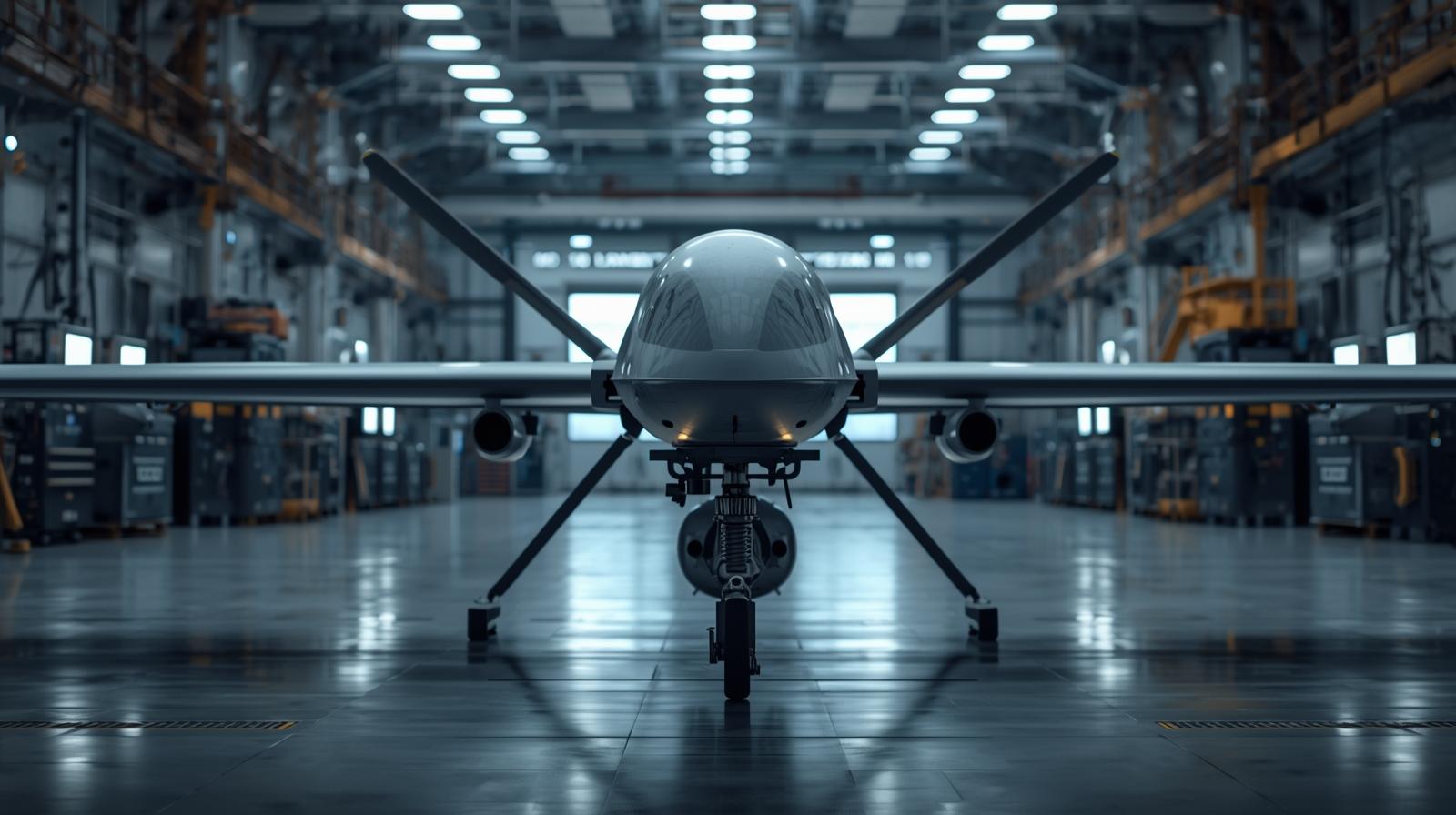
Mumbai, November 1, 2025 – India is taking a bold leap toward defense self-reliance. Larsen & Toubro (L&T) has teamed up with US defense leader General Atomics Aeronautical Systems, Inc. (GA-ASI) to produce advanced Medium Altitude Long Endurance (MALE) combat drones domestically. This landmark partnership is a major milestone in India’s Atmanirbhar Bharat defense initiative, strengthening operational readiness, technological independence, and domestic aerospace manufacturing capabilities.
By combining L&T’s precision engineering expertise with GA-ASI’s combat-proven unmanned aircraft systems, India will now manufacture drones that have already flown millions of hours worldwide, entirely on Indian soil. This initiative is expected to enhance India’s surveillance, intelligence, and strike capabilities while creating a foundation for long-term defense technology self-reliance.
Advancing Atmanirbhar Bharat in Defense
Under the Partnership, GA-ASI is the technology partner, and L&T is the highest bidder for the Ministry of Defense’s 87 MALE RPAS program. By bringing vital drone technologies to India, the project will directly support the Make in India Drones and Atmanirbhar Bharat defense programs.
Known for their intelligence, strike, and surveillance capabilities, these MQ-series drones are already in use all over the world and are valuable resources for India’s changing security requirements. The Indo-US defense collaboration will see L&T act as the prime bidder for the Ministry of Defence’s 87 MALE RPAS program, with GA-ASI as the technology partner, producing world-class MQ-series drones entirely on Indian soil. By integrating MALE RPAS, India is set to strengthen operational readiness while maintaining Indo-US defense collaboration at the forefront of technological innovation.
What are remotely piloted aircraft systems?
RPAS are unmanned aerial systems that are operated from a ground station and are intended for tactical and surveillance purposes.
They vary in size and capability—from lightweight quadcopters to medium-sized drones with endurance up to 8 hours and advanced satellite communication systems for long-range missions.
Types and Capabilities
- Medium-sized long-endurance aircraft for long- or medium-range missions
- Medium VTOL aircraft capable of vertical take-off and landing
- Lightweight VTOL drones such as quadcopters
Operational Range
RPAS operate within Radio Line of Sight (RLOS) or Beyond Radio Line of Sight (BRLOS) via satellite links, enabling both coastal and inland operations. They provide real-time data and video feeds to ground control stations, enhancing situational awareness and mission efficiency.
Leaders Talk
L&T Chairman and MD S.N. Subrahmanyan stated:
India now has a rare chance to produce cutting-edge unmanned platforms domestically thanks to this partnership. We are honored to work with GA-ASI to improve India’s defense capabilities and hasten its aerospace independence.
Additionally, General Atomics Global Corporation CEO Dr. Vivek Lall stated:
“Our goal is to provide top-notch MALE RPAS solutions that improve India’s operational readiness and defense ecosystem by fusing GA-ASI’s successful technology with L&T’s reliable manufacturing.”
Strategic Impact on the Indian Armed Forces
L&T GA-ASI Partnership Enhanced Operational Capabilities
The adoption of MALE RPAS India strengthens the armed forces’ surveillance, intelligence, and strike capabilities while reducing risks to personnel. These make-in-India drones act as a strategic force multiplier, providing persistent monitoring, rapid response, and precision targeting across multiple operational theaters.
Global Competitiveness and Self-Reliance
By embracing this advanced technology, India positions its defense sector as a globally competitive hub for aerospace innovation, supporting self-reliance in critical technologies and reinforcing its strategic autonomy in defense manufacturing.
India’s Defense Future Takes Flight
The L&T GA-ASI partnership is setting a benchmark in Atmanirbhar Bharat defense innovation. By combining cutting-edge drone technology with domestic manufacturing, India is strengthening national security, operational readiness, and technological independence.
As MALE RPAS India drones become operational, the project will enhance the armed forces’ capabilities and inspire other sectors to pursue self-reliant technological growth. Similar to India’s defense autonomy efforts, other domestic innovation projects are shaping the country’s long-term strategic and economic future.

Ismot Jerin is the founder and Editor-in-Chief of WindNewsToday, an independent publication covering offshore wind, renewable energy policy, and clean power markets with an analytical focus on the United States and global energy transition.