WindNewsToday

What Is Wind Energy? Technology, Costs, Jobs & Future — Complete Guide

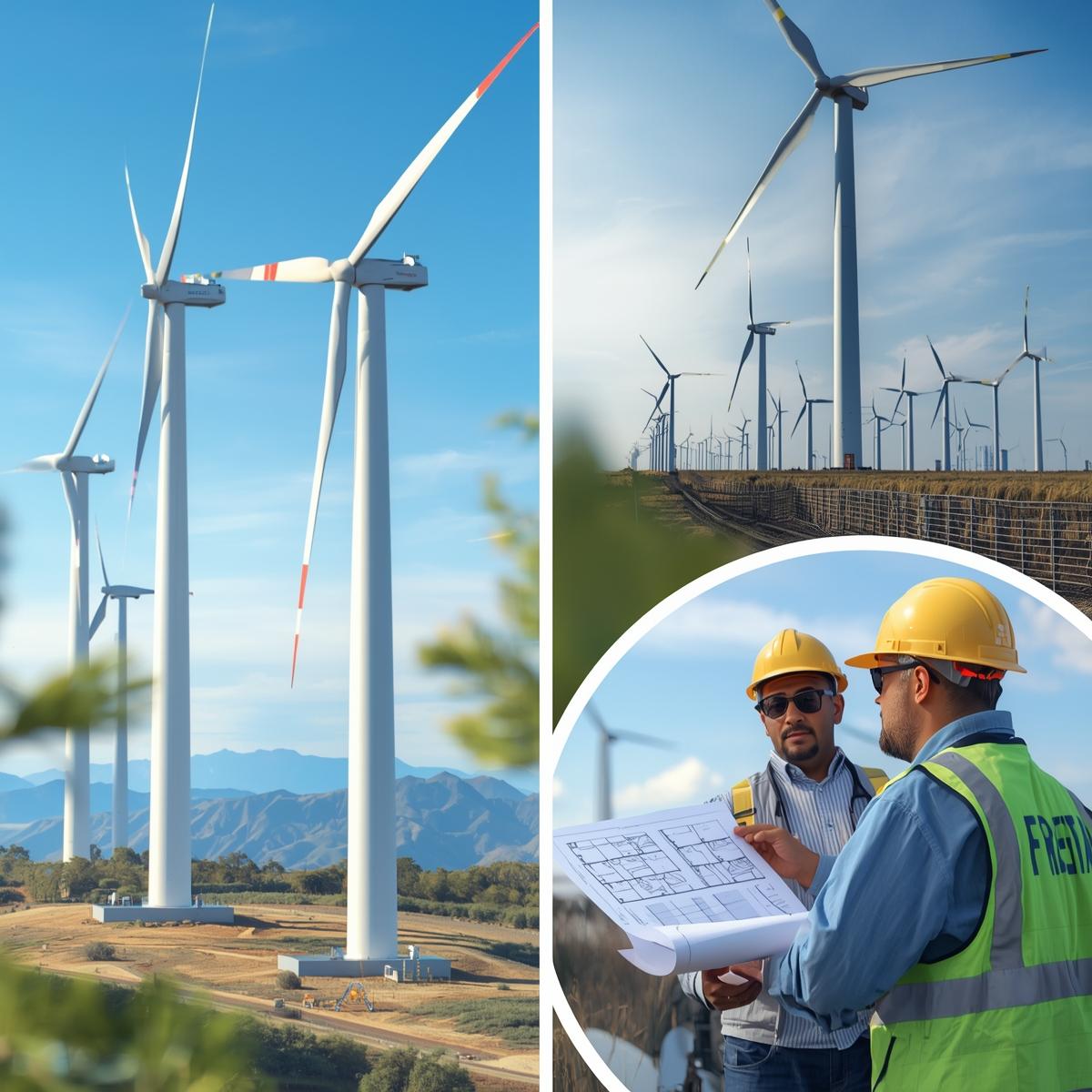
modern wind turbines generating renewable electricity

What is wind energy?

If we want to understand what wind energy is, in simple terms, it is a clean, renewable energy source that converts the kinetic energy of moving air into electricity using turbines. Wind farms are installed onshore, across plains or hilly areas, and offshore, in oceans or large bodies of water, where winds are stronger and more consistent. Unlike fossil fuels, wind power does not burn fuel or consume water, making it environmentally friendly.

According to the U.S. Department of Energy – Wind Power Technology Office, wind energy is one of the fastest-growing sources of electricity worldwide and plays a key role in reducing carbon emissions.

Once operational, wind farms can generate electricity for 20 to 25 years with regular maintenance, providing stable and relatively low-cost energy while reducing carbon emissions and improving energy security. Today, wind energy supplies electricity to millions of homes worldwide and continues to grow rapidly, driven by technological advances, supportive policies, and increasing demand.

This article explains how wind power works, its types, technologies, jobs, policy context, wind energy costs, and prospects, all in a clear, easy-to-understand way with real-world examples and actionable insights

How Does Wind Energy Work?

Wind turbines capture kinetic energy from moving air and convert it into electricity. The blades rotate when wind passes over them, turning a generator inside the nacelle. Modern turbines adjust the blade pitch and orientation automatically for maximum efficiency, even at variable wind speeds.

Detailed Explanation:

Wind energy works by converting the kinetic energy of moving air into mechanical power and then into electricity. When wind flows across turbine blades, it creates lift, causing the blades to rotate. This rotational motion turns a shaft connected to a generator, where mechanical energy is converted into electrical energy. The electricity is then conditioned and transmitted through cables to the power grid for distribution.

Modern wind turbines are equipped with sensors and control systems that continuously adjust blade angle and orientation to maximize efficiency and protect equipment during high winds. Power electronics ensure that the electricity produced meets grid requirements for voltage and frequency, allowing wind energy to integrate smoothly into existing power systems.

Main turbine components:

  • Rotor blades
  • Nacelle (gearbox, generator, control systems)
  • Tower
  • Transformer

Types of Wind Energy Systems

Wind energy projects are generally categorized based on location.

Onshore Wind Energy

Onshore wind farms are built on land—often in open plains, agricultural regions, or ridgelines with strong, consistent winds.

Why onshore wind dominates today:

  • Lower construction costs
  • Easier grid connection
  • Faster permitting
  • Proven technology

Onshore wind farms are installed on land and remain the most widely deployed due to lower construction and maintenance costs. In countries like the United States, onshore wind is one of the cheapest sources of new electricity, particularly in states such as Texas, Iowa, and Oklahoma.

Offshore Wind Energy

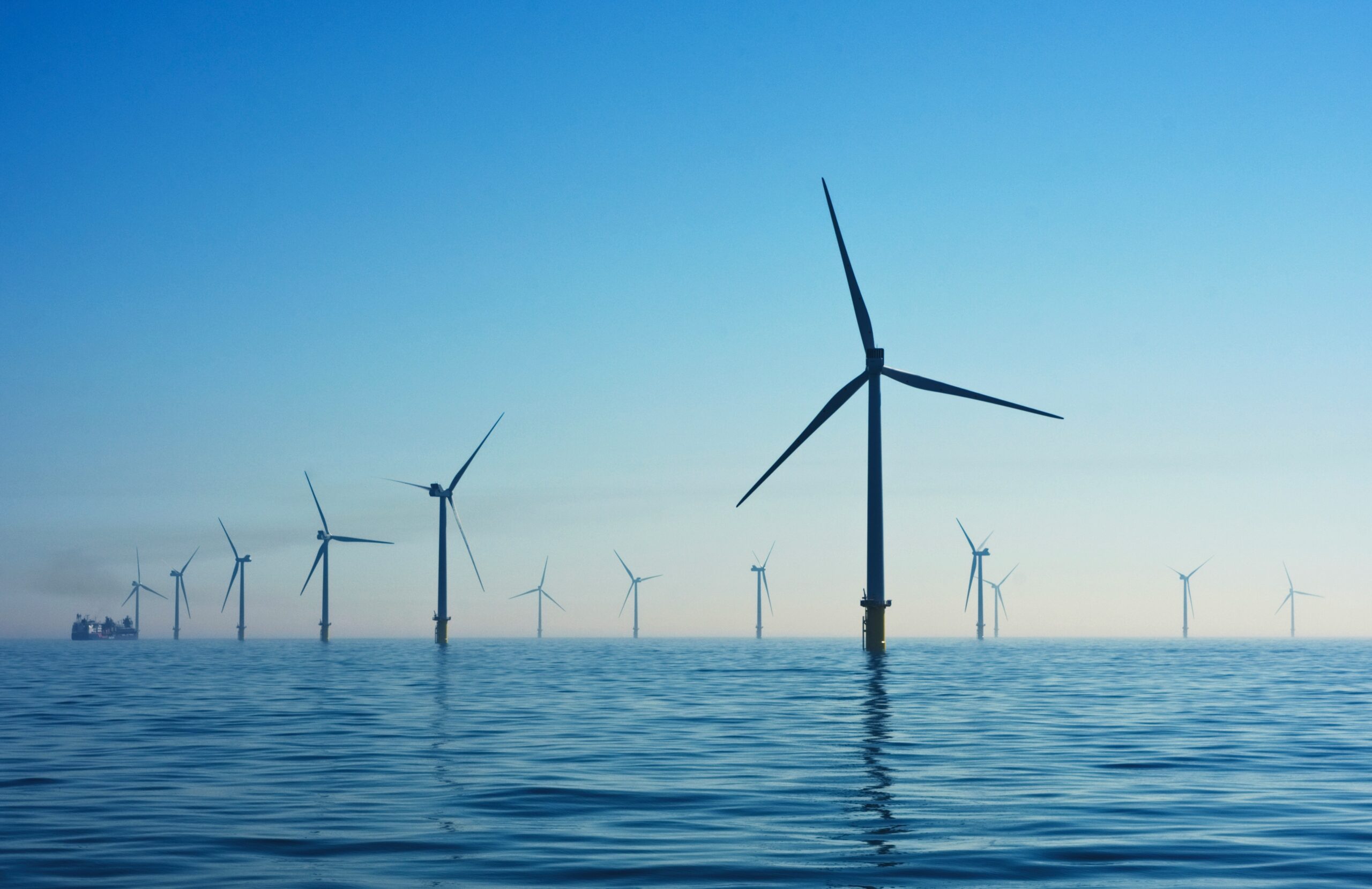
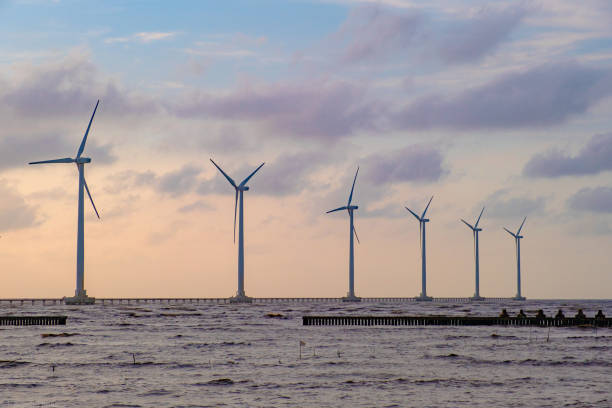
offshore wind turbines in the ocean
Offshore wind farms provide reliable, large-scale renewable electricity

Offshore wind farms are located in oceans or large lakes, where winds tend to be stronger and more consistent, allowing for higher energy output.

Advantages:

  • Higher capacity factors
  • Massive power potential near coastal cities
  • Less land-use conflict

Challenges:

  • Higher costs
  • Complex installation
  • Longer development timelines

Offshore wind is expanding rapidly in Europe and Asia and is now gaining momentum in the United States. Fixed-bottom turbines are anchored directly to the seabed in shallow waters, while floating offshore wind systems are designed for deeper waters where traditional foundations are not feasible. Each approach plays a role in expanding wind energy into new geographic areas.

To understand the technical and economic differences between offshore technologies, you can explore our comparison of fixed-bottom and floating offshore wind systems

Fixed-Bottom vs Floating Offshore Wind

Most offshore wind turbines use fixed-bottom foundations, ideal for shallow waters (<60 meters). Floating turbines allow installations in deep waters (>60–80 meters), expanding potential sites.

Fixed-Bottom Foundations:

  • Economical, proven technology
  • Used extensively in Europe and the North Sea

Floating Offshore Wind:

  • Ideal for deep waters with stronger winds
  • Anchored using mooring lines and tethers
  • Reduces seabed disturbance
  • Examples: Scotland’s Hywind and the U.S. Gulf of Maine pilots

Key Considerations:

  • Cost: Floating systems are currently more expensive but declining
  • Installation: Floating turbines can be assembled onshore and towed to the site
  • Environmental Impact: Minimal seabed disruption, but requires monitoring of mooring lines

Wind Energy Costs and Economics

Wind energy is among the most cost-competitive electricity sources globally. According to the International Energy Agency (IEA)

Onshore Costs:

  • LCOE: $30–50/MWh in optimal regions
  • Low operational costs, no fuel required

Offshore Costs:

  • LCOE: $60–100/MWh
  • Costs declining with larger turbines, floating technology, and better logistics
Comparison of levelized cost of energy (LCOE) for onshore and offshore wind power, showing costs in USD per megawatt-hour for global regions
Levelized cost of energy (LCOE) for onshore and offshore wind projects. Onshore wind remains the most cost-competitive in optimal regions, while offshore costs are declining due to larger turbines and floating technology innovations. Source: International Energy Agency (IEA).

Financial Advantages:

  • Long-term predictable energy costs
  • Government incentives and renewable energy credits reduce investment risk

Wind Energy and Grid Integration

Integrating wind energy into electricity grids is one of the most important challenges—and opportunities—of large-scale renewable deployment. Because wind speeds vary, grid operators rely on advanced forecasting, energy storage, and flexible generation resources to balance supply and demand in real time.

Advances in digital forecasting tools and grid management software have significantly improved system reliability. Wind power often complements solar energy by producing more electricity at night and during winter months, helping stabilize grids with high shares of renewable generation. At the same time, continued investment in transmission infrastructure is essential, particularly for offshore wind projects that require subsea cables and upgraded coastal substations to deliver power efficiently to population centers.

As wind capacity expands, grid integration will increasingly depend on smarter networks, expanded transmission corridors, and closer coordination between renewable generation and storage technologies.

Environmental Impact

Wind energy reduces carbon emissions, but it has environmental considerations:

  • Wildlife interactions: Birds and bats
  • Visual and noise impact
  • Marine ecosystems for offshore installations

Mitigation Strategies:

  • Careful turbine siting
  • Seasonal operational adjustments
  • Monitoring programs to protect wildlife

Wind Energy Jobs and Workforce

The rapid expansion of wind energy is not only transforming power systems but also creating a strong global workforce. From manufacturing and construction to operations and maintenance, the wind sector now supports millions of skilled jobs worldwide and continues to grow as new projects come online.

Wind turbine technicians have emerged as one of the fastest-growing occupations in the renewable energy sector, particularly in countries expanding offshore and utility-scale onshore wind. Alongside technicians, the industry relies on engineers, project managers, environmental specialists, and grid experts to plan, build, and operate increasingly complex wind projects.

Globally, the wind workforce is estimated at around 1.3 million jobs as of 2025, with steady growth expected through the next decade. In the United States alone, employment for wind turbine technicians is projected to grow by around 50% by 2030, reflecting strong investment in both onshore and offshore wind development.

For readers interested in career paths, required skills, salaries, and long-term job prospects, see our detailed guidelines on wind energy jobs, which explain how the industry is shaping the future renewable workforce.

Policy and Regulation

Government policy plays a decisive role in how quickly wind energy scales. Stable regulatory frameworks reduce investment risk and enable developers to commit to long-term projects. In many regions, wind deployment only accelerated after clear policy support was introduced.

Key policy tools include tax incentives, renewable energy targets, and streamlined permitting processes. In the United States, federal incentives such as the Production Tax Credit have helped reduce costs and encourage private investment. At the state level, renewable portfolio standards ensure steady demand for clean electricity. In Europe, coordinated policy efforts have positioned offshore wind as a central pillar of the energy transition.
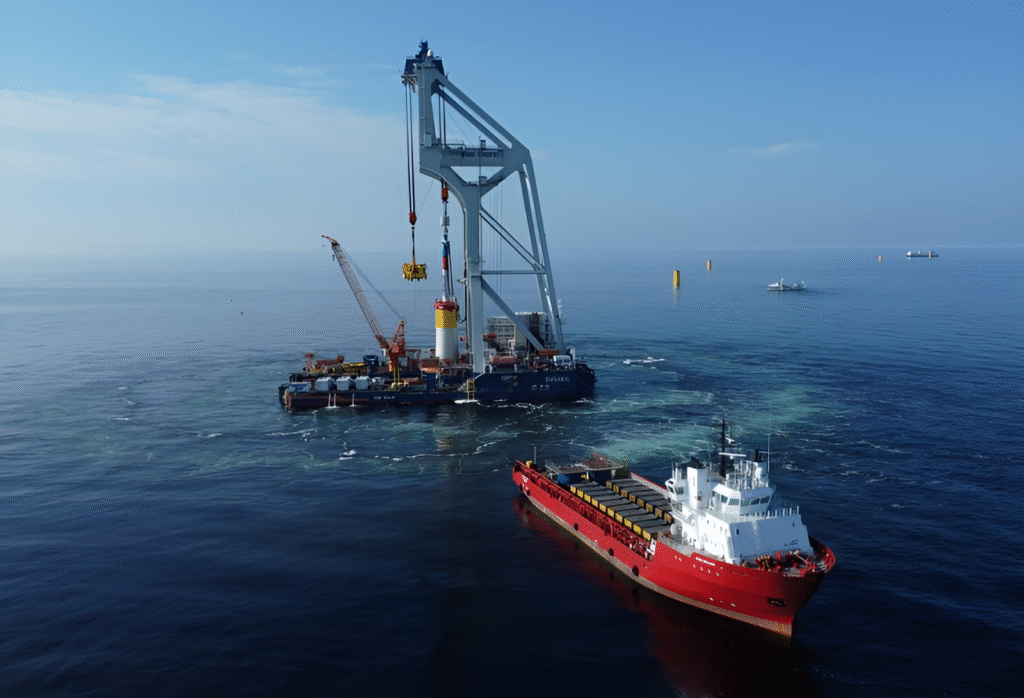
For ongoing coverage of federal and state-level developments, incentives, and regulatory updates, explore our U.S. wind energy policy section, where we track the latest policy changes shaping the industry.

The Future Outlook of Wind Energy

The future of wind energy is defined by scale, innovation, and integration. Larger turbines, longer blades, and floating platforms are unlocking new markets and improving efficiency. At the same time, digital technologies such as artificial intelligence and predictive maintenance are reducing operational costs and downtime.

As countries race to meet climate targets, wind energy is expected to remain one of the fastest-growing sources of new electricity generation. Continued investment in grids, energy storage, and policy stability will determine how quickly wind power can replace fossil fuels and support a fully decarbonized energy system. In the coming years, success will depend not only on technology but on how effectively wind power is integrated into modern electricity networks.

Why Wind Energy Matters

After explaining what wind power is, in a nutshell, wind power is one of humanity’s most important resources and a cornerstone of a sustainable future. At its core, wind power produces electricity with zero direct greenhouse gas emissions, making it a vital tool in combating climate change – the defining challenge of our time. Every turbine that turns in the wind represents a step toward avoiding pollution, cleaner air, and less dependence on fossil fuels.

Beyond its environmental benefits, wind power strengthens energy security. Reducing reliance on imported energy, it helps insulate countries from volatile global energy markets and geopolitical disruptions. Wind power keeps energy costs local, supporting domestic industries, and stabilizing long-term electricity costs for both consumers and businesses.

The wind industry is also a powerful economic engine. It supports millions of well-paying jobs in manufacturing, construction, installation, and long-term maintenance. Many of these jobs are created in rural and coastal communities, where wind projects provide new income opportunities, stable tax revenues for local governments, and lease payments for landowners. In regions facing economic decline, wind energy has become a source of renewal and long-term resilience.

Unlike fossil fuels, which are limited and increasingly expensive to extract, wind is a renewable resource. It will not run out and will not become more expensive as it is used. Wind energy provides important public health benefits by eliminating air pollutants from coal and gas plants that cause asthma, heart disease, and premature death – often impacting vulnerable communities the most.

Today, wind energy is no longer a niche or experimental technology. In many regions, it is one of the cheapest sources of new electricity, providing clean energy without a premium price. Wind works particularly well alongside solar power, producing electricity at different times of the day and year – often stronger at night and in winter – creating a more balanced and resilient energy system.

With proven technology, rapidly improving efficiency, and the ability to deploy projects faster than many other forms of power generation, wind power is one of the most scalable and practical solutions available. It is not just a vision for the future – it is a solution that can be built today, at the speed and scale needed to meet urgent climate, economic, and energy security goals.

  1. U.S. Department of Energy
  2. International Energy Agency
  3. GWEC – Global Wind Reports
  4. NREL – Grid Integration of Wind

Why the Trump Administration Paused U.S. Offshore Wind Leases Over National Security Risk

Offshore wind turbines off the U.S. coastline showing radar interference concerns for national security

The Trump offshore wind pause marks a significant turning point for America’s clean energy transition. Citing offshore wind national security risks, the U.S. Department of the Interior announced that U.S. offshore wind leases have been paused for all large-scale projects currently under construction.

At the center of the decision is growing concern over offshore wind radar interference, which defense agencies warn could weaken the nation’s ability to detect real threats near critical East Coast population centers. The move raises urgent questions about whether offshore wind projects and national defense can safely coexist.

Government Announcement: U.S. Offshore Wind Leases Paused

The Department of the Interior, working with the Department of War and other agencies, announced an immediate pause on large-scale offshore wind projects. The action affects major leaseholders and state partners while authorities assess the potential for mitigating national security risks.

Interior Secretary Doug Burgum stated:

“The prime duty of the United States government is to protect the American people. This pause ensures that emerging national security risks are addressed before these projects proceed.”

Offshore Wind National Security Risks Explained

Radar Interference and “Clutter.”

One key concern is the interference from offshore wind radar, commonly referred to as radar clutter. According to unclassified U.S. government reports:

  • Massive turbine blades create moving reflections
  • Highly reflective towers distort radar signals
  • These distortions can obscure actual threats or generate false targets

The Department of Energy noted in a 2024 report that radar thresholds can be adjusted to reduce false alarms; however, this may increase the likelihood of missing real targets. More details are available at the Department of Energy – Wind Energy Technologies Office

Projects Affected

The following U.S. offshore wind leases have been paused:

  • Vineyard Wind 1 (OCS-A 0501)
  • Revolution Wind (OCS-A 0486)
  • CVOW – Commercial (OCS-A 0483)
  • Sunrise Wind (OCS-A 0487)
  • Empire Wind 1 (OCS-A 0512)

These projects represent billions of dollars in investment and are pivotal to East Coast renewable energy plans.

Strategic Concerns for the East Coast

Most paused projects are near:

  • Dense population centers
  • Military installations
  • Key shipping lanes

To understand the technical differences between project types, see our guide on Floating vs Fixed-Bottom Offshore Wind.

Defense officials warn that radar interference from offshore wind near these zones could reduce situational awareness and response capability, creating vulnerabilities as adversary technologies evolve.

Next Steps

Federal agencies will:

  • Review classified defense assessments
  • Collaborate with developers to explore mitigation measures
  • Decide whether leases can resume or require modifications

Potential solutions include:

  • Advanced radar-compatible turbine designs
  • Modified turbine layouts
  • Partial or permanent project cancellations

Implications for the U.S. Offshore Wind Industry

This pause introduces uncertainty for:

  • Investors
  • State renewable energy targets
  • Supply chains for turbine manufacturing

It also signals that future offshore wind development will need to carefully consider national security constraints, particularly near strategic defense zones.

Source: U.S. Department of the Interior

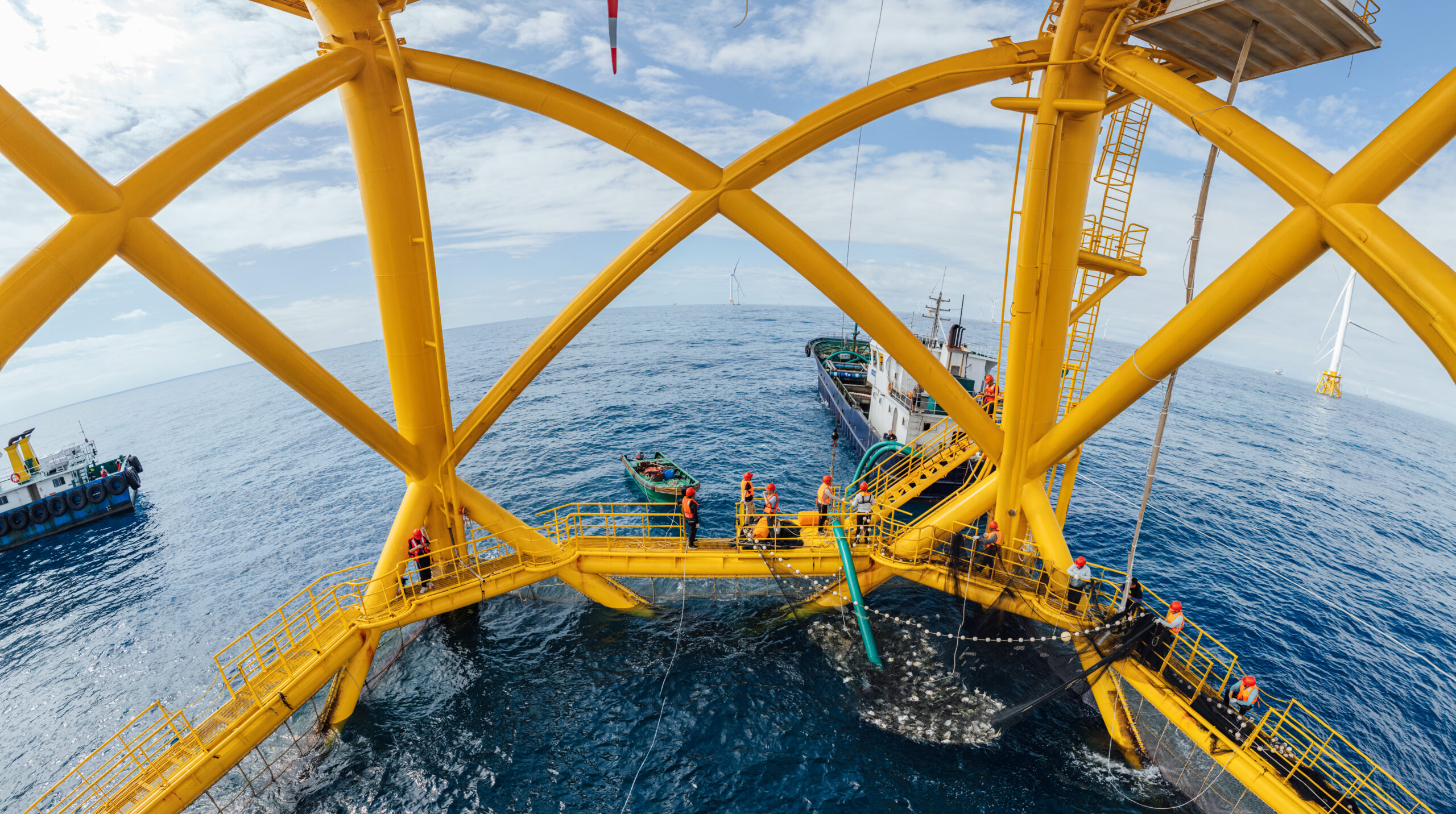
50 MW Floating Turbine—the World’s Largest—Was Built by China

China Built the World’s Largest 50 MW Floating Turbine

A Giant Rises in Offshore Wind

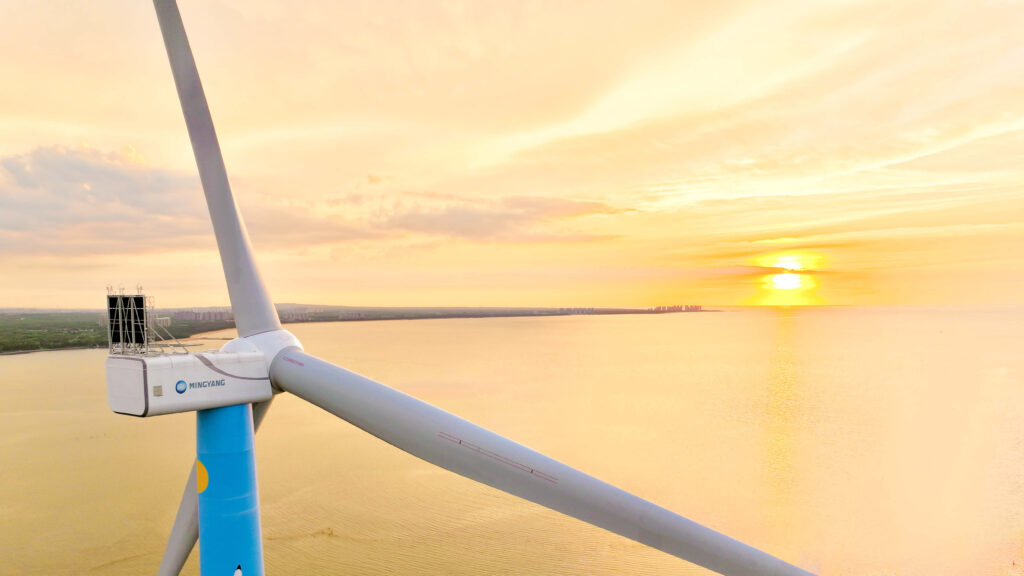
China has once again captured global attention in the renewable energy sector. An important turning point for the offshore wind sector has been marked by the announcement of plans for the largest 50 MW floating turbine in the world by Mingyang Smart Energy, one of the nation’s leading clean energy companies, according to Bloomberg.

Though it is still in its infancy, the idea goes far beyond small steps forward. It is a daring leap in ambition, scale, and design that has the potential to completely reshape the boundaries of what is technically and financially feasible in floating wind technology.

Mingyang Smart Energy—Behind the Innovation

Since its founding in 2006, Mingyang Smart Energy has emerged as a world leader in offshore engineering, smart energy systems, and wind turbine manufacturing. Record-breaking designs are nothing new to the company. By announcing a 22 MW offshore turbine in 2023, it raised the bar for turbine capacity. Mingyang is ambitious to outdo even that achievement with its 50 MW floating wind turbine concept, the largest ever proposed.

What Makes the 50 MW Floating Wind Turbine So Revolutionary?

The engineering scale of a 50 MW floating wind turbine is unprecedented. Today’s offshore wind turbines typically have a capacity of 10–18 MW. The increase to 50 MW, which is almost three times that capacity, necessitates radical adjustments to materials, structure, and floating platform stability.

According to Mingyang, this concept leverages:

MySE16-260, Image: Mingyang Smart Energy
  • lightweight composite blades of the next generation that are longer than 150 meters.
  • Large rotating structures can be stabilized with intelligent load control systems.
  • Sophisticated floating foundations are made to survive harsh maritime environments.
  • AI-powered energy optimization that enables integration with smart grids for optimal output efficiency.

By eliminating the need for numerous smaller units and lowering the cost per megawatt for offshore wind farms, this design may be able to power tens of thousands of homes with a single turbine.

Why China Is Betting Big on Floating Wind

The growth of offshore wind energy in China has been astounding. In terms of installed wind capacity, the nation leads the world, and floating wind power is becoming the next big thing. Floating turbines can function in deep offshore regions with more reliable and powerful wind resources than fixed-bottom turbines, which need shallow waters.

With the help of this technological advancement, China can now access enormous oceanic wind corridors in the East China Sea and South China Sea, opening up previously untapped potential for renewable energy.

Along with creating new investment opportunities for maritime engineering and smart grid integration, floating wind technology also lessens conflicts with coastal industries and fishing zones.

Floating Wind: The Next Phase of Global Energy Evolution

Although floating wind technology is not new, China’s large-scale entry could change the rules of international competition.
Early progress in floating wind pilot projects has been made by nations like Norway, Japan, and the United Kingdom. None, though, have suggested a design with a capacity of about 50 MW.

Mingyang hopes to reduce production costs, show grid stability, and illustrate how large turbines could power deep-sea wind farms in the future by scaling up.

This is in line with China’s long-term objective of becoming carbon neutral by 2060 and its larger clean energy strategy, which calls for 1,200 GW of renewable capacity by 2030.

Engineering Challenges Ahead

Despite the excitement, building a 50 MW floating wind turbine is no small task. Engineers must address:

  • Extreme load management: enormous wind and wave forces acting on a single massive structure.
  • Floating stability: ensuring the platform remains balanced in deep waters.
  • Transportation and assembly: moving colossal turbine components from land to offshore installation sites.
  • Grid connectivity: maintaining power stability for such a large, single-unit generation source.

Each of these challenges requires precision engineering, advanced materials, and continued research collaboration with global partners.

Global Reactions and Industry Impact

Energy analysts see Mingyang’s announcement as a symbol of China’s growing dominance in renewable technology.
If successful, this 50 MW floating wind turbine could outpace existing European designs and reshape offshore wind economics by drastically reducing per-megawatt costs.

Moreover, it would strengthen China’s position in exporting clean energy technology, enabling other nations to adopt large-scale floating wind solutions in their own coastal regions.

The Future of Offshore Wind Power

The concept also points to the future direction of offshore wind:
Fewer, larger, smarter turbines—all networked into digital energy grids.

By combining floating foundations, AI-driven efficiency, and smart energy systems, projects like Mingyang’s could accelerate the transition toward a cleaner, more sustainable global energy mix.

This innovation not only supports China’s domestic goals but also contributes to global decarbonization, offering a blueprint for how nations can harness offshore wind at scale.

Final Thoughts: The Floating Giant That Could Redefine Energy

Mingyang’s 50 MW floating turbine remains a concept, but its implications are enormous. It embodies the next generation of offshore wind innovation, combining engineering power, digital intelligence, and clean energy ambition.

If brought to life, this turbine could symbolize the moment the world’s energy landscape truly began to float—toward a smarter, greener, and more sustainable horizon.

Key Facts at a Glance

FeatureDetails
Turbine Capacity50 MW
TypeFloating Offshore Wind Turbine
DeveloperMingyang Smart Energy (China)
Innovation HighlightsAI optimization, smart grid integration, digital twin technology
Global SignificanceWorld’s largest wind turbine concept

FAQs

Q1: Why is the 50 MW floating wind turbine important?
It represents a major leap in offshore wind technology, offering higher capacity, lower costs, and access to deeper waters for clean energy generation.

Q2: What is unique about floating wind turbines?
They don’t require fixed foundations, making them ideal for deep-sea deployment where winds are stronger and more stable.

Q3: How does AI improve turbine efficiency?
AI algorithms monitor performance, predict failures, and adjust turbine settings in real time for optimal power generation and maintenance savings.

Stay updated on the world’s biggest renewable energy breakthroughs—follow WindNewsToday for daily insights into offshore wind, AI innovation, and global clean power transformation.

Vestas Is Hiring! Wind Senior Engineer Jobs—Grid Code & Interconnection (2025) in Texas

Vestas Is Hiring for Wind Senior Engineer jobs – Grid Code & Interconnection (2025)

Apply for Wind Senior Engineer Jobs – Powering the Renewable Energy Revolution USA

One of the most ambitious transformations in the history of the U.S. energy grid is underway in 2025. Experts in grid code compliance are more in demand than ever as wind, solar, and battery systems replace fossil fuels. Leading this shift is Vestas, a world leader in wind turbine production and innovation in renewable energy.

For the Wind Senior EngineerGrid Code & Interconnection position in Houston, Texas, Vestas is seeking a driven individual. The technical direction of grid integration will be influenced by this position. It’s more than just a job; it’s a chance to shape the way that clean power is delivered to millions of homes in North America.

If you are an accomplished electrical or power systems engineer with a strong interest in inverter-based energy systems and renewable grid compliance,

Why Grid Code & Interconnection Expertise Matters in 2025

The U.S. grid is changing quickly. As wind and solar resources increase, ensuring that grid codes are followed and interconnection performance is strong is vital for reliability. ISOs and RTOs like ERCOT, PJM, CAISO, and ISO-NE now require wind and hybrid plants to meet strict technical standards. These standards help balance renewable energy output with grid stability.

This is where Vestas’ Senior Engineer, Grid Code & Interconnection, plays an important role. You will ensure that inverter-based resources (IBRs) meet performance standards. You will work with NERC and IEEE committees and help shape the grid codes that will guide the renewable future.

At its heart, this role connects regulation, design, and innovation. It turns policy requirements into high-performing renewable systems.

Engineering Role in U.S. Wind Industry

As a Wind Energy Engineer Jobs USA – Grid Code & Interconnection, you will:

– Represent Vestas in industry working groups such as IEEE PES, ESIG, EPRI, and FERC discussions.

– Develop and interpret technical standards for interconnection of inverter-based resources.

– Collaborate with R&D teams to ensure wind turbines and Power Plant Controllers (PPCs) meet North American requirements.

– Monitor regulatory and market changes and turn them into actionable engineering plans.

– Support interconnection studies using modeling tools like PSS/E, PSCAD, TSAT, and DIgSILENT PowerFactory.

– Communicate compliance strategies and risks to leadership.

– Engage with utilities, ISOs, and regulatory bodies to solve grid code challenges.

This position blends technical knowledge and leadership. It is ideal for engineers who excel at the crossroads of regulation, technology, and strategic decision-making.

Qualifications & Expertise

– You’ve got a bachelor’s or master’s in electrical engineering, power systems, or renewable energy.

– At least 10 years working hands-on in grid interconnection, power systems engineering, or renewable energy.

– You know your way around modeling inverter-based resources and compliance testing.

– You’ve dealt with IEEE, NERC, FERC, and regional ISO/RTO standards—maybe even sat on a technical committee (IEEE, NERC, ESIG).

– You know how to get your point across and keep stakeholders on the same page.

– You can run simulations and use control tools like PSCAD, PSS/E, or PowerFactory.

Why Join Vestas Careers USA?

Vestas isn’t just the world’s biggest wind turbine producer—we’re on a mission. Every engineer here really helps lower global emissions and brings clean energy to more people, faster.

Here’s what you get:

– Solid base pay, plus a 401(k) with a company match.

– Full health, dental, and vision insurance.

– Flexible work hours and plenty of paid time off.

– Support for building your skills, including tuition reimbursement.

– A truly global, open, and supportive team where different backgrounds and ideas matter.

When you join Vestas, you’re signing on for more than just a job. You’re joining a team that’s building a future powered by wind and sustainability.

The Bigger Picture: Houston and the Renewable Grid Transition

Houston used to be the oil capital of the world. Now? It’s turning into a hotspot for renewable energy engineers. Texas leads the pack in wind power, and engineers here are shaping the future of grid-connected wind farms and hybrid systems.

At Vestas, you’ll collaborate with teams from all over the world. You’ll get your hands on the latest modeling tools and work on real projects that challenge the limits of renewable energy.

Job Summary—Wind Senior Engineer Jobs, Houston, TX: Grid Code & Interconnection

Position Title Wind Senior Engineer – Grid Code & Interconnection
CompanyVestas Careers USA—Global Leader in Wind Power
LocationHouston, Texas, USA
Employment TypeFull-Time
Job FamilyRenewable Energy Engineering Jobs
Experience LevelSenior/Management (10+ years)
IndustryPower Systems Engineer Wind Energy, Grid Compliance
Education RequiredBachelor’s or Master’s Degree in Electrical Engineering, Power Systems, or Renewable Energy
Work ModeOn-site/Hybrid (Houston-based)
Estimated Salary Range$130,000–$160,000+ (Depending on experience)
Date PostedOctober 10, 2025
Requisition ID65268
Application DeadlineOpen until filled

FAQs—Power Systems Engineer Wind Energy

1. What is a Wind Senior Engineer – Grid Code & Interconnection?
This is a senior-level engineering role responsible for ensuring Vestas’ wind energy systems comply with U.S. grid interconnection requirements and technical standards.

2. What qualifications are needed for this role?
A degree in Electrical or Power Systems Engineering, 10+ years of relevant experience, and deep knowledge of renewable grid compliance standards.

3. Where is this position based?
Houston, TX, USA, the center of renewable energy innovation in the U.S.

4. Are Wind Senior Engineer jobs remote or on-site?
They are mostly on-site, with some flexibility for hybrid collaboration and industry travel.

5. Why is grid code compliance important in wind energy?
It ensures renewable systems provide stable and reliable power to the grid while fulfilling all regulatory performance standards.

6. What is the average salary for a senior engineer in this field?
Salaries range from $130,000 to over $160,000, depending on experience and regional cost of living.

7. How can I apply?
Apply directly at Vestas Careers USA or explore other wind energy jobs at WindNewsToday.com/jobs.

Build the Future for Renewable Energy Engineering Jobs

If you’re ready to drive the renewable transformation, Vestas wants you.
Join as a Wind Senior Engineer – Grid Code & Interconnection and help design the compliance systems that make clean energy possible.

Company Address

💼 Location: Houston, TX
🌍 Company: Vestas—Global Leader in Wind Power

Hedeager 42
8200 Aarhus N
Denmark
Phone: (+45) 97 30 00 00
Fax: (+45) 97 30 31 30
vestas@vestas.com
🕒 Type: Full-Time | Management | Engineering

RWE Offshore Wind Project Australia Canceled Amid Policy Delays

RWE Offshore Wind Project Australia Canceled

The RWE Offshore Wind Project Australia—a massive 2 GW development planned off the coast of Victoria—has officially been canceled. German renewable energy giant RWE confirmed it has ceased the development of the Kent Offshore Wind Farm, following the Australian government’s decision to delay its first offshore wind tender.

After nearly a year of feasibility studies, RWE announced that the RWE Offshore Wind Project Australia would no longer move forward under current market conditions. The Kent site, located approximately 67 kilometers off the Gippsland offshore wind zone, featured an average water depth of 59 meters and was expected to be operational in the early 2030s.

“This decision follows a review of the project’s competitiveness in current market conditions, as well as ongoing uncertainties around supply chain costs and the future design of the auction framework,” RWE said in a statement.

“We want to be clear that this decision relates solely to the Kent Offshore Wind Project.”

RWE’s Kent Offshore Wind Vision in Australia

The RWE Offshore Wind Project Australia was designed to generate 2 gigawatts (GW) of clean power, enough to supply hundreds of thousands of homes with renewable energy. The project symbolized a major investment in Australia’s transition toward carbon neutrality and reflected RWE’s growing interest in the Asia-Pacific renewable energy market.

However, with policy delays, high supply chain costs, and an undefined auction framework, RWE concluded that continuing with development was no longer viable at this stage.

RWE’s Kent Offshore Wind Vision in Australia

The RWE Offshore Wind Project Australia was designed to generate 2 gigawatts (GW) of clean power, enough to supply hundreds of thousands of homes with renewable energy. The project symbolized a major investment in Australia’s transition toward carbon neutrality and reflected RWE’s growing interest in the Asia-Pacific renewable energy market.

However, with policy delays, high supply chain costs, and an undefined auction framework, RWE concluded that continuing with development was no longer viable at this stage.

Gippsland: The Heart of Australia’s Offshore Wind Ambitions

Declared in 2022, Gippsland became Australia’s first offshore wind zone, with an estimated potential of 25 GW of renewable energy capacity. The region quickly attracted leading developers, including RWE, BlueFloat Energy, and a joint venture between Origin Energy and Renewable Energy Systems (RES).

Yet, recent months have brought setbacks. BlueFloat Energy withdrew from the Gippsland zone in July 2025, and the Origin-RES joint venture later suspended work on its 1.5 GW Navigator Offshore Wind Project, citing similar challenges and uncertainties around Victoria’s delayed offshore wind auction.

These developments collectively underscore how regulatory delays and rising global supply costs are impacting Australia’s emerging offshore wind sector.

Policy Uncertainty Threatens Offshore Wind Growth

The Victorian government’s decision to indefinitely postpone its first offshore wind auction in September has created significant market uncertainty. Without a clear auction framework, developers find it difficult to assess project economics and secure funding for the complex infrastructure offshore wind requires.

Experts say that the RWE Offshore Wind Project Australia highlights the importance of a transparent and timely offshore wind policy to maintain investor confidence.

“Australia has the wind resources and engineering talent to become a global offshore wind leader,” said an energy analyst from Melbourne. “But developers need policy stability and consistent auction timelines to make long-term investment decisions.”

Australia’s Offshore Wind Potential Remains Strong

Despite RWE’s withdrawal, Australia’s offshore wind potential is vast and largely untapped. The federal government estimates that tens of gigawatts of renewable energy could be generated from the nation’s coastal zones, supporting national targets to reach net zero emissions by 2050.

The Gippsland offshore wind zone remains central to this vision, with other developers continuing feasibility studies despite current challenges. The area’s powerful and consistent winds offer a foundation for future clean energy generation once clearer policies are in place.

Conclusion: RWE Offshore Wind Project Australia Signals a Wake-Up Call

The cancellation of the RWE Offshore Wind Project Australia is a reminder that even the strongest renewable energy ambitions depend on policy clarity, stable auction frameworks, and supply chain support.

While RWE has paused its Australian offshore wind efforts, the company remains a leading global player in offshore wind development across Europe, North America, and Asia-Pacific. Industry observers believe RWE could re-enter the Australian market once the regulatory environment matures.

Ultimately, the project’s cancellation serves as both a lesson and an opportunity—highlighting the need for stronger coordination between government, investors, and developers to realize Australia’s clean energy potential and secure its place in the global offshore wind market.

What’s Next for RWE?

Although RWE has exited the Kent project, the company continues to maintain a strong presence in global offshore wind markets, with active developments in Europe, the United States, and Asia-Pacific. The company remains optimistic about future opportunities in Australia once market conditions stabilize and the government finalizes its offshore wind framework.

Project Controls Specialist Offshore: Ultimate Exciting Role at Vestas in NYC

Project Controls Specialist Offshore: Ultimate Exciting Role at Vestas in NYC

Drive Vestas’ US offshore wind projects with expertise in project controls, cost management, and scheduling

Vestas offshore Wind US

Vestas, the global leader in wind energy, is hiring a Project Controls Specialist, Offshore to manage and optimize offshore wind project controls for its US projects. This role is essential for overseeing planning, scheduling, and cost management offshore wind projects, ensuring timely and efficient delivery. You will collaborate closely with senior management, project teams, finance, and customers to drive project success.

At a Glance – Project Controls Specialist Offshore

Offshore Wind Project Controls Key Responsibilities

  • Serve as a subject matter expert on project controls, designing and implementing systems for offshore wind project controls in the US.
  • Standardize procedures for cost reporting, schedule management, and progress tracking across all projects.
  • Promote a progress-based schedule and cost philosophy within Offshore Customer Project Execution.
  • Implement lessons learned to continuously improve project controls frameworks for future offshore projects.
  • Prepare all project deliverables: cost reports, revenue forecasts, Primavera schedules, 30-day look-ahead reports, progress reports, and manhour tracking.
  • Analyze real-time data to support decision-making on schedule, revenue recognition, costs, risks, and contingencies.
  • Identify, escalate, and mitigate construction portfolio risks to enhance overall P&L performance.
  • Liaise with Supply Chain, Transportation, and external teams to mitigate risks affecting offshore project delivery.
  • Collaborate with Performance Management Office for trend analysis and P&L performance reporting.
  • Ensure timely issuance of all deliverables to customers according to contractual requirements.

Project Management Qualifications

  • Bachelor’s degree in Engineering, Project Management, Business Administration, or related field.
  • 5+ years in project controls, planning/scheduling, cost management, contract management, or change management.
  • Experience managing large-scale projects, ideally Vestas offshore wind US projects or other international energy initiatives.
  • Proficiency in Primavera P6, MS Office Suite, SAP, and BI tools.
  • Strong organizational, analytical, and communication skills.
  • Ability to work independently and collaboratively in dynamic, high-pressure environments.
  • Willingness to travel to offshore sites for training and onboarding.

Competencies

  • Advanced English communication (verbal, written, presentation).
  • Technical proficiency with Microsoft Office Suite and SAP.
  • Ability to implement and streamline administrative and project processes.
  • Cross-functional collaboration and multicultural awareness.
  • Strong attention to detail, integrity, and transparency.

Work Location

Brooklyn, NY, with occasional travel to offshore project sites for training and onboarding.

Compensation & Benefits

  • Salary: $120,000–$140,000 annually
  • Comprehensive benefits including dental, vision, PTO, 401(k) with employer match, and tuition assistance
  • International, collaborative work environment with a focus on sustainability and safety

FAQs

Q1: What is the main focus of the Project Controls Specialist, Offshore role?
A1: To manage and optimize offshore wind project controls, including planning, scheduling, cost management, risk mitigation, and reporting.

Q2: What experience is required?
A2: 5+ years in project controls, project management, or cost management for large-scale or offshore wind projects.

Q3: Will travel be required?
A3: Yes, the role requires travel to offshore sites for training and project onboarding.

Q4: Which software skills are preferred?
A4: Primavera P6, MS Office Suite, SAP, and BI tools are preferred.

Q5: What is the compensation range?
A5: $120,000 – $140,000 annually, with comprehensive benefits including PTO, 401(k), and tuition assistance.

Call to Action (CTA)

Join Vestas Offshore Wind US, the global leader in renewable energy, as a Project Controls Specialist Offshore, and lead the success of cost management offshore wind projects. Apply now to make an impact in sustainable energy and career growth.

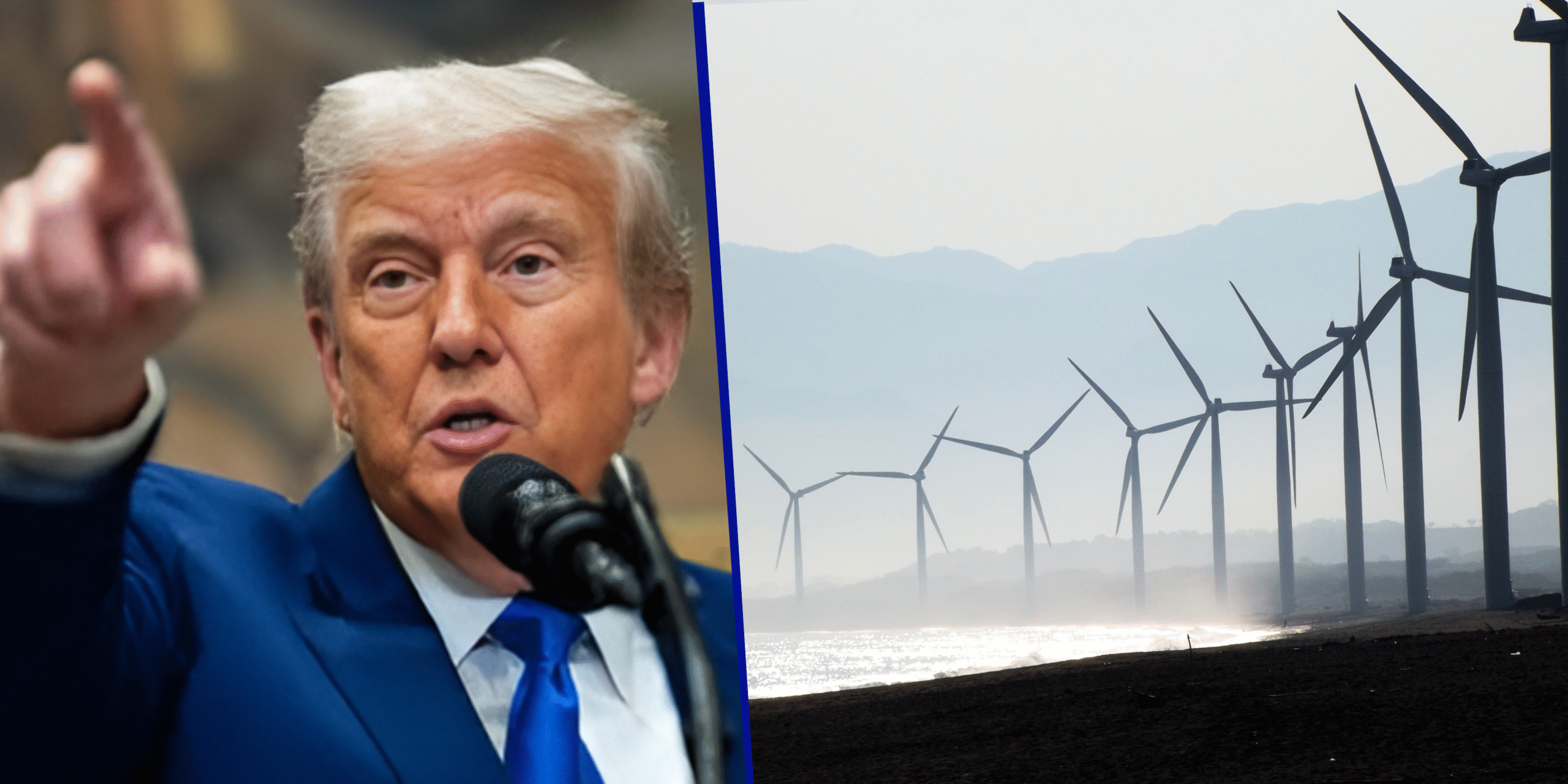
How Trump Energy Policy is Killing 22 Offshore Wind Projects, $114B Investment

How Trump energy policy is Killing 22 Offshore Wind projects, $114B Investment

The offshore wind sector has been stagnant with federal leasing halted, tax credits eliminated and developers pulling out of core markets

President Donald Trump energy policy changes are putting America’s offshore wind industry in jeopardy, with more than 22 projects on hold and an estimated $114 billion in clean energy investments at risk.

The Biden administration has been making some dramatic strides in its push toward renewable energy, particularly wind power. Several offshore wind project policy decisions involving billions of dollars in investment, projects, and infrastructure were made before he took office. But Trump’s reversal of that Biden-era clean energy aid — along with an executive order suspending offshore wind leasing and permitting — has brought development along the East Coast to a near standstill. Energy experts warn that the stalling could hurt states’ climate goals and derail America’s renewable energy ambitions for the next decade, potentially costing billions of dollars.

Trump Energy Policy Halts Offshore Progress

On his first day in office, President Trump signed an executive order halting new and renewal approvals for offshore wind projects pending a full federal review. The order effectively withdraws federal waters from offshore wind leasing and suspends agency operations across multiple departments, including the Bureau of Ocean Energy Management (BOEM).

While the review remains incomplete, the White House has declined to provide details or a timeline for a resolution.

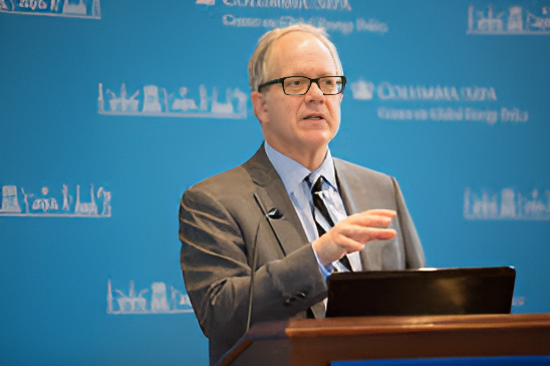
“The result I fear is unexplained delays,” said Jonathan Elkind, a senior research scholar at Columbia University’s Center on Global Energy Policy. “There’s no transparency here.”

Permits revoked, projects canceled

Since the order, numerous wind projects have had their air permits revoked, environmental assessments delayed, and construction halted. As a result of regulatory uncertainty, a major offshore project in New Jersey has pulled out of its state power contract after the EPA’s decision to revoke its permit. France-based renewable energy developer EDF has formally withdrawn from its $5 billion Atlantic Shores offshore wind project in New Jersey, which was set to generate up to 1,500 megawatts of power, decarbonize the U.S. power grid, and provide clean electricity to more than 700,000 homes.

Industry data shows that 22 wind farms spanning states from Massachusetts to North Carolina are either on hold in the planning stages or have been pulled out of the pipeline entirely. In the New York Bay, once a centerpiece of Biden’s offshore wind campaign, at least two projects have been formally canceled.

The delays would affect about 22 gigawatts of planned capacity — enough to power millions of homes.

$114B Offshore Wind investments at risk

Natalie Gunnell, Shell’s renewable energy division imge: linkedln

According to an April analysis by BloombergNEF, the Trump’s energy policy changes have forced developers to pull out of projects that have yet to reach a final investment decision (FID). Without assurances of federal support, companies are delaying supplier contracts, canceling financing rounds and exiting joint ventures.

Shell and Equinor, the two largest investors in the sector, have already pulled out of key offshore developments in New Jersey. Shell has confirmed that it will not be building any new offshore wind projects in the United States.

“The commercial situation is no longer viable,” said Natalie Gunnell, a spokeswoman for Shell’s renewable energy division.

The Republican Party has moved to repeal the Clean Energy Tax Incentive.

The industry slowdown comes amid efforts in Congress to repeal key provisions of the Inflation Reduction Act, including the Clean Energy Investment Tax Credit. Clean energy projects would have to begin construction within 60 days to qualify for the home-grown energy package, and would be phased out entirely by 2028.

The current Senate version drops the 60-day provision while maintaining the phase-out provision. Industry advocates argue that the proposed changes add another layer of uncertainty, further cooling investment.

“It’s creating an environment where financing and procurement deals are not moving forward,” said Harrison Schoeller, an offshore wind analyst at BloombergNEF.

Supply chain expansion stalls nationwide

Beyond the coast, the impact is being felt across the U.S. wind supply chain. For example, Siemens Gamesa’s plan to open a Virginia blade manufacturing facility in 2023 was canceled due to insufficient demand. Vestas’ proposed nacelle assembly plant in New Jersey has been quietly shelved.

As domestic suppliers retreat, future U.S. wind projects could become more reliant on imports—with developers facing potential tariffs on European components proposed by the Trump administration.

As a result, analysts estimate that production costs could increase by up to 25% over current policy conditions.

Climate Goals at risk

The United States is now expected to generate just 6.1 gigawatts of offshore wind power by 2030, 20% of the Biden administration’s original 30-gigawatt goal. Eleven states with offshore wind targets are unlikely to meet them, according to a project-by-project review by BloombergNEF.

“There’s been a chilling effect across the industry,” said Katharine Collins, president of the Southeastern Wind Coalition. “We’re seeing projects being scrapped and approvals being delayed nationwide.”

The impact extends beyond power generation. Thousands of green jobs, from technicians to engineers, are at risk in shipbuilding, steelmaking and port construction. State officials have begun revising energy roadmaps as the federal government restricts wind development.

South Fork Wind Farm

One example of Biden’s success in offshore wind projects is the name of South Fork Wind Farm. It is New York’s first commercial offshore wind farm and is considered a milestone toward meeting the United States’ 2030 renewable energy goals.

The 150-megawatt offshore wind farm is a groundbreaking project in the search for sustainable energy solutions. It is the first offshore wind project in the United States to connect to the national grid in 2024. It is one of the achievements of the Biden-Harris administration, symbolizing the 2030 wind policy.

Jointly owned by Danish multinational Orsted and US energy supplier Eversource, the wind farm has a capacity of 130 megawatts and can generate clean energy for more than 70,000 homes. It is a major step towards achieving New York’s goal of generating 70% of its electricity from renewable sources by 2030. Located about 35 miles off the coast of Montauk, the wind farm is expected to eliminate up to six million tons of carbon emissions over its lifetime, the equivalent of taking 60,000 cars off the road for the next 20 years.

South Fork Wind is providing more than 1,200 direct construction jobs and thousands more indirect and induced jobs. Hundreds of New Yorkers, engineers, electricians and conservationists are operating the South Fork Wind project. It aims to create thousands of long-term and temporary environmentally friendly jobs, support training programs, fund scientific research and provide opportunities for underserved communities.

Some Hope, But Not Clear

Despite the stalemate, a handful of offshore wind farms are under construction, including Empire Wind in New York, and are expected to be completed by 2027, adding about 5.7 gigawatts of power to the East Coast grid. But experts warn that these projects represent legacy investments from previous administrations, not signs of future progress.

“There are still opportunities here,” said Hilary Bright of the national offshore wind advocacy group Turn Forward. “But without policy coordination, those opportunities won’t materialize.”

The Bottom line

The future of offshore wind in the U.S. under the Trump’s energy policy with administration’s current energy strategy is highly uncertain. With billions in clean energy investments on hold and dozens of projects stuck in regulatory deadlock, the path to a low-carbon energy grid is narrowing. The U.S. is moving away from green policies, lower greenhouse gas emissions, and efforts to limit warming to 1.5 degrees Celsius. Absent major federal policy changes or legislative compromises, America’s offshore wind projects ambitions will likely remain on hold for the next decade.

UK Floating Wind Powers Up 4M Homes, Create 5,000+ Jobs – “A Generational Win”

UK Floating Wind Powers Up 4M Homes, Create 5,000+ Jobs

UK Floating Wind Farms Lights Up Millions and Transform Coastline Economies

A huge project to harness the power of the wind 15 miles out to sea south of the coastlines of south Wales and south-west England is “breathtaking” and a “generational win” for clean energy and the UK economy, according to the government. The government has now named the companies that will build the farms, pledging a “green industrial revolution” that will feed enough renewable energy to the grid to supply power to up to four million homes — and to produce more than 5,300 in renewable energy jobs.

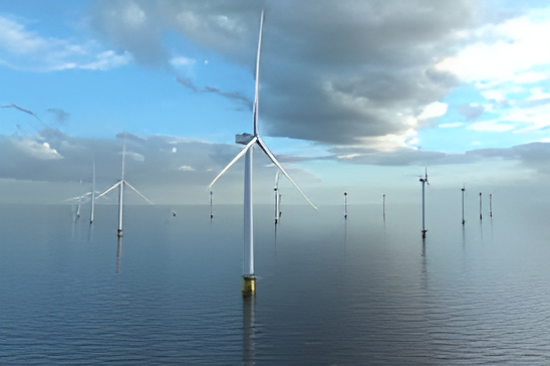
The project, led by joint venture partners Equinor and Gwynt Glas (EDF Renewable UK and ESB), was supported by the Crown Estate, and is set to see building some of the world’s biggest floating wind turbines – standing as tall as 300m and mounted on platforms the size of football pitches in deep waters some distance away from the coast.

They are to be built in Port Talbot and Bristol providing long term jobs, economic benefits and training in the regions. The UK government expects the windfarms to be operational in the early 2030s, with the added benefit of lower energy bills and energy independence to thousands of clean energy workers

“This is great news for future generations,” said sustainability consultant Andy Middleton. “Teenagers of today will be the workforce of tomorrow driving a UK green energy future that is clean, secure and affordable.
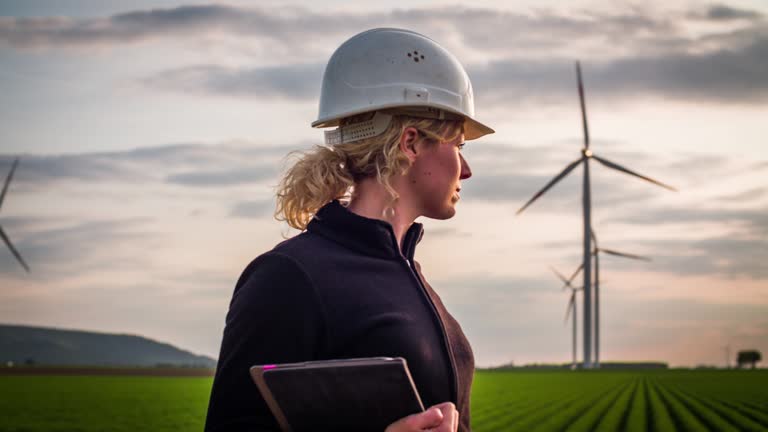
UK Floating Wind Lights Up 4M Homes

£400m Crown Estate investment Sparks Economic Boost

Image: GOVT. UK

The Crown Estate, responsible for managing seabed rights and with more than £603m of holdings in land in wales, is putting £400m into boosting the UK’s offshore wind supply chain. The scheme fits with the UK’s push to ramp up net-zero actions to drive green jobs and green infrastructure.

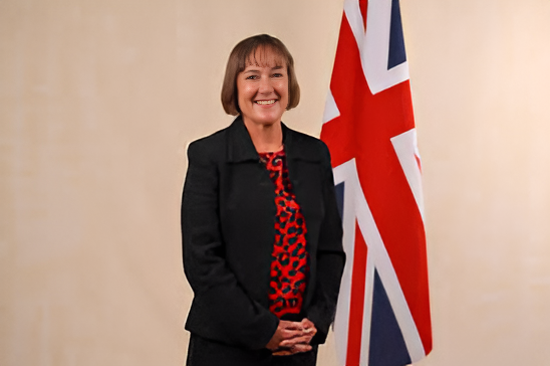
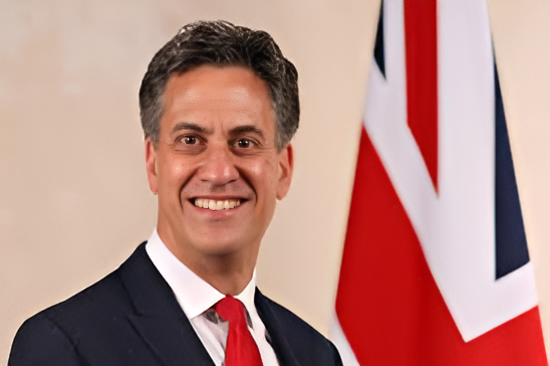
Welsh Secretary Jo Stevens said the initiative was “hugely significant” while Energy Secretary Ed Miliband said it would be “transformative,” pointing to industrial renewal, energy independence and economic renewal in places like Port Talbot and Bristol.

Image: GOVT. UK

“We’re backing thousands of jobs while ensuring everyone can rely on clean, affordable energy at the flick of a switch for decades to come,” said Miliband.

Youth & Inclusion of UK Floating Wind

At least 10% of new recruits are pledged to be drawn from the stagnant 19 to 24 NEET market. This guarantees the renewal that the next generations are involved in the energy transition and can find sustainable and skilled careers.

The Welsh Government, meanwhile, has promised to contract with developers directly in an effort to ensure the maximum number of jobs for local people.

Image: BBC

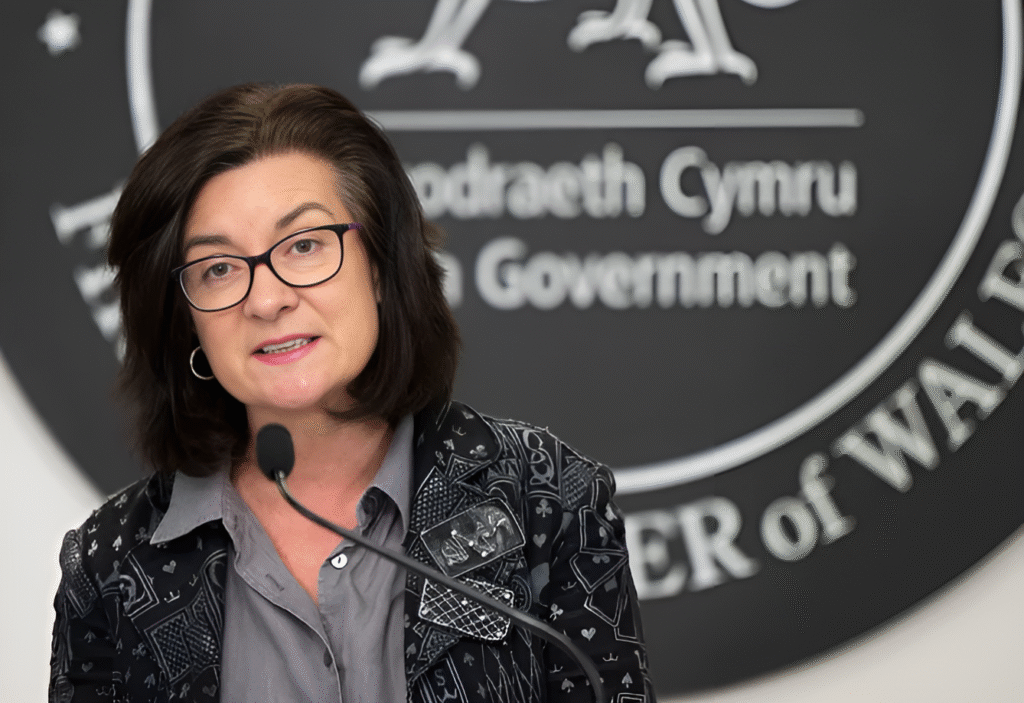
“We’ll be getting on the phone to these companies to get jobs into Wales,” the first minister, Eluned Morgan, said.

Voices of Concern and Opportunity

The move has been welcomed by many, but some Welsh politicians raised concerns over the redistribution of profit. Plaid Cymru’s energy spokesperson Llinos Medi MP criticised that money would be going to Whitehall rather than being retained in Wales after making use of Welsh natural resources.

Even so, the scale of that opportunity is difficult to dismiss.

Image: Linkedln

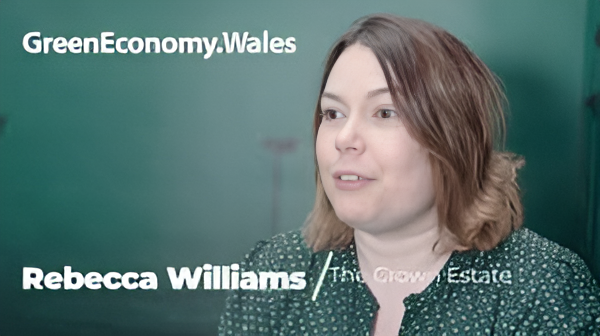
“This is more than simply an energy project — it represents a major turning point for the U.K.’s clean energy economy,” said Rebecca Williams, the director of the Crown Estate portfolio in Wales.

With UK floating wind farms in the pipeline, supported by billions of pounds of investment and thousands of jobs, the UK is cementing its position as a world leader in offshore renewable energy. And as construction accelerates and turbines are assembled in Port Talbot and Bristol, this clean energy surge holds the potential to power homes, train future generations and transform regional economies — all while driving the U.K. toward a net-zero future.

FAQ: UK Floating Wind Farms

What is a floating wind farm?

A floating wind farm is a wind farm with turbines installed on floating platforms instead of fixed substations embedded on the seafloor. Rather than stationary, bottom-fixed turbines, floating wind farms can be placed in deeper waters where wind is stronger and more consistent.

Why is the UK invest in floating wind farms?

The UK has fantastic offshore wind potential globally, especially in deeper water. The UK investing in floating wind technology enables it to:

Increase renewable generation of electricity

Power millions of homes

Help net-zero missions objectives

Produce tens of thousands of green jobs in coastal communities

Where are the UK floating wind farms being built?

New floating windfarms are planned for the coasts of south Wales and south-west England, and Port Talbot and Bristol are earmarked for turbine assembly and supply chain hubs.

Who are the UK’s floating wind leaders?

The UK’s key floating wind projects are being driven by:

Equinor (a dominant global offshore wind company)

EDF Renewables UK and ESB JV Gwynt Glas

The Crown Estate Offshore wind investment £400m in UK offshore wind supply chain

How many households will floating wind farms supply in the UK?

The proposed floating wind farms, which are expected to be operational by the early 2030s, could produce clean energy to power more than 4 million homes in the UK.

What economic value will these projects add?

Floating wind is expected to:

Generate more than 5,300 renewable energy jobs Wales

Inject a £1.4 billion benefit to the UK economy

Boost local jobs, particularly in Wales and the south-west of England

How do floating wind farms differ from fixed-bottom offshore wind farms?

Floating windmills can be placed in depths of water down to 60+ meters whereas fixed-bottom windmills need shallow shoreline seas. This opens up new frontiers for development, notably in the Celtic Sea.

How does this help young workers and local communities?

Developers have pledged to take on a minimum 10 per cent of NEET workers aged 19-24. That supports long-term clean energy careers and makes sure local talent profits right from the green shift.

When will the UK floating windfarms be up and running?

The UK’s first commercial floating wind farms are anticipated to be operational by the early 2030s, with early stage development and investment in the supply chain already taking place.

Crown Estate £400M Offshore Wind Investment to supercharge to UK Infrastructure

Crown Estate £400M Offshore Wind Investment to supercharge to UK Infrastructure

Crown Estate Offshore Wind Investment Plan Explained

In a significant move to super-charge the UK’s offshore wind industry, The Crown Estate has announced plans to invest up to £400 million in a new round of leasing for offshore wind sites. This was an ambitious declaration made at the ‘2025 Global Offshore Wind conference’ summit in London when — dubbed the powering wind energy plan — aims to unlock the next phase of wind energy growth in the UK by the supporting vital onshore.

UK offshore Wind Investment Set for Major Expansion

Under the “Powering Offshore Wind”, The Crown Land’s new capital investment plan comes on the back of a strategy to offer long-term seabed leases for new offshore wind projects, aiming to develop a world leading offshore wind market in the UK.

The plan centers on:

  • Port and harbor upgrades
  • centers of wind-turbine component manufacturing
  • Research and testing installations
  • Partners International Agency Collaboration with national energy agencies

This is vital in order to meet the UK’s renewables targets, and also a catalyst for creating jobs, spurring investment, and driving economic

Head Of the Investment, Crown Estate

Supply chain capacity has been one of the biggest hurdles to fast offshore wind growth in the UK. Ben Brinded, head of investment of The Crown Land, said that it was an investment to target the gaps.

“Without working together and investing in the UK supply chain, we will not achieve the full economic, social and environmental potential of offshore wind,” Brinded said, during the announcement.

And by de-risking future offshore wind developments, improving logistics, and cutting costs for developers, the £400 million funding is predicted to deliver long-term wins in terms of both clean energy generation and the domestic economy.

How the powering offshore wind plan support by supply chain growth

It’s not going to occur in a vacuum, this investment. Organizations including Great British Energy, the National Wealth Fund, and key private sector players will all be supported by The Crown Land to help deliver maximum impact.

Chair of the Offshore Wind Growth Partnership

“As the Offshore Wind Industry works towards delivering the aspirations of the Industrial Growth Plan, industry and the other public investors working in alignment and collaboration is the best way to achieve this,” added Tim Pick, Chair of the Offshore Wind Growth Partnership.

That aligns with efforts to speed up projects, support technology leadership in the UK and increase local content in offshore wind work, cementing Britain’s status as a global wind leader.

How the powering offshore wind plan supports by supply chain

While The Crown Land manages seabed leasing for England, Wales and Northern Ireland, the investment affects various other regions across the UK, such as Scotland and Ireland. Many infrastructure improvements will do good for regional economies while enhancing the national grid.

So whether it’s off the coast of the north-east of (England, Scotland and Wales) building out extra port capacity, in Wales manufacturing and in Northern Ireland testing facilities, this package is about making sure all parts of the UK can access the advantages of clean energy.

This is not your casual investment of the day. The Crown Land is focusing medium-term infrastructure development for resilient systems that can deliver:

  • Floating wind farms
  • Larger turbine deployments
  • Faster project permitting
  • Engineering and construction green jobs

They are also in line with the UK’s goal to reach net-zero emissions by 2050.

Why £400 million in Renewable Energy funding matters now

The UK is already a world leader in offshore wind capacity, but expansion has stagnated because of infrastructure constraints and the pressures of rising costs. As a strategic ambitious investment inducement, it unlocks stalled schemes, as well as drawing in overseas money and encouraging innovation in next-generation wind.

For developers, investors and for communities, the news is being portrayed in the media as a turning point – one that could shape the UK’s energy landscape for generations to come.

The Crown Land’s £400 million pledge to unlock the full potential of offshore wind is more than an investment – it is a statement of ambition that the UK will be the global leader in clean energy.

As new ports are developed, manufacturing scales up, and innovation progresses, this scheme could turbocharge the offshore wind industry, support thousands of green jobs and help transition the UK towards a sustainable, net zero future.

Trump’s EPA Kills $5B Wind Farm – EDF pulls out New Jersey project

Trump's EPA Kills $5B Wind Farm - EDF pulls out New Jersey project

President’s executive order Sparks uncertainty over offshore wind

EDF France-based Renewables developer has officially withdrawn from its Atlantic Shores offshore wind project in New Jersey, due to regulatory uncertainty created by the administration and policies of former President Donald Trump. The $5 billion clean energy project faces a significant setback today after the Environmental Protection Agency (EPA) revoked a key permit, halting construction plans just months after federal approval under President Biden.

Trump EPA Sinks $5B Wind Farm

Trump order and EDF withdrawal cited as key reasons

Former President signed an executive order on his first day back in office that directed the Interior Department to suspend future leases for offshore wind projects and reevaluate the permitting process. While the order did not directly affect projects already approved, it did result in the Environmental Protection Agency revoking the environmental permit granted to Atlantic Shores in October 2024. In a follow-up,

EDF Renewables filed a request with New Jersey regulators on Tuesday to terminate the power supply agreement associated with the Atlantic Shores 1 wind project. The move effectively puts the project on indefinite hold and is said to be one of the most high-profile withdrawals in the U.S. offshore wind sector.

Renewable’s filing directly blames President’s decision to revoke the original permit by the Environmental Protection Agency and broader executive actions taken by the White House targeting offshore wind development.

“The President’s wind memorandum, the subsequent loss of permits and other actions taken by the current administration have forced the applicant’s parent company to materially reduce its workforce, terminate contracts and cancel planned project investments,” the company said.

EDF cited in its filing that these actions have created “an uncontrollable level of uncertainty,” making further investment in the NJ project financially and operationally risky.

Impact on New Jersey’s Clean Energy Goals

The Atlantic Shores Wind Farm, a major Biden-era effort that was slated to generate up to 1,500 megawatts of electricity, decarbonize the U.S. power grid and provide clean electricity to more than 700,000 homes, is now a part of the now-defunct Great loss for Renewable Future initiative. It was one of 11 offshore wind projects approved between 2021 and 2024 under the previous administration.

“This filing marks the end of a chapter, but not the end for Atlantic Shore,” Atlantic Shore CEO Joris Veldoven said in a public statement. “Offshore wind continues to provide NJ with a strong value proposition that includes thousands of well-paying jobs, stable electricity prices and real economic benefits.”

However, Veldoven noted that the company is “re-evaluating” its long-term plans in the U.S. due to changing federal policy. Opponents of offshore wind development, on the other hand — including lawmakers, fishermen and environmental groups concerned about marine life — are celebrating the announcement.

“This is a huge win for South Jersey,” said longtime critic Rep. Jeff Van Drew (R-N.J.). “We have been fighting to protect our coastline, our economy and our communities from reckless offshore wind development.”

Bonnie Brady, president of the Long Island Commercial Fishing Association, added:

“Every time a wind company pulls out of a project in the United States, it’s a great day for all of us who make our living from the ocean.”

Offshore Wind Struggle Continues

This is the second major wind project in NJ to be canceled in less than two years. Earlier in 2023, Denmark’s Orsted abandoned its Ocean Wind projects due to economic pressures from inflation and global supply chain problems.

With the France-based renewable new joining the Renewal exit list, questions are being raised about the future viability of offshore wind power in the United States—especially under an administration that favors fossil fuels over renewables.


Conclusion: The Future of Energy Shifts in the Political Policies

As the political winds shift, clean energy developers are facing a new era of uncertainty in the United States. The renewable energy company, who plays a leading role, developed 23 GW over 300 projects, has withdrawal from the Atlantic Shores project could signal a broader industry withdrawal in response to federal opposition—which could have a high-impact impact on the country’s ability to meet climate goals.

Poland Opens Baltic’s Largest Offshore Wind Terminal Led By ORLEN Neptun

Poland Opens Baltic's Largest Offshore Wind Terminal Led By ORLEN Neptun

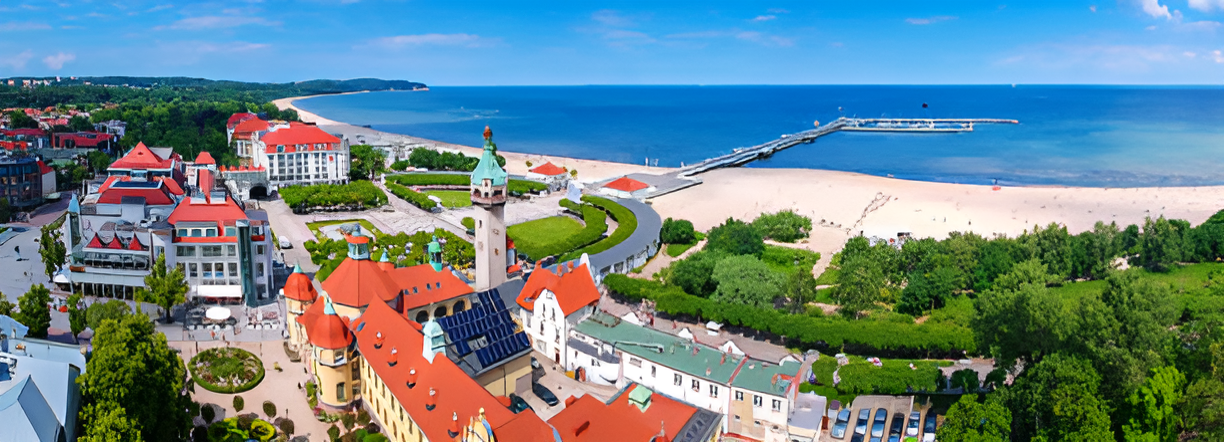
Świnoujście Becomes the a pivotal Hub of offshore Wind Energy in Poland

Świnoujście, Poland – In a groundbreaking step for Poland’s renewable energy ambitions with the launch of Świnoujście‘s First Offshore wind installation terminal led by ORLEN Neptun, a subsidiary of the ORLEN Group, in the Baltic region.

With the long-term lease signed with Ocean Winds, this state-of-the-art facility is the first of its kind in the country and is set to become a commercial and technologically advanced facility for external developers operating in the Baltic Sea, including the waters of Germany, Sweden and Denmark.

This could be a first for the entire region and for the nation and a game-changer for the entire European region, capable of supporting next-generation turbines and international cooperation, making Świnoujście a key hub for the green energy transition across Europe.

Poland Strategic agreement with Ocean Winds

ORLEN Group has signed a long-term lease agreement with Ocean Winds, a Spanish-French offshore wind consortium recognized as a global leader in wind power development, as part of the terminal’s operation. The partnership will emphasize the central European country’s strategic role in shaping the future of advanced offshore energy in Europe.

According to the agreement, Ocean Winds will use almost the entire facility to support the construction of the BC-Wind offshore wind farm, located approximately 228 kilometers from Świnoujście.

Ocean Winds Poland Managing Director Kacper Kostrzewa highlighted the importance of this facility, saying:

“We are delighted to have chosen the port of Świnoujście as a key hub for the BC-Wind offshore farm, which fully meets both our technical requirements and the project timeline.”

Advanced infrastructure built in Europe for the future of offshore wind

The ambitious proposed terminal is specifically designed to handle advances in offshore wind technology, capable of supporting the installation of next-generation wind turbines, each with a capacity of around 15 MW. The proposed key infrastructure includes:

Wind turbine blades and sub-components stored at Świnoujście terminal, for off-shore wind installation in PolandAlt Text
Jack-up offshore wind installation vessel at the Świnoujście terminal for turbine load-out

Facilities for unloading, stacking and loading large turbine components

Monopiles, towers, blades, nacelle and storage

Capacity to receive substation topsides of up to 24,000 tonnes

Jack-up and docking of heavy-lift vessels

The terminal is designed to be operated by dozens of workers and will enable efficient supply and assembly for the installation of large-scale wind farms across the Baltic Sea region.

Why Świnoujście? Prime location for offshore wind expansion

Irenuj Fafara, Image: Newspaper

Firstly, one of the reasons why Świnoujście was chosen is its inland coastal location, which offers excellent connections by rail, road, ferry and air, as well as excellent weather conditions, ensuring year-round operations. A third reason is that the location was specifically chosen for its logistical advantages and its potential to become a Baltic offshore farm logistics powerhouse.

Irenuj Fafara, CEO and Chairman of the Management Board of ORLEN, highlighted:

“We are laying the foundations for a completely new, future-ready sector of the economy. Świnoujście will be our base for the implementation of offshore farm projects with almost 50% Polish capital participation.”

Economic impact: Increased industry and job creation

In addition to the environmental benefits, the terminal will act as a major economic catalyst for the region. By employing local contractors and professionals with international experience, the project will create new jobs, create many green jobs, develop the supply chain and, needless to say, encourage industrial innovation in the renewable energy sector in Europe.

Cargo handling, storage and port services will be carried out by regional businesses, which will strengthen Poland’s ambitions to become a competitive player in the European offshore wind market.

What is the ORLEN2035 strategy: Offshore wind as a key renewable pillar

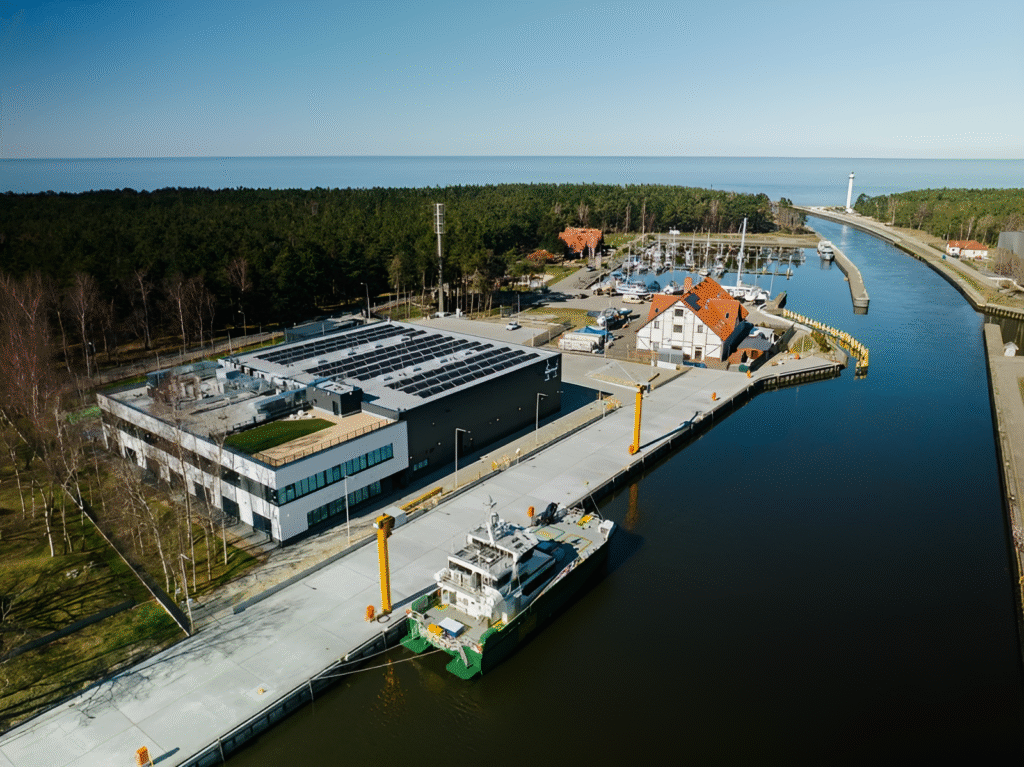
Aerial view of ORLEN Neptun’s offshore wind terminal in Świnoujście, Poland, the biggest installation hub in the Baltic Sea.
Aerial picture of the Świnoujście Offshore Wind Terminal, Image from website

The opening of the Świnoujście terminal is fully consistent with the broader ORLEN2035 strategy, which sets ambitious goals for Poland’s green transformation. ORLEN has set a target of installing 12.8 GW of renewable energy capacity by 2035, of which 6.4 GW will come from offshore wind farms.

This facility will certainly play a key role in realizing that vision, enabling ORLEN and its partners to implement projects at scale and speed.

🇵🇱 Offshore Wind Energy in Central Europe: Electricity for a Greener Tomorrow

Now, let’s take a brief look at Poland’s offshore wind energy. The 9km-diameter wind farm will be situated off the Polish Baltic Sea coast, bolstering country’s newly found position as a European power house in the area and fast-tracking the country’s transition to clean energy. It’s national goals are too ambitious, with the potential to install as much as 11 GW of offshore wind capacity by 2040, making it the regional center for renewable energy in Central and Eastern Europe, supported by the Polish government and leading investors. These investments do not only contribute to the EU’s climate ambitions, but also strengthen it’s energy sovereignty, deliver thousands of green jobs, and drive industrial innovation.

The construction of the offshore wind farms being delivered with the help of specialized infrastructure such as the new Świnoujście terminal signals a new phase in the country’s energy transition — one that turns away from coal and toward a low-carbon, future-proof economy.

About ORLEN

ORLEN is one of the leading integrated energy concerns in Central Europe, advancing the region’s transition to sustainable energy systems. The state-owned firm is pouring money into offshore wind, solar, small modular reactors (SMRs) and energy storage in a strategy to grow installed renewable capacity to 12.8 GW by 2035. Baltic Power – ORLEN’s flagship offshore wind project, with Northland Power – is the most advanced wind farm project in Poland and the first to have reached FID.

Beyond renewables, ORLEN is upgrading Poland’s energy system, exiting coal, and creating a robust, mixed portfolio of energy, that will help to drive economic growth, meet climate goals, and secure energy supplies long into the future in the region.

Conclusion: The country becomes the epicenter of European offshore wind

Above all, with the inauguration of the largest offshore wind terminal in the ocean region, Poland has firmly established itself in the field of offshore wind energy in Europe. The consortium between ORLEN Neptune and Ocean Winds will undoubtedly serve as a strong example of the public-private partnership needed to achieve climate goals and ensure energy independence.

As the world moves undouble towards clean energy sources, Świnoujście has become a symbol of innovation, sustainability and regional development in offshore wind.

Scotland Launches Offshore Wind Consultancy — Could it Transform Energy and the Sea?

Scotland Launches Offshore Wind Consultancy— Could it Transform Energy and the Sea?

June 2025 — Edinburgh, Scotland launches national offshore wind consultancy supported by both the Scottish Government and industry leaders — a mainstay of revolution. The new initiative will combine marine science, AI-driven analytics and engineering to offer expert advice on wind development.

It is a world-leading sea-based energy innovator, with significant North Sea wind energy potential and a long-standing renewables success story.

So, what do you get when a country of only 5.5 million people dares to take on the titans of the power sector? Which is just what Scotland has just gone and done.

The UK country is positioning itself to be the great power player in the renewable game, and their new offshore development consultancy is no just another government program: it’s even got it’s own special protection for the iconic seas and coastlines.

Scotland Seeks to Strategically Boost Offshore Wind

Anyone watching offshore wind development in 2025—and beyond—will know this decision to control their own renewable fate over the dictates of remote corporations. Using decades of North Sea experience and hard-earned lessons, they are constructing what stares new-found riches in the eye.

But here’s what is truly fascinating; the consultancy will provide guidance to projects throughout Europe, the U.S., and Asia, including site optimization, environmental impact assessments, and smart-grid integration.

The effort — backed by the Scottish Government and offshore renewable energy leaders — is aimed at helping countries establish high-efficiency wind farms in a bid to develop key international capabilities and build up the supply chain. By virtue of deep knowledge of the North Sea and marine engineering experience, It is turning its geography into an export asset, becoming a hub of wind energy consulting around the world.

  • Use the latest  data and scientific evidence to inform decisions on energy developments – such as how projects will impact wildlife and nature 
  • Ensure the environmental, social, economic opportunities and constraints from offshore projects are clearly set out to help inform decision making
  • Ensure the interests and views of other marine users, including fishers, coastal and island communities and environmental groups are taken into account  

The consultancy isn’t trying to top down implement solutions. Instead, they’re partnering with fishing communities, island populations, and traditional maritime industries to devise community-driven methods.

This isn’t just good politics, it’s also good business. New Haven Strategy of better involving stakeholders early on is helping avoid the conflicts that have dogged the development of offshore projects elsewhere. The consultancy acts as an interface between where tech innovation and the communities that will eventually live with these great works.

And this method is already paying dividends. Festering lawsuits and protests on one side, and partnerships between fishing cooperatives and wind developers on the other. Attitudes are changing, and the idea that the sea should be widely shared for the benefit of all continues to gain ground.

The Global Knowledge Export

This EU country is not hoarding its lessons learnt Scotland positioned as “global knowledge center” for the world’s offshore energy industries – where others learn, train and plan strategies, according to the consultancy.

Even now, they have delegations visiting from Japan, Chile and South Africa. They’re not merely on the hunt for more spinning turbines—they’re there to see what makes its model distinctive, to learn how to integrate it all.

In turn, this export of knowledge produces a virtuous cycle. Every international partnership introduces fresh perspectives and challenges which itself continuously hones the Scottish method. The consultancy grows stronger with every exchange, solidifying the country as the global center of excellence in wind power.

In the Words of the Government Bodies and Experts

Gillian MartinSecretary, Acting Net Zero and Energy Highlighted,

Gillian Martin, Image: Linkedln

MIKE SPAIN – Director of Marine, Crown Estate Scotland cites,

MIKE SPAIN, LinkedIn

Scottish energy minister Paul Wheelhouse said

Paul Wheelhouse, Image: Paul Weehhouse

Benefits to the Community and Justice

Their consultancy is about more than just megawatts and money. They are questioning the very basics of who profits from offshore development, and how to share those profits in an even manner.

They’ve built community benefit types where local communities experience the upstream benefits of nearby projects. These can include lower electricity prices and shares of community ownership stakes in the projects themselves.

This approach takes into account that development is not done in a vacuum. Sustainable support from the public, on which the long-term success of our sector depends, can only be maintained if each citizen feels the benefits in their everyday lives.

The consultancy is pushing back on the traditional lowest-common-denominator measure of community engagement that developers have used. This has resulted in a new wave of projects that local communities are embracing, rather than fighting.

Conclusion

Lastly, in countries like the United States, where large-scale this wind development is expanding on both coasts, country’s four proposed approaches will serve as a blueprint for balancing innovation and ecosystem conservation.

The SMP-OWE draft aims to avoid conflicts between industrial development and marine conservation – providing a transparent, science-driven way to build trust between developers, communities and environmental groups so they can work on investment, technology and innovation at the same time.

Greenvolt Group Lights Up 33.2 MW Wind Portfolio to Enea Nowa Energia in Poland

Greenvolt Group Lights Up 33.2 MW Wind Portfolio to Enea Nowa Energia in Poland

Greenvolt Group, through its subsidiary Greenvolt Power, has finalized an agreement to sell its 33.2 MW wind power portfolio in Poland to Nova Energia. The €83.3 million transaction includes four wind farms in various stages of development and a total of 16 turbines, each with a capacity of between 2 MW and 2.2 MW.

The move follows two recent utility-scale transactions by Greenvolt Group worth an equivalent of €250 million, which sees Greenvolt Power playing a key role in growing and monetizing clean energy infrastructure in utility-scale renewable projects across Europe.

Wind Project Glimpse

Greenvolt Group is the seller through Greenvolt Power

Enea Nowa Energia subsidiary of Enea Group is the buyer

Investment Volume is €83.3 million

Total Capacity if power is 33.2 MW

Operatinng Wind Farms: 4 projects

Total Turbines USed: 16 Vestas V110 (2–2.2 MW each)

  • Operational Status: Skibno Wind Farm – 10 MW (Operational)
  • Zaklików – 10 MW (Under Construction)
  • Nowe Miasto Lubawskie – 6.6 MW (Under Cons truction)
  • Jabłonowo Pomorskie – 6.6 MW (Under Construction)

Contraction Timeline: Remaining projects to be operational by 2026

Strategic Objective:

  • Greenvolt: Asset rotation model (selling 70–80% of projects)
  • Enea: Expanding renewable portfolio under 2035 development strategy

Greenvolt’s Portfolio in Poland:

  • 731 MW Wind
  • 1,878 MW Solar PV
  • 2,712 MW Battery Storage

Wind Farm Portfolio Objectives

The wind farm portfolio includes:

Skiebno Wind Farm: a 10 MW wind farm located in northwestern Poland that is already operational.

Zakliko Wind Farm: located in the south-east of the Subcarpathian region, with an installed capacity of 10 MW.

Nowa Miasto Lubowski Wind Farm: Located in northern Poland with a capacity of 6.6 MW.

Jablonowo Pomorskie Wind Farm: Located in the north with a capacity of 6.6 MW.

Three non-operational sites are currently under construction, equipped with Vestas V-110 turbines. They are expected to start commercial operations around 2026.

In the words of Enia Nowa Energia

Enia Nowa, one of the largest electricity suppliers in Poland, continues its commitment to the development of renewable energy. Enia’s Vice President for Commercial Affairs, Bartosz Krysta, emphasized the importance of green energy:

Bartosz Kryst. Image: Linkdln

Company’s’ CEO Arkadiusz Arustowicz cited:

Greenvolt Group’s vision for 2035

This acquisition is in line with Enia Group’s development strategy 2035, as it foresees investments of £107.5 billion (€25.3 billion) – most of which will be directed towards renewable energy, energy storage and the modernisation of distribution infrastructure.

With each transaction, Enia and Greenvolt continue to push the boundaries of Europe’s energy transition, making Poland a central player in the continent’s green future. For this reason,

Bartosz Krysta, Vice-President of Enia’s Management Board, stressed that this acquisition is another important step in Enia’s transition to sustainable energy, fully in line with national environmental and energy security goals.

João Manso Neto

In addition, João Manso Neto, CEO of the Group, highlighted that this deal demonstrates company’s ability to effectively deliver and monetize large-scale renewable projects, supporting its business model of 70-80% asset turnover at various stages of preparation.

Previously, this company also sold the Pelplin wind farm and the Sompolno hybrid project – further strengthening its capital base and reaffirming its position as a top-tier renewable developer in Europe.

With this deal, Greenvolt is strengthening its 13.2 GW utility-scale portfolio, operating 18 countries, including 731 MW of wind, 1,878 MW of solar PV and 2,712 MW of battery storage in Poland alone.

Poland’s renewable energy Target Matters

The second largest Wind farm Developed by the a Woman Enthusiast, Image: Notes From Poland

Country’s energy sector is still heavily dependent on fossil fuels, particularly coal. While it has made progress in wind and solar power, coal remains the main source of electricity generation. In 2024, 57% of the country’s electricity generation will come from coal, and in 2023, 63%.

As part of the National Energy and Climate Plan, it has set a target of 56% of the electricity mix and announced an investment of PLN 792 billion (about $205 billion) to achieve the target. But the 2030 renewable energy target is important because it faces challenges in diversifying its coal fuel sources. European this country is said to a home of Europe’s largest coal mines, the Mainz.

Wind energy started supply electricity since 2019. While it has set a target, reaching it is not easy, with the Greenvolt group project accelerating discussions on four wind projects.

Last words:

The €83.3 million transaction solidifies Greenvolt’s role in Poland’s renewable energy landscape and supports Enia Group’s strategic move towards sustainability, contributing to a green, resilient European energy goals.

Ireland’s €38 Billion Offshore Wind At Danger – Who’s to Blame?

Ireland’s €38 Billion Offshore Wind At Danger

Ireland’s Offshore Wind Farms Are Danger!

Dublin, 27 May 2025Wind Energy Ireland (WEI) has issued a stark warning: country’s entire offshore wind portfolio worth €38 billion could be lost if the government does not act quickly. Offshore wind is in a state of flux. It comes as a major blow to offshore wind, as Germany warned two days ago that its wind farms could become a battlefield. It follows US President Donald Trump’s ban on wind projects, which the government was forced to lift under pressure.

However, not for the Irish.

A new Wind Plan for Offshore was formally unveiled at this year’s Conference in Dublin, setting out a path to save Ireland’s wind dream and rebuild confidence at home and abroad, which will be held again on 27 and 28 May at the Clayton Burlington Hotel in Dublin.

The plan sets out the key government priorities needed to harness Ireland’s offshore wind potential and restore confidence in Ireland’s ability to build a competitive, sustainable and resilient offshore wind industry. While welcoming the government’s progress in recent years, the plan calls for swift action to deliver on these policy commitments to reflect the seriousness of the government’s commitment to the sector.

On the positive side, the document outlines a clear and practical plan for how the Irish government can support the delivery of offshore wind projects under development and sets out a long-term framework that provides certainty and stability for future development through 24 targeted actions across four delivery areas. But the clock is ticking. Let’s see!

What’s at Stake of €38 Billion Wind Investment?

Ireland has a huge opportunity to be a world leader in offshore wind. The industry could create more than €38 billion in economic value, bring energy independence and reduce carbon emissions, estimates suggest. But in view of the Action Plan, it is now the question whether that future is possible at all. Why?

Slow process of planning and permission

No investment into ports and grid infrastructure

Opaque government policy and bottleneck regulations

Inadequate funding for top state agencies

The Industry Is Ready. Is the Government?

Noel Cunniffe, the C.E.O. of Wind Energy Ireland said. “The industry is prepared to do its part but it is only possible with the political will and whole-of-government leadership,”

Cunniffe stressed that the 24 steps in the plan are not theoretical—they are crucial. Without them, there could be no offshore wind farms in Irish waters by 2030.

“We know what needs to be done,” he said. “We are now in a critical time frame”

Noel Cunniffe, CEO of Wind Energy Ireland

Areas Ireland Must Address Immediately:

Phase One Projects Are Delivered or Face Losing an Industry altogether

This obvious country’s wind energy ambitions will never take off if the first phase one projects don’t happen. These are the projects that we have to get first in the ground for us to reach the Government’s 2030 renewable electricity targets. No turbines in the water, no offshore industry — just promises.

The Government says it fully backs these schemes, but that means nothing to developers who are repeatedly held up, not least by the long and avoidable Read more: delays caused by the planning process. These should have been dealt with earlier with greater resourcing and pre-application engagement by the state authorities.

What must happen now:

  • Urgent audit of manpower needs in all related state organizations.
  • Government’s support for each Phase One project will be through strategic intervention and direct support.
  • Acceleration of decision making to meet 2030 delivery deadlines.

And if planning delays continue through into 2026 there could be no Phase One projects for 2030 at all — leaving the country’s entire wind energy timeline going aground.

Construct the Enablers — Ports, Grid, and Demand Infrastructure

wind energy, Dublin wind conference 2025

Ireland cannot simply erect offshore wind farms when it does not have the ports and grid infrastructure to sustain them.and these transport enablers are currently lagging well behind.

Ports:

Despite several announcements, Ireland still does not have sufficient port capacity for industrial scale offshore construction.” And if Irish ports are not upgraded soon, developers may have to look elsewhere — but discover that capacity is also limited there.

Grid & Demand:

For many next-generation projects, grid access remains uncertain. Even worse, there is no one way to match power generation to demand.

What must happen now:

  • Site development should go hand-in-hand with reasonable grid capacities through TYNDP 2026.
  • Create green energy parks and private wire opportunities in the south east and other priority coastal areas.
  • Work with the IDA and DETE to develop >1 GW regional demand plans that draw in clean tech industry and provide offtake certainty.

Leveraging the South Coast DMAP – Opening Up the Next Wave of Projects

Country’s next significant offshore wind area is the South Coast Designated Maritime Area Plan (SC-DMAP). The projects in this region – Tonn Nua, Lí Ban, Manannán and Danu – must be scheduled and supported so pipeline is constant.

Tonn Nua (Site A):

This 900 MW project must qualify under ORESS 2 in 2025. But developers and investors are growing anxious about the lack of auction information and grid certainty.

Lí Ban (Site B):

Might be developed through ORESS or competitive MAC, so long as it is actually determined the grid can get there. EirGrid’s research should be fast-tracked.

Manannán & Danu (Sites C & D):

Should proceed in a MAC environment – but again, only if routeto-market (grid, private wire, etc.) is clear early on.

What must happen now:

  • conclude auction times and grid commitments for Tonn Nua.
  • Release grid studies for the southeast.
  • Speed up the competitive MAC process.
  • Allow hybrid and export-focussed project models.

Speed-up the National DMAP - A Vision of Long-Term Energy Security

The focus is on short-term projects, but Ireland has to think long-term. That means expediting the National DMAP to chart future offshore areas on the east, south, and west coasts— and in the wind industry’s case, that includes floating wind. This will have to take place without having it undermine the current projects but as a simultaneous process.

Key requirements:

  • Resource the process: DECC needs to sub-contract aspects of this to external experts for speed and quality.
  • MAC-first development model – place the risk- and timeline-reducing leasings and permitting ahead of auction.
  • Site electricity demand planning: DETE should incorporate coastal demand hubs in line with future DMAP zones.
  • Invest in floating wind demos: At least two demonstration sites need fast-tracking.

What must happen now:

  • Start National DMAP rollout NOW!
  • Tie it into grid planning, industrial strategy and export readiness.
  • Provide the plan no later than 2027 so that developers and investors have clarity about the future.

These aren’t options. They’re imperatives. Ireland needs to advance on all four of these fronts at the same time to ensure its place as the clean energy economy of the future — and stop the €38 billion offshore wind opportunity disappearing in the fog of political inaction.

So… Who’s to Blame?

wind energy policy Ireland,
wind energy policy Ireland, Image” iStock

But while business leaders stay polite, the blame is now squarely placed on government inactivity. The decisions have lagged behind for years, and agencies have been starved of funding, with unclear policies, and the sector is frustrated.

If Irish authority does not act now, it risks not only environmental catastrophe, but also forfeiting an economic bonanza, a flight of investors and international humiliation.

Summary: Change the Policy, Fuel the Future

The Wind Action Plan sends a clear political signal: political ambition has to keep pace with Ireland’s renewable energy resource. Billions property and the country’s green future are at stake.

This is a moment for bold measures, real resources and some quick action.

Wind Turbine Technician Needed – Onshore/Offshore at Global Wind Service in Carrollton, Texas ‘Only For US Citizen’

Wind Turbine Technician– Onshore/Offshore at Global Wind Service in Carrollton, Texas

Are you a U.S. citizen, or do you have valid work authorization and live in the United States?

If you love the environment and you’re looking to leverage your technical knowledge for good, listen up. Join Global Wind Service, one of the largest companies in regards to installation of wind turbines. We are looking for the very best Wind Turbine Technicians to work in onshore and offshore environments all over the U.S.

This is your chance to help shape the future and get a jump start on your career working with our world-class experts.

Wind Turbine Offshore Technician For Global Wind Service Careers Overview

💼Position Title: Wind Turbine Technician

·  🏢 Company: Global Wind Service

·  📍 Location: Carrollton, TX

·  🕒 Job Type: Full-time, Entry-Level

·  🎓 Experience Required: No prior experience needed – training provided

·  💡 Industry: Renewable Energy / Wind Power

·  💵 Pay Range: Competitive entry-level salary + benefits

Travelling Wind Turbine Technician Jobs Description

A Travelling Wind Turbine Technician or Tech will work nationwide under the guidance of a team of highly skilled professionals to care for the facilities around the wind turbine and the wind turbine itself. The Teams are responsible for the upkeep of the site surrounding the turbine, including minor cleaning and repairs. A high awareness of these security procedures and the discipline as a whole is essential to and employee’s safety while on the job.

Wind Technician Jobs Entry Level Summary

  • Build and install wind turbines per standard operations procedures.
  • Commission and/or Trouble Shoot wind turbines.
  • Maintenance works – re-power, torque/tension, cleaning.

Wind Turbine Offshore Technician Jobs Responsibilities

  • Ensure you read and comprehend mechanical drawing;
  • Can Stick to standard work procedures for installation of turbine.
  • Executing the required work for installed, serviced and maintenance WTG, etc.
  • Perform maintenance work with minimal supervision.
  • Perform required duties based on the GWS safety protocol and procedures and wear PPE when required.
  • Be present at site induction, as well as another requested site meeting conducted by the client and GWS.
  • Safety-oriented. Report near misses, incidents and accidents to the site Manager.
  • Mandatory training and education require by the sit Manager or the client.
  • Use all equipment and tools in a safe, responsible manner.
  • Perform requisite equipment maintenance and maintenance on tool while installation site.
  • Maintain a clean work site to prevent accidents and increase efficiency.
  • Meet weekly report deadline for work time, work progress report and traveling report.
  • Ability to work at height, includes physical fit to climb. Flexibility to travel extensively and work in varying and adverse weather conditions.
  • Flexibility to work overtime hours on a weekly basis, including nights and weekends.

Requirements for Wind Tech Jobs

  • High School or equivalent –
  • 1+ years Experience in the turbine field as a WTG technician.
  • Mechanical/technical education.-
  • Experience in installing and pre-installation, ability to climb upward up to 400 ft. on a daily basis.
  • Cooperative, communicative, open-mined and flexible – respectful other and other culture. :
  • Ability to work at remote site in bad weather condition, work with diverse group of individual. :
  • Ability and willingness to travel and work domestic and international trip as required
  • Ability and confidence to work at height – physical fitness to climb.
  • Professional one with a high emphasis on Quality and Safety:- Valid GWO Training and OGUK Medical Fit

Offshore Wind Tech Technician Jobs Environment Conditions

  • Ability to work unsupervised.
  • Able to lift 50 pounds or more.
  • Have to be a citizen of this country or have a valid work visa to work in the United States.

Application Instructions for Global Wind Service :

  • If you are ready to bring your wind energy career to the next level, contact us!
  • If interested please apply on line with a resume and cover letter detailing your experience and availability.
  • For more information visit our careers page at Global Wind Service Careers
  • For inquiries, please contact our recruitment team at careers@globalwindservice.com.
Global Wind Service Careers

🛑 Disclaimers:

Candidates must have the right to work in the United States and be able to travel to projects.

Wind Jobs No Experience Texas

Breakthrough in Offshore Wind Modelling Hits North Sea

EuroWindWakes North Sea Offshore Wind

A major breakthrough to optimize in offshore wind energy efficiency and power forecasting

in late 2024, a major collaborative effort called EuroWindWeaks, bringing together leading European industry and research institutions, was launched. The project aims to dramatically improve the accuracy of wake effect modeling in offshore wind farms, particularly in the North Sea, where offshore wind development is at its peak.


This project is tackling one of the most enduring challenges: the wake effect – a phenomenon where wind turbines reduce wind speed and create turbulence, reducing the efficiency of neighboring turbines. Focusing on the Sea, one of the world’s most turbine-dense offshore regions, this multinational project goals to deliver a breakthrough in wind wake modelling that could transform how wind farms are planned, built and optimized.

Through improved forecasting methods and cutting-edge research, it is setting a new benchmark for energy efficiency and spatial planning in renewable energy.

Eurowindweeks Project overview

Title: EuroWindWeeks (EWW) – Multidimensional Modelling of the Impact of European Wind Power Awakening

Project Duration: December 2024 – November 2027

Project Budget and Funding: Total Budget: DKK 10.91 million

Grant: DKK 7.29 million

Own Contribution: DKK 3.62 million

Funding Rate: 67%

Funding Year: 2024

Funding Source: Federal Ministry for Economic Affairs and Climate Action (BMWK), as part of the EU Clean Energy Transition Partnership (CETP)

Program: EUDP stands for Energy Technology Development and Demonstration Programme

Project Type: International (non-IEA) Development

Technology Focus: Energy Efficiency, Software Solutions, Renewable Energy Harvesting

Why in the North Sea?

 North Sea Offshore Wind
Wind turbines at sea seen with clouds from above, Image: North Sea Offshore Wind

First of all the North Sea is the world’s largest wind farm hub and is becoming a hotbed of offshore wind energy. However, this rapid development comes with a number of significant challenges: Wake effects – the turbulence and reduced wind speed caused by turbines, which can affect the performance of nearby turbines.

The wake effect can lead to:

Reduced power generation

Rapidly increasing turbine losses

Complications in spatial planning

Increased uncertainty in financial forecasts

Accurate Forecasting and Optimized Spatial Planning

Project Focuses On

The EuroWindWex project is primarily focused on reducing the loss of energy efficiency and the ability to obtain reliable forecasts of power generation. By improving wind wake models, the project aims to:

Optimized maritime spatial planning

Determine the most useful smarter wind farm designs

Reliable financial modeling

According to Dr. Bernhard Stoevsand of Fraunhofer IWES
,

What are the main goals of the project?

Eurowindweeks Project
Eurowindweeks Project Researchers

1. Reduce wake prediction inaccuracy

Bring 20-30% uncertainty from current models

Eurowindwakes aims to reduce to 10% Validation of models at a multinational scale

2. Support maritime spatial planning

Provide more accurate long-range wake impact data so that

Essential for aligning multiple countries’ goals in the North Sea

3. To improve energy generation forecasting

To help wind developers and investors to make better-informed decisions

To reduce the risks associated with financing wind farms

Develop new and improved modelling techniques

Make a combine insights from multiple small-scale wake research projects

innovate and Integrate advanced simulation tools and real-world measurements

Consortium of Experts

Industdial Partners:

  • RWE,
  • BP,
  • EnBW,
  • TotalEnergies

Research Institutes:

  • Fraunhofer IWES
  • Technical University of Denmark
  • Delft University of Technology
  • Deutscher Wetterdienst
  • University of Oldenburg
  • Consultancies & Innovators:
  • Pondera Consult
  • EMD International
  • DHI

According to Anja Schönnebeck, national project coordinator at Pondera Consult:

Anja Schönnebeck, national project coordinator at Pondera Consult

Project Supported by Europe’s Clean Energy Vision

The EuroWindWex project is co-funded by:

Germany’s Federal Ministry for Economic Affairs and Climate Action (BMWK)

Denmark’s Energy Technology Development and Demonstration Programme (EUDP)

Netherlands Enterprise Agency (RVO)

All working under the umbrella of the EU Clean Energy Transition Partnership (CETP).

Value Added

This EuroWindWeeks is not just an advanced modelling – it is about unlocking the full potential of wind farm in Europe. Modelling reduces uncertainty and enables optimal marine spatial planning, based on the project’s

Future energy production forecasts

Encourages more sustainable investment decisions

Strengthens European cooperation in wind energy innovation

wind projects face many technical challenges that make them unviable

contributes to the creation of a European Centre of Excellence for Wind Energy, under the European Energy Research Alliance (EERA JP Wind)

What Next?

Over the next three years, EuroWindWex is set to be a game-changer for offshore wind planning and performance. As countries step up their investment in wind energy renewables, the project will continue to help create a more efficient, collaborative and financially robust future for wind power in the North Sea and beyond

Jobs in Texas! Traveling Wind Technician GE Wind Turbine | Alpha Offshore Services

Challenging Traveling Wind Technician GE Wind Turbine Jobs Texas 2025

Travelling Wind Technician Jobs in Texas Overview

Traveling Wind Technician Jobs Description:

Alpha Offshore are looking for talented, motivated, and skilled Wind Technician (experience on GE Wind Turbines), travelling across US. to join our team of those passionate about Renewable Energy. Houston, TX-based travel responsible to wind farm sites for maintenance on specific systems.\_ In this role, you will travel to various locations in multiple states to complete tests and analysis for repairs and re-commissioning of wind energy systems.

If you are passionate about renewable energy, a hard worker, and capable of working hard in challenging conditions, we want to hear from you.

For Wind Jobs in Texas – Responsibilities

  • Oversee GE wind turbine systems for the purpose of maintenance, troubleshooting, and/ or repair upgrades.
  • Inspect or repair turbines, turbine blades, or towers or supervise workers performing similar tasks.
  • Work with hand power tools to accomplish mechanical or electrical tasks
  • Perform performance testing and system diagnostics to verify turbine operation
  • Record details of reports, service, and maintenance functions perform.
  • Comply with all site and industry safety requirements and standards
  • Work closely with site management, engineers, and support technicians to optimize turbine performance

Wind Turbine Technician Requirements & Experience

  • Previous WT Technician experience, with preference on GE platforms
  • Thorough knowledge of low voltage electrical systems and mechanical problem solving
  • Able to work at high altitudes and in various weather conditions
  • Experience with generating facilities, SCADA data and turbine diagnostics is a plus
  • Work independently while staying in contact with a remote team
  • Current valid driver’s license and the ability to travel extensively to various client sites.

Join the GE Wind Turbine: Renewable Energy

At the Offshore Services company, leading the way in clean energy. Join the wind revolution and apply today to power the future.

Apply Now | Courses Starting Now

Alpha Offshore Services is an EO employer. We believe in diversity and are dedicated to providing an encompassing, anti-discriminatory environment for everyone.

Why Join Alpha Offshore?

  • Wind Turbine Technician Salary per hour is: $35.00 – 49.50 / per hour
  • Work/life balance with a flexible schedule
  • The chance to work with prestigious renewables projects
  • We are a supportive, safety-first work culture.

About Alpha Offshore Services

Alpha Offshore Service, an Altrad Sparrows company is one of the world’s leading provider of wind energy services and part of the international leader, Altrad Group. Supported by a network of experts and engineers from the standers of the world, we deliver specific support for wind energy projects worldwide – onshore and offshore.

We are proud to partner with 300+ highly experienced, GWO-trained wind technicians in providing our premium service, ensuring the highest standards are maintained in safety, service and performance across site. Our agile business model combines permanent employees with long-term contractors, to so that we have the flexibility to keep pace with our clients’ evolving requirements.

From our GWO-certified training center in Houma, Louisiana, we deliver best-in-class training in Basic Safety Training, Advanced Rescue, Crane & Hoist, and other areas, enabling our U.S. technicians to exceed global industry standards.

We have a presence in large wind power installations around the world:

Onshore: Australia (Alinta), USA (Deerfield, Black Oak, Great Western, Bingham), Ireland (Cappawhite), Finland (Nikkarinkaarto, Kopss), Sweden (Hunflen) and Denmark (Lem Kaer).

Offshore Wind Projects: UK (Barrow, North Hoyle, Scroby Sands, Kentish Flats, Thanet, Robbin Rigg), The Netherlands (OWEZ, Q7), Denmark (Horns Rev 1), Belgium (Northwind).

Partner with us to advance the future of sustainable energy — investing in our employees, driving development of cutting-edge technology, and supporting communities and customers by strengthening the grid of the future.

Be part of an industry front runner in off and onshore wind services

High Level Skilled Wind Turbine Technician in Hutson, Texas

Shocking move: Germany Pulls the Plug on Oldest 60 MW Offshore Wind Project

Germany closes 60 MW alpha ventus Offshore Wind Project

Alpha Ventus Wind Farm Decommissioning Explained

Alpha Ventus, which was inaugurated on 27 April 2010 was one of the pit-stops towards Germany’s pursuit for renewable power. Situated 45 km from the island of Borkum in the German Bight, the farm comprised six Adwen M5000 and six Senvion 5M wind turbines which were installed using two types of foundations, making the site a testing ground for both technology deployed and activity offshore.

The farm wasn’t just a power producer, having been developed by the Alpha Ventus consortium, a joint venture of EWE, RWE and Vattenfall. It served as a platform for research, but also as an innovation in the ways in how the technology of the turbine works (turbine behavior and installation operation) and how the turbine would be integrated in the grid in a harsh marine environment.

This year there was rumour in the press that the consortium was considering its future options for the windfarm, including serious consideration given to decommissioning. The catalyst? The end of the subsidy period for Alpha Ventus, which expired last year. Since the project continues to work, this goal was completed, they wrote their partner.

Repowering (the replacement of ageing turbines with new equipment) was not economically or technically feasible for the small and frail infrastructure of the project. According to Eric Richter, Managing Director of the operating company DOTI:

Offshore Wind Power Project Retirement

Decommissioning On 21 May 2025, the consortium published a statement about the decommissioning of Alpha Ventus. It is closing down Germany’s first offshore wind farm, but it is also making history, as it is the first time an offshore wind farm in German waters has been decommissioned.

The work will be carried out in close cooperation with the Federal Maritime and Hydrographic Agency (BSH) and other authorities. The focus will be on:

Reducing environmental damage

🔄 Maximise recycling and reusing of elements

📚 Document and learn from that experience.

While the actual removal won’t happen right away — Alpha Ventus still has a little over four years of design life left — planning is already taking place. Vessels, and port facilities require advance booking and/must be booked well in advance, so prior arrangements are crucial.

The project developers are now working on a comprehensive decommissioning concept that favours environmental protection and will provide a blueprint for future wind-downs of offshore windfarms in Germany and elsewhere.

Legacy Of Germany Wind Farm Closure

Though its turbines may soon be quiet, Alpha Ventus is passing on a powerful legacy. It showed offshore wind could work in Germany, sparking an industry that now generates power for millions of homes. And now, by wading into the uncharted waters of offshore wind decommissioning ahead of everyone else, it is leading the way yet again.

Germany’s long view on its own greener future will see Alpha Ventus standing as a monument to innovation, daring experimentation and the cycle of life of renewable infrastructure.

Wind Turbine Technician II – Primoris Renewable Energy Fresher Jobs in Texas

Wind Turbine Technician II at Primoris Renewable Energy | Louisiana Hiring | U.S.-Based Travel Role

Wind Turbine Technician II Job at Texas – No Experience

Wind Turbine Technician II Job opportunity! looking to lead in the great renewable energy boom? Primoris Renewable Energy is seeking Wind Technician (Level II) to support our Operations & Maintenance group. This is a highly involved position that requires extensive travel within the U.S. and a strong emphasis on safety, technical proficiency and problem-solving.

Wind Turbine Operation & maintenance technician Jobs – Key Responsibilities:

  • For this position a typical day may include: You play a very important role in keeping turbines running at optimal performance. Responsibilities include:
  • Enforcing, and ensuring compliance with, all company safety policies and procedures
  • Conducting Wind Turbine operations, inspections, repair, and maintenance on a day to day basis.
  • Scaling towers (up to 120–130 metres) several times a day
  • Diagalnosising and repairing electrical mechanical and hydraulic systems
  • Performing preventive maintenance and system checks
  • The subsequent installation of new or refurbished parts and application of hydraulic torque/tension tools
  • Professionally interfacing with customers and internals squads
  • Maintaining and servicing substations, underground transmission, and fiber optic control networks
  • Filling out reports, observing LOTO procedures, and submitting to safety certifications
  • Assuming responsibility for quality, safety, and turbine performance at the job site

Wind Turbine Technician Jobs in Texas – Education Requirements

  • High School or Equivalent.
  • A current and valid driver’s license (CDL preferred)
  • Must have or be able to obtain a TWIC card
  • 2+ years in wind turbine experience and/or 1 years experience with technical degree
  • Knowledge of high power tools, hydraulic systems, and industrial safety practices

Wind turbine technician Skills:

Hiring – Renewable Energy Company USA Travel

Primoris Services Corporation is the parent company of a diverse group of firms that includes a highway and heavy construction company, a specialty underground contractor, a commercial and industrial construction company, a construction materials company, a utility contractor, an engineering and construction company, and a technical services company. We are proud of our safety-first culture and our “value” of innovation and supporting our team to do work they are not only proud of but their best work for years to come.

Wind Turbine Technicians salary

Salary and Benefits Offer

  • Pay is competitive + you get to travel opportunities.
  • 401(k) with Company Match
  • Offer Health, Dental and Vision Insurance
  • 10 days of Paid Time Off + 10 Paid Holidays
  • Employee Stock Purchase Plan
  • Growth & Continued Training

📌 Location & Travel for Fresher Jobs, Texas

Local: National CityState/Area: Across the country.

Work Locations: Outside, high up and arduous duties

·   Able to work in an outdoor environment in all types of weather and at remote wind farms

Equal Opportunity Employer Statement Required

Primoris is an Equal Opportunity Employer and is committed to diversity in the workplace. CULTURE We offer equal employment opportunities to all employees and applicants for employment and prohibits discrimination and harassment of any type without regard to race, religion, sex, sexual orientation, gender identity, national origin, veteran or disability status.

Primoris does not accept unsolicited resumes from third parties. Agencies: Please call our Talent Acquisition Manager to become an approved vendor.

Ready to Level Up Your Wind Career?

👉 Visit www. prim. com to learn more.

Entry level Wind Turbine Jobs in Texas

Senior Offshore Wind Design Role in Copenhagen: Drive Asia Wind Energy

Senior Offshore Wind Design Role in Copenhagen – Asia

Offshore Wind Jobs East Asia

Arup is looking for an experienced and talented Senior Offshore Wind Design Manager to be based on Copenhagen. Do you want to make an impact where you live and work? We shape a better world At Arup, our innovative spirit compels us to express our ingenuity in unique ways — developing many of the world’s most innovative and sustainable buildings, transport and civil engineering projects. We are proud to work as creative designers, planners, engineers, consultants and experts across many disciplines. Work at Arup and you’ll be joining a community of people who are dedicated to shaping a better world.

We love you and we want you to play through this. At SE you get to develop in whatever direction you desire. We also provide flexible working options for you to enjoy your life outside of work too. We are an equal opportunity employer and we are committed to building a diverse and inclusive team. We support and encourage diversity and welcome all applications. Who we are. You will work in a collaborative team in an agile environment and be able to participate in different aspects of building an app.

We’re growing our energy business under the success in the East Asia and you will be an important member supported by capable, independent and renewable experience people. The successful applicants would be based at one of the offices in Hong Kong, Taipei, Tokyo, Seoul, Manila or Ho Chi Minh City.

As an established lead position you be innovatively designing offshore wind projects across East Asia, making your mark on the future and having the support and backing of one of Europe’s largest clean energy hubs. Join us and help make the world a greener, better and more sustainable one!

Offshore Wind Jobs Copenhagen – at a glance!

Senior Offshore Wind Engineer Jobs Responsibilities:

  • Leading and developing a team of specialist offshore wind designers using their expertise on the international design codes as a driver.
  • Support and develop structural teams in our offices in Asia to develop independent design centers of excellence for offshore wind foundations, monopile and jackets.
  • Assistance of the energy advisory teams with the evaluation of offshore wind farm projects.
  • Collaborate with our clients to develop our service offering within offshore wind business.
  • Support continued development and improvement of in-house digital design tools to deliver optimized, cost efficient and bespoke foundation solution for wind farm foundations.

Qualification & Experience:

  • Bachelor degree or above in relevant offshore wind engineering including civil, structural, mechanical, electrical engineering.
  • At least 12 years of relevant experience in energy or similar sector.
  • At least 8 years’ experience in senior authoritative position in a wind energy company.
  • Strong experience in business developing and a small business mindset to develop a business offer.
  • Preferable for strong client contacts with the Asia Region from the renewable and associated offshore wind design services sector but not a requirement.
  • Demonstrated experience in offshore wind design services as an Owner’s Engineer, TA or EPC designer
  • Candidates with less experience may be considered for Project Engineer positions.

Senior Offshore Wind Design Salary

  • A competitive and fabulous remuneration package will be offered to the candidate, designed to reflect your experience and expertise.
  • The successful candidate will benefit from our Global Profit Share scheme designed to ensure your overall success in the long term by providing you with a percent of our collective success.
  • We also offer you unrivalled career development opportunities,
  • Enabling you to develop, lead, and excel in a vibrant, global, and encouraging organization.

Why Join Arup

  • Join a world-leading consultancy that is innovative and sustainable
  • Do interesting work focused on climate and energy problems
  • Benefit from a modern, family friendly work environment and a culture promoting work/life balance
  • Receive a flexible, inclusive and diverse work culture and a range of working options including; working from home, flexible hours and part time opportunities
  • Statement style private practice office located in Sydney’s CBD Negotiable hours and days, This is the position that you have been waiting for!
  • Enjoy the best learning and education resources in the world
  • Work in a team that values diversity, collaboration, and creativity

At Arup, we create what is significant. Start your career and open a new page in the renewable energy revolution. Apply today.

Renewable Energy Jobs Denmark

Could 10 Environmental Groups’ Lawsuit Overturn Trump Offshore Wind Policy?

10 Environmental Groups' Lawsuit, Trump Offshore Wind Policy

Trump offshore wind Policy — a legal storm is brewing over America’s clean energy future.

Seventeen states, Washington, D.C., and a leading wind industry group have filed a landmark lawsuit against the Trump administration, seeking to overturn a controversial executive order that effectively blocks all new offshore wind energy development on the East and Southeast coasts.

A coalition of ten environmental organizations, including the Arcata-based — Environmental Protection Information Center (EPIC), has filed a legal brief in support of the lawsuit challenging Trump’s policy. They argue that Trump’s offshore wind policy is “arbitrary, unlawful, and politically motivated, designed to favor fossil fuel interests by stifling the growth of clean energy.”

The question is, can the lawsuit really overturn Trump’s offshore wind ban — and what does it mean for the future of renewable energy in the United States?

What is Trump Offshore Wind Policy?

Offshore Wind Lawsuit”
Interior Secretary Doug Burgum

On his first day in office, Donald Trump signed an executive order temporarily halting the sale of offshore wind leases in federal waters and halting approvals, permits, and loans for all wind projects in key coastal states including Florida, Georgia, South Carolina, and North Carolina. While this policy is designed to protect marine ecosystems and coastal economies, but the order leaves wind energy developers hundreds of miles of federal waters. Following this, recently Trump administration halted construction of Empire Wind, a major offshore wind project by Equinor, a Norwegian company in New York, which was building the project to start generating electricity in 2026 and suppose to provide clean electricity to more than 500,000 homes.

The company finalized the federal lease for Empire Wind in March 2017, at the start of President Donald Trump’s first term. BOEM approved the construction and operation plan in February 2024, and construction began that year, but the multibillion-dollar project is stalling midway. Interior Secretary Doug Burgum ordered the Bureau of Ocean Energy Management to halt construction on the fully approved Empire Offshore Wind Farm, the first offshore Wind Farm in New York, aiming to provide clean electricity to 500,000 New York homes.

Empire Offshore Wind project,
Empire Offshore Wind project

Critics say the policy was more about politics, designed to stall the progress of green energy, cast an unspoken doubt on the safety of wind power, and appease fossil fuel allies. This legal battle is a continuation of that.

Groups’ Lawsuit challenge: Who’s behind it?

The lawsuit, initially filed in U.S. District Court in Massachusetts, was led by state attorneys general and supported by The Alliance for Clean Energy New York (ACE NY). Their lawsuit challenges both the validity of the executive order and the federal government’s refusal to process wind power permit applications that they say violate existing environmental and energy laws.

They are now joined by the Natural Resources Defense Council (NRDC), Citizens Campaign for the Environment, Conservation Law Foundation, Environmental Advocates NY (represented by Earthjustice), Environmental Defense Fund, Environmental Protection Information Center, National Wildlife Federation, New York League of Conservation Voters, Sierra Club, and the Southern Environmental Law Center, and other powerful organizations, have filed an amicus curiae (friend of the court) brief to strengthen the case for the immediate lifting of the ban.

Environmental 10 groups argue that the ban is legally unenforceable and environmentally harmful. In a joint petition, they say:

They highlight the hypocrisy of the administration’s claim to protect wildlife from wind projects, while also seeking to undermine federal wildlife protections and fast-track fossil fuel infrastructure, which has far-reaching impacts on ecosystems and the climate.

  • Threatens thousands of green-paying green jobs
  • Threatens Hinder billions and economic development in the Southeast, where more than 100 companies produce components for the wind industry
  • States’ ability to meet emissions-reduction targets
  • Customer access to affordable, clean electricity
  • States like New York, which has invested heavily in offshore wind projects, argue that the ban threatens their energy sovereignty and undermines long-term planning.

As Adrian Esposito of the Citizens Campaign for the Environment says:

Environmental Groups' Sue Trump
citizens campaign for the environment

Will the court overturn trump executive order

  • Legal experts say the case is strong. The plaintiffs argue that Trump’s blanket ban:
  • exceeds the president’s authority
  • violates established permitting laws
  • lacks any scientific or environmental justification

Furthermore, the Biden administration has since rescinded the executive order, yet the permits remain in limbo. The case could provide the legal clarity needed to force the federal government to resume processing wind energy permits. The amicus brief urges the court to grant a preliminary injunction, which would allow the permits to continue until the larger case is resolved.

As Vanessa Fajans-Turner of Environmental Advocates NY says:
The case is about more than permission – it’s about power.

The case represents a rare show of unity among states, industry, and environmentalists at this time – all determined to defend wind power as a critical and growing solution to climate change, economic development, and energy independence.

Julie Tighe, president of the New York League of Conservation Voters, is furious and insists:

Jill Tauber, vice president of litigation for climate and energy at Earth Justice cited.

Wind power plays a critical role in keeping our energy grid reliable and affordable,” Jill Tauber,

Kate Sinding, senior VP of the Conservation Law Foundation, told Daily.

Final Thoughts: Can the Ban Be Overturned?

Yes—this case has the potential to overturn Trump’s offshore wind policy, revive the permitting process, and clear the way for major offshore wind development in U.S. waters.

If it does, it would also set an important precedent. If the court finds that the executive branch cannot arbitrarily block clean energy development without due process or scientific justification, it could protect future climate policy from political interference.

For now, the wind industry—and the planet—are waiting.

Wind Turbine Technician & Operations Jobs in Ørsted | Deadline May 31, 2025

Wind Turbine Technician & Operations Jobs in Ørsted

The Generation Control Center (GCC) Operator assists in ensuring stable and economic operation of the system in the USA markets.

Bring your energy experience and join the world’s leading offshore wind developer, Ørsted, as a Gen Control Center Operator for our Port Jefferson, NY location. In this pivotal operations role, you will be tracking, overseeing and managing American’s largest fleet of offshore wind farms from our cutting edge Generation Control Center.

You will be responsible for supporting grid stability, responding to system events, and maximizing asset performance, all in the massive push to deliver cost effective clean energy. This is the perfect opportunity for detail oriented individuals who thrive in a technical environment and have a passion for renewable energy.

  • Country: United States Location: Port Jefferson
  • Workplace: On-site
  • Working hours: Full-time
  • Employment type: Permanent
  • Legal entity: Orsted North America Inc
  • control of Renewable Generators
  • establishing and managing IT Systems, including the Generation Control System
  • regulating ancillary services
  • alarm tracking and reporting monitoring tracking and recording of alarms
  • talking with local ISOs, TOs, trading services and partners and product suppliers.
  • have at least two years control center operations and/or renewable generation operations experience
  • ideally have at least (2) years of managing/supervisory experience, preferably control center/power plant environment
  • have shown leadership and mentoring ability
  • possess or can obtain (with company assistance) NERC certification, preferably as a Reliability Coordinator
  • can be authorized under the Ørsted Electrical Safety Rules, with company support.

Ørsted is one of the world’s largest developers of offshore wind, a major player in renewable energy and a pioneer in climate action. With us, you’ll contribute to the development of a green energy supply. You’ll develop your talent in a fast-paced and high-growth category and have plenty of room for learning and assignment and industry-leading experts to guide you. Here you can work in a friendly working atmosphere of trust, respect and cooperation.

Ørsted is a leading global green energy major, actively involved in climate action across all aspects of society. With us you will be able to contribute to the direction of change towards a green energy future. You’ll build your talent to meet the needs of our businesses and markets in a fast-paced and high-growth environment with plenty of options to develop you on challenging assignments and thereupon to industry-leading experts. Here you can work in a friendly and trustful atmosphere respecting and helping each other.

Get your application to us by the 31st May 2025. We are interviewing continuously and will close this advert as soon as we have found the right candidate. In the US, you can reach out to Talent Acquisition Operations US at talentacquisitionUS@orsted.com if you have any questions about the position.

If you require any adjustments to work practices, working patterns or assessment or interview processes, we are happy to discuss.

To note for your application to be taken into consideration you need to apply through our online career pages, and answer the screening questions in your country section.

To get a lucrative job opportunity here assessment process of the Ørsted given.

We read each and every application. You will always hear from us, whether we schedule an interview or not. Please be aware that only applications submitted through our official job board will be considered. If we believe your profile fit the position, we will contact you.

Our goal at the interview is to get to know you through your skills, experiences and expectations, as well as to provide you with an insight into the team, the position and Ørsted’s culture. We appreciate your decision to make an application for a position with us and we want you to have the best possible experience when you visit our website.

For finalists, there are three parts to the review. Kindly Check each stage’s summary below. Interviews may be conducted in person or remotely.

Phone screen with TA Partner Note: This was very brief, nothing special #LI-Remote #ZGARA025Posting Notes: Remote || Texas || United States (US) || None || |Engineering ||.

For this initial call we will do a brief phone screen to discuss your interest, motivations, skills, and experience and to answer any questions you have in accordance with a talent acquisition partner.

Interview with the hiring manager on the first round
The first round interview is by the hiring manager and is more about the skill set and knowledge the job requires.

Panel interview in the second round
Should you be invited to an in-person interview for a second round, you will participate in a behavioral/competency-based interview with the hiring manager for the role they will have applied for. We want to get to know the authentic you, so be authentic, and try not to overthink what you think we’re seeking, which may not be what we’re seeking at all.

For select positions you may also be asked to complete a business case exercise. If so, your recruiter will give the heads up and you can be ready.

Any concerns to the assessment procedure?
As soon as there is an update about a hiring decision, your talent acquisition partner will be in touch to let you know the outcome of your interviews. If you have any questions about the process, please contact your talent acquisition partner.

Wind Turbine Technician II- Vestas Jobs for Freshers in Texas

Traveling Wind Technician Jobs for GE Vernova Career 2025

Urgent Job Opportunity Texas: Wind Turbine Technician II

Wind Turbine Technician Qualifications Needed

  • High School Diploma or equivalent education required
  • One (1) year of technical air industry experience or six (6) months of air industry experience required
  • And a certificate from an air technician program or three (3) years of experience in electrical, hydraulic, mechanical, composite, or heavy equipment operation required
  • Must be able to climb stairs and ladders while carrying up to 50 pounds.
  • Must have intermediate level familiarity with hydraulic, power torque, and diagnostic tools (e.g., Fluke meter function, hydraulic pressure gauge).
  • A valid driver’s license is preferred.
  • Must have basic computer skills including internet navigation and the ability to create and interpret data
  • Must know how to read and interpret technical drawings and schematics with a strong focus on safety procedures (e.g., confined spaces, power isolation)
  • Strong communication skills and the ability to collaborate effectively with both customers and team members

Wind Turbine Technician Job Responsibilities

  • Must know how to perform maintenance and installation work on assigned wind turbines with minimal supervision
  • Must be able to follow established schedules, procedures, and safety protocols
  • Must be able to provide guidance to entry-level technicians as needed
  • Must be able to work at heights and in confined spaces up to 250 feet to perform inspections, maintenance, and repairs
  • Must be able to perform outdoor work in a variety of weather conditions
  • Must be able to climb towers, transport equipment, and components, and perform physically demanding tasks
  • Must maintain high standards of safety, professionalism, and teamwork in all aspects of the job
  • Wind Turbine Technician Salary and Benefits
  • $2,500 USD / $3,300 CAD Sign-on Bonus – as a token of appreciation for the skills you bring
  • Competitive salary and one of the most comprehensive benefits packages in the industry
  • Benefits coverage begins within the first month of employment
  • Paid Time Off (PTO): Earn 3 weeks annually
  • Industry-leading training program
  • Excellent 401(k) retirement plan

Vestas Annual Global Bonus Opportunities

Vestas is proud to be an equal opportunity employer. We are committed to a diverse and inclusive workplace and consider all qualified applicants regardless of age, race, religion, gender, national origin, veteran status, disability, or any other protected status.

Vestas Wind Turbine Technician

We are looking for dedicated technicians who are passionate about saving our planet through clean, renewable wind energy. As a Vestas Technician, you will leverage your electrical, hydraulic and mechanical experience, ensuring your safety and the safety of your team.

How to become a wind turbine technician

To be a successful technician, in this intermediate level position, you will be required to use your skills and training to perform maintenance and/or installation work on assigned wind turbines with minimal supervision. You will be provided with specific schedules and procedures, including safety protocols, verbal/written instructions, but you will also be required to provide mentoring to entry-level technicians.

On a typical day, you may work up to 250 feet above the ground, or in small spaces to perform maintenance and repairs. Being a roofer in the field may require you to be outdoors, and sometimes when the weather is not good you will be climbing, carrying tools and equipment, and moving parts to get your job done.

Teamwork is a priority at Vestas, and our reputation for professionalism, safety, and attention to detail is important to our customers. We also encourage suggestions to improve the safety and quality of our work.

About Vestas Careers

Vestas is a global leader in sustainable energy solutions. We design, manufacture, install and service wind turbines in both onshore and offshore environments – setting the standard in the renewable energy industry.

With over 185 GW of wind power capacity worldwide and over 40 years of experience, Vestas has consistently led the way in innovation and reliability. We have installed more wind power than any other company, making us a true pioneer in shaping a sustainable energy future.

Their team of 30,000+ employees is driven by a shared goal: powering a cleaner tomorrow with cutting-edge wind technology. Vestas is proud to foster an inclusive culture that values ​​all forms of diversity. At Vestas, every team member is respected, supported and empowered to thrive – regardless of background or identity. They actively promote an environment where diverse experiences, skills and perspectives are celebrated. We are committed to ensuring equal access to opportunities without discrimination of any kind.

Vestas recruitment process

Visit our website to learn more about life at Vestas. Join our Talent Universe to stay informed about new and relevant job opportunities and follow us on our social media channels for the latest updates.

We are proud to be an equal opportunity employer, committed to providing fair treatment to all applicants regardless of age, race, religion, gender, national origin, disability, or veteran status. Applicants who require accommodations during the application or interview process should contact our Public Relations and Culture department.

You have to come with:

  • Qualifications Required – High School Diploma or equivalent. One (1) year of technical experience in the wind industry.
  • Six (6) months of experience in the wind industry and a certificate from a wind technician program.
  • OR At least three (3) years of experience in electrical, hydraulic, mechanical, composite, or heavy equipment work certificates.
  • Must be able to climb stairs and ladders while carrying weights up to 50 pounds.
  • Must be proficient in the use of intermediate level power tools, including hydraulic tools, power torque tools, and diagnostic devices (e.g., Fluke meter, hydraulic pressure gauge).
  • Must bring a valid driver’s license.
  • Basic computer skills may be tested, including the ability to navigate internet-based programs and interpret data.
  • Ensure ability to read and understand technical drawings and schematics; pay close attention to detail in following safety protocols (e.g., confined space entry, power isolation).
  • And obviously must have strong communication skills and the ability to communicate effectively with customers and work collaboratively with team members.

Please be aware of recruitment fraud. All legitimate communications from Vestas will come from official channels. For more information, visit our website: https://us.vestas.com/en-us/careers

Diversity, Equality, Inclusion and Inclusion (DEIB)

At Vestas, we believe diversity fuels innovation and success. We strongly encourage applicants from all backgrounds—even those who may feel they cannot meet every qualification—to apply. As our CEO says,

Your unique voice and perspective will help us build a more sustainable, inclusive and resilient future.

More Jobs : Wind Turbine Technician

PD Ports Teesport Offshore Gateway Aims £200m Offshore Wind Hub

PD Ports Teesport Offshore Gateway, Source: PD Ports

Quick Project Glimpse

  • Offshore Wind Location: Teesport, River Tees, UK
  • Site Size: 180 acres
  • Investment: Approx. £200 million
  • Access: 1 km deepwater berth, open access to the North Sea
  • Status: Early planning stage, subject to changes to existing consents

PD Engages Industry Partners

In the Words of PD Ports

France Calze

France Calze, CEO of PD Ports, stressed the potential of the project not only for the industry but also for the community, saying:

Project Timeline (Estimated)

Concept Development—Completed
Planning Variation Submission—In Progress
Stakeholder Engagement—Ongoing
Funding & Partnerships—Exploring
Assigned tasks—manufacturing, logistics and Supply chain
Construction Starting Time—TBD
Operational Launching Time—TBD
Milestone—Building a UK Offshore Wind Hub

The Core Collaboration and Significance

  • PD Ports are actively involved with the project and looking for
  • OEMs (Original Equipment Manufacturers)
  • Wind farm developers
  • UK Government departments
  • Industry experts and investors

What does this mean for the UK’s clean energy targets?

  • The project is not just an infrastructure project—it is set to represent a significant step towards achieving the UK’s offshore wind targets. It is set to:
  • Accelerate clean energy generation
  • Bring together all the technologies for wind farms
  • Attract global investment
  • Increase local employment and skills training
  • Strengthen the supply chain for the UK’s growing offshore wind sector, and if successful, it will have a tremendous effect on the clean energy goal of the UK, which is 90% electricity generation from renewable and net zero emission.

As the project journey progresses, all eyes will be on Teesport—and its role in shaping a sustainable future.

Remote Field Services Technician For Offshore Wind (April 18) | GE Careers

Field Services Technician III – Offshore Wind

Remote Field Services Technician Jobs USA 2025

Wind turbine technician jobs Summary, USA

Explore a new job opportunity at GE Vernova as a Remote Field Services Technician III – Offshore Wind and play a vital role in supporting our renewable energy mission. Located in Massachusetts, USA, this remote opportunity includes turbine maintenance, troubleshooting, and field operations of GE wind turbine generators. If you are think you are an experienced wind technician having a strong background in electrical, hydraulic, and mechanical systems, we want to hear from you. Join the growing field of offshore wind and contribute to a sustainable future.

We know that as the world moves towards the sustainable energy and the role of wind energy especially, offshore wind turbine technicians is becoming increasingly significance. These technicians will have not only maintain the equipment ensure that the systems are running efficiently too, which is crucial to maximizing energy production. Such as understanding the nuances of wind patterns, impact on turbine efficiency, performance and ensuring that operational efficiency can be greatly enhanced.

Importance of Safety

Safety is paramount. Technicians must be well-versed in safety protocols to prevent accidents and ensure their well-being while on the job. For example, they must use personal protective equipment (PPE) such as helmets, harnesses, and life jackets when working at heights or near water. Regular safety drills and training are essential to prepare technicians for emergency situations.

Field Services Technician Jobs Responsibilities:

  • Have to execute daily based operational tasks and contractual obligations in alignment with customer requirements.
  • Have to maintain, repair, and replace mechanical, hydraulic, and electrical components of GE offshore wind turbines.
  • have to troubleshoot complex systems, including variable pitch and variable speed wind turbines.
  • shoulbe be Ssupportive on various site operations with minimal supervision.
  • well performed diagnostic electrical analyses as needed.
  • have to be accurately document all service work using digital service reporting tools.
  • have to coordinate with GE Vernova’s Remote Operations Center as required.
  • Having High School Diploma or GED.
  • Need a Minimum of 5 years of experience as a Wind Technician.
  • At least 3 years of hands-on troubleshooting experience with hydraulic, electrical, and mechanical systems.
  • Familiarity with power hydraulic tools and computer-based diagnostics.

Jobs requirements:

Technological Advancements in Wind Energy

The energy sector is rapidly evolving with advancements in technology. Innovations such as predictive maintenance analytics, which utilize data collected from turbines to predict failures before they happen, are transforming the field. This proactive approach not only minimizes downtime but also reduces maintenance costs significantly.

  • Preference on Prior leadership experience with field service teams.
  • Need a Associate’s or Bachelor’s Degree in Technical, Electrical, or Electronics fields.
  • Having Wind Energy or Electrical/Electronic technical certification.
  • And Strong initiative and ability to work independently.
  • Practical experience with cranes, rigging, and heavy equipment.
  • Proven experience in wind turbine operations and safety procedures.

Field Services Technician Salary and Benefits

Our Pay Range: $39.18 – $63.17 per hour

  • Support comprehensive healthcare coverage: medical, dental, vision, prescription drugs
  • Provide access to 24/7 health coaching and Employee Assistance Program
  • Have retirement plans: 401(k) with company match and retirement contributions
  • Added Additional benefits: tuition assistance, adoption assistance, paid parental leave, disability and life insurance, and PTO for vacation or illness


GE Vernova Careers 2025

GE Vernova is committed to fostering a collaborative, inclusive, and innovative work environment across all sectors. We offer professional development opportunities, challenging career paths, and competitive compensation packages.

We are also proud to be an equal opportunity employer. All employment decisions at GE Vernova are made without regard to race, color, religion, national or ethnic origin, gender, sexual orientation, gender identity or expression, age, disability, protected veteran status, or any other legally protected status.


GE Vernova Careers Qualifications Notice:

Applicants for this role must be legally authorized to work in the United States. Employment is contingent upon successful completion of a drug test, where applicable.

Relocation Assistance: Not Provided
Work Arrangements: #LI-Remote – This is a fully remote position.

About GE Vernova

GE Vernova’s is a global leader in offshore wind energy solutions. With turbine capacities reaching up to 14 MW, we have successfully installed nearly 1 GW. Our projects span across Europe, Asia and North America, driving the global clean, renewable energy transformation.

Future of Offshore

The future looks promising, with global investments projected to increase. Countries are recognizing the potential of offshore wind farms to provide clean energy and reduce carbon emissions. For example, the United Kingdom has plans to expand capacity to 40 GW by 2030, creating thousands of job opportunities in the sector.

With the booming of offshore wind projects as well as jobs creation, the demand for skilled technicians is needed. Now is the perfect time for those interested in entering the renewable energy sector and those interested in pursuing a career as a wind turbine technician should consider gaining relevant certifications and practical experience to build a professional career and increase their employability in this dynamic industry. Thank you