
Updated January 2026 | Originally published July 10, 2025
China’s wind energy expansion in 2025 is reshaping the global renewable energy landscape. With 223 GW of wind power under construction, China accounts for nearly 45% of global wind projects currently being built. This scale of development is unprecedented and reinforces China’s position as the world leader in wind power capacity and manufacturing.
According to a report from Global Energy Monitor (GEM) and reporting by the Financial Times, China is developing a combined 510 GW of utility-scale solar and wind, representing almost 74% of global renewable capacity under construction. This rapid build-out supports China’s goals of energy security, industrial growth, and climate commitments.
China’s wind leadership is also supported by a record-breaking 2024, when the country added 357 GW of new renewable capacity. This growth is driven by onshore wind bases, offshore expansion, and a rapidly expanding supply chain that now dominates global wind manufacturing.
China’s Wind Power Leadership in 2025

China’s total installed wind power capacity has now surpassed 700 GW, supported by a massive 593 GW wind-and-solar pipeline that includes announced, permitted, and under-development projects. In 2024 alone, the country added a record 357 GW of new renewable capacity, driven largely by large onshore wind bases and rapidly expanding offshore projects.
Unlike earlier phases of development, today’s wind expansion is tightly aligned with national priorities such as energy security, industrial competitiveness, and long-term climate commitments. Wind power is no longer treated as a niche clean-energy option; it has become a core component of China’s national development strategy.
Offshore Wind Takes Center Stage Along China’s Coast
Offshore wind is a key growth area for China. Installed offshore capacity has jumped from less than 5 GW in 2018 to 42.7 GW operational in 2025. Another 28 GW is under construction, and the offshore pipeline now stands at 67 GW.
Coastal provinces such as Guangdong, Jiangsu, Shandong, and Fujian are leading offshore development, linking new projects to industrial zones, ports, and emerging green hydrogen hubs.
China’s move into deeper waters is also growing, with floating wind projects and advanced grid connections being developed to support industrial decarbonization. For a deeper technical comparison, see our article on floating vs fixed-bottom offshore wind.
Wind Energy and China’s Energy Security Strategy
Wind power plays a central role in China’s effort to reduce reliance on imported fossil fuels while modernizing its electricity system. Data from the National Energy Administration shows that in the first quarter of 2025, wind‑generated electricity supplied nearly 12 percent of national power consumption, surpassing several traditional thermal sources.
This expansion is supported by heavy investment in ultra‑high‑voltage (UHV) transmission lines, allowing wind‑rich regions such as Inner Mongolia and Xinjiang to deliver electricity to coastal demand centers. These grid upgrades are essential to maintaining reliability as wind penetration continues to rise, a challenge also facing other major wind markets worldwide.
Mega Wind Projects Reshaping the Global Market
China’s leadership in wind energy is most visible in the scale of its flagship projects. Notable developments include:
- Ningxia onshore wind bases exceeding 16 GW
- Shandong offshore wind clusters surpassing 10 GW, including early floating platforms
- UHV wind‑to‑grid corridors linking western provinces with coastal industrial zones
These projects increasingly deploy next‑generation 16 MW wind turbines, a trend now spreading across major offshore markets in the United States and Europe. As a result, China’s domestic demand is influencing global turbine design, manufacturing standards, and cost curves.
Wind Projects Under Construction in China (2025)
| Metric | Capacity |
| Wind‑Solar Energy Pipeline (Announced + Development) | 593 GW |
| Wind Projects Under Construction | 223 GW |
| Share of Global Wind Construction | ~45% |
| Operational Wind Capacity | 700+ GW |
| Offshore Wind Operational | 42.7 GW |
| Offshore Wind Under Construction | 28 GW |
| Offshore Wind Pipeline | 67 GW |
Global Leadership and Economic Impact
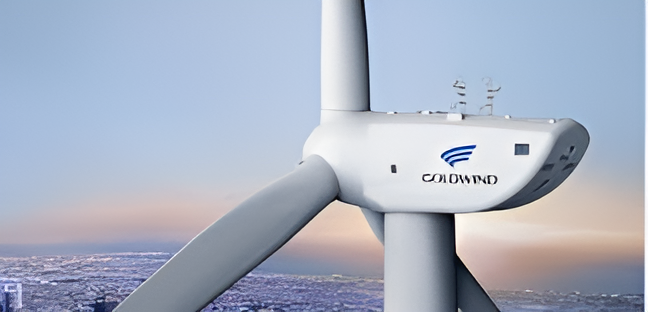
China’s wind energy growth extends beyond domestic power generation. The country now hosts the world’s largest wind fleet and dominates global manufacturing, producing more than 70% of wind turbine components, including blades, towers, nacelles, and power electronics.
Leading manufacturers such as Goldwind, Mingyang, and Envision export wind technology worldwide, supplying projects across Asia, Africa, Latin America, and Europe.
According to the Centre for Research on Energy and Clean Air (CREA), clean energy led by wind accounted for 25% of China’s GDP growth in 2024, while supporting over 3 million jobs. This shows wind power is not just a clean-energy solution but also a major economic engine.
Looking Ahead to COP30 in Belém

With COP30 in Belém, Brazil, approaching, China is expected to announce stronger national climate targets. Analysts predict new policies around:
- Higher national wind capacity goals
- Dedicated offshore wind industrial zones
- Expanded wind-to-hydrogen integration
- Streamlined offshore leasing programs
These policies could influence global renewable energy investment and technology deployment.
For additional context on China’s clean energy transition, see our China renewable energy growth article.
Offshore Wind: Opportunities and Challenges
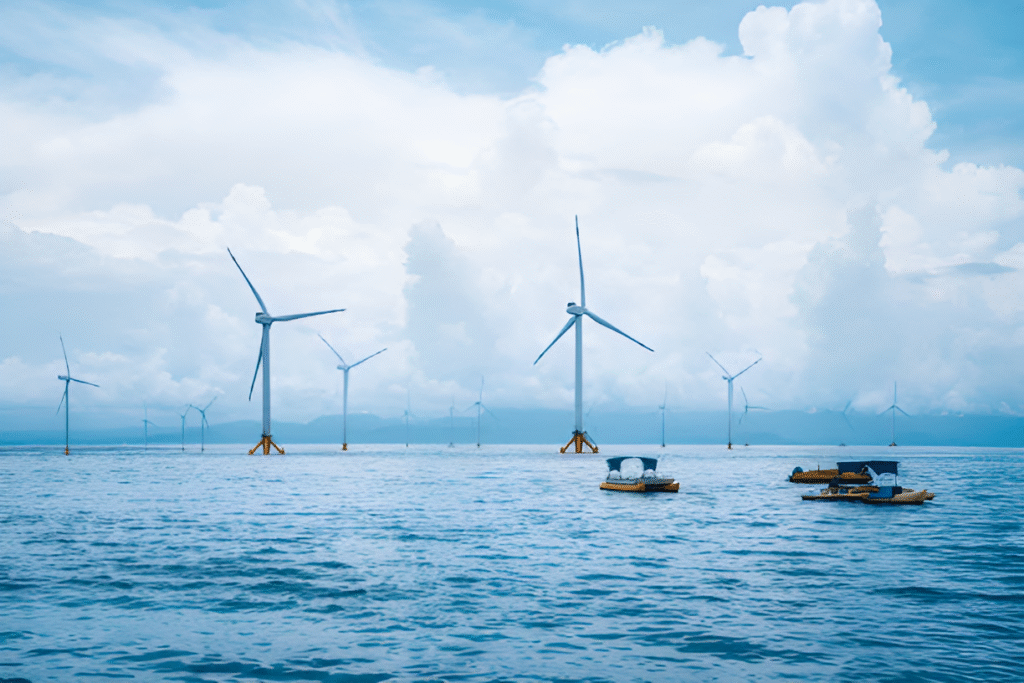
Despite rapid growth, China’s offshore wind sector faces structural challenges, including grid connection delays, overlapping permitting systems, and the technical demands of typhoon resilience. Deep-sea floating wind projects also carry higher costs due to complex foundations, subsea cables, and specialized installation vessels.
Ongoing investment in typhoon-resistant turbine design and offshore grid infrastructure is expected to gradually reduce these barriers and support long-term scalability.
Offshore Wind: Opportunities and Challenges
China’s offshore wind sector faces challenges including:
- Grid connection delays
- Overlapping permitting systems
- Typhoon resilience requirements
- High cost of floating wind foundations and deep-water logistics
However, government support, green financing, and technological R&D are expected to reduce these barriers over time, helping the sector scale sustainably.
From Energy User to “Electrostate”
Wind power now supplies a growing share of electricity for China’s high-speed rail, smart manufacturing, urban heating and cooling networks, and rapidly expanding data centers. As explored in our coverage of renewable-powered data centers and AI infrastructure, this shift is helping transform China into an emerging renewable-powered “electrostate.
Final Takeaway
China’s wind energy surge in 2025 is reshaping the global renewable‑energy landscape. With 223 GW under construction, accelerating offshore deployment, and unmatched manufacturing scale, China is not only leading the wind sector—it is redefining how quickly a large economy can transition to clean power.
As global attention turns toward COP30, China’s policy direction and execution will play a decisive role in determining the pace and trajectory of the worldwide energy transition.
FAQs: China Wind Energy 2025
How much wind power does China have in 2025?
China has over 700 GW of installed wind capacity, with 223 GW under construction.
What share of global wind projects are in China?
China accounts for nearly 45% of all wind projects under construction worldwide, according to GEM.
Why is offshore wind important for China?
Offshore wind supports industrial decarbonization in coastal provinces and provides large-scale clean power close to demand centers.
Who are China’s leading wind turbine manufacturers?
Goldwind, Mingyang, and Envision are among China’s top wind turbine companies.
How does wind energy impact China’s economy?
Wind energy contributed roughly 25% of GDP growth in 2024 and supports more than 3 million jobs, according to CREA.

Ismot Jerin is the founder and Editor-in-Chief of WindNewsToday, an independent publication covering offshore wind, renewable energy policy, and clean power markets with an analytical focus on the United States and global energy transition.