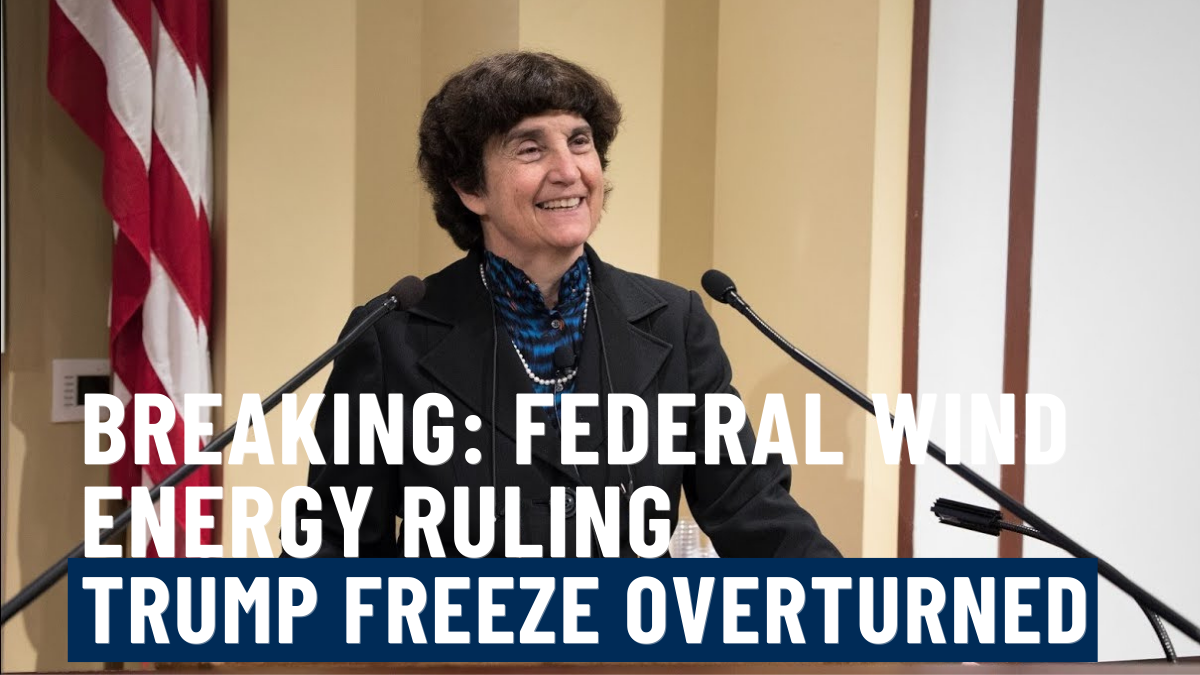
A landmark federal wind energy ruling by Judge Patti Saris has overturned the Trump-era freeze, reopening the path for onshore and offshore wind projects in the U.S. The decision represents a significant win for states, developers, and clean energy advocates, who warned that halting approvals would have harmed jobs, the economy, and climate goals.
This ruling restores momentum for U.S. wind energy, signaling a more predictable regulatory environment for both current and future projects.
Judge Saris Rules the Freeze “Arbitrary and Capricious”

A landmark federal ruling by Judge Patti Saris has overturned the Trump-era wind energy freeze, ensuring that both onshore and offshore wind projects in the U.S. can continue under proper legal procedures. The decision reinforces stable governance for renewable energy policy and signals a reset for developers, investors, and state authorities.
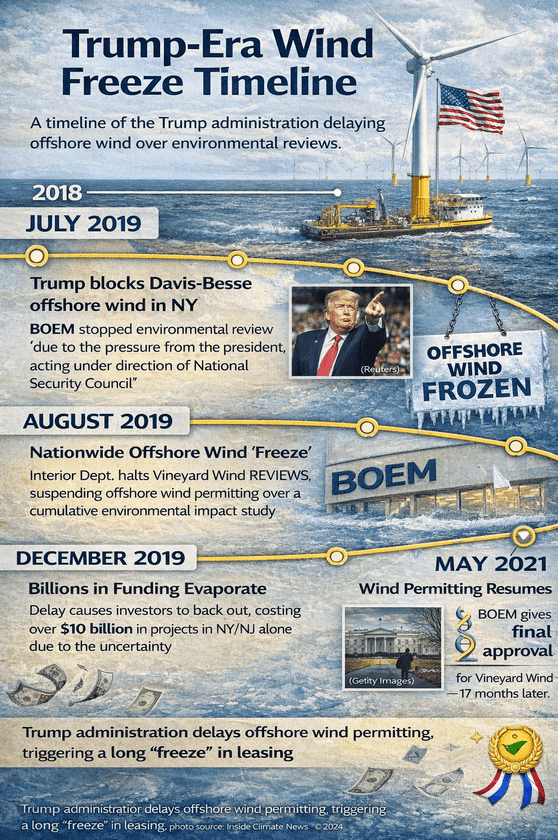
The freeze, issued early in the Trump administration, attempted to halt leasing and permitting for wind projects on federal lands and waters. States including New York, Massachusetts, New Jersey, California, and a coalition of 13 others argued that the freeze jeopardized billions of dollars in investments, hundreds of jobs, and the reliability of the nation’s electrical grid.
This wind energy court decision ensures that renewable energy development can continue under proper legal procedures, reinforcing stable governance for renewable energy policy news.
The freeze, issued early in the Trump administration, sought to halt leasing and permitting for wind projects on federal lands and waters. States including New York, Massachusetts, New Jersey, California, and a coalition of 13 others argued that the freeze jeopardized billions of dollars in investments, hundreds of jobs, and the reliability of the nation’s electrical grid.
What the Freeze Meant for U.S. Wind Energy
“This decision protects vital investments in renewable energy and demonstrates that abrupt policy shifts cannot bypass federal law,” said Massachusetts Attorney General Andrea Joy Campbell. Her office, along with other state attorneys general, had challenged the freeze in court.
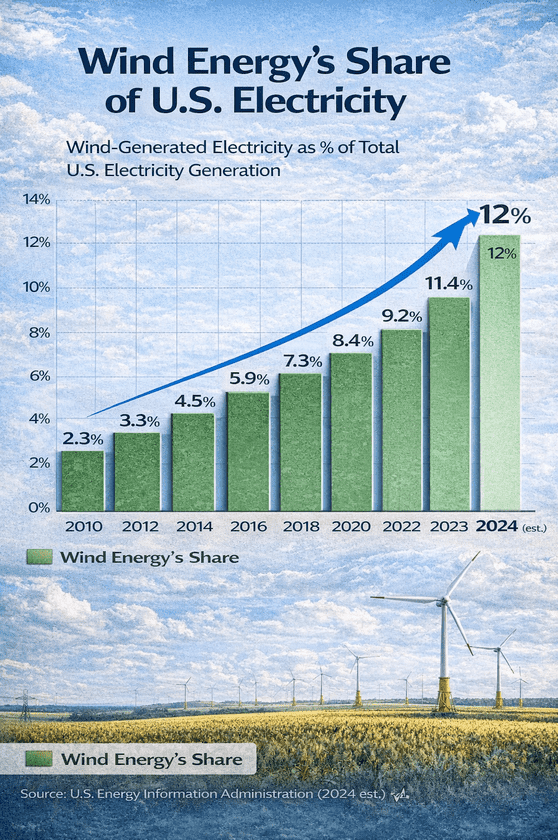
Industry groups welcomed the ruling as a crucial reset. Wind energy court decisions like this are more than legal victories—they safeguard a sector powering nearly 10% of U.S. electricity. The Alliance for Clean Energy New York called the ruling “a victory for consumers, workers, and businesses who depend on stable renewable energy policy.”
Impact on Offshore Wind Projects USA
For offshore wind projects USA, the ruling is particularly significant. Many large-scale developments rely on federal approvals to secure financing and move toward construction. Delays caused by the freeze threatened not only the projects themselves but also the coastal jobs and supply chains that support the industry. With the freeze lifted, developers can resume federal reviews and continue toward construction milestones without further uncertainty.
Read our Offshore Wind Projects Guide
Legal Precedent and Long-Term Implications
Judge Saris emphasized that the Trump freeze was “arbitrary and capricious”, violating the Administrative Procedure Act. Experts in energy law note that this sets a precedent: federal authorities cannot impose sweeping restrictions on renewable energy projects without following proper procedures.
Analysts say the ruling’s impact extends beyond wind energy. By clarifying limits on executive power, it may influence future administrations’ approach to national energy policy, encouraging stable, predictable regulation essential for long-term investment.
Government agencies also highlight the significance of the decision. According to the Bureau of Ocean Energy Management (BOEM), offshore wind leasing and permitting are critical to meeting regional clean energy goals. The Department of Energy Wind Energy Technologies Office notes that wind is one of the most cost-effective electricity sources. Meanwhile, the Energy Information Administration reports that wind already contributes a growing share of U.S. electricity, projected to rise in the coming years.
What’s Next After the Federal Wind Energy Ruling
Federal agencies are expected to restart pending wind permit reviews immediately. States plan to accelerate grid upgrades, transmission improvements, and procurement processes delayed by the freeze.
Although political debates over renewable energy will continue, the ruling sends a clear message: stability, adherence to legal procedures, and consideration of economic evidence must guide U.S. energy decisions. Developers, investors, and communities can now plan with confidence, particularly for offshore wind projects in the USA and other renewable initiatives.
FAQ
Q: What did the federal wind energy ruling decide?
A: The court overturned the Trump-era freeze, allowing onshore and offshore wind projects in the U.S. to continue under proper legal procedures.
Q: Who benefits from the ruling?
A: Developers, state authorities, investors, and clean energy advocates gain regulatory certainty, protecting jobs, investments, and grid planning.
Q: Why is this ruling important for offshore wind projects?
A: Many large-scale offshore developments rely on federal approvals for financing and construction; the ruling removes delays caused by the freeze.
Sources: U.S. Department of Energy (DOE), International Energy Agency (IEA), National Renewable Energy Laboratory (NREL), Company Press Releases.

Ismot Jerin is the founder and Editor-in-Chief of WindNewsToday, an independent publication covering offshore wind, renewable energy policy, and clean power markets with an analytical focus on the United States and global energy transition.