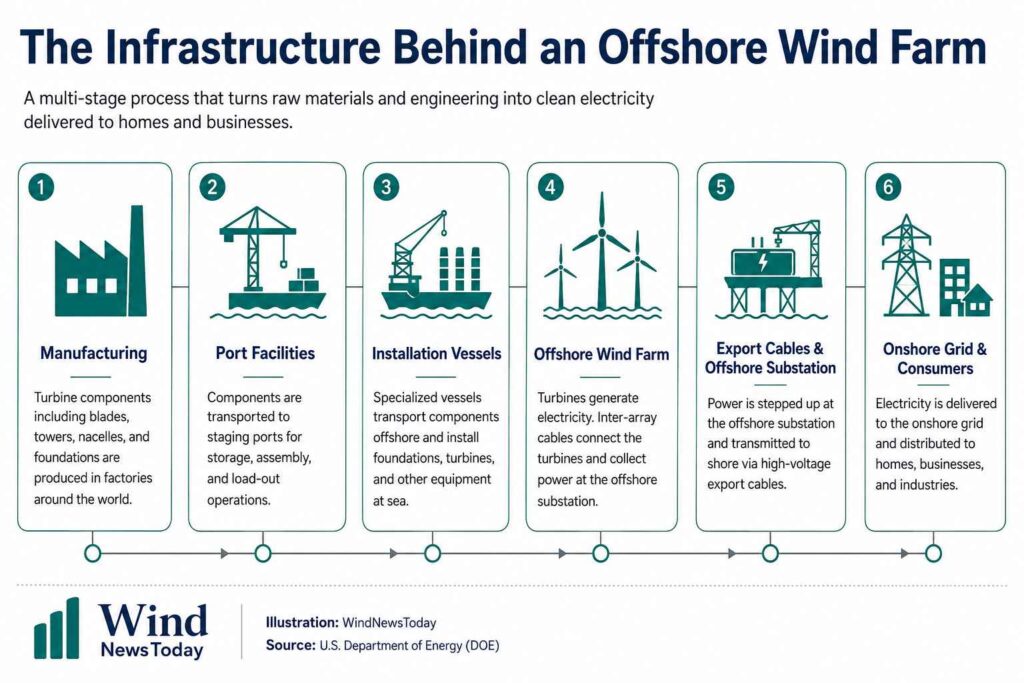
Offshore wind projects begin long before turbines are installed at sea. Behind every completed wind farm is a network of ports, manufacturing facilities, installation vessels, transmission systems, logistics providers, and skilled workers that make large-scale construction possible.
At WindNewsToday, our Infrastructure section examines the physical and industrial foundations supporting the offshore wind industry. While turbines often receive the most attention, the success of any project depends on whether the supporting infrastructure can keep pace with growing demand.
Building offshore wind at scale requires far more than suitable wind resources. Developers need ports capable of handling some of the largest components manufactured today, specialised vessels to transport and install equipment offshore, factories producing towers, foundations, blades, and cables, and transmission networks able to deliver electricity to consumers. Delays in any one of these areas can affect project costs, construction schedules, and long-term investment decisions.
Our infrastructure coverage looks beyond individual projects to explain how industrial capacity is evolving and where the industry’s biggest opportunities and constraints continue to emerge.
What You’ll Find in Our Infrastructure Coverage
The Infrastructure section explores the assets, facilities, and supply chains that support offshore wind development from manufacturing through commercial operation.
Readers will find analysis covering port development, vessel availability, domestic manufacturing, offshore logistics, subsea cables, transmission infrastructure, fabrication facilities, installation technology, and industrial investment.
We also examine how governments and private companies are expanding manufacturing capacity to support growing offshore wind markets. New factories, upgraded ports, and specialised installation fleets often represent long-term investments that shape the competitiveness of the industry for decades.
Another area of focus is supply chain resilience. Offshore wind depends on thousands of components sourced from multiple suppliers, making procurement, transportation, and industrial coordination increasingly important as projects become larger and more complex.
Rather than reporting individual announcements in isolation, our analysis explains how infrastructure developments fit into the wider offshore wind ecosystem.
Explore our Market section to understand how infrastructure investment influences project economics and industry growth. Read our Offshore Wind Project Analysis to see how infrastructure affects construction timelines and project delivery.
Why Infrastructure Matters
Infrastructure is often one of the defining factors separating planned offshore wind projects from operational ones.
Modern offshore wind turbines are significantly larger than those installed only a decade ago. Manufacturing these components, transporting them to ports, assembling them safely, and installing them offshore requires highly specialised facilities and equipment that are not widely available.
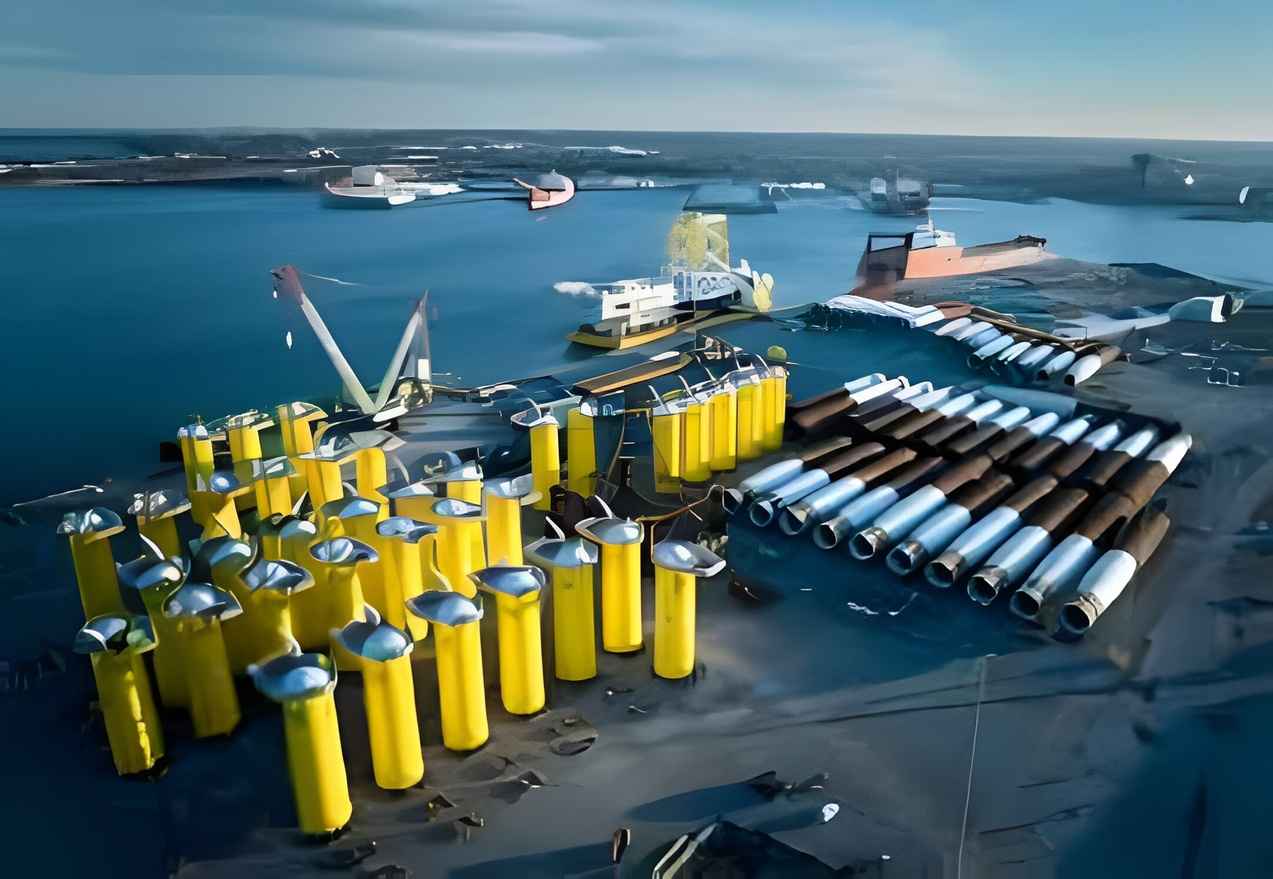
Port capacity illustrates this challenge clearly. Offshore wind ports must accommodate oversized blades, towers, nacelles, and foundations while supporting heavy lifting operations and efficient logistics. In many regions, existing port infrastructure was designed for different industries and requires extensive upgrades before supporting commercial-scale offshore wind construction.
The same applies to installation vessels. Purpose-built ships capable of transporting and installing next-generation turbines remain limited, creating competition for specialised fleets across global markets. Manufacturing capacity, skilled labour, and transmission infrastructure can present similar constraints as offshore wind deployment accelerates.
Understanding these industrial challenges helps explain why projects with strong financial backing and regulatory approval may still encounter delays during construction.
Visit our Policy section to explore how industrial policy and domestic content requirements influence infrastructure investment. Read our Grid & Electricity Demand coverage to understand why transmission infrastructure is becoming increasingly important.
Connecting Infrastructure With Projects, Markets and Policy
Infrastructure connects every part of the offshore wind industry.
Manufacturing investment influences project costs. Port capacity affects construction schedules. Transmission planning determines whether electricity generated offshore can reach homes and businesses efficiently. Policy decisions may encourage domestic manufacturing, while market conditions influence where companies invest in new facilities.
These relationships mean infrastructure cannot be understood separately from the wider offshore wind industry.
Our Market coverage examines how industrial investment affects project economics and corporate strategy. The Policy section explains how government decisions shape manufacturing incentives, permitting, and supply chain development. Project analysis shows how infrastructure influences individual developments throughout their lifecycle.
Together, these editorial sections provide a broader understanding of how offshore wind grows from concept to commercial operation. Infrastructure will also become increasingly important as floating offshore wind expands into deeper waters, requiring new port facilities, different installation methods, and additional manufacturing capabilities to support next-generation projects. Continue to our Analysis section for broader coverage of the offshore wind industry. Explore Grid & Electricity Demand to understand how electricity networks support renewable energy expansion.
Our Editorial Approach
WindNewsToday’s infrastructure reporting is based on publicly available information, including government publications, port authority announcements, regulatory filings, company disclosures, industry reports, environmental assessments, and technical documentation.
Rather than focusing solely on construction milestones, we examine the industrial systems that enable offshore wind development and explain how infrastructure influences project timelines, investment decisions, and long-term market growth.
Our reporting aims to provide context, accuracy, and transparency while distinguishing verified information from editorial analysis. As the industry evolves, we update evergreen coverage to reflect significant developments in manufacturing, logistics, transmission, and offshore construction.
Learn more about our Editorial Policy. Read our Methodology to understand how we research and verify our reporting. Discover the mission behind About WindNewsToday.
Continue Exploring Our Infrastructure Coverage
The future of offshore wind depends on far more than turbine technology. Ports, vessels, manufacturing facilities, transmission systems, and resilient supply chains will determine how efficiently new projects move from planning to operation.
Our Infrastructure section follows these developments with long-term analysis designed to explain the industrial foundations supporting offshore wind. Whether you are interested in manufacturing investment, maritime logistics, transmission expansion, or supply chain development, this section provides a starting point for deeper reporting across WindNewsToday.
The Infrastructure Behind an Offshore Wind Farm